
Fire Hose Cabinet
Class I, II & III standpipe hose stations in tempered glass, stainless steel and recessed configurations · 800–2000 mm · NFPA 14 compliant · Factory direct from Fujian, China
Complete Range of Fire Hose Cabinets for Standpipe Hose Stations
A fire hose cabinet is the permanent wall-mounted enclosure that houses a standpipe hose station — the angle valve, hose, nozzle, rack and optional extinguisher that building occupants or responding firefighters use to fight a fire at the floor where it starts. Every mid- and high-rise commercial building in the world has some form of fire hose cabinet, and the specification matters because the cabinet must protect the hose station against tampering and contamination while making the contents accessible within seconds in an emergency.
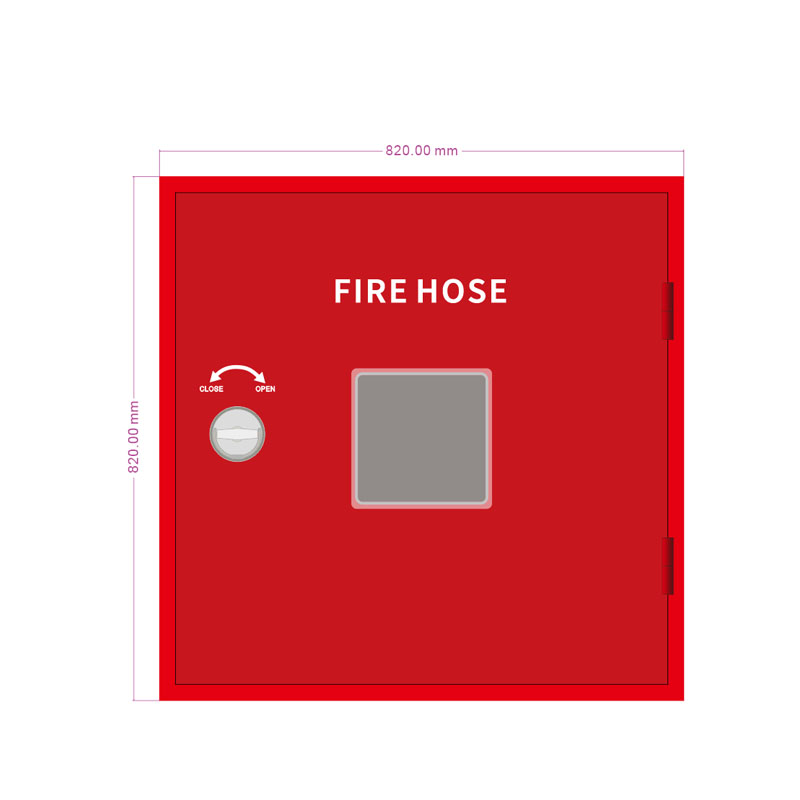
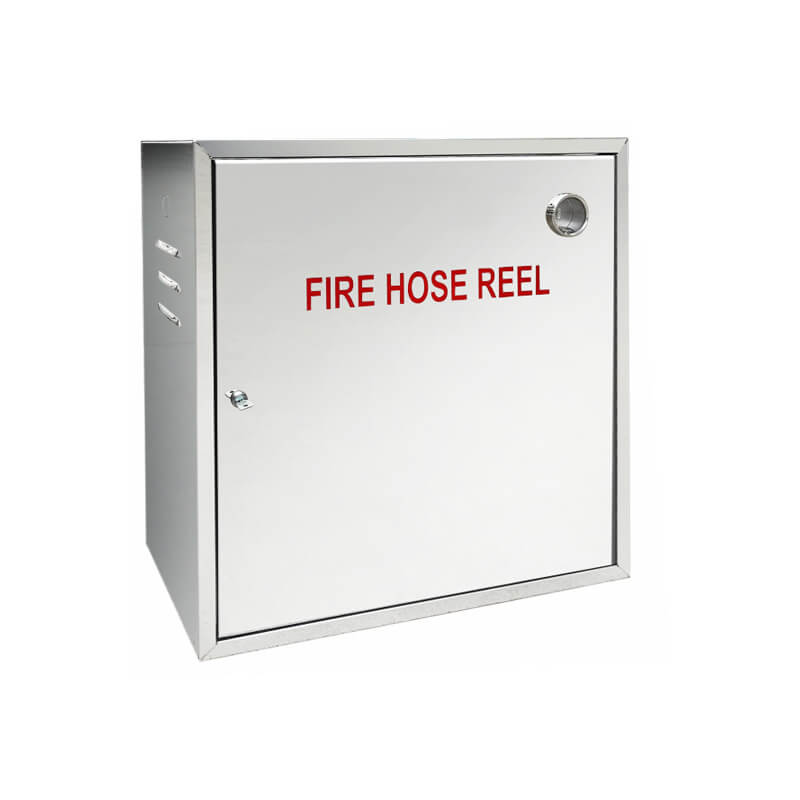
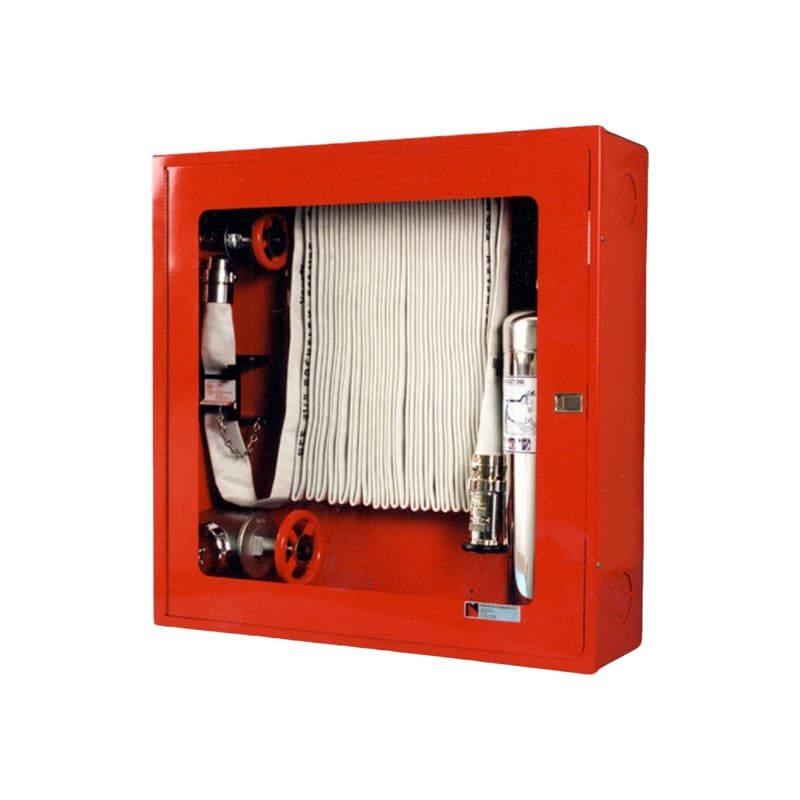
CA-FIRE manufactures the SG24 fire hose cabinet range in three engineering variants — tempered glass front, full stainless steel, and flush-mount recessed — each optimised for a different installation environment. Four standard sizes from 800 mm to 2000 mm cover Class I, Class II and Class III standpipe hose stations under NFPA 14. All three variants share the same internal layout, fitting, and equipment compatibility, so projects can mix variants across floors or zones without retraining occupants or emergency responders.
This page is the selection hub for the CA-FIRE hose cabinet range. Use the decision tree below to pick the right variant for your project, then click through to the product detail page for dimensions, CAD files, full specifications and quotation. If you are also specifying portable extinguisher stations, see our fire extinguisher cabinet range.
What Is a Fire Hose Cabinet?
A fire hose cabinet is a wall-mounted steel enclosure that houses the equipment of a standpipe hose station — specifically an angle valve connected to the building's wet or dry standpipe riser, a 1.5-inch or 2.5-inch fabric hose on a rack or reel, a discharge nozzle, and frequently an additional portable fire extinguisher. In some jurisdictions the cabinet is also referred to as a fire hydrant cabinet (when the term is used loosely to mean any internal hose station) or a hose reel cabinet (when it specifically contains a reel-style hose).
The cabinet itself has three jobs. First, it protects the hose station from tampering, theft, dust and mechanical damage during the long periods when the station is not in use — typically years between actual fire events or training drills. Second, it makes the station immediately identifiable and locatable in an emergency through standardised red colour, signage and placement. Third, it provides a standardised layout so that trained occupants and arriving firefighters know exactly where each component is without having to search.
Fire hose cabinets are specified in most modern fire codes including NFPA 14 (Standard for the Installation of Standpipe and Hose Systems) in the United States and many export markets, GB 16280 in China, and equivalent national codes elsewhere. The specific cabinet type required depends on the building's standpipe class — covered in the Class I / II / III section further down this page.
Three Fire Hose Cabinet Variants
Pick by material and mounting — all three variants share the same SG24 internal layout and fit the same hose station equipment, so the choice is about installation environment, not functional capability.
How to Choose the Right Fire Hose Cabinet
Three decision axes matter when picking between the tempered glass, stainless steel and recessed variants. Walk down each column and find the row that matches your project — the recommended variant is listed next to each scenario.
By Installation Environment
- Standard indoor corridor
Any variant works — usually glass front for inspection benefit - Coastal / marine / salt air
Must be stainless steel — painted cabinets rust out in 1–2 years - Food / pharma wash-down
Must be stainless steel — HACCP / GMP compliance - ADA accessible corridor
Must be recessed — ≤4″ projection rule
By Building Type
- Hotel / office tower
Usually glass front for architectural look + inspection - Hospital / school
Recessed — ADA corridors + clean finish - Shopping mall / airport
Mix of recessed and glass by zone - Factory / warehouse
Glass front — durable and inspectable - Port / chemical plant
Stainless steel (316 for marine)
By Budget Priority
- Lowest unit cost
Tempered glass — entry-level pricing - Best architectural finish
Recessed — disappears into wall - Longest lifetime
Stainless steel — 20+ year service - Lowest maintenance
Stainless steel — no repaint, no rust - Fastest inspection cycle
Glass front — verify without opening
NFPA 14 Class I / II / III Standpipe Systems
Fire hose cabinets exist to house standpipe hose stations, and NFPA 14 defines three standpipe classes based on who is expected to operate the hose during a fire. The class determines cabinet size, hose diameter, valve type and required nozzle. A complete breakdown of the classes, with operational differences and design implications, is available in our Class I, II, III explained guide — this section is the quick-reference summary.
2.5″ Hose Stations
Class I systems are intended for use by the fire department with 2.5-inch hose connections. Cabinets typically house only the angle valve and signage — the fire department brings their own hose. Common in high-rise office towers and large industrial buildings.
1.5″ Hose Stations
Class II systems are intended for use by building occupants with pre-connected 1.5-inch hose. The cabinet houses the valve, hose, nozzle and often an extinguisher — everything an occupant needs to fight an incipient fire before the fire department arrives.
1.5″ + 2.5″
Class III systems combine both previous types in one station — 1.5-inch occupant hose and a 2.5-inch firefighter connection. Requires a larger cabinet (usually 1600–2000 mm wide) to house the full combined equipment. Common in modern high-rise construction.
Typical Applications
Fire hose cabinets are installed in every mid- and high-rise building with a standpipe system. Eight of the most common project types:
Frequently Asked Questions
What is the difference between a fire hose cabinet and a fire hydrant cabinet?
In strict fire code language the two terms refer to different things. A fire hose cabinet is the internal enclosure that houses a standpipe hose station — the valve, hose and nozzle used by occupants or firefighters inside the building. A fire hydrant is a water outlet, usually outdoors at street level, that supplies water to fire apparatus and is not typically housed in a cabinet. In common usage — especially in Asian and Middle Eastern markets — the two terms are used interchangeably because the Chinese GB 16280 standard calls the internal cabinet 消火栓箱 which translates directly as "fire hydrant cabinet." When a specification calls for a "fire hydrant cabinet" for an indoor corridor installation, it almost always means the internal hose cabinet covered on this page, not an outdoor street hydrant.
What goes inside a fire hose cabinet?
A standard Class II occupant-use fire hose cabinet contains an angle valve connected to the building standpipe riser, a 1.5-inch fabric or lined hose (25 or 30 m length) on a rack or reel, a discharge nozzle, and often a portable fire extinguisher (5, 10 or 20 lb ABC or CO₂) mounted to one side. Signage and operating instructions are printed on the door. A Class I firefighter-use cabinet contains only the 2.5-inch valve and signage because the fire department brings their own hose. A Class III combined station contains all of the above. For a detailed inventory with photos and component part numbers, see our complete contents guide.
What sizes do fire hose cabinets come in?
The CA-FIRE SG24 range is offered in four standard widths — 800 mm, 1600 mm, 1800 mm and 2000 mm — all with 700 mm height and 240 mm depth. The 800 mm size is suitable for Class II occupant-use stations in smaller buildings; 1600 and 1800 mm are the most common for Class I and combined Class III stations in commercial towers; 2000 mm is used for larger combined stations and industrial sites that need additional equipment space inside the cabinet. The stainless steel variant adds a 2000 mm size; the recessed variant drops the 800 mm size because small recessed cabinets do not justify the framing cost. For a full dimensions breakdown including rough opening sizes for recessed installations, see our fire hose cabinet dimensions guide.
Which variant is best for my project — glass, stainless or recessed?
Use the decision tree higher up this page. The shortest version: if your environment is corrosive (marine, food, pharma, chemical) you need stainless steel; if your corridor is subject to ADA accessible-route rules you need recessed flush-mount; for everything else, the standard tempered glass variant is the default choice at the lowest unit cost. Projects often mix variants across a single site — for example, a hotel might use tempered glass on guest floors and recessed on the ADA-compliant ground-floor public areas. Mixing variants is fully supported and all SG24 cabinets share the same internal hose station layout regardless of external configuration.
Do I need to buy the hose, valve and nozzle separately, or are they included?
By default the cabinet ships empty so that buyers can specify hose station equipment from locally-certified suppliers — UL-listed in the United States, EN-marked in Europe, GB-certified in China and so on. Hose station component certification is market-specific and it is usually easier for the buyer to source these locally than for us to ship them with the cabinet. That said, we can supply a fully-fitted cabinet including GB 16280 certified angle valve, hose, nozzle and rack at quotation time — this is common on projects destined for the Middle East, Africa and Southeast Asia where GB certification is accepted. Specify your equipment requirements early so we can confirm shipping and compliance.
What standards do CA-FIRE fire hose cabinets meet?
Our cabinets are designed to the principles of NFPA 14 (Standard for the Installation of Standpipe and Hose Systems) and GB 16280 (the Chinese national standard for indoor fire hose boxes). Manufacturing is ISO 9001 certified. The cabinet body itself is not subject to third-party performance certification in most jurisdictions — the certifications that matter for fire hose stations apply to the equipment inside (valve, hose, nozzle), not to the enclosure. That said, if your project requires UL-listed cabinet hardware or CE-marked components, we can supply certified hardware at quotation time. Material certificates, ISO quality certificates and factory test reports are included in the submittal package for every order. For a deeper discussion of which standards apply where, see our NFPA requirements guide.
How long does it take to get a quote and delivery?
Quote response is within one business day for any of the SG24 hose cabinet variants. The quote package includes unit pricing, lead time, cabinet specification datasheet, CAD blocks and Revit families from our CAD & BIM download centre, and a full submittal document for the project architect or fire protection engineer. Typical production lead time is 15–25 days for standard configurations and 30–40 days for stainless steel and custom sizes. Shipping from our Fujian factory to most international destinations is 20–40 days by sea freight — we ship to 60+ countries and have worked with local distributors and direct-end-user buyers on every continent. Email sales with your project details to start the quotation process.
Can I get CAD blocks and BIM / Revit files before I buy?
Yes. DWG CAD blocks in plan and elevation view, and Revit family (RFA) files for all four SG24 sizes and all three variants, are available for free download from our CAD & BIM download centre — no registration required. The files include correct dimensions, rough opening sizes for recessed installations, and parameterised family types so that architects and fire protection engineers can drop them directly into design drawings. If you need a specific custom size or a pre-release variant, contact sales directly and we can supply drawings on request.