
Fire Protection Alarm Check Valves
Wet & dry alarm valves · Grooved & flanged · Stainless steel & pre-action · DN50–DN200
The Complete Range of Alarm Check Valves for Fire Sprinkler Systems
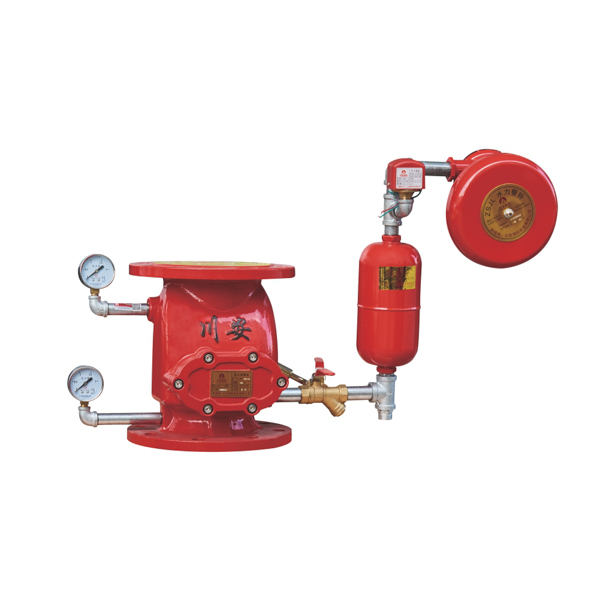
An alarm check valve is the master control component of an automatic fire sprinkler system — a one-way clapper valve that holds the water supply under pressure in standby, opens instantly when one or more sprinkler heads activate, and simultaneously drives the water motor alarm gong and pressure switch to deliver hydraulic and electrical fire alarm signals. Every wet-pipe, dry-pipe, and pre-action sprinkler alarm valve system depends on this single component for both flow control and alarm output.
CA-FIRE manufactures six alarm check valve configurations — flanged wet, dry-pipe accelerated, stainless steel explosion-proof, grooved coupling, pre-action double-interlock, and temperature-controlled self-actuating — covering the full range of connection types, pipe system designs, environmental conditions, and building types required for fire protection projects worldwide. All types comply with GB 5135.6-2006, NFPA 13, and are supplied with national fire product type approval certificates.
Looking for a deluge valve instead? See the CA-FIRE deluge valve range for open-nozzle zone suppression systems.
 Most Widely Specified
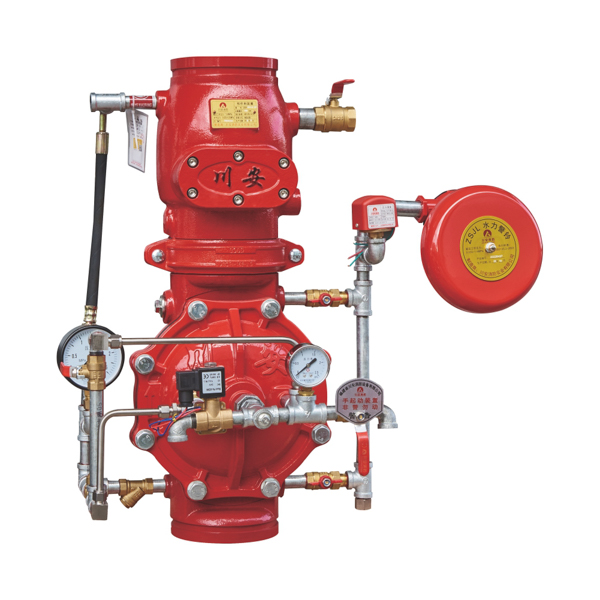
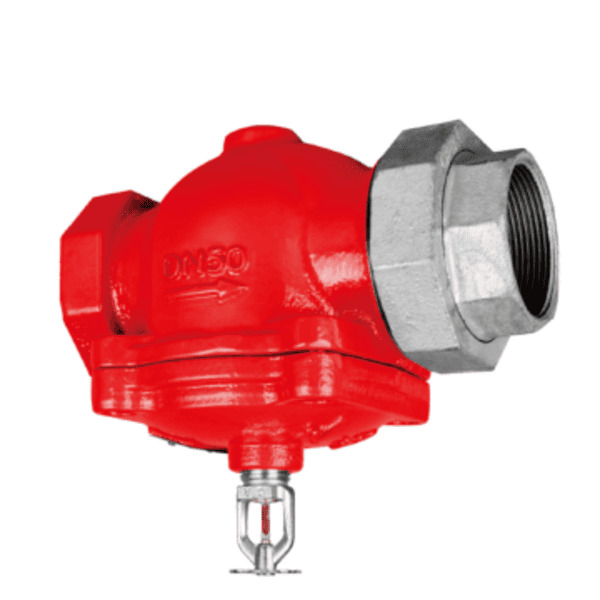
Alarm Check Valve Selection Guide
Match your project condition to the correct alarm valve type. The primary selection driver is the pipe system type (wet, dry, or pre-action), followed by the installation environment.
| Project Condition | Recommended Type | Sizes | Key Feature |
|---|---|---|---|
| Standard wet-pipe, indoor / weatherproof | Wet Alarm Valve ZSFZ | DN65–DN300 | Flanged, cast iron, EPDM clapper, <0.02 MPa hydraulic resistance |
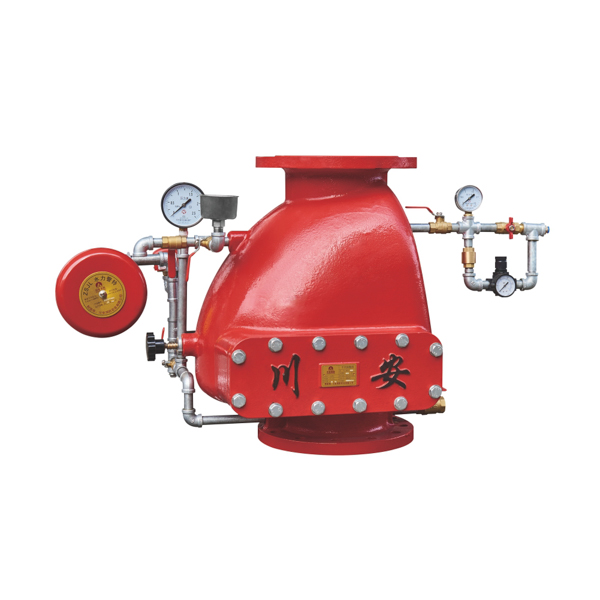
| Unheated / outdoor / freeze risk | Dry Alarm Valve ZSFC | DN100–DN200 | Compressed air, accelerator, trips on ≥0.07 MPa air drop, <60 s fill time |
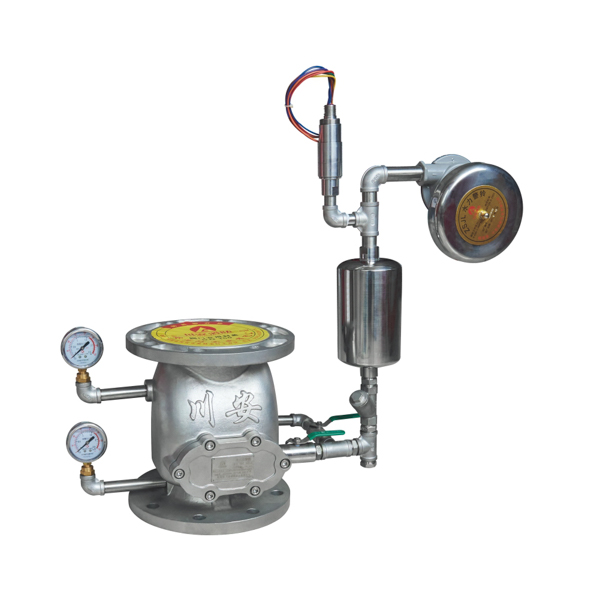
| Corrosive / offshore / coastal / Zone 1–2 | SS Alarm Valve ZSFZ-Ex | DN65–DN300 | SS304/SS316, Ex db IIC T6 Gb, IP65, −20°C to +70°C |
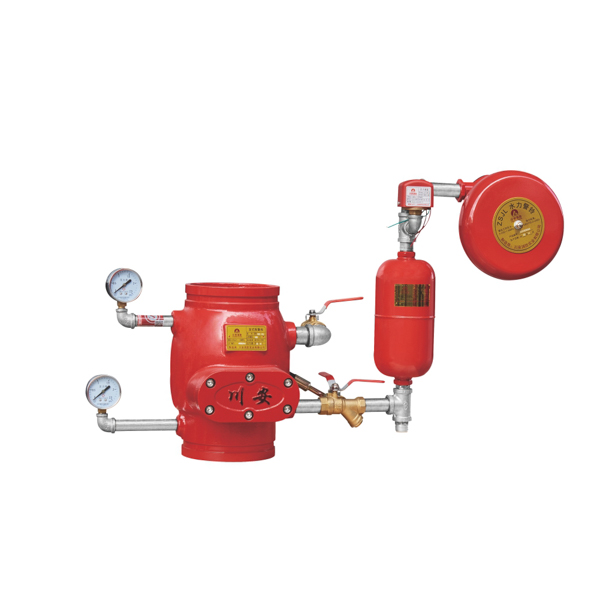
| Grooved-pipe system throughout | Grooved Alarm Valve | DN80–DN200 | Victaulic-compatible IPS/ISO groove, 2-bolt coupling, ductile iron |
| Data centre / archive / false discharge risk | Pre-Action Alarm Valve ZSFY | DN65–DN200 | Double-interlock, supervised air, detector + sprinkler head both required |
| Small area, no detection system, thermal-only | Fire Sprinkler Alarm Valve ZSFW | DN32–DN80 | Self-contained thermal element, 57–93°C, no electrical power required |
Alarm Check Valve Assembly — Components & How It Works
A complete alarm check valve assembly consists of the valve body and clapper plus a standardised set of trim components — together forming the complete alarm valve station.
| # | Component | Function |
|---|---|---|
| 1 | Alarm check valve body | Clapper valve — holds pressure in standby, opens on flow demand |
| 2 | Retard chamber | Absorbs pressure surges — prevents false alarm gong activation from water hammer |
| 3 | Water motor alarm gong | Hydraulically driven bell — sounds audible alarm within seconds, no electrical power required |
| 4 | Alarm pressure switch | Electrical signal to fire alarm panel on flow — triggers remote monitoring and BMS annunciation |
| 5 | Supply & system gauges | Continuous display of upstream/downstream pressure — differential confirms clapper seal in standby |
| 6 | Main drain valve | Drains downstream pipework after activation or maintenance; used for full-flow alarm trip test |
| 7 | Inspector's test valve | Verifies alarm gong and pressure switch at minimum flow equivalent to one sprinkler head |
| 8 | OS&Y isolation valve | Tamper-switch monitored gate valve upstream — visible open/closed position per NFPA 13 |
How the alarm check valve works — three states:
Technical Specifications — All 6 Types at a Glance
| Type | Sizes | Working Pressure | Body | Hydraulic Res. | Temp Range | Standard |
|---|---|---|---|---|---|---|
| Wet Alarm Valve ZSFZ | DN65–DN300 | 1.6 MPa | Cast iron | <0.02 MPa | 4°C – 70°C | GB 5135.6 |
| Dry Alarm Valve ZSFC | DN100–DN200 | 1.6 MPa | Cast iron | <0.02 MPa | −20°C – 70°C | GB 5135.6 |
| SS Alarm Valve ZSFZ-Ex | DN65–DN300 | 1.6 MPa | SS304/SS316 | <0.02 MPa | −20°C – 70°C | GB 5135.6 · IEC 60079 |
| Grooved Alarm Valve | DN80–DN200 | 1.6 MPa | Ductile iron | <0.02 MPa | 4°C – 70°C | GB 5135.6 · NFPA 13 |
| Pre-Action Valve ZSFY | DN65–DN200 | 1.6 MPa | Cast iron | <0.02 MPa | 4°C – 70°C | GB 5135.6 · NFPA 13 |
| Sprinkler Alarm Valve ZSFW | DN32–DN80 | 1.6 MPa | Cast iron | <0.02 MPa | 4°C – 70°C | GB 5135.6 |
CA-FIRE vs Tyco / Viking / Victaulic — Alarm Valve Comparison
Engineers specifying alarm valve Tyco AV-1, Viking Model J-1, or Victaulic Series 751 alarm valves for international projects can specify CA-FIRE's ZSFZ/ZSFC series as a direct equivalent — same operating principle, comparable hydraulic performance, and full GB 5135.6 / NFPA 13 compliance. The practical difference is procurement: CA-FIRE manufactures direct in China with shorter lead times and more competitive pricing for BRI/EPC export projects, without the distributor margin embedded in Western brand pricing.
| Parameter | CA-FIRE ZSFZ | Tyco AV-1 / AV-1-300 | Viking Model J-1 | Victaulic Series 751 |
|---|---|---|---|---|
| Valve type | Flanged wet alarm check valve | Flanged wet alarm check valve | Flanged wet alarm check valve | Grooved wet alarm valve |
| Available sizes | ✓ DN65–DN300 | 2"–8" (DN50–DN200) | 2"–8" (DN50–DN200) | DN80–DN200 |
| Operating standard | ✓ GB 5135.6 + NFPA 13 | UL / FM / NFPA 13 | UL / FM / NFPA 13 | UL / FM / NFPA 13 |
| Stainless steel option | ✓ SS304/SS316 + Ex certified | Limited — special order | Limited | Not standard |
| Ex certification | ✓ Ex db IIC T6 Gb (ZSFZ-Ex) | Via separate Ex trim kit | Via separate Ex trim kit | Not standard |
| Lead time (export) | ✓ 3–5 weeks factory direct | 8–16 weeks via distributor | 8–16 weeks via distributor | 6–14 weeks via distributor |
| Price (factory direct) | ✓ Contact for project pricing | Higher (distributor margin) | Higher (distributor margin) | Higher (distributor margin) |
Standards & Certifications
| Standard | Scope & Relevance |
|---|---|
| GB 5135.6-2006 | 自动喷水灭火系统 第6部分 湿式报警阀 干式报警阀 — the primary Chinese national standard governing alarm check valve performance, hydraulic testing, clapper seal, and alarm response requirements. National fire product type approval certification held for all ZSFZ, ZSFC, ZSFZ-Ex, and ZSFW models. |
| NFPA 13 | Standard for the Installation of Sprinkler Systems — alarm check valve NFPA 13 requirements govern alarm valve placement, trim assembly, drain sizing, and test connections. CA-FIRE provides Cv flow coefficients per DN size for NFPA hydraulic calculations on all export projects. |
| IEC 60079 series | Explosion-proof equipment standards — applicable to the ZSFZ-Ex stainless steel alarm valve. Ex db IIC T6 Gb / Ex tb IIIC T80°C Db certified for Zone 1/2 gas and Zone 21/22 dust installations. |
| GB 50084 | 自动喷水灭火系统设计规范 — Chinese sprinkler system design code specifying alarm valve type selection, installation height, drain connection sizing, and alarm valve room requirements. |
| ISO 9001:2015 | CA-FIRE QMS certification — covering valve body casting inspection, clapper seat machining, hydraulic pressure testing (seal: 3.2 MPa, strength: 6.4 MPa), alarm gong function test, and shipment documentation for all alarm check valve models. |
Frequently Asked Questions — Alarm Check Valve
When one or more sprinkler heads open thermally, the downstream pressure drops, the clapper lifts, and water flows into the system. Simultaneously, flow through the alarm port drives the water motor alarm gong — a hydraulically powered bell requiring no electricity — and the alarm pressure switch, which sends an electrical signal to the fire alarm control panel. The alarm check valve therefore performs three functions in one unit: flow control, backflow prevention, and immediate fire alarm output.
In a dry alarm valve system, the distribution pipework is filled with compressed air. When a sprinkler head opens, air pressure drops; once the differential reaches the trip threshold (≥ 0.07 MPa for the ZSFC series), the dry valve trips, water fills the distribution network, and discharge begins — typically within 30–60 seconds. Dry systems are the only option for unheated spaces, outdoor areas, and cold storage where standing water would freeze.
When the clapper briefly lifts due to a pressure surge, a small volume of water enters the retard chamber and then slowly drains out through a calibrated orifice before reaching the gong. A genuine fire activation generates sustained flow that fills the retard chamber and maintains pressure on the gong circuit — triggering the alarm. The retard chamber typically delays alarm output by 5–90 seconds — enough to eliminate false alarms from surges while still delivering an alarm within NFPA 13's required 90-second response time.
The OS&Y or butterfly isolation valve upstream must be locked open or supervised by a tamper switch connected to the fire alarm system. CA-FIRE can provide alarm valve installation drawings and Cv data for hydraulic calculations — contact sales@ca-fire.com with the DN size and system configuration.
For projects specified under UL/FM listings, CA-FIRE's GB 5135.6 certification is the Chinese national equivalent and is accepted on Chinese domestic projects and most BRI/EPC export projects. For projects with a contractual UL or FM listing requirement, contact sales@ca-fire.com to discuss certification options. CA-FIRE can provide Cv data, dimensional drawings, and material certificates for project submittal in any format required.
A deluge valve controls an open-nozzle system — all nozzles in the protected zone have no thermal element and are always open. When the deluge valve opens on a fire signal, water discharges simultaneously from every nozzle across the entire protected zone. This makes deluge valves the correct specification for high-hazard areas where fire spreads faster than individual heads can respond (transformer bays, aircraft hangars, tank farms). See the CA-FIRE deluge valve range for open-nozzle zone suppression systems.
Annually (NFPA 25): Full main drain test. Alarm trip test using the inspector's test valve — confirm water motor gong activates within 90 seconds and alarm pressure switch sends signal to fire panel. Record all test results. Inspect clapper and seat for wear or debris.
Every 5 years (NFPA 25): Internal inspection of the alarm check valve body — remove clapper and inspect seat, hinge mechanism, and seal material. Replace EPDM clapper seat if cracking or deformation is observed. CA-FIRE can supply replacement clapper assemblies and trim components — contact sales@ca-fire.com with the model and DN size.
DN32–DN300 · 1.6 MPa · GB 5135.6 · NFPA 13 · IEC 60079 · ISO 9001
Factory direct — project quotation, Cv data, drawings & submittals within 24 hours