tsai, kington

Standard-Fire-Equipment-List-—-What-Every-Building-Needs-2026

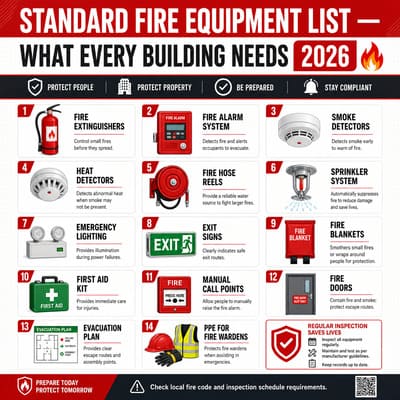
Standard Fire Equipment List — What Every Building Needs 2026

Procurement · Compliance · 2026 Guide Standard Fire Equipment List — What Every Building Needs (2026) The complete list of fire equipment a commercial, industrial or residential building should have on hand — by category, by occupancy type, and by code requirement. Covers detection, suppression, egress, brigade equipment, training and PPE, with notes on standards […]

Standard Fire Equipment List — What Every Building Needs 2026 Read More »
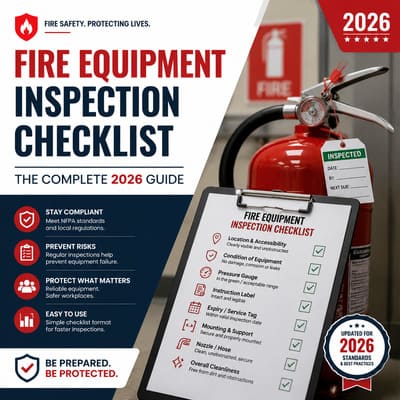
Fire Equipment Inspection Checklist — The Complete 2026 Guide

Compliance · Maintenance · 2026 Guide Fire Equipment Inspection Checklist — The Complete 2026 Guide A practical walkthrough of monthly, quarterly and annual fire equipment inspection requirements — what to check, how to test it, what to record, and which equipment fails most often in real-world audits. Covers extinguishers, hose reels, hydrants, sprinklers, nozzles, alarms

Fire Equipment Inspection Checklist — The Complete 2026 Guide Read More »

Wet-Pilot-vs-Dry-Pilot-vs-Electric-Release-Deluge-—-Compared-CA-FIRE

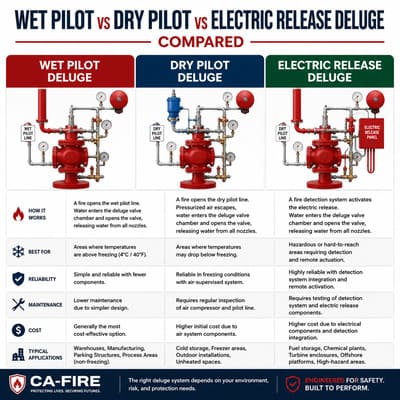
Wet Pilot vs Dry Pilot vs Electric Release Deluge — Compared

Wet Pilot vs Dry Pilot vs Electric Release Deluge — Compared By the CA-FIRE engineering team · 12 min read · Updated 2026 A deluge valve sits closed in standby because something is holding it closed. The mechanism that removes that holding force when fire is detected is called the actuation method or release method.

Wet Pilot vs Dry Pilot vs Electric Release Deluge — Compared Read More »

Deluge-Valve-Testing-Procedures-—-NFPA-25-Compliance-Guide-CA-FIRE

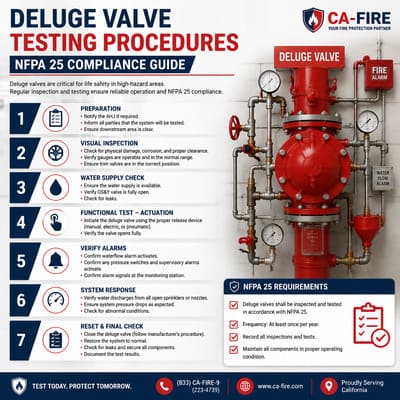
Deluge Valve Testing Procedures — NFPA 25 Compliance Guide

Deluge Valve Testing Procedures — NFPA 25 Compliance Guide By the CA-FIRE engineering team · 13 min read · Updated 2026 A deluge valve sits in armed standby for years between actual fire events. The only way to verify it’s still capable of operating reliably when needed is regular functional testing — controlled trips that

Deluge Valve Testing Procedures — NFPA 25 Compliance Guide Read More »

Deluge-Valve-Price-Guide-—-Cost-Factors-Budget-Framework-CA-FIRE

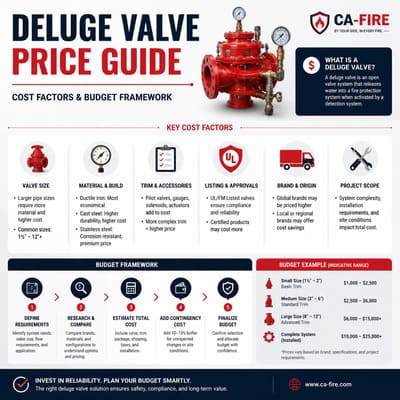
Deluge Valve Price Guide — Cost Factors & Budget Framework

Deluge Valve Price Guide — Cost Factors & Budget Framework By the CA-FIRE engineering team · 11 min read · Updated 2026 📌 Why No Specific Prices? Deluge valves are project-specific industrial products — pricing depends on the exact specification, certification scope, project quantity, freight, and current material costs. Industry-published “list prices” are typically misleading.

Deluge Valve Price Guide — Cost Factors & Budget Framework Read More »

Top-6-Deluge-Valve-Manufacturers-Compared-—-Buyers-Guide-CA-FIRE

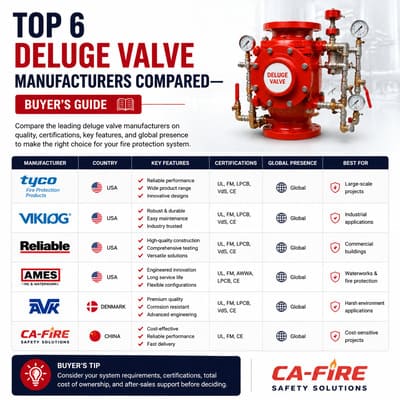
Top 6 Deluge Valve Manufacturers Compared — Buyer’s Guide

Top 6 Deluge Valve Manufacturers Compared — Buyer’s Guide By the CA-FIRE engineering team · 14 min read · Updated 2026 📌 Editorial Note This guide is published by CA-FIRE Protection, one of the manufacturers covered. We’ve made our best effort to describe each manufacturer’s positioning fairly based on publicly available information. For project-critical procurement

Top 6 Deluge Valve Manufacturers Compared — Buyer’s Guide Read More »

Transformer-Deluge-Systems-—-Water-Spray-Fire-Protection-CA-FIRE.

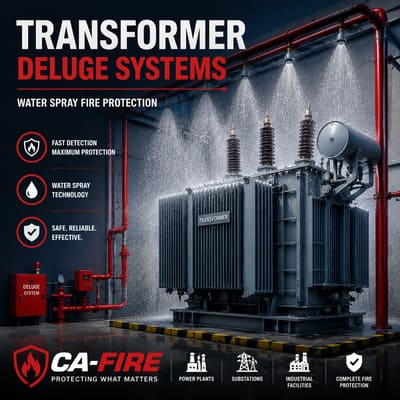
Transformer Deluge Systems — Water Spray Fire Protection

Transformer Deluge Systems — Water Spray Fire Protection By the CA-FIRE engineering team · 13 min read · Updated 2026 A large oil-filled power transformer holds 30,000 to 100,000 litres of mineral insulating oil — a fire load comparable to a small fuel tank, sitting in the middle of an electrical substation worth hundreds of

Transformer Deluge Systems — Water Spray Fire Protection Read More »

Offshore-Petrochemical-Deluge-Systems-—-Engineering-Guide-CA-FIRE.

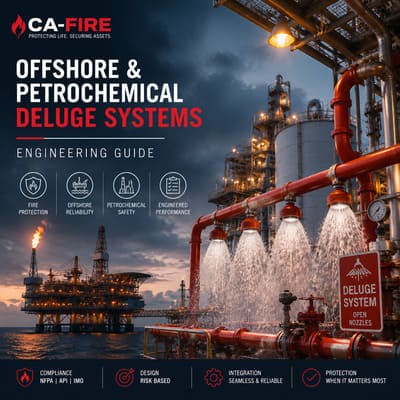
Offshore & Petrochemical Deluge Systems — Engineering Guide

Offshore & Petrochemical Deluge Systems — Engineering Guide By the CA-FIRE engineering team · 14 min read · Updated 2026 A fire on a hydrocarbon process unit, an offshore platform, or an LNG storage area can escalate in seconds — and a fire suppression system that takes 30 seconds to react has already lost. Deluge

Offshore & Petrochemical Deluge Systems — Engineering Guide Read More »

Scroll to Top