
Piercing Fire Nozzle — The Tool for Hidden & Enclosed Fires
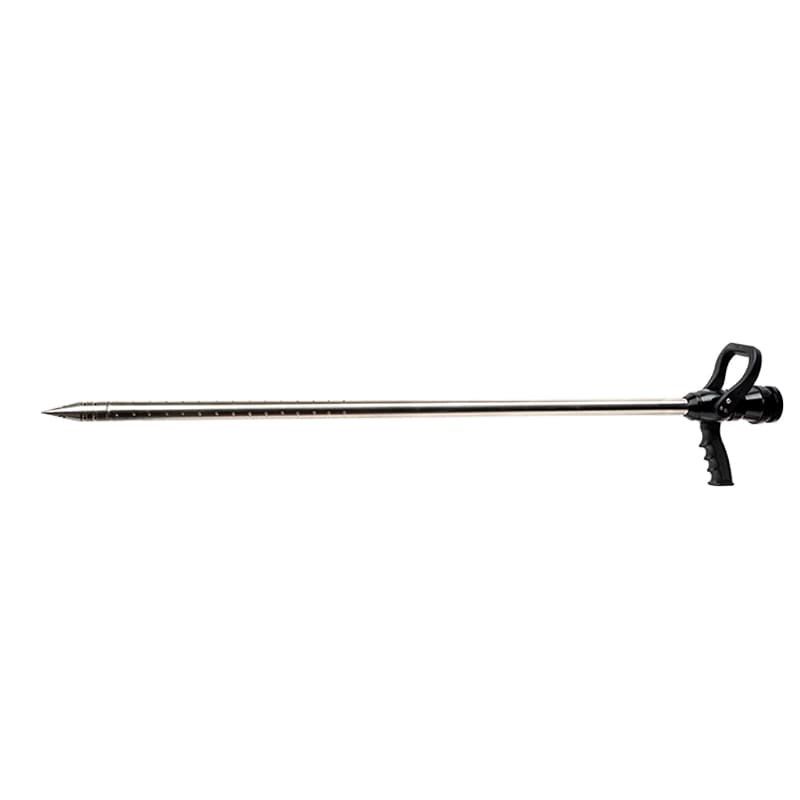
When a fire is sealed inside something — a vehicle, a shipping container, an attic void, a mobile home, a locked compartment — the standard approach is to open it up before you can attack it. The QCG-1 piercing nozzle does both jobs in one tool. Its 1-metre stainless steel spike drives through sheet metal, drywall and timber, then floods the compartment from inside through ports drilled along the spike length. One firefighter, one nozzle, one minute from arrival to water on fire.
The Right Tool When You Can't Get to the Fire
Most fires can be reached with a standard hose nozzle. The fire that has barricaded itself inside a vehicle engine bay, a sealed cargo container, an attic crawl space or a locked storage unit cannot — and forcible entry to get to it costs time the fire uses to grow. The QCG-1 piercing nozzle is the standard answer to this problem: a hardened spike that becomes the entry tool, the discharge tool, and the suppression tool in one piece of equipment.
The 1-metre stainless steel spike is driven through the barrier by hand impact or by striking the rear of the nozzle body with an axe or halligan. Once the spike is inside the compartment, water at 7 bar flowing through discharge ports along the spike length fills the volume from inside — exactly the right pattern for a confined-space fire, distributing water evenly through the compartment rather than concentrating it in one direction.
The QCG-1 is mainly used for houses, cars and trucks, garages, barns and mobile homes. Whenever a single firefighter has to make entry and start suppression simultaneously — typically in the critical first minutes of arrival — the piercing nozzle removes the forcible-entry step from the timeline. For crews wanting both piercing capability and a standard nozzle in one body, see the multi-functional nozzle with optional piercing tip.
Why Choose the QCG-1
- 1-metre hardened stainless steel spike — penetrates sheet metal, drywall, roof sheathing, vehicle bodywork
- Discharge ports along spike length distribute water through the compartment from inside
- 600 LPM @ 7 bar — high flow for rapid volume fill
- Strong lightweight aluminium body — 2.5 kg total weight
- One-firefighter operation — entry + suppression in one tool
- 1.5″ / 2.5″ Storz / Machino / NH / NPSH coupling
- Forged coupling rated for working pressure
- Eliminates the forcible-entry step in many scenarios
- 100% pressure tested before shipment
Three Steps from Arrival to Water on Fire
The QCG-1 combines forcible entry and water discharge into a single tool. Operating it is straightforward — but the time saving is dramatic.
Position the Spike
Operator identifies the target compartment and places the spike point against the barrier — a vehicle door panel, drywall, container wall, roof sheathing, attic decking. Water can already be flowing — the discharge ports are spaced along the spike, not at the tip.
Drive Through
Drive the spike through the barrier — by hand impact for softer materials (drywall, vehicle plastic, mobile home sheathing), or by striking the rear of the nozzle with an axe, mallet or halligan for sheet metal and timber up to typical penetration thicknesses.
Discharge Inside
Once the spike is fully through, the discharge ports are inside the compartment. Open the line — 600 LPM at 7 bar fills the volume from inside, distributing water throughout the space without concentrating in one direction. Withdraw and reposition if needed.
Built for Impact
Three engineering decisions define the QCG-1 — and explain why it is one tool, not two.
Hardened Stainless Steel
1-metre penetration spike machined from hardened stainless steel. Pointed leading edge for clean penetration through sheet metal and timber. Discharge ports drilled at engineered spacing along the spike length to distribute water evenly inside the penetrated compartment. Corrosion-resistant for repeated training use.
Strong Lightweight Aluminium
Nozzle body machined from solid aluminium billet for strength-to-weight ratio. Designed to transmit impact force from the rear striking surface to the spike without deforming. The aluminium body keeps total nozzle mass at 2.5 kg — light enough for one-firefighter operation including spike-driving impact work.
Forged · Multi-Standard
Forged coupling rated for the 7 bar working pressure. Standard 1.5″ and 2.5″ Storz, Machino, NH and NPSH thread options off the shelf — BS, GOST, AS and custom OEM threads available for project orders. Forged construction handles the impact loads transmitted through the body during spike-driving.
QCG-1 Technical Data
| Model | QCG-1 |
| Working Pressure | 7 BAR (≈100 PSI) |
| Flow Rate | 600 L/M (≈160 GPM) |
| Spike Length | 1 Metre |
| Total Weight | 2.5 kg |
| Spike Material | Hardened Stainless Steel |
| Body Material | Strong Lightweight Aluminium |
| Coupling Sizes | 1.5″ / 2.5″ |
| Coupling Types | Storz / Machino / NH / NPSH (BS / GOST / AS on OEM request) |
| Primary Applications | Houses, cars & trucks, garages, barns, mobile homes, containers, attic voids |
| Standards | GB 8181 · NFPA 1964 compatible · ISO 9001 manufacturing |
| Pressure Testing | 100% pressure tested before shipment |
| Insurance | PICC product liability coverage on all shipments |
When the Piercing Nozzle Saves Critical Minutes
Vehicle Engine Bay Fires
Lifting a hot bonnet during an engine bay fire admits oxygen and can escalate the fire in seconds. The QCG-1 spike drives directly through the bonnet sheet metal or wheel-arch liner into the engine compartment — water inside, fire suppressed, bonnet stays shut. Same approach works on truck cab fires and engine bay fires on agricultural machinery.
Cargo Container Fires
Shipping container fires at ports, intermodal facilities and warehouses cannot be opened until you know what is burning — opening a container of unknown chemical cargo into atmospheric oxygen has caused major incidents worldwide. The QCG-1 lets the crew put water inside the container through the wall while keeping the door shut and the contents identified.
Attic, Roof Void & Crawl Space Fires
Fires hiding above ceilings or below floor decking are unreachable with standard hose lines and difficult for ventilation crews to access. The piercing nozzle drives up through a ceiling or down through a floor to flood the void directly — no need to cut open the structure or wait for ventilation. Particularly valuable in older buildings with concealed timber-framed cavities.
Mobile Homes & Caravans
Mobile homes and caravans have thin sheathing walls and burn very fast — a 3-minute delay to forcible entry can mean the difference between a saveable property and a total loss. The QCG-1 spike drives through mobile home sheathing in seconds; the crew is delivering water inside while a structural crew would still be choosing an entry point.
Garages, Barns & Outbuildings
Detached garages, agricultural barns and outbuildings often have a single door that may be padlocked, blocked or compromised by fire. Rather than wait for forcible entry through that one door, the QCG-1 can deliver water directly through the wall sheathing — useful for early knockdown while ventilation and forcible entry crews work on proper access.
Locked Rooms & Concealed Compartments
Fires in locked rooms, secure storage units, or concealed compartments inside machinery are difficult to reach. The QCG-1 spike penetrates standard drywall, plywood and most stamped sheet metal — enough to deliver water into the compartment while forcible entry teams work on the door. Critical in residential and light commercial structures.
Frequently Asked Questions — Piercing Nozzle
What is a piercing fire nozzle?
When do I need a piercing fire nozzle?
What flow rate does the QCG-1 piercing nozzle deliver?
How does the QCG-1 spike penetrate the barrier?
What is the QCG-1 made of?
Can the QCG-1 be used as a regular hose nozzle?
What couplings are available on the QCG-1?
Is the QCG-1 suitable for EV battery fires?
What standards does the QCG-1 meet?
What is the lead time for the QCG-1?
Request a Quote on the QCG-1 Piercing Nozzle
24-hour quote turnaround. Free CAD drawings, test certificates and product samples for confirmed projects. OEM laser engraving and custom spike-length options available for project orders of 50+ units.