
Foam Fire Nozzles — Type A, Low & Medium Expansion
CA-FIRE manufactures the complete range of handheld foam nozzles for Class B liquid fires — petroleum, diesel, ethanol, polar solvents and chemical fuels. Type A air-aspirating nozzles for tank and ground fires, low-expansion (ratio ≥9) for long-throw oil suppression, medium-expansion (ratio 20–200) for filling enclosed spaces, self-inducting nozzles with built-in eductor, and standalone inline foam eductors for any nozzle in your system.
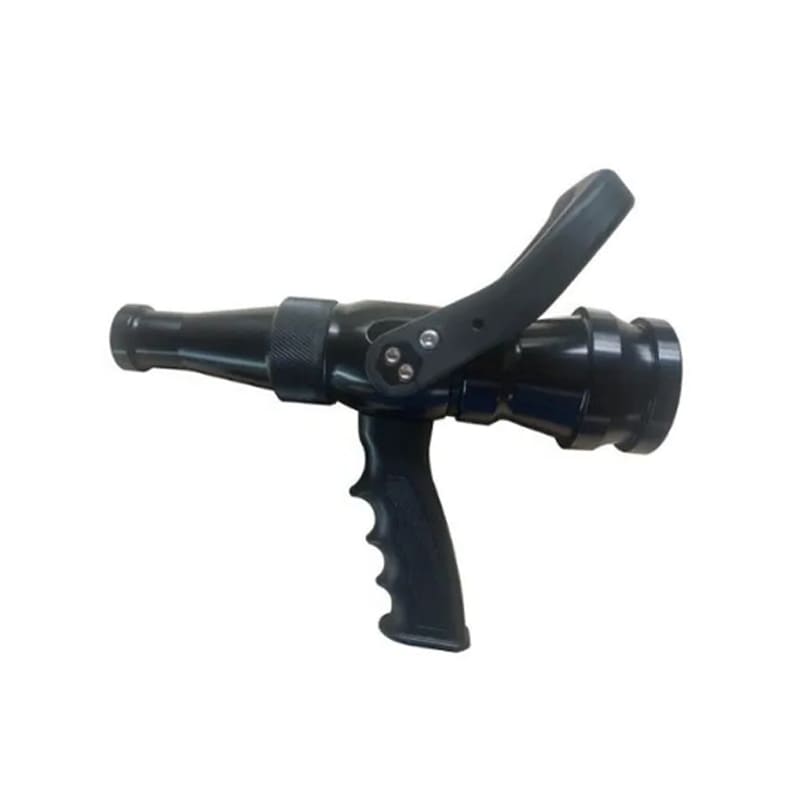
The Right Foam, The Right Place, The Right Way
Foam suppresses Class B fires through three combined effects: cooling the fuel surface, separating fuel vapour from atmospheric oxygen with a sealed blanket, and re-sealing the surface against re-ignition. The right foam expansion ratio depends entirely on the fire scenario — a refinery tank rim fire and a tunnel ventilation fire call for very different foam.
CA-FIRE manufactures three distinct families of handheld foam nozzles plus standalone inline foam eductors:
(1) Type A air-aspirating nozzles (PQA600, PQA Large Orifice) — heavy-flow nozzles for petroleum tank, ground fuel and Class A solid fires. (2) Low- and medium-expansion air-aspirating nozzles (PQ 2, PQZ8/0.8) — engineered for specific expansion ratios with K-factor verified performance for fixed-system specification. (3) Self-inducting foam nozzles with built-in eductor (QP4/0.7Z, QP8/0.7Z, QP16/0.7Z) — draw foam concentrate directly through a flexible suction tube, no upstream proportioner required. Plus standalone inline foam eductors (FE095, FE125, FE250) that convert any standard nozzle in your fleet into a foam-capable line.
Why Choose CA-FIRE Foam
- Complete range — Type A, low-exp, med-exp, self-inducting, inline eductors all from one factory
- Compatible with AFFF, AR-AFFF, FFFP, FP and Class A concentrates
- K-factor verified expansion ratios for engineering specification
- Self-inducting models eliminate the need for upstream proportioners on small operations
- Inline eductors retrofit any handheld nozzle to foam-capable in seconds
- Stainless steel mesh on medium-expansion model
- Strong lightweight aluminium body with visible suction hose on QP series
- Matched CA-FIRE foam concentrate available — one supplier for the complete system
- 100% pressure tested before shipment
How Firefighting Foam Is Made
Three ingredients combined at the correct ratio at the nozzle. Each CA-FIRE family handles this differently.
Water Supply
Pumped from hydrant or tender at line pressure.
Concentrate Added
Inline eductor (FE) or self-inducting tube (QP) mixes 1%, 3% or 6% foam concentrate.
Air Aspirated
Type A or expansion nozzle draws in atmospheric air through aeration ports.
Expanded Foam
Finished foam discharged onto the fire — cool, seal, smother.
Type A Air-Aspirating Foam Nozzles
Heavy-flow tank and ground fuel fire nozzles. PQA600 (22 mm orifice, 600 LPM) and PQA Large Orifice (28/32 mm) for high-volume Class B attack with dry-foam or wet-foam delivery.
Jump to Family ALow & Medium Expansion Foam Nozzles
Engineering-spec nozzles with verified K-factor and expansion ratio. PQ 2 low-expansion (ratio ≥9, K=43.4) for tank and bund attack; PQZ8/0.8 medium-expansion (ratio 20–200) for enclosed space filling.
Jump to Family BSelf-Inducting & Inline Eductors
QP4/QP8/QP16 self-inducting foam nozzles with built-in eductor and visible suction hose, plus standalone inline foam eductors FE095, FE125, FE250 for any existing nozzle.
Jump to Family CFamily A — Type A Air-Aspirating Foam Nozzles Tank Fires
Type A foam nozzles are heavy-flow air-aspirating nozzles designed for direct attack on petroleum tank fires, ground oil and oil-product fires, and Class A solid material fires. They are paired with an upstream proportioner or foam concentrate source. Suitable for general solid material fires when filled with water-only as well.
| Model | Working Pressure | Flow Rate | Orifice | Outlet | Throw (Dry Foam) | Throw (Wet Foam) | Weight / Coupling |
|---|---|---|---|---|---|---|---|
| PQA600 | 7 bar | 600 L/M | 22 mm | — | Standard reach for Type A foam | 1.5 kg / 1.5″ · 2.5″ | |
| PQA (Large Orifice) | 7 bar | Pressure-dependent | 28 / 32 mm | 36 mm | ≥15 m | ≥18 m | — / 1.5″ · 2.5″ |
Family B — Low & Medium Expansion Foam Nozzles Engineering Spec
Air-aspirating foam nozzles with certified expansion ratio and K-factor — for engineered fixed and mobile systems where finished foam properties must meet specification. Low-expansion (ratio ≥9) delivers dense long-throw foam for liquid-surface attack. Medium-expansion (ratio 20–200) delivers fluffy fast-filling foam for enclosed spaces.
| Model | Family | Pressure | Flow | Expansion Ratio | K Factor | Drainage Time | Throw |
|---|---|---|---|---|---|---|---|
| PQ 2 | Low Expansion | 0.8 MPa | 120 LPM | ≥ 9 | 43.4 | — | ≥ 15 m |
| PQZ8/0.8 | Medium Expansion | 0.8 MPa | 475 LPM (+10%) | 20 ≤ N ≤ 200 | — | 50% in 20 min | ≥ 18 m |
Family C — Self-Inducting Nozzles & Inline Foam Eductors No Proportioner
Two solutions to the same problem — "how do I add foam without rebuilding my pump system?" QP-series foam nozzles have a built-in eductor and a flexible suction hose that draws concentrate from a portable container next to the operator. FE-series inline foam eductors are mounted in any standard hose line and convert any handheld nozzle into a foam-capable nozzle at the chosen proportioning rate.
QP Series — Self-Inducting Foam Nozzles
| Model | Working Pressure | Flow Rate | Throw | Weight | Notes |
|---|---|---|---|---|---|
| QP4/0.7Z | 7 bar | 240 L/M | 30 m | 2.7 kg | Small flow — reel line, light vehicle fires |
| QP8/0.7Z | 7 bar | 480 L/M | 33 m | 3.3 kg | Standard handheld — fuel depot, ground spill |
| QP16/0.7Z | 7 bar | 960 L/M | 33 m | 3.3 kg | Large flow — refinery, tank rim, two-operator |
FE Series — Standalone Inline Foam Eductors
| Model | Length | Weight | Inlet | Outlet | Flow Rate | Inlet Pressure | Proportioning |
|---|---|---|---|---|---|---|---|
| FE095 | 190 mm | 1.63 kg | 1.5″ | 1.5″ | 360 L/M | 14 bar (200 PSI) | 0–1/4%–1/2%–1%–3%–6% |
| FE125 | 190 mm | 1.63 kg | 1.5″ | 1.5″ | 480 L/M | 14 bar (200 PSI) | 0–1/4%–1/2%–1%–3%–6% |
| FE250 | 295 mm | 1.93 kg | 2.5″ | 2.5″ | 960 L/M | 14 bar (200 PSI) | 0–1/4%–1/2%–1%–3%–6% |
Picking the Right Foam Nozzle
Petroleum Tank & Bund Fires
Atmospheric storage tanks (gasoline, diesel, crude) and the surrounding bund area need dense low-expansion foam that throws far and clings to the fuel surface. The PQ 2 air-aspirating nozzle delivers ratio ≥9 foam with a 15-metre reach; for higher flow the QP16/0.7Z (960 LPM, 33 m reach) is the workhorse. Pair with 3% or 6% AFFF concentrate.
Chemical Plants & Polar Solvents
Polar solvents (alcohols, ketones, esters) destroy ordinary AFFF foam — they need AR-AFFF concentrate paired with a robust air-aspirating nozzle. The PQA600 Type A nozzle and PQA Large Orifice deliver the heavy flow needed for plant process-unit fires, where the goal is rapid blanket coverage rather than long-throw attack.
Tunnels, Basements & Enclosed Spaces
Medium-expansion foam (ratio 20–200) is the right tool when you need to fill a volume with fire-suppressing foam — vehicle tunnels, basement car parks, machinery rooms, oil-fired boiler enclosures. The PQZ8/0.8 expands 475 LPM of foam solution into 9,500–95,000 LPM of finished foam — filling a typical service tunnel within minutes.
Fuel Spills & Tanker Incidents
Roadside fuel spills and overturned tankers need a fast deployment: foam ready in minutes, no time to rig a proportioner. The QP8/0.7Z self-inducting nozzle has a built-in eductor and a flexible suction tube — drop the tube into a 20 L AFFF can and start producing foam. 480 LPM at 33 m reach is sufficient for most highway incidents.
Retrofitting Existing Hose Lines
If you already operate a fleet of standard water nozzles and want to add foam capability without buying new nozzles, install an inline FE-series eductor upstream. The FE095 / FE125 / FE250 mount mid-line, draw concentrate from a portable container, and feed foam solution to any handheld nozzle downstream. Adjustable 0–6% proportioning.
One-Person Reel-Line Response
Compact response trucks and aircraft rescue units need foam capability without two-operator workload. The QP4/0.7Z (240 LPM, 2.7 kg) is single-operator, self-inducting, and reaches 30 m — ideal for compact fire vehicles, light tenders and small ARFF crews on small aircraft incidents.
Frequently Asked Questions — Foam Fire Nozzles
What is a foam fire nozzle and when do I need one?
What is the difference between low-expansion and medium-expansion foam nozzles?
What is the difference between an air-aspirating foam nozzle and an inline foam eductor?
What foam concentrate works with CA-FIRE foam nozzles?
What is foam proportioning (1% / 3% / 6%)?
What pressure do CA-FIRE foam nozzles require?
Can a foam nozzle be used as a water-only nozzle?
What standards do CA-FIRE foam nozzles meet?
What is the lead time and minimum order quantity?
Request a Quote on the Foam Nozzle Range
One supplier for nozzles, eductors, concentrate and bladder tanks. 24-hour quote turnaround. Free CAD drawings, test certificates and expansion-ratio reports for confirmed projects. OEM laser engraving available.