
Stainless Steel Deluge Valve
SS304 & SS316 · Ex db IIC T6 Gb · Pneumatic (Dry Pilot) · DN50–DN350 · Offshore & Marine
Corrosion-Resistant
SS304 standard / SS316 marine — chloride, seawater, and chemical exposure rated. Service life ≥ 15 years in offshore conditions.
Explosion-Proof
Ex db IIC T6 Gb certified electrical accessories — Zone 1/2 hazardous area approved. Hydrogen and acetylene service rated.
Air-Controlled (Dry Pilot)
Pneumatic actuation eliminates the need for electrical power at the valve — the correct choice for offshore Zone 1 and freezing environments.
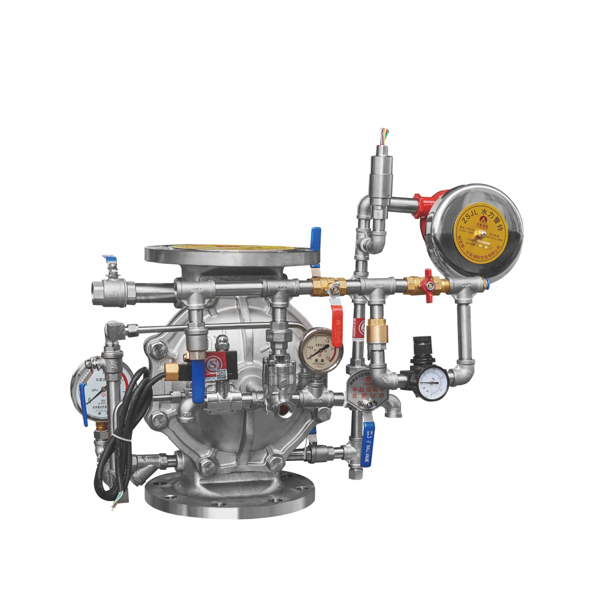
Molybdenum-bearing stainless — chloride pitting and crevice corrosion resistant in seawater and salt-spray environments.
Continuous offshore standby with no internal corrosion — verified by accelerated salt-spray testing (ASTM B117).
Pneumatic dry-pilot mode requires no electrical power at the valve location — true Zone 1 ATEX-friendly installation.
DN50 to DN350 — full coverage of process deck and helideck deluge mains on standard offshore topsides.
Material Selection — SS304 vs SS316
SS304 Stainless Steel
Composition: 18% Cr / 8% Ni · austenitic · non-magnetic
When to specify: indoor or sheltered installations with normal humidity, chemical plants without chloride exposure, freshwater service, food-grade environments, and outdoor locations more than 5 km inland from coastline.
Typical uses:
- Inland chemical plant deluge systems
- Pulp & paper mill protection
- Pharmaceutical manufacturing
- Indoor industrial freshwater systems
- General corrosion upgrade from cast iron
SS316 Stainless Steel
Composition: 16% Cr / 10% Ni / 2-3% Mo · molybdenum-bearing
When to specify: any chloride exposure — offshore platforms, FPSO topsides, coastal locations within 5 km of seawater, LNG terminals, seawater firewater systems, swimming pool environments, salt-pickling chemical service. The molybdenum content delivers significantly better resistance to chloride pitting and crevice corrosion than SS304.
Typical uses:
- Offshore platforms & FPSO process decks
- LNG / LPG marine import terminals
- Coastal power generation
- Seawater-supplied firewater systems
- Helideck foam-water deluge (saltspray)
Pneumatic Air-Controlled (Dry Pilot) Actuation — Zone 1 Friendly
The unique feature of the ZSFM-P-Ex is its pneumatic dry-pilot actuation — a separately supplied air-control device that uses a pressurised air or nitrogen pilot line to trip the deluge valve hydraulically, with zero electrical power required at the valve location itself.
Why it matters offshore: a typical FPSO process deck is classified Zone 1 hazardous, and electrical equipment in Zone 1 must be Ex-certified and rigorously inspected. Pneumatic actuation eliminates the electrical equipment from the valve location entirely — the only electrical component is the remote detection panel, located in a safe area inside the topside accommodation block.
The dry-pilot mode also performs reliably in freezing environments where a wet (water-pilot) line would be at risk of ice formation. A single pneumatic pilot trips the valve in under 1 second when the pilot line vents — operationally identical response time to electric solenoid actuation.
Triple actuation is standard: pneumatic dry pilot · electric solenoid · manual override — any of the three can independently trip the valve.
Complete Technical Specifications
Pressure Ratings & Body (ZSFM 50~350-1.6P-Ex)
| Parameter | Value | Standard / Test |
|---|---|---|
| Nominal pressure | 1.6 MPa (PN16) | GB 5135.2 |
| Seal test pressure | 3.2 MPa | Hydrostatic, 10 min, zero leakage |
| Strength test pressure | 6.4 MPa | Hydrostatic, no deformation |
| Hydraulic resistance | < 0.08 MPa | At rated flow, full-bore waterway |
| Seal leakage | ≤ 0.1 L/min | Standby, fully seated |
| Body material | SS304 (standard) / SS316 (marine) | EN 10088 / ASTM A276 |
| Internal trim | SS316 (matching) · brass option | Corrosion-matched to body |
| Sealing element | EPDM diaphragm (fabric-reinforced) | Saltwater & foam compatible |
| Fastener material | SS316 (offshore) · A4-80 | Marine-grade fasteners |
| Connection | Flanged PN16 (GB) / ANSI Class 150 | Drilling per order |
| Medium temperature | 4°C – 70°C | Ambient service |
| Suitable medium | Fresh water · Seawater · Foam solution (AFFF/AR-AFFF) | Material-compatible |
Dimensions by Nominal Size
| Nominal Size | DN50 | DN65 | DN80 | DN100 | DN125 | DN150 | DN200 | DN250 | DN300 | DN350 |
|---|---|---|---|---|---|---|---|---|---|---|
| Overall height (mm) | 270 | 270 | 330 | 340 | 415 | 435 | 555 | 655 | 800 | 850 |
| Working pressure | 1.6 MPa (all sizes) | |||||||||
| Hydraulic resistance | < 0.08 MPa | |||||||||
| Ex marking (control panel) | Ex db IIC T6 Gb · Ex tb IIIC T80°C Db | |||||||||
Triple Actuation Modes
| Actuation Mode | Trigger | Power at Valve | Best For |
|---|---|---|---|
| Pneumatic (dry pilot) — primary | Air/N₂ pilot line vented by detection device | None (compressed air only) | Offshore Zone 1, freezing environments, no-electrical zones |
| Electric solenoid (Ex-rated) — backup | Ex db IIC T6 Gb solenoid energised | 24 VDC / 110 VAC / 220 VAC | Where remote control panel hard-wired trip is needed |
| Manual override — always available | Manual trip ball valve on valve trim | None | Field maintenance, emergency local trip, commissioning |
Why Specify the ZSFM-P-Ex Stainless Steel Deluge Valve
🌊 SS316 — Genuine Offshore-Grade Material
Many "stainless steel" deluge valves on the market use SS304 for the visible body but carbon steel or brass for internal trim — a hidden corrosion shortcut that fails in the first chloride exposure event. The CA-FIRE ZSFM-P-Ex with SS316 specification uses molybdenum-bearing stainless throughout: body, internal trim, fasteners, and pressure-retaining components all SS316. Verified by salt-spray testing per ASTM B117 with zero pitting after the standard 1,000-hour cycle. Service life exceeds 15 years in continuous offshore standby — the typical platform design life.
💨 Pneumatic-First Design — Genuine Zero-Electrical Option
The pneumatic (dry pilot) actuation is engineered as the primary trip mode, not retrofitted onto an electric design. The pilot line entry, the venting geometry, and the diaphragm response are all tuned for pneumatic operation. Result: 1-second valve open time with a pneumatic trip — operationally equivalent to electric solenoid response. For offshore Zone 1 and freezing-environment installations where electrical equipment at the valve is undesirable or prohibited, pneumatic-first matters.
⚡ Ex db IIC T6 Gb on Electrical Accessories
For installations using the optional electric solenoid backup, every electrical accessory is independently certified Ex db IIC T6 Gb (Group IIC — covers hydrogen and acetylene). Solenoid trip valve, alarm pressure switch, supervisory pressure switch, water motor gong motor, junction boxes — all flameproof enclosures, IP65/66 ingress rating. ATEX/IECEx certification also available on specification.
📋 Marine-Compliant Documentation Package
Every shipment includes: SS316 mill certificates (EN 10204 3.1) traceable to material heat number; hydrostatic pressure test reports; Ex certification (Chinese CNEx/NEPSI standard, ATEX/IECEx on specification); GB 5135.2 type certificate; salt-spray test report (ASTM B117); NFPA 13/15 compliance documentation; English-language installation & maintenance manual. Marine class society approvals (DNV, ABS, BV, Lloyd's) available on specification with extended lead time.
Applications — Where the SS316 Stainless Steel Deluge Valve Is Required
Offshore Platforms & FPSOs
Process deck deluge systems, wellhead area cooling, and equipment skid protection on offshore production platforms and FPSO topsides. SS316 body required for chloride exposure; pneumatic actuation required for Zone 1 classification. The flagship application for this product.
LNG & LPG Marine Terminals
Loading arm deluge, jetty fire protection, and LNG storage tank cooling at coastal import/export terminals. Combined chloride exposure (saltspray from sea) plus Zone 2 hydrocarbon classification — requiring both SS316 material and Ex-rated electrical accessories.
Coastal Power Stations
Transformer and switchgear deluge protection at coastal thermal and combined-cycle power stations. SS316 prevents accelerated atmospheric corrosion that would degrade a carbon-steel valve to scrap within 5–7 years of continuous standby in salt-air conditions.
Helideck Foam-Water Deluge
NFPA 418 / ICAO Annex 14 compliant helideck foam-water deluge on offshore platforms, FPSOs, drillships, and coastal helipads. Saltspray and direct seawater exposure mandate SS316 material throughout the foam-water system, including the deluge valve.
Chemical Plants (Chloride Service)
Chemical plant deluge systems handling chloride process streams, brine cooling, or chlor-alkali production — where standard cast iron valves would suffer rapid pitting corrosion. SS316 specification provides 15-year service life in continuous chemical exposure.
Cold-Climate & Freezing Environments
Northern oil and gas facilities, arctic LNG terminals, and refrigerated storage where a wet pilot line would freeze. The pneumatic dry pilot mode is the only viable actuation method below 0°C. SS316 also resists low-temperature chloride embrittlement common in coastal arctic service.
SS Stainless vs Carbon Steel Ex — Which Do You Need?
The standard carbon steel explosion-proof deluge valve (ZSFM-Ex, 2.5 MPa) is the correct choice for inland petrochemical and refinery applications where supply pressure exceeds 1.6 MPa but chloride exposure is not a factor. Specify the stainless steel version when chloride exposure (offshore, marine, coastal, chemical), pneumatic-only actuation, or 15+ year service life under harsh conditions are required.
View Carbon Steel Ex Version →Frequently Asked Questions
What's the difference between SS304 and SS316 — which should I specify for my project?
SS304 is the standard "18-8" stainless (18% chromium, 8% nickel). It's excellent for general atmospheric corrosion resistance and is the right choice for indoor or sheltered installations, freshwater service, pharmaceutical and food-grade environments, and outdoor locations more than 5 km inland from coastline.
SS316 adds 2-3% molybdenum to the SS304 composition, which dramatically increases resistance to chloride pitting and crevice corrosion. Specify SS316 for any application with chloride exposure: offshore platforms, FPSO topsides, coastal sites within 5 km of seawater, LNG terminals, seawater-supplied firewater systems, swimming pool environments, and any chemical service with chloride process streams.
Rule of thumb: if there's any salt in the environment — sea spray, salt fog, road de-icing salt drift, or chloride process chemistry — specify SS316. The premium over SS304 is typically 25–40% on the deluge valve, but the service-life difference in chloride environments is 5× to 10× longer. The lifecycle cost almost always favours SS316 for chloride service.
Why specify pneumatic (dry pilot) actuation rather than standard electric solenoid?
Three scenarios where pneumatic actuation is the correct or required choice:
(1) Offshore Zone 1 hazardous classification. A typical offshore FPSO or platform process deck is Zone 1 hazardous. While Ex-certified electrical equipment is permitted, many offshore safety regimes prefer to eliminate electrical equipment from Zone 1 entirely where alternatives exist. Pneumatic actuation removes electrical equipment from the valve location — the only electrical components in the system are then in the remote detection panel inside the safe-area accommodation.
(2) Freezing environments. A wet pilot line (water-filled) is at risk of ice formation below 0°C, leading to pilot line burst or stuck activation. A dry pilot (air or nitrogen) line is immune to freezing. Northern oil and gas facilities, arctic LNG terminals, and cold-storage facilities all require dry pilot.
(3) No reliable electrical supply at the valve location. Remote installations, temporary facilities, and decommissioned platforms being repurposed often lack a reliable electrical supply at the valve — a pneumatic system needs only a small compressed-air source, which is more universally available on industrial sites than 110/220 VAC.
Does the stainless steel deluge valve still have Ex certification — or is the SS body the only safety feature?
Yes, the ZSFM-P-Ex carries full Ex db IIC T6 Gb certification on every electrical accessory in the valve station — solenoid trip valve, alarm pressure switch, supervisory pressure switch, water motor gong motor, junction boxes, and local control panel. The "P-Ex" model code confirms both Pneumatic-capable AND Explosion-proof rating.
This is an important distinction because some competitors offer "stainless steel deluge valves" without Ex-certified electrical accessories — meaning the body is corrosion-resistant but the electrical equipment is rated only for safe (non-classified) areas. Such valves cannot be installed in Zone 1 or Zone 2 hazardous locations, defeating the main reason for choosing a stainless body in the first place (offshore/petrochemical service almost always implies hazardous classification). When specifying CA-FIRE ZSFM-P-Ex, the SS body and the Ex certification come together as a single integrated product.
What's the actual service life of an SS316 deluge valve in offshore conditions?
The CA-FIRE ZSFM-P-Ex with SS316 specification is rated for a service life of ≥ 15 years under continuous offshore standby — matched to the typical 20–25 year design life of an offshore platform with a 5-year refurbishment cycle. This rating is supported by:
(1) Accelerated salt-spray testing per ASTM B117 with zero pitting after the standard 1,000-hour cycle (equivalent to ~5+ years of typical offshore exposure); (2) field service data from CA-FIRE valves installed on Bohai Bay and South China Sea platforms since 2010; (3) the inherent corrosion immunity of SS316 in chloride service when the entire valve (body + trim + fasteners) is correctly specified and not just the visible surfaces.
The major service-life threats are not the SS316 body itself but the EPDM diaphragm (replaceable on 10-year cycle as standard maintenance) and the Ex-rated electrical accessories (5-year inspection, 10-year refurbishment). Both are addressed in the standard CA-FIRE maintenance schedule with same-week-shipment replacement parts.
Can I get marine class society approvals (DNV, ABS, Lloyd's) for the stainless deluge valve?
Yes — for offshore projects requiring marine class society approval, CA-FIRE supplies the ZSFM-P-Ex SS316 variant with class society type approval certification on specification. The four major classification societies covered:
DNV (Det Norske Veritas) — Norwegian Continental Shelf and North Sea projects; ABS (American Bureau of Shipping) — US Gulf of Mexico, Brazilian pre-salt, and many Asian projects; Lloyd's Register — UK Continental Shelf and Commonwealth projects; Bureau Veritas (BV) — French TotalEnergies, West African, and Mediterranean projects. Lead times for class-approved variants run 14–18 weeks from order versus 6–8 weeks for standard CNEx-only variants. Contact sales@ca-fire.com early in the project specification phase to confirm class scope and lead time.
What information do you need to prepare a quotation for a stainless steel deluge valve?
To prepare an accurate quotation, please provide: (1) nominal size (DN50–DN350) and quantity per size; (2) SS304 or SS316 material specification (we strongly recommend SS316 for any chloride/marine exposure); (3) actuation mode preference (pneumatic dry pilot primary, electric solenoid backup, or both); (4) hazardous area classification of the installation (Zone 1, Zone 2, or safe area); (5) certification scope required (Chinese CNEx, ATEX/IECEx, marine class — DNV/ABS/BV/Lloyd's); (6) connection standard (GB PN16 flange or ANSI Class 150); (7) any marine project documentation requirements such as material traceability with EN 10204 3.1 or 3.2 mill certs.
Contact sales@ca-fire.com or WhatsApp +86 18150362095. Standard CNEx-certified SS316 quotations turn around in 1–2 business days; class-society or ATEX-scope quotations require 3–7 business days.
Related Deluge Valve Products
Further Reading — Offshore & Marine Resources
Complete design guide for hazardous-area deluge systems: API 2510 cooling water rates for LPG spheres, LNG terminal design, offshore platform requirements, and material selection by environment. Read the design guide →
Side-by-side comparison of the three actuation modes with selection decision tree for offshore, freezing, hazardous, and standard installations. Read the actuation guide →
Mechanism comparison for the two primary deluge valve types: pressure ratings, water hammer resistance, maintenance and cost. Read the comparison →
Complete classification of all 7 deluge valve types with a project-to-product decision framework. Read the types guide →
Get a Quote — Stainless Steel Deluge Valve (ZSFM-P-Ex Series)
SS304 / SS316 · DN50–DN350 · 1.6 MPa · Ex db IIC T6 Gb · Pneumatic Dry Pilot
Offshore · FPSO · LNG Terminal · Coastal Power · Marine Class Society Approvals Available