
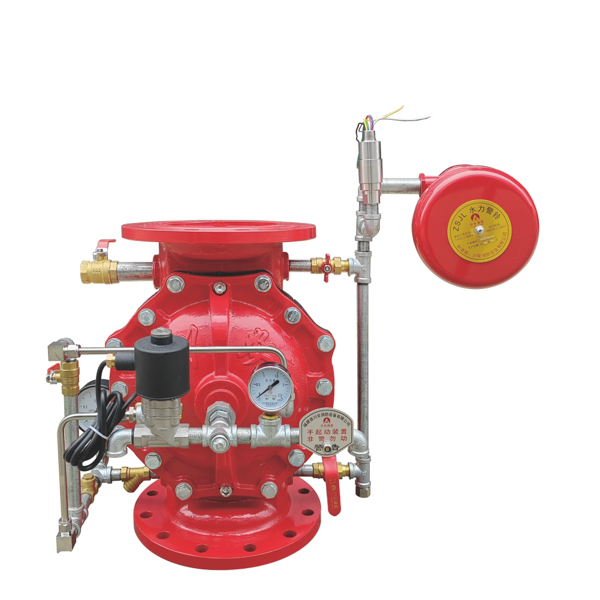
Diaphragm Deluge Valve
DN50–DN350 · 1.6 MPa · EPDM Diaphragm · GB 5135.2 & NFPA 13 Certified
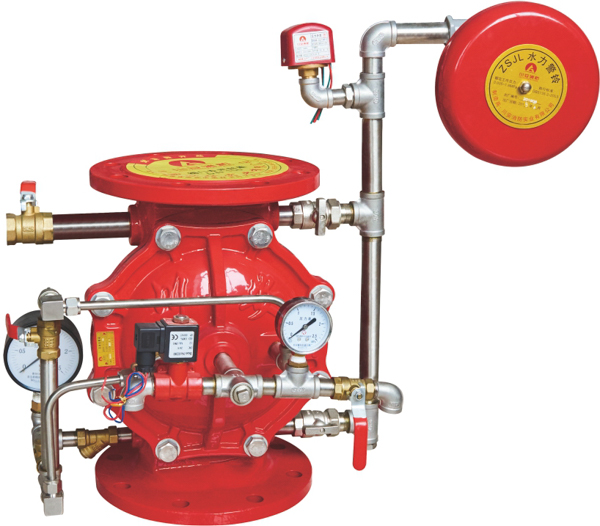
Complete DN50–DN350 range — single-source supply for every main on the project.
Full-bore waterway — minimal pressure drop in hydraulic calculations.
Electric solenoid, wet pilot, dry pilot, or manual — one valve body for any control mode.
BRI-ready English documentation and third-party inspection packages available.
How the Diaphragm Deluge Valve Works
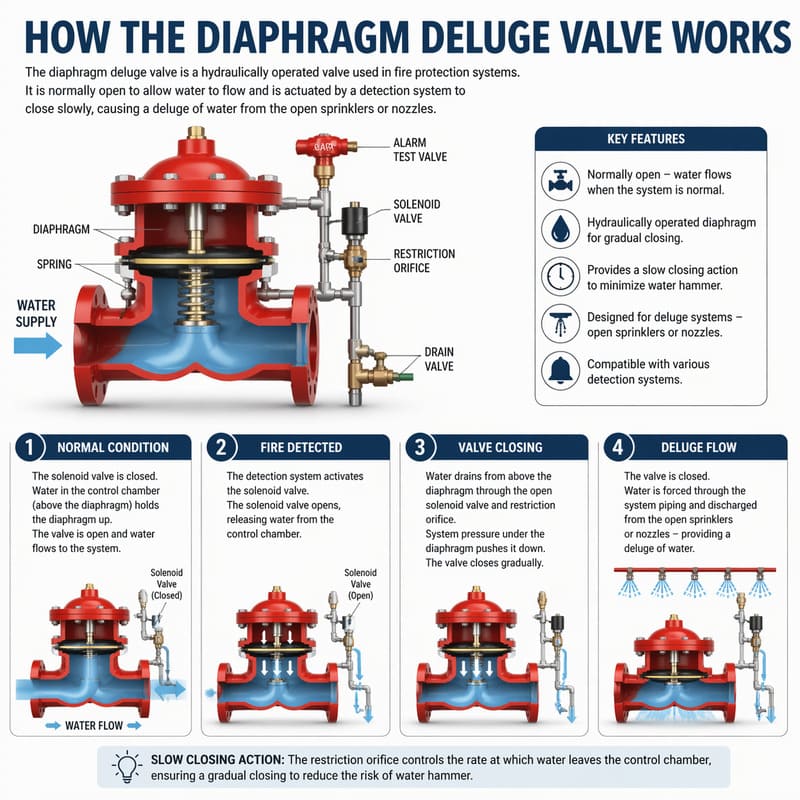
The deluge valve diaphragm is both the sealing element and the actuating mechanism. During standby, pressurised water in the control chamber acts on the upper face of the fabric-reinforced EPDM diaphragm. Combined with the valve geometry, this produces a net downward closing force greater than the upward supply pressure — the diaphragm seals tightly against the valve seat and the downstream pipework remains completely dry.
When a fire signal is received, the control panel energises the solenoid trip valve (or a wet/dry pilot detector operates), which vents the control chamber to drain. With control pressure removed, supply water pressure lifts the diaphragm fully open in under one second — no clapper, no latch, no pivot in the flow path. Water floods every open nozzle in the protected zone simultaneously.
The full-bore, unobstructed waterway produces a hydraulic resistance of less than 0.08 MPa across the rated flow range — a direct benefit for the hydraulic calculation and for reducing pump pressure requirements. The smooth bore also eliminates sediment pockets and biological-growth sites that are characteristic of clapper-type designs.
The 4-Stage Operating Sequence
Standby
Control-chamber pressure holds the EPDM diaphragm closed. Downstream open-nozzle pipework is dry. Alarm circuit supervised.
Detection & Trip
Fire signal reaches control panel → solenoid (or wet/dry pilot) opens → control chamber vents to drain in <0.5 s.
Full Discharge
Supply pressure lifts the diaphragm fully open. Water floods every open nozzle in the zone simultaneously.
Alarm & Reset
Water motor gong activates, alarm pressure switch signals panel. Post-incident: close supply, drain, re-prime chamber.
For step-by-step diagrams, animated operation sequences, and reset procedure details, see our complete guide: How Does a Deluge Valve Work? Operation Principle Explained.
Complete Technical Specifications
Pressure Ratings & Material (ZSFM 50~350-1.6)
| Parameter | Value | Standard / Test |
|---|---|---|
| Nominal pressure | 1.6 MPa (PN16) | GB 5135.2 |
| Seal test pressure | 3.2 MPa | Hydrostatic, 10 min, zero leakage |
| Strength test pressure | 6.4 MPa | Hydrostatic, no deformation |
| Hydraulic resistance | < 0.08 MPa | At rated flow, full-bore waterway |
| Seal leakage | ≤ 0.1 L/min | Standby, diaphragm fully seated |
| Valve body material | Cast iron (grey) | Fusion-bonded epoxy coating |
| Diaphragm material | EPDM (fabric-reinforced) | Chloramine-compatible |
| Internal trim | Brass / stainless steel | Corrosion-resistant |
| Connection | Flanged (GB/T 17241.6 or ANSI B16.1 Class 125) | Drilling per order |
| Medium temperature | 4°C – 70°C | Ambient service |
| Suitable medium | Clean water · Foam solution (AFFF/AR-AFFF 3% & 6%) | EPDM compatible |
Dimensions by Nominal Size
| Nominal Size | DN50 | DN65 | DN80 | DN100 | DN125 | DN150 | DN200 | DN250 | DN300 | DN350 |
|---|---|---|---|---|---|---|---|---|---|---|
| Overall height (mm) | 270 | 270 | 330 | 340 | 415 | 435 | 555 | 655 | 800 | 850 |
| Working pressure | 1.6 MPa (all sizes) | |||||||||
| Seal test | 3.2 MPa | |||||||||
| Strength test | 6.4 MPa | |||||||||
| Hydraulic resistance | < 0.08 MPa | |||||||||
Actuation Modes (Select at Order)
| Mode | Trigger | Power Required | Best For |
|---|---|---|---|
| Electric solenoid | Fire detection panel energises solenoid trip valve | 24 VDC / 110 VAC / 220 VAC | Standard indoor industrial — the default choice |
| Wet pilot | Pressurised water pilot line vented by pilot sprinkler | None | Remote sites, hydraulic independence from electrics |
| Dry pilot (air/N₂) | Pressurised air pilot line vented by pilot head | None (compressed air source only) | Freezing environments where wet pilot would ice |
| Manual | Operator opens manual trip valve | None | Secondary / override — always available on all modes |
Key Features — Why Specify the ZSFM Diaphragm Deluge Valve
💧 Full-Bore EPDM Diaphragm Design
The fabric-reinforced EPDM rubber diaphragm is both the sealing element and the actuating mechanism — there is no clapper, no hinge, no pivot in the flow path. This produces a full-bore, unobstructed waterway with hydraulic resistance consistently below 0.08 MPa. The smooth bore also eliminates the sediment pockets and biological-growth sites that are characteristic of clapper-type alarm valves. EPDM is compatible with chlorinated potable water and AFFF / AR-AFFF foam concentrates at 3% and 6% application rates.
⚙️ Field-Serviceable Without Pipeline Removal
Diaphragm replacement can be completed during scheduled annual maintenance without removing the valve body from the pipeline. The access cover is retained by a modest number of bolts; with the supply isolated, the diaphragm can be inspected, cleaned, or swapped in 30–45 minutes by a single trained technician. Replacement diaphragm kits are held at CA-FIRE for same-week shipment — no long lead times for aftermarket parts.
🏭 10 Nominal Sizes — Single-Source Supply
The complete DN50 to DN350 range is manufactured on one platform — from the small DN50 valve for single-zone spray applications up to the DN350 valve serving large aircraft hangar foam-water systems. The same trim, the same accessories, the same documentation package across all sizes. For EPC projects with multiple valve stations at different sizes, this eliminates the friction of sourcing from multiple manufacturers.
📋 GB, NFPA & UL-Listed Option Available
Standard manufacture to GB 5135.2 with every unit tested and certified. Engineering-only submittal documents reference NFPA 13 and NFPA 15 for international projects. UL-listed and FM-approved variants are available as a separate production line for North American and Gulf region projects where listing is contractually required. Full English-language certification packages supplied for BRI export projects.
Typical Applications
Indoor Transformer Substations
Dry-type and oil-insulated transformer bays in substations and switchrooms. Diaphragm deluge valve serves the fixed overhead spray nozzle network. NFPA 15 / IEEE 979 compliant design.
Commercial & Industrial Warehousing
Deluge protection for flammable liquid storage rooms, solvent rooms, and high-hazard warehousing areas that do not qualify for standard sprinkler protection.
Aircraft Hangar Foam-Water Systems
Large-bore DN200–DN350 diaphragm deluge valves feed the foam-water supply to overhead foam spray nozzles. NFPA 409 compliant for Group I–III hangars.
Conveyor & Cable Tray Protection
Linear deluge systems along conveyor belts and cable galleries where a localised fire must be contained before propagating along the length of the run.
Process Cooling & Vessel Protection
Water-spray cooling on process vessels and reactors where simultaneous multi-nozzle discharge is required on detection. Standard 1.6 MPa pressure is sufficient for most process supply systems.
BRI Export — EPC Industrial Projects
The ZSFM diaphragm deluge valve is CA-FIRE's flagship export product — specified on BRI projects across Southeast Asia, Central Asia, the Middle East and Africa. Full English documentation.
Diaphragm vs Piston Deluge Valve — Which Do You Need?
The diaphragm design is the correct choice for the majority of standard applications up to 1.6 MPa supply pressure. For supply pressures above 1.6 MPa, petrochemical high-pressure systems, or installations where hazardous-area Ex-rating is required, the piston-type explosion-proof deluge valve is the correct specification.
Read the Full Comparison →Frequently Asked Questions
What is a diaphragm deluge valve and how does it differ from other deluge valve types?
A diaphragm deluge valve uses a flexible EPDM rubber diaphragm as both the sealing element and the actuating mechanism. It is the standard deluge valve configuration for applications up to 1.6 MPa supply pressure — which covers the majority of commercial and industrial deluge systems globally.
The main alternative is a piston-type deluge valve, which uses a machined piston instead of a rubber diaphragm. The piston design can withstand higher working pressures (2.5 MPa on CA-FIRE's ZSFM-Ex series) and provides superior water-hammer resistance — it is the correct choice for petrochemical supply systems, pre-action configurations, and hazardous-area Ex-rated installations.
For a complete side-by-side technical comparison, see Diaphragm vs Piston Deluge Valve.
Why is the deluge valve diaphragm made of EPDM rather than nitrile or Viton?
EPDM (ethylene propylene diene monomer) is the correct diaphragm material for water-service deluge valves because it offers the best balance of long-term water compatibility, chlorine/chloramine resistance, ozone resistance, and UV resistance across the operating temperature range. Nitrile rubber degrades faster in chlorinated water; Viton is significantly more expensive without offering meaningful performance benefits for water service and is only specified for aggressive chemical media.
The EPDM compound used on the CA-FIRE ZSFM diaphragm is also fully compatible with AFFF and AR-AFFF foam concentrates at 3% and 6% application rates, making the same valve suitable for both water-only deluge and foam-water deluge systems without material substitution.
What is the typical service life of the diaphragm — and how often does it need replacement?
Under normal standby conditions — with supervised water pressure in the control chamber and zero fire events — the EPDM diaphragm has a design service life of 10 to 15 years. This is confirmed by standby-pressure accelerated-ageing tests performed during GB 5135.2 certification.
The diaphragm is inspected annually during the deluge valve's scheduled trip test. Replacement is recommended if: (a) the valve has undergone a full discharge (post-fire or post-test); (b) the diaphragm shows visible surface cracking, deformation, or fabric exposure; (c) the annual seal leakage test exceeds 0.1 L/min; or (d) routine age-based replacement is scheduled on a 10-year or 15-year cycle per the site maintenance policy. Replacement kits include the diaphragm, cover gasket, and cover bolts — held at CA-FIRE for same-week shipment.
Can the same diaphragm deluge valve be used for water-only and foam-water systems?
Yes — the ZSFM diaphragm deluge valve is compatible with both clean water and AFFF / AR-AFFF foam solution at 3% and 6% proportioning rates. The EPDM diaphragm, brass trim, and epoxy-coated cast iron body all tolerate foam concentrate exposure without degradation. No material substitution is required when a system is converted from water to foam-water service, or when a single deluge valve station serves adjacent water and foam zones.
For a complete foam-water deluge system, CA-FIRE also supplies the upstream foam bladder tank proportioner and foam-compatible spray nozzles — all from a single source.
Is the diaphragm deluge valve an "automatic deluge valve"? How is it controlled?
Yes — the ZSFM diaphragm deluge valve is an automatic deluge valve. It opens automatically on receipt of a fire signal from the detection system; no operator action is required. Four control modes are available (selected at order):
(1) Electric solenoid — the fire alarm control panel energises the solenoid trip valve on detection; most common configuration. (2) Wet pilot — a pressurised water pilot line from a pilot sprinkler detector valve hydraulically trips the deluge valve; no electrical power required. (3) Dry pilot — a pressurised air or nitrogen pilot line replaces the wet pilot; used in freezing environments. (4) Manual — always available in addition to the automatic mode, via a manual trip ball valve on the trim.
What certifications and documentation are supplied with the diaphragm deluge valve?
Every ZSFM diaphragm deluge valve is supplied with: (1) a GB 5135.2 type test certificate from the Chinese national fire product certification centre; (2) hydrostatic test report showing the individual serial number's seal test (3.2 MPa) and strength test (6.4 MPa) results; (3) material mill certificates for the cast iron body and trim components; (4) factory test report; (5) installation & maintenance manual in English.
For international and BRI export projects, the documentation package also includes NFPA 13 / NFPA 15 compliance references, CE documentation (where applicable), and third-party inspection reports from SGS, BV, or TÜV on request. UL-listed variants carry the full UL documentation package. Contact sales@ca-fire.com with your project specification to confirm the certification scope required.
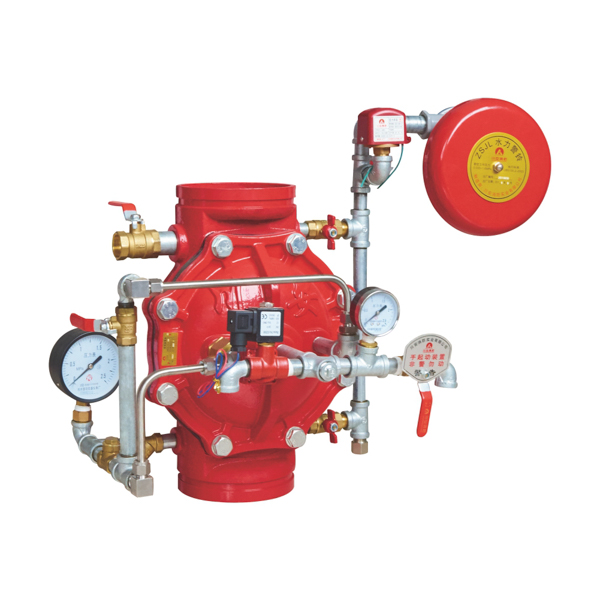
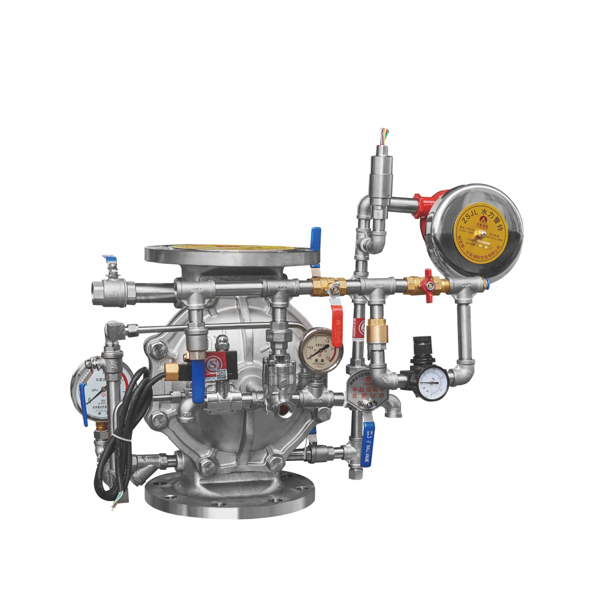
Related Deluge Valve Products
Further Reading — Deluge Valve Technical Resources
Step-by-step explanation of the standby, trip, discharge and reset sequence — with animated diagrams and downloadable PDF. Read the full guide →
Technical comparison of the two primary deluge valve mechanisms: pressure ratings, water-hammer resistance, maintenance, cost and application selection table. Read the comparison →
Step-by-step install procedure, NFPA 13 acceptance test walkthrough, common mistakes to avoid, and downloadable commissioning checklist. Read the installation guide →
Full classification of deluge valve types by mechanism, application and end connection, with a decision tree to match your project to the correct variant. Read the types guide →
Get a Quote — Diaphragm Deluge Valve (ZSFM Series)
DN50–DN350 · 1.6 MPa · EPDM Diaphragm · Electric / Wet Pilot / Dry Pilot / Manual
GB 5135.2 · NFPA 13 · NFPA 15 · UL-Listed Option · Factory Direct from China