Explosion Proof Deluge Valve — 2.5MPa High-Pressure, DN50–DN300 (ZSFM-Ex Series)
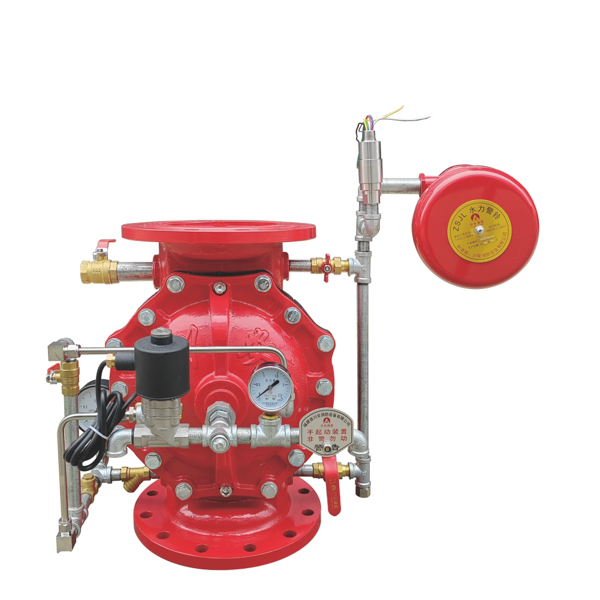
An explosion proof deluge valve is a fire suppression control valve in which every electrical component — solenoid valve, pressure switch, and control panel — is enclosed in a certified explosion-proof housing, preventing any internal spark from reaching surrounding flammable gas or dust atmospheres.
CA-FIRE’s ZSFM 50–300-2.5-Ex is the high-pressure model in the explosion proof deluge valve range. Its defining specification is the 2.5 MPa working pressure rating — 56% higher than the 1.6 MPa standard — which makes it the correct choice for petrochemical and industrial systems where supply pressure, long pipe runs, or large-area nozzle arrays demand more than standard valves can deliver.
Three specifications determine when to select this valve over other CA-FIRE deluge valve models:
Specify this valve when supply pressure exceeds 1.6 MPa, or when the hydraulic calculation requires 2.5 MPa inlet pressure to achieve design discharge density at the nozzle. The standard diaphragm deluge valve covers 1.6 MPa applications.
Specify this valve when hazardous area classification (Zone 1/2) applies and high pressure is required simultaneously. If the environment requires Ex certification but supply pressure is 1.6 MPa, the stainless steel deluge valve also carries Ex db IIC T6 Gb certification at lower cost.
Specify the stainless steel deluge valve instead when corrosion resistance is the primary driver — coastal, offshore, or chemical plant environments where the body material matters more than elevated pressure rating.
Technical Specifications
Model: ZSFM 50–300-2.5-Ex
| Parameter | Value |
|---|---|
| Nominal Size | DN50 – DN300 (9 sizes) |
| Working Pressure | 2.5 MPa |
| Seal Test Pressure | 5.0 MPa |
| Strength Test Pressure | 10.0 MPa |
| Hydraulic Resistance | < 0.08 MPa |
| Body Material | High-strength carbon steel with anti-corrosion coating |
| Diaphragm Material | High-performance EPDM rubber |
| Explosion-Proof Rating | Ex db IIC T6 Gb / Ex tb IIIC T80°C Db |
| Protection Level | IP65 |
| Activation Modes | Automatic · Remote linkage · Manual |
| Response Time | ≤ 2 s (auto/remote) · ≤ 1 s (manual) |
| Max Flow Rate | Up to 400 L/s (DN-dependent) |
| Control Voltage | DC24V, ≤ 1.6A |
| Power Consumption | 55W (panel) · 12W (solenoid) |
| Operating Temperature | −20°C to +70°C |
| Operating Medium | Water · Foam-water mixture (up to 6%) |
| Connection Type | Flanged — GB standard (ANSI on request) |
| Service Life | ≥ 15 years |
| Standards | GB 5135.7-2019 · IEC 60079-1 · NFPA 13 (on request) |
| Certifications | National fire product certification · PICC liability insurance · Ex certification |
Dimensional Data
| DN (mm) | Height (mm) | Flange Bolt Circle (mm) | No. of Bolts | Weight (kg) |
|---|---|---|---|---|
| 50 | 270 | 160 | 8 | 45 |
| 65 | 270 | 180 | 8 | 58 |
| 80 | 320 | 200 | 8 | 72 |
| 100 | 320 | 220 | 8 | 95 |
| 125 | 365 | 250 | 8 | 130 |
| 150 | 365 | 280 | 8 | 165 |
| 200 | 480 | 340 | 12 | 240 |
| 250 | 610 | 400 | 12 | 320 |
| 300 | 690 | 460 | 16 | 450 |
Dimensional drawings and CAD files available on request — sales@ca-fire.com
Key Features
2.5 MPa Working Pressure — For High-Demand Industrial Systems
The 2.5 MPa working pressure is the primary technical differentiator of this valve. Three operational consequences follow directly from this rating:
Higher flow capacity: Maximum flow rate up to 400 L/s (DN-dependent), enabling simultaneous supply to multiple large-area nozzle zones without pressure drop reducing discharge density below design levels.
Faster downstream fill time: At 2.5 MPa supply pressure, the downstream piping fills and reaches design discharge pressure measurably faster than at 1.6 MPa — relevant in fast-developing petrochemical fires where seconds determine suppression outcome.
Compatibility with hydraulically demanding systems: Facilities with long pipe runs from the water supply to the valve station, elevated nozzle arrays on tall process equipment, or high back-pressure foam proportioning systems require elevated inlet pressure to achieve design discharge density at the nozzle. The 2.5 MPa rating accommodates these conditions where a 1.6 MPa valve would be undersized.
Pressure validation — strength test at 10.0 MPa and seal test at 5.0 MPa — is significantly more demanding than the 6.4 MPa / 3.2 MPa tests applied to 1.6 MPa valves, confirming structural integrity at four times working pressure.
Certified Explosion-Proof Design — Zone 1/2 and Zone 21/22
Every electrical component carries independent explosion-proof certification:
Ex db IIC T6 Gb / Ex tb IIIC T80°C Db · IP65
| Hazardous Zone | Atmosphere | Certified |
|---|---|---|
| Zone 1 | Explosive gas — present under normal operation | ✓ |
| Zone 2 | Explosive gas — present under abnormal conditions | ✓ |
| Zone 21 | Explosive dust — present under normal operation | ✓ |
| Zone 22 | Explosive dust — present under abnormal conditions | ✓ |
IIC gas group covers hydrogen and acetylene — the most ignition-sensitive industrial gases — making this valve suitable for virtually all hazardous area classifications encountered in petrochemical, oil and gas, mining, and chemical industries. T6 temperature class confirms all external surfaces remain below 85°C, preventing auto-ignition of surrounding substances.
Per IEC 60079-1, all explosion-proof housings are designed to contain any internal ignition source — sparks or hot surfaces from solenoid switching, pressure switch contacts, or panel components cannot reach surrounding flammable atmospheres regardless of internal fault condition.
High-Strength Carbon Steel Body — Purpose-Built for 2.5 MPa
The valve body, bonnet, and pressure-bearing components are manufactured from high-strength carbon steel with wall thickness and internal geometry calculated specifically for 2.5 MPa duty — not a scaled-up adaptation of the standard 1.6 MPa design. This purpose-built approach eliminates the stress concentrations and premature fatigue that can occur when standard-pressure valves are uprated.
External anti-corrosion coating provides protection for standard industrial indoor and sheltered outdoor environments. For marine, coastal, or chemical plant installations where body corrosion is a primary concern alongside high pressure, contact sales@ca-fire.com to discuss material options.
Three Independent Activation Modes — Full Redundancy
Automatic: Explosion-proof detector → integrated control panel → solenoid valve vents control chamber → diaphragm opens in ≤ 2 seconds. Primary mode for all automatic systems.
Remote linkage: Central FACS or DCS sends activation signal to control panel → zone-selective activation from remote control room. Essential for large petrochemical complexes managing multiple deluge zones simultaneously from a central control room.
Manual: Explosion-proof pushbutton at valve station → direct activation in ≤ 1 second, independent of automatic and remote systems — the final backup regardless of detection system or power status.
All three modes are independently functional. All activation events and system status are transmitted to connected monitoring systems via standard signal outputs.
Deluge Valve Working Principle — 2.5 MPa Explosion Proof System
Understanding how the 2.5 MPa explosion proof deluge valve operates within a complete suppression system assists facility engineers in system design, commissioning, and maintenance planning.
Standby: The EPDM diaphragm is held against the valve seat by water pressure in the control chamber — fed from the supply side via a small pilot port. Downstream piping and all open nozzles are empty and at atmospheric pressure. Explosion-proof detectors monitor the protected zone continuously. Supply pressure gauge confirms system readiness.
Fire detected: An explosion-proof heat or smoke detector in the protected zone identifies a fire condition and signals the explosion-proof control panel within seconds of detection.
Control chamber vents: The control panel energises the trim solenoid valve (DC24V) → solenoid opens → control-chamber pressure vents to drain. With restraining pressure removed, 2.5 MPa supply pressure acts on the underside of the diaphragm.
Full-bore opening: The diaphragm lifts fully into the bonnet cavity in ≤ 2 seconds — exposing the complete valve bore. Water flows at maximum rate into the downstream distribution header. The high supply pressure ensures the full pipe system reaches design discharge pressure rapidly.
Simultaneous total-zone discharge: Water or foam-water mixture discharges simultaneously from every open nozzle across the entire protected zone. At 2.5 MPa supply pressure, large-area nozzle zones and elevated nozzle arrays achieve design discharge density immediately — no delay from system fill time.
Alarm output: Flow through the alarm port drives the water-motor gong and trips the explosion-proof alarm pressure switch → alarm signal to control panel and all connected monitoring systems simultaneously.
Manual override: Explosion-proof manual pushbutton at valve station activates system directly in ≤ 1 second if automatic and remote systems are unavailable.
Reset: De-energise solenoid → re-pressurise control chamber → diaphragm reseats → drain downstream pipework via drain valve → return to standby.
2.5 MPa vs 1.6 MPa Explosion Proof Deluge Valve — When to Specify Each
| Factor | 2.5 MPa (This Product) | 1.6 MPa Explosion Proof |
|---|---|---|
| Supply pressure available | > 1.6 MPa | ≤ 1.6 MPa |
| Max flow rate | ✓ Up to 400 L/s | Up to 360 L/s |
| Long pipe runs | ✓ Accommodates pressure drop | May undersupply remote nozzles |
| Elevated nozzle arrays | ✓ Maintains pressure at height | Marginal at significant elevation |
| High back-pressure foam systems | ✓ Suitable | May not achieve design flow |
| Strength test pressure | 10.0 MPa | 6.4 MPa |
| Ex certification | ✓ Ex db IIC T6 Gb | ✓ Ex db IIC T6 Gb |
| Body material | Carbon steel | Carbon steel |
| Corrosion resistance | Standard coating | Standard coating |
| For corrosive environments | → Stainless steel deluge valve | → Stainless steel deluge valve |
| Relative cost | Higher | Lower |
Applications
Petrochemical refineries: Distillation towers, catalytic cracking units, chemical reactors, and solvent storage — Zone 1/2 classified environments where high supply pressure from facility fire water systems (typically 1.4–2.0 MPa at the valve) and long distribution runs to nozzle arrays make the 2.5 MPa rating necessary. Per NFPA 15 water spray fixed system requirements.
LNG liquefaction and gas processing: Zone 1 methane and hydrogen sulfide atmospheres with high-demand foam-water deluge coverage of process equipment — where IIC Ex certification and elevated pressure both apply. Per NFPA 59A LNG facility standards.
Onshore oil and gas processing plants: Compressor stations, gas processing units, and crude oil stabilisation facilities where facility fire water pump pressure exceeds 1.6 MPa and Zone classification is mandatory throughout process areas.
Coal handling and mining: Coal preparation plants, conveyor transfer points, and mine infrastructure where Zone 21/22 dust classification applies and where large-area coverage demands higher flow rates than 1.6 MPa can sustain. The Ex tb IIIC T80°C Db dust certification covers these environments directly.
Power generation — transformer and turbine protection: High-value transformer bays and turbine halls where foam-water deluge systems are specified at elevated operating pressures and where any installed electrical component must carry Ex certification due to adjacent classified areas.
Metallurgical plants: Steel mills, aluminium smelters, and foundries where cutting oil and hydraulic fluid fires present Zone classification requirements and where large suppression areas require high flow rates sustained at 2.5 MPa.
Chemical warehouses and tank farms: Bulk flammable solvent storage and chemical feedstock tanks where NFPA 30 compliant deluge systems require both Zone-rated components and sufficient pressure to supply large-area nozzle arrays from a single valve station.
Factory Quality Control
Before shipment, every 2.5 MPa explosion proof deluge valve completes:
- Hydrostatic strength test at 10.0 MPa — four times working pressure
- Seal integrity test at 5.0 MPa — confirming zero leakage at twice working pressure
- Functional activation test across all three modes — automatic, remote, and manual
- Explosion-proof component inspection against Ex certification drawings
- EDX spectrometer material verification on valve body castings confirming carbon steel grade
- Dimensional inspection of flange face and bolt circle against GB/T 9113
A factory test report documenting all results is issued with every valve for project commissioning documentation.
Standards and Certifications
| Standard | Scope |
|---|---|
| GB 5135.7-2019 | Chinese national standard — deluge alarm valves |
| IEC 60079-0 / IEC 60079-1 | Explosion-proof equipment — general and flameproof enclosure |
| GB 50151 | Foam fire extinguishing system design |
| NFPA 13 | Sprinkler system installation |
| NFPA 15 | Water spray fixed systems for fire protection |
| NFPA 30 | Flammable and combustible liquids |
| NFPA 59A | LNG facilities |
Frequently Asked Questions
What is the difference between a 1.6 MPa and 2.5 MPa explosion proof deluge valve? Working pressure determines maximum operating pressure and achievable flow rate. The 2.5 MPa explosion proof deluge valve delivers higher flow rates (up to 400 L/s), accommodates longer pipe runs and elevated nozzle arrays without pressure shortfall, and undergoes more demanding factory pressure testing (10.0 MPa strength test vs 6.4 MPa). For standard building and warehouse applications, 1.6 MPa is adequate. For large-scale petrochemical and industrial facilities with high-pressure water supply systems, 2.5 MPa is the correct specification.
What is the difference between this valve and the stainless steel deluge valve? The 2.5 MPa explosion proof deluge valve is specified when high pressure is the primary requirement — large industrial systems where supply pressure exceeds 1.6 MPa. The stainless steel deluge valve is specified when corrosion resistance is the primary requirement — coastal, offshore, or chemical plant environments. Both carry Ex db IIC T6 Gb certification. If a project requires both high pressure and corrosion resistance simultaneously, contact sales@ca-fire.com for a custom specification discussion.
Which hazardous zones is this valve certified for? Ex db IIC T6 Gb / Ex tb IIIC T80°C Db covers Zone 1 and Zone 2 (flammable gas/vapour) and Zone 21 and Zone 22 (combustible dust). IIC gas group — the most stringent classification — covers hydrogen and acetylene, making this valve suitable for virtually all hazardous area classifications in petrochemical, oil and gas, mining, and chemical industries.
Can this valve be used with foam suppression systems? Yes. Compatible with foam-water mixture at up to 6% concentrate — AFFF, AR-AFFF, FFFP, and protein foam types. Integrates directly with balanced-pressure proportioners, bladder tank systems, and inline inductors. No modification to the valve body required.
What maintenance does this valve require? Quarterly visual inspection of body, trim, and gauge readings. Annual functional test of solenoid activation and pressure switch operation. Biennial diaphragm inspection and valve seat integrity check — replace diaphragm if cracking or hardening detected. Anti-corrosion coating inspected annually — touch up if mechanically damaged. CA-FIRE provides complete maintenance documentation with every valve.
What is included in a complete system package? A complete system package includes the 2.5 MPa explosion proof deluge valve, explosion-proof control panel, solenoid valve trim, alarm pressure switch, water-motor gong, supply-side isolation valve, pressure gauges, strainer, manual release, and interconnecting trim pipework — factory assembled and tested. Open-orifice nozzles, foam proportioning equipment, and detection sensors are available separately or as part of a full system supply contract.
Related Products
- Deluge Valve — Full Range & Selection Guide
- Stainless Steel Deluge Valve — corrosion resistance + Ex certification at 1.6 MPa
- Diaphragm Deluge Valve — Standard 1.6 MPa — non-hazardous-area standard applications
- Deluge Valve Skid — Vertical Explosion-Proof — factory pre-assembled hazardous-area station
- Horizontal Deluge Valve Assembly — multi-valve skid for low-headroom installations
- Foam Bladder Tank System — foam proportioning for foam-water deluge systems
Email: sales@ca-fire.com · Mobile: +86 13400715622 · WhatsApp: +86 18150362095 · WeChat: 404863577 · www.ca-fire.com
General Specifications
| Specification | Details |
|---|---|
| Product Name | 2.5MPa Explosion-Proof Deluge Valve (Core of Deluge Valve System) |
| Model | ZSFM 50-300-2.5-Ex |
| Core Function | High-pressure fire suppression, explosion-proof operation, rapid fluid release |
| Working Pressure | 2.5MPa |
| Sealing Test Pressure | 5.0MPa |
| Strength Test Pressure | 10.0MPa |
| Hydraulic Resistance | <0.08MPa |
| Material | High-strength carbon steel (valve body); anti-corrosion coating |
| Explosion-Proof Rating | Ex db IIC T6 Gb/Ex tb IIIC T80°C Db |
| Protection Level | IP65 |
| Application Temperature | -20°C to +70°C |
| Operating Medium | Clean water, foam mixture |
| Service Life | ≥15 years (under normal operating conditions) |
| Certification | National fire product certification, PICC liability insurance, Explosion-proof certification |
Dimension Specifications
| DN (mm) | Height (mm) | Flange Bolt Circle Diameter (mm) | Number of Bolts | Weight (kg) |
|---|---|---|---|---|
| 50 | 270 | 160 | 8 | 45 |
| 65 | 270 | 180 | 8 | 58 |
| 80 | 320 | 200 | 8 | 72 |
| 100 | 320 | 220 | 8 | 95 |
| 125 | 365 | 250 | 8 | 130 |
| 150 | 365 | 280 | 8 | 165 |
| 200 | 480 | 340 | 12 | 240 |
| 250 | 610 | 400 | 12 | 320 |
| 300 | 690 | 460 | 16 | 450 |
H3: Performance Parameters of the Deluge Valve System
- Maximum Flow Rate: Up to 400L/s (depending on DN size)
- Response Time: ≤2 seconds (automatic/remote activation); ≤1 second (manual activation)
- Control Voltage: DC24V, ≤1.6A
- Power Consumption: 55W (control panel); 12W (solenoid valve)
- Compatibility: Works with foam proportioning devices, explosion-proof detection systems, and industrial sprinkler heads
- Activation Modes: Automatic (smoke/heat detectors), remote linkage, on-site manual control
- Operating Environment: Suitable for indoor/outdoor industrial installations (with proper protection)