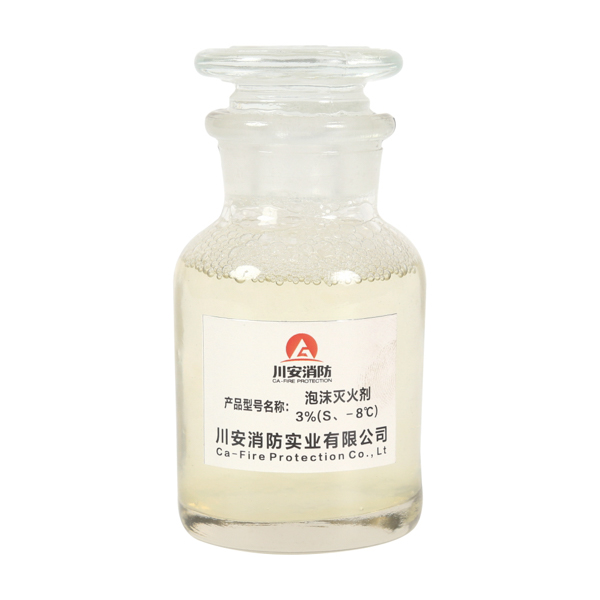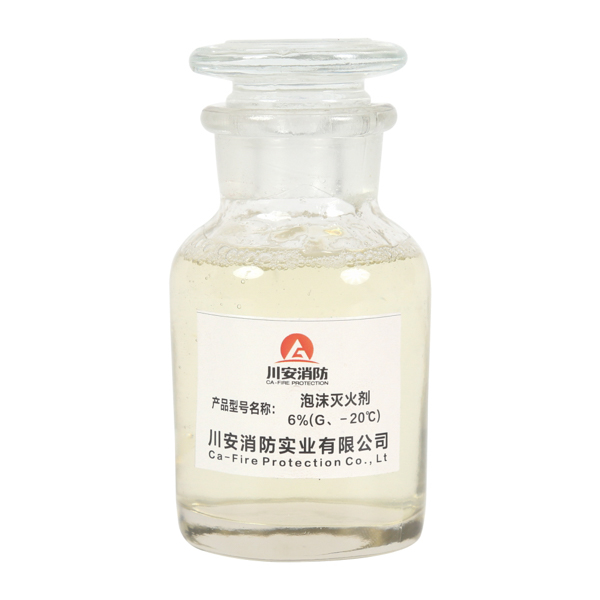
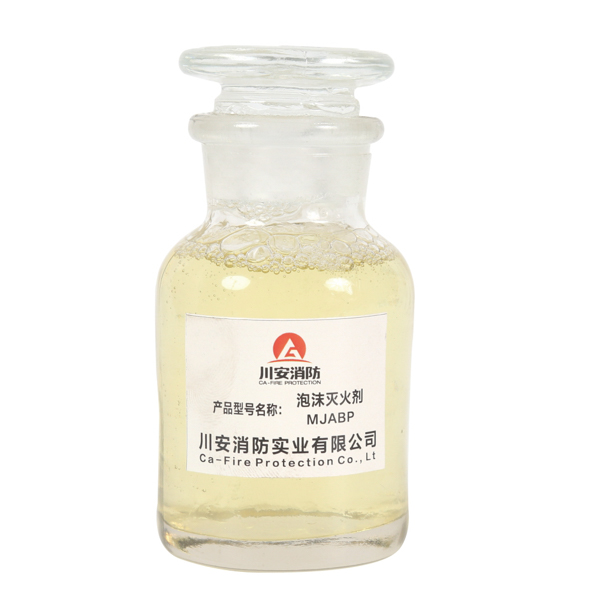
Class A Foam Concentrate MJABP | Wildland & Structural Fire | CA-FIRE
CA-FIRE Protection · Foam Concentrate

Class A Foam Concentrate
MJABP

0.1–1% mixing ratio  ·  Wildland & structural fires  ·  CAFS compatible  ·  Deep fuel penetration  ·  PFAS-free

Class A Foam Concentrate

Class A Foam Concentrate MJABP
for Wildland, Structural & CAFS Applications

CA-FIRE MJABP Class A foam concentrate is a specially formulated surfactant-based wetting agent that transforms ordinary water into a far more effective firefighting medium for Class A solid fuel fires. When added to water at just 0.1–1%, MJABP reduces the surface tension of water by up to 95% — enabling it to spread instantly across fuel surfaces and penetrate deep into the porous structure of wood, timber, paper, vegetation and other solid fuels, rather than beading up and running off.

This deep penetration means the fire is extinguished at its seat — not just on the surface — dramatically reducing the risk of deep-seated re-ignition after the initial knockdown. In wildland firefighting, where every litre of water on a helicopter or tanker counts, the improved water efficiency of Class A foam can reduce water consumption by 50–75% compared to plain water for equivalent suppression performance.

MJABP is fully compatible with CAFS (Compressed Air Foam System) apparatus, aspirated foam branches, direct injection systems and pre-mix tanks. It contains no fluorosurfactants or PFAS compounds — safe for use in wildland environments and on environmentally sensitive sites. Freeze point −18°C, operating range −13°C to 45°C.
Deep Solid Fuel Penetration 0.1–1% Mixing Ratio CAFS Compatible Wildland Fires Structural Fires PFAS-Free Freeze Point −18 °C 75% Water Saving
Class A Foam Concentrate MJABP wildland structural CAFS — CA-FIRE Protection In Stock · PFAS-Free
0.1–1%
Mixing Ratio
−18 °C
Freeze Point
45 °C
Max Use Temp
6.5
pH Value
−75%
Water Saving
PFAS-Free
Fluorine Free
The Science

Why Plain Water Fails on Solid Fires —
and How Class A Foam Fixes It

Water has a naturally high surface tension of approximately 72 mN/m. When plain water contacts a burning log, piece of timber or pile of vegetation, this surface tension causes it to form droplets and bead up on the fuel surface — much of the water runs off without penetrating into the fuel mass where the fire is burning. The result: high water consumption, shallow extinguishment, and rapid re-ignition from deep-seated embers once the surface is dry.

CA-FIRE MJABP Class A foam concentrate contains a blend of hydrocarbon surfactants that reduce water surface tension to approximately 15–20 mN/m — less than one-quarter of plain water. At this surface tension, the treated water spreads instantly across any fuel surface and wicks deep into wood grain, vegetation stems and porous materials by capillary action, reaching and cooling internal combustion zones that plain water can never access.

The result is complete extinguishment through the full depth of the fuel — not just surface cooling — with dramatically less water, faster knockdown and far lower re-ignition risk after the fire appears out.

Performance at a Glance
72 mN/m
Plain Water Surface Tension
~18 mN/m
Class A Foam Solution
−75%
Water Use Reduction
Mixing Ratio Guide by Application Mode
0.1%
Wet water / direct inject
0.3%
Dry CAFS
0.5%
Wet CAFS / barrier foam
1.0%
Aspirated branch / max foam

Lower ratios produce wetter, more penetrating foam. Higher ratios produce drier foam with better cling to vertical surfaces for barrier applications. Calibrate to application type and CAFS rig specification.

Class A This Product
  • Solid fuels: wood, paper, rubber, vegetation
  • Wetting agent — deep fuel penetration
  • CAFS / wildland / structural use
  • PFAS-free formulation
  • 0.1–1% mixing ratio
Class B AFFF / AR-AFFF
  • Flammable liquids: petroleum, solvents
  • Foam blanket — vapour suppression
  • Tank farms / industrial / aviation
  • Aqueous film formation
  • 3–6% mixing ratio
Suppression Mechanism

Four Steps from Application to Complete Extinguishment

01
Proportioning
MJABP is inducted at 0.1–1% via a CAFS direct injection system, inline proportioner, pre-mix tank or backpack proportioner. Even at the lowest ratio of 0.1%, a single 20 L container treats up to 20,000 L of water — one of the most concentrate-efficient agents available.
02
Surface Spreading
The dramatically reduced surface tension causes the foam solution to instantly spread across the fuel surface on contact, maximising the area cooled per litre applied and coating every exposed fuel surface with the wetting agent.
03
Deep Penetration
Capillary action draws the low-surface-tension water deep into the porous fuel structure — wood grain, vegetation stems, paper fibre, charred material. The water reaches internal smouldering zones that plain water runs off without touching, cooling the fuel below ignition temperature throughout its full depth.
04
Radiant Heat Barrier
When applied to unburned fuel ahead of a fire front, Class A foam forms a moisture-retaining blanket on the fuel surface that insulates it from radiant heat and delays ignition. The foam clings to vertical and overhead surfaces — providing lasting pre-treatment protection during structure defence operations.
CAFS Compatibility

MJABP Is the Standard
Agent for CAFS Systems

Compressed Air Foam Systems (CAFS) inject compressed air directly into the foam solution before it reaches the hose, producing a very dry, lightweight foam that travels further, clings better to vertical surfaces, and weighs far less than water — critical advantages for wildland fire engines and aerial applications.

Class A foam concentrate is the universal choice for CAFS — it is specifically formulated to produce a stable, consistent foam texture across the full 0.1–1% ratio range when air is injected. CA-FIRE MJABP has been tested with the leading CAFS rig manufacturers and produces consistent foam quality at all specified ratios.

💨
Dry CAFS (Compressed Air Foam)
Very dry, stiff foam that clings to vertical surfaces and travels up to 20 m from the nozzle. Ideal for structure defence pre-treatment, attic space application and rapid roof line foam drops.
Typical ratio: 0.2–0.4%
💧
Wet CAFS / Aspirated Foam
Wetter foam with higher water content — more penetrating, better for knockdown of active fires in deep-seated solid fuel beds, log piles and structural materials.
Typical ratio: 0.4–0.8%
🌊
Wet Water (Direct Inject, No Air)
Concentrate added to water stream without air injection — produces highly penetrating "wet water" for use through standard fire hoses, backpack pumps and monitor nozzles where CAFS equipment is not available.
Typical ratio: 0.1–0.2%
Equipment Compatibility

System & Equipment
Compatibility

Equipment / System TypeCompatible
CAFS (compressed air foam system) ✓ Yes — primary use
Aspirated foam branch pipe ✓ Yes
Direct injection into water stream ✓ Yes
Pre-mix tank (batch proportioning) ✓ Yes
Backpack / knapsack proportioner ✓ Yes
Aerial tanker / helicopter bucket ✓ Yes
Inline / Venturi proportioner ✓ Yes
Standard fire hose (as wet water) ✓ Yes
Class B foam system (AFFF tank) ✗ Separate system
PFAS-sensitive environments ✓ PFAS-free formulation
Technical Specifications

Class A Foam Concentrate MJABP — Technical Data

Model Fire Class Mixing Ratio Freeze Point pH Value Expansion Ratio Min Use Temp Max Use Temp PFAS
MJABP Class A 0.1–1% −18 °C 6.5 6.0–9.0 (Low–Med) −13 °C 45 °C None — PFAS-free

Expansion ratio varies with mixing ratio and application method: lower ratios produce wetter foam (lower expansion); higher ratios with aspirating nozzle produce drier foam (higher expansion). All data per GB 15308 at 20°C. Contact CA-FIRE for third-party test certificates or CAFS compatibility data sheets.

Water Efficiency by Mixing Ratio

Mixing RatioConcentrate per 1,000 L SolutionWater Treated per 20 L ContainerTypical Application
0.1%1 L20,000 LWet water / direct inject
0.3%3 L6,666 LDry CAFS for structure defence
0.5%5 L4,000 LWet CAFS / barrier foam
1.0%10 L2,000 LAspirated branch / maximum foam volume

Packaging Options

Pack SizeContainer TypePallet QtySuitable For
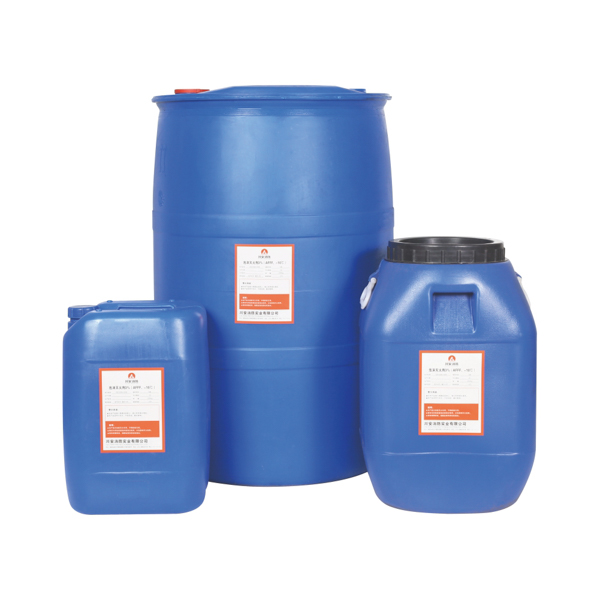
20 LHDPE Jerrican40 jerricans / palletWildland engines, CAFS tenders, backpack systems
200 LHDPE Drum4 drums / palletFire station bulk stock, fixed CAFS systems
1000 LIBC Tote1 IBC / palletLarge wildland operation base camps, bulk supply
Typical Applications

Where Class A Foam Concentrate Is Used

🌲
Wildland & Forest Fires
Wildland fire engines, aerial tankers, helitankers and hand crews use Class A foam for direct attack, aerial drops and fuel pre-treatment ahead of advancing fire fronts. The 50–75% water saving extends operational range and reduces refilling frequency — critical in remote terrain with limited water supply.
🏠
Structure Defence — WUI Fires
Wildland-urban interface (WUI) structure defence: Class A foam is applied to roofs, soffits, decks and combustible cladding ahead of an advancing wildfire to create a moisture barrier that delays ignition. CAFS apparatus can cover a structure in minutes with dry foam that clings to all surfaces.
🏭
Structural Firefighting
Urban and industrial structural fires in buildings, warehouses and factories. Class A foam significantly improves the penetration of hoseline water into smouldering structural timber, insulation and contents, reducing re-ignition after the fire appears out. Widely used with CAFS-equipped engines.
📦
Solid Fuel Storage & Timber
Timber yards, paper mills, waste recycling facilities, baled hay and straw storage, and wood chip stockpiles where deep-seated internal combustion is common. Class A foam penetrates deep into compressed bales and large-diameter logs where water alone cannot penetrate.
🚂
Rail & Infrastructure
Trackside vegetation fires, railway sleeper fires and embankment fires where water alone has minimal effect on dry ground-level fuel. Class A foam applied through CAFS rigs on specialist rail fire vehicles achieves rapid knockdown with minimal water volume.
🔋
EV Battery & Waste Fires
Electric vehicle battery fires and waste/refuse fires where deep-seated internal thermal runaway requires massive cooling depth into the fuel mass. Class A foam's penetrating action delivers cooling water to the core of battery modules and refuse piles more effectively than plain water.
FAQ

Frequently Asked Questions about Class A Foam Concentrate

Class A foam concentrate is a surfactant-based wetting agent used to enhance the effectiveness of water on Class A solid fuel fires — wood, timber, paper, rubber, plastics, vegetation and brush. When mixed at 0.1–1%, it dramatically reduces the surface tension of water, enabling deep penetration into solid fuel masses rather than running off the surface. It is used in wildland and forest fire suppression, structural firefighting, CAFS apparatus, structure defence operations at wildland-urban interface fires, solid fuel storage protection and increasingly for EV battery cooling. It is not suitable for Class B flammable liquid fires.
MJABP is used at 0.1–1% depending on the application. For dry CAFS (structure defence pre-treatment): 0.2–0.4%. For wet CAFS (active fire knockdown): 0.4–0.8%. For aspirated foam branch (maximum foam volume): 0.5–1.0%. For wet water (direct injection without air): 0.1–0.2%. The very low ratio range means a 20 L container treats 2,000–20,000 litres of water. Always calibrate your CAFS rig or proportioner to the specific ratio for your intended application — lower ratios for penetrating wet water, higher ratios for dry foam with good vertical cling and barrier properties.
Class A foam is formulated for solid fuel fires and works by reducing water surface tension to enable deep penetration into porous solid fuels. It does not form an aqueous film or vapour barrier on liquid fuels and is ineffective on flammable liquid fires. Class B foams (AFFF, AR-AFFF, FFFP) are formulated for flammable liquid fires and suppress vapour by forming a foam blanket or aqueous film on the fuel surface — they provide no solid fuel penetration benefit. For sites with both Class A and Class B hazards, a Synthetic Foam Concentrate (S-type) covering both fire classes from a single stock is available, or separate dedicated systems for each hazard class.
Plain water has a surface tension of ~72 mN/m — at this level it beads up and runs off burning vegetation and timber rather than penetrating the fuel. Class A foam reduces surface tension to ~15–20 mN/m, causing the treated water to spread instantly and wick deep into fuel by capillary action. Studies have consistently shown 50–75% water reduction for equivalent suppression compared to plain water. On an aerial tanker or helicopter bucket — where the total water load is fixed — this means each drop achieves 2–4× the fuel cooling of a plain water drop. On ground units, it extends operational range between refills and reduces the number of tanker shuttle runs needed on large fires.
Yes. CA-FIRE MJABP is fully compatible with CAFS (Compressed Air Foam System) apparatus and is specifically formulated for CAFS use. It produces a stable, consistent foam texture across the full 0.1–1% ratio range when compressed air is injected. The concentrate is compatible with the proportioning systems and foam solution plumbing of major CAFS rig manufacturers. If you are evaluating MJABP for a specific CAFS platform, CA-FIRE can provide 20 L samples for on-rig compatibility testing before committing to bulk purchase.
No. CA-FIRE MJABP Class A foam concentrate is a PFAS-free formulation containing only biodegradable hydrocarbon surfactants — no fluorosurfactants, no PFOA, no PFOS, no PFAS compounds of any type. Class A foam concentrates do not require fluorochemicals to perform their wetting function, unlike Class B AFFF foams which traditionally used fluorosurfactants for film formation. MJABP is safe for use in wildland and environmentally sensitive areas. Always follow local environmental authority guidelines on foam use near waterways.
MJABP is available in 20 L HDPE jerricans, 200 L HDPE drums and 1000 L IBC totes. Due to the very low mixing ratio (0.1–1%), even a single 20 L container treats 2,000–20,000 litres of water — making Class A foam exceptionally economical to stock and transport. OEM private-label packaging is available for fire equipment manufacturers and distributors. 20 L DHL Express samples are available for pre-purchase CAFS compatibility testing within approximately 5 business days. Contact sales@ca-fire.com for pricing and ordering details.
Request a Quote for Class A Foam Concentrate MJABP
Contact CA-FIRE for project pricing, bulk OEM supply, CAFS compatibility samples or SDS documents. Specify pack size and required volume when enquiring.
📧 Get a Quote Now
Scroll to Top