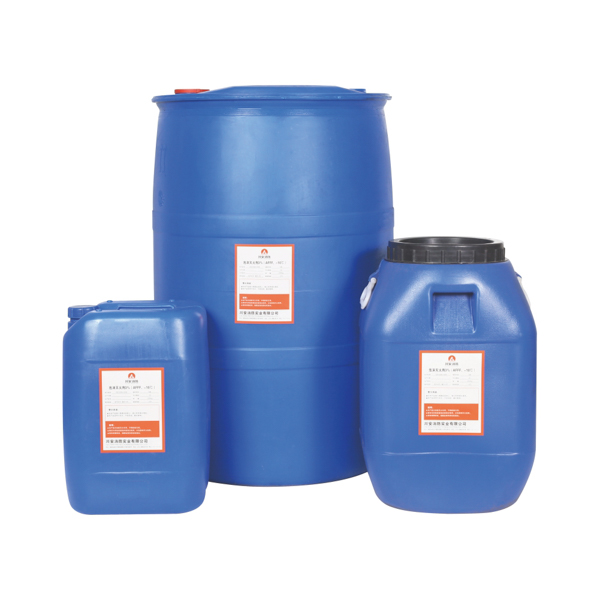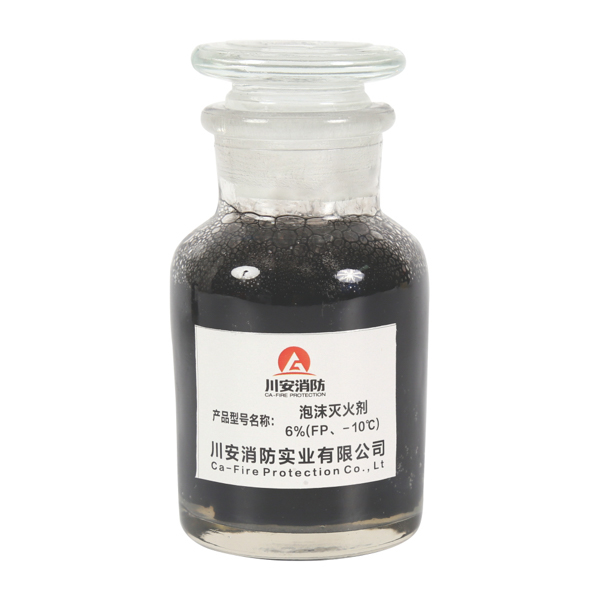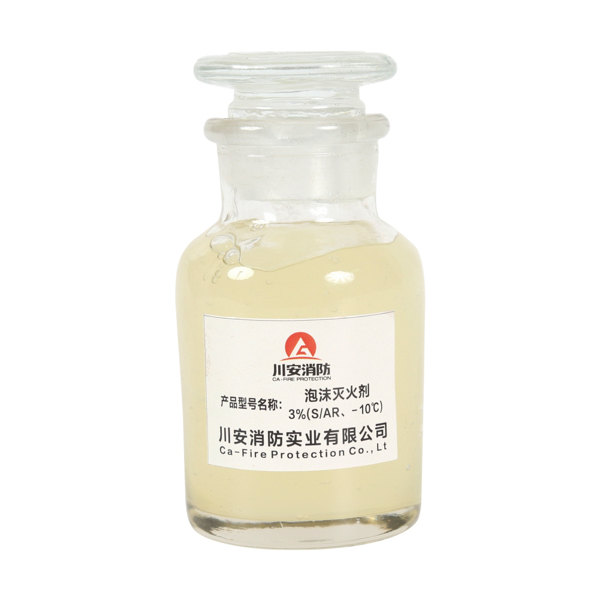
High Expansion Foam Concentrate 201–1000× | YEG-3 YEG-6 | CA-FIRE
CA-FIRE Protection · Foam Concentrate

High Expansion Foam Concentrate
YEG-3 & YEG-6

201–1000× expansion ratio  ·  Enclosed-space fire suppression  ·  3% & 6% mixing ratio  ·  Engine rooms · Hangars · Mines · Car parks

High Expansion Foam Concentrate

High Expansion Foam Concentrate
for Enclosed-Space Fire Suppression

CA-FIRE high expansion foam concentrate — available in YEG-3 (3% mixing ratio) and YEG-6 (6% mixing ratio) — is a specialist foam agent engineered to rapidly fill and suppress fires in enclosed or semi-enclosed spaces. When proportioned and passed through a high-expansion foam generator, it produces foam at 201 to 1000 times its liquid volume, flooding a compartment in minutes and suppressing fire by two simultaneous mechanisms: oxygen displacement (smothering) and rapid cooling of both the fuel and the surrounding structure.

Formulated from a compound of surface-active agents, foam stabilisers, antifreeze agents and solvents, YEG-3 and YEG-6 produce a dense, stable high-expansion foam blanket that maintains its volume long enough to keep oxygen below combustion-sustaining levels while the fire is extinguished. The freeze point of −20 °C and operating range down to −15 °C make it suitable for cold-climate installations including offshore platforms, cold-region mines and refrigerated warehouses.

Compliant with NFPA 11 (Standard for Low-, Medium-, and High-Expansion Foam) and GB 15308. Full SDS, TDS and test certificate documentation available for every order.
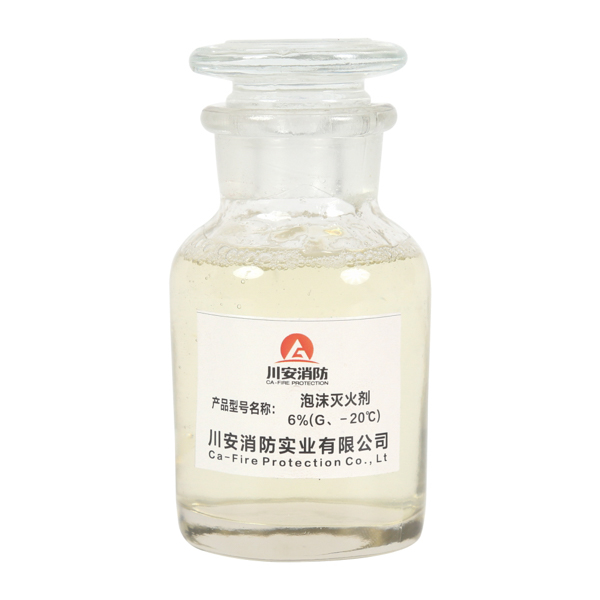
201–1000× Expansion Oxygen Displacement Rapid Space Flooding YEG-3 & YEG-6 3% & 6% Ratio Freeze Point −20 °C NFPA 11 Compliant GB 15308 Tested
High Expansion Foam Concentrate YEG-3 YEG-6 201 to 1000 expansion ratio — CA-FIRE In Stock
201–1000×
Expansion Ratio
3 / 6%
Mixing Ratio
−20 °C
Freeze Point
6.5
pH Value
45 °C
Max Use Temp
10 yr
Shelf Life
The Power of High Expansion

1 Litre of Solution → Up to 1,000 Litres of Foam

The extreme expansion ratio is what makes high expansion foam uniquely suited to enclosed-space suppression. A very small volume of concentrate and water produces enough foam to completely flood a large compartment — faster and with far less water damage than conventional deluge systems.

Low Expansion (AFFF / FFFP)
6–9×
6–9 litres of foam per litre of solution. Applied as a blanket on fuel surfaces. Ideal for open-area fuel spill and tank fires. Not suited to flooding enclosed spaces.
Medium Expansion
20–200×
20–200 litres per litre of solution. Used in some diked area and warehouse applications. Transitional range — less efficient than high expansion for full compartment flooding.
High Expansion — YEG-3 / YEG-6
201–1000×
201–1000 litres per litre of solution. Floods enclosed compartments within minutes. Requires far less water and concentrate than any other system type for the same protected volume.
🚢
500 m³
Ship Engine Room
At 500× expansion: only 1 m³ of foam solution needed. Flooded in under 2 minutes with correctly sized generators.
✈️
10,000 m³
Aircraft Hangar
At 1000× expansion: 10 m³ of solution floods the full hangar volume to 1 m depth — suppressing ground-level fuel fires before smoke layer descends.
🚗
2,000 m³
Underground Car Park
High expansion foam fills the car park compartment, suppressing vehicle fires and preventing spread, while generating significantly less water runoff than sprinklers.
Suppression Mechanism

How High Expansion Foam Suppresses Fire

01
Proportioning
YEG-3 or YEG-6 concentrate is inducted into the water supply at the correct 3% or 6% ratio via an inline proportioner or bladder tank system, producing a homogeneous foam solution that feeds the generator.
02
High-Expansion Generation
The foam solution is sprayed onto a mesh screen inside a high-expansion foam generator. A fan or blower forces large volumes of air through the wetted screen, producing foam at 201–1000× the solution volume. Output is directed into the protected space via ducts.
03
Oxygen Displacement
As the foam mass rapidly fills the compartment, it displaces air and reduces the oxygen concentration below 15% — the minimum level needed to sustain combustion on most fuels. The fire is smothered without requiring direct contact with the flame base.
04
Cooling & Hold
Water draining from the foam blanket simultaneously cools the burning fuel and surrounding structural steelwork, reducing re-ignition risk. The foam remains in place, maintaining oxygen exclusion and cooling effect until the generator is switched off and the space is ventilated.
Technical Specifications

High Expansion Foam Concentrate — Technical Data

Model Mixing Ratio Freeze Point pH Value Expansion Ratio Min Use Temp Max Use Temp Generator Type
YEG-3 (3%G-20°C) 3% −20 °C 6.5 201–1000× −15 °C 45 °C High-expansion generator (blower type)
YEG-6 (6%G-20°C) 6% −20 °C 6.5 201–1000× −15 °C 45 °C High-expansion generator (blower type)

Expansion ratio depends on generator type and airflow rate — 201× is achievable with most standard generators; 1000× requires optimised high-ratio generators with high airflow velocity. All specifications per GB 15308 at 20°C. Contact CA-FIRE for third-party test certificates or NFPA 11 performance data sheets.

Packaging Options

Pack SizeContainer TypePallet QtySuitable For
20 LHDPE Jerrican40 jerricans / palletSmall systems, portable generators, testing
200 LSteel or HDPE Drum4 drums / palletFixed systems, medium enclosed-space protection
1000 LIBC Tote1 IBC / palletLarge hangars, mine systems, bulk project supply
Typical Applications

Enclosed Spaces Protected by High Expansion Foam

🚢
Ship Engine Rooms & Pump Rooms
Fixed high-expansion foam systems on merchant vessel engine rooms, machinery spaces and pump rooms. SOLAS-compliant systems required on vessels above a certain GT. High expansion foam is the primary alternative to CO₂ total flooding for engine room protection.
✈️
Aircraft Hangars
High-expansion foam hangar systems specified under NFPA 409 (Aircraft Hangars). Group I and Group II hangars require foam systems capable of covering the hangar floor to a minimum 600 mm depth within the required time. High expansion foam meets this requirement while significantly reducing the water volume needed.
🚗
Underground Car Parks
Multi-level underground car parks present severe challenges for sprinkler systems — smoke accumulation and limited vehicle access. High expansion foam systems flood individual compartments, suppressing EV battery and fuel fires while limiting water runoff into lower levels.
⛏️
Mine Roadways & Tunnels
High expansion foam is specified for protecting mine conveyor belt galleries, electrical substations and machinery chambers in underground mines where fire in a confined roadway can be rapidly fatal. The foam completely fills the cross-section of the roadway, blocking fire spread.
🔌
Cable Tunnels & Substations
Electrical cable tunnels and power substation cable vaults present high fire risk from insulation and transformer oil fires. High expansion foam suppresses fires in inaccessible cable duct runs and substation basement areas without damaging sensitive electrical equipment.
🧊
LNG & Cold-Climate Facilities
The −15°C minimum operating temperature makes YEG-3 and YEG-6 suitable for LNG facilities, cold-climate industrial sites and offshore platforms in northern waters where foam must function reliably in sub-zero ambient conditions. The −20°C freeze point prevents concentrate degradation during cold storage.
System Design Guide

Key System Design
Considerations — NFPA 11

1
Calculate Protected Volume
Determine the total enclosed volume to be protected and the required foam submergence depth per NFPA 11. For total flooding, the foam depth must exceed the highest fuel source. For floor-level suppression, 600 mm depth is the NFPA 11 minimum for most hazard classes.
2
Select Generator Output Rate
The generator must deliver sufficient foam volume per minute to fill the space to the required depth within the time specified by NFPA 11 — typically 2 minutes for ship engine rooms and 4 minutes for hangars. Generator output (m³/min) = Protected Volume ÷ Required Fill Time.
3
Size Concentrate Supply
Calculate concentrate volume from solution flow rate × mixing ratio × minimum operating duration per NFPA 11. Provide sufficient storage for the design duration, plus 100% reserve per NFPA 11 recommendations for bladder tank systems.
4
Life Safety Pre-Discharge
NFPA 11 requires a pre-discharge alarm and sufficient time delay (minimum 30 seconds for attended spaces, longer for larger spaces) to allow personnel to evacuate before the foam is discharged. Clearly marked exits and personnel training are mandatory requirements.
NFPA 11 Reference Data

Application Rate Requirements
by Space Type

Protected Space Min Fill Time Min Foam Depth
Ship engine room / machinery space 2 min Full submergence
Aircraft hangar (Group I) 4 min 600 mm
Aircraft hangar (Group II) 4 min 600 mm
Underground car park Per AHJ 600 mm min
Mine roadway / cable tunnel Per local code Full cross-section
Foam operating duration (min) 12 min NFPA 11 §5.8

Reference: NFPA 11 (2021 edition). Consult the current edition and local AHJ for project-specific requirements. CA-FIRE can provide technical support for system design calculations.

FAQ

Frequently Asked Questions about High Expansion Foam Concentrate

High expansion foam concentrate is used to rapidly fill and suppress fires in enclosed or semi-enclosed spaces. When passed through a high-expansion foam generator, it produces foam at 201 to 1000 times its liquid volume — enough to completely flood a compartment in minutes. The foam suppresses fire by displacing oxygen below the level needed for combustion and simultaneously cooling the fuel and structure. It is the preferred agent for ship engine rooms, aircraft hangars, underground car parks, mine roadways, cable tunnels, LNG plant and any enclosed space where water deluge or conventional low-expansion foam systems cannot access the fire effectively.
YEG-3 and YEG-6 both produce an expansion ratio of 201 to 1000 times. This means that 1 litre of foam solution can produce between 201 and 1000 litres of finished foam, depending on the generator type and airflow. In practical terms, a 500 m³ ship engine room can be completely flooded to full depth using only 0.5–2.5 m³ of foam solution — compared to tens of thousands of litres that a water deluge system would require for the same space. This extreme efficiency is the key reason high expansion foam is preferred for enclosed-space protection where water damage would be catastrophic and water supply is limited.
High expansion foam requires a dedicated high-expansion foam generator — a blower-type device that forces large volumes of air through a foam-solution-wetted mesh screen to produce the high-ratio foam. Standard AFFF or FFFP foam branches and monitors are not suitable. Fixed high-expansion generators are typically integrated into a building's foam concentrate supply and water supply, sized to flood the protected space to the required depth within the time mandated by NFPA 11. Portable high-expansion generators are available for firefighter deployment in mine roadways and tunnels. CA-FIRE can advise on generator selection for specific protected space dimensions and fill time requirements.
YEG-3 uses a 3% mixing ratio (3 parts concentrate per 100 parts foam solution) and YEG-6 uses a 6% mixing ratio. Both produce the same 201–1000× expansion range, the same freeze point (−20°C) and the same operating temperature range. Foam performance is equivalent when correctly proportioned at the specified ratio. The choice is driven entirely by your proportioning system design — the proportioner or bladder tank must be calibrated for either 3% or 6%, and the concentrate must match. Do not substitute one for the other without recalibrating the proportioner. If your system design is not yet finalised, CA-FIRE can advise on which ratio is more common for your application type.
High expansion foam is designed primarily for enclosed or semi-enclosed spaces. In open outdoor environments, wind rapidly disperses the foam mass before it builds to the depth needed to suppress a fire. The agent is therefore not suitable for open-area fuel spill fires or outdoor tank fires — for these applications, AFFF or FFFP is appropriate. Some semi-enclosed outdoor scenarios — such as transformer bunds with windbreak walls, or covered loading bays — may be feasible with high expansion foam if wind effects are accounted for in the system design. Contact CA-FIRE for assessment of specific borderline applications.
High expansion foam concentrate is non-toxic and non-corrosive — the foam itself is harmless to skin. However, the oxygen displacement mechanism that makes it effective at suppressing fires also means that people present in a fully flooded compartment will be unable to breathe. NFPA 11 requires pre-discharge alarms with sufficient warning time, clearly marked evacuation routes, and personnel training before any high expansion foam system is activated in an occupied space. For attended spaces, a minimum 30-second pre-discharge delay is required. Emergency escape breathing devices and personnel accountability procedures should be part of any high expansion foam system fire safety plan.
High expansion foam systems are governed by NFPA 11: Standard for Low-, Medium-, and High-Expansion Foam. Key design parameters include minimum application rates, required foam depth, fill time limits, concentrate supply duration and pre-discharge alarm requirements. For marine installations, SOLAS Chapter II-2 and IMO MSC.1/Circ.1432 apply. For aircraft hangars, NFPA 409 applies. For mines, local mining safety regulations take precedence. CA-FIRE can provide technical support including concentrate consumption calculations, submittal datasheets and NFPA 11 compliance documentation for project approval. Contact sales@ca-fire.com with your space dimensions and application type.
Request a Quote for High Expansion Foam Concentrate
Contact CA-FIRE for project pricing on YEG-3 or YEG-6, NFPA 11 system design support, SDS documents or 20 L sample orders. Please specify model, mixing ratio and protected space type when enquiring.
📧 Get a Quote Now
Scroll to Top