
Home ›Blog ›Gate Valve vs Ball Valve
|
Technical Guide Gate Valve vs Ball Valve: Key Differences, Pros & ConsGate valves and ball valves are both used for on/off isolation in pipelines — but they work differently, suit different applications, and have completely different requirements in fire protection systems. This guide explains every key difference so you can specify the right valve with confidence. What Are Gate Valves and Ball Valves?A gate valve controls flow by raising or lowering a wedge-shaped disc (the “gate”) across the pipe bore. Turning the handwheel multiple turns drives the gate up out of the flow path (open) or down to seal against the valve seats (closed). The gate moves perpendicular to the direction of flow. A ball valve controls flow by rotating a spherical ball with a through-hole a quarter-turn inside the valve body. When the bore aligns with the pipe, flow passes through. When rotated 90°, the solid wall of the ball blocks the pipe. Head-to-Head Comparison
Pressure Drop: Are They Really Different?One of the most common misconceptions is that gate valves have lower pressure drop than ball valves. When both are fully open and full-bore, the pressure drop is essentially identical — both allow unrestricted flow through a bore that matches the pipe diameter. The situation where pressure drop differs is when comparing a reduced-bore (standard-port) ball valve against a full-bore gate valve. In a hydraulically calculated fire sprinkler system, this matters — which is why full-bore gate valves are specified on supply mains. Hydraulic calculation note: Full-bore OS&Y and NRS gate valves in DN100 and above typically have Cv values above 1,000 — essentially zero headloss at fire sprinkler flow rates. Always specify full-bore valves when modelling to NFPA 13.
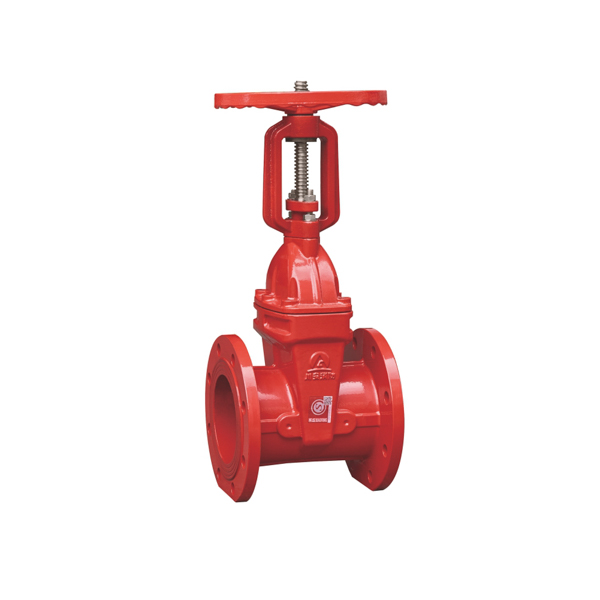
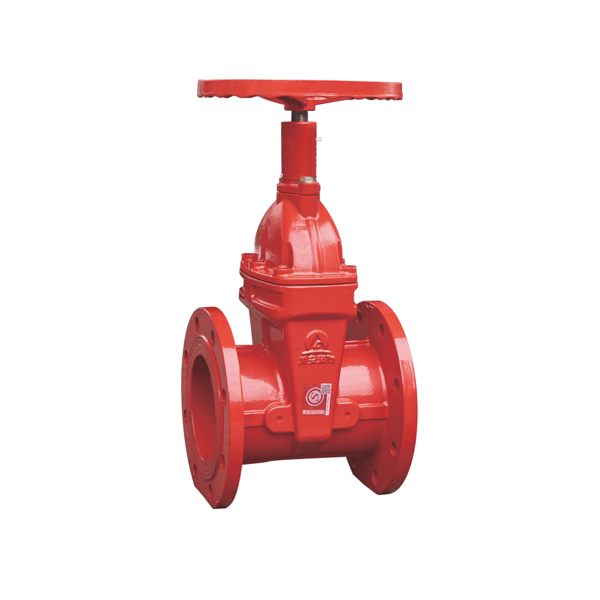
Why Fire Protection Systems Require Gate ValvesNFPA 13 requires that all isolation valves on fire sprinkler supply mains meet specific criteria that standard ball valves do not satisfy: 1. Visual open/closed position indicationThe rising stem of an OS&Y gate valve provides clear visual indication — stem extended = open, retracted = closed. Visible from across a pump room. An NRS gate valve satisfies this through its dial position indicator. A standard ball valve lever does not consistently satisfy this requirement at distance. 2. Tamper switch / supervisory device integrationNFPA 72 requires that control valves on fire sprinkler systems be supervised by a tamper switch that signals the fire alarm panel if the valve is closed or partially closed. Gate valves with integral tamper switches are standard products designed for this. Standard ball valves do not inherently accommodate this. 3. NFPA 13 Section 8.16 valve type requirementSection 8.16 of NFPA 13 explicitly lists OS&Y and NRS gate valves as acceptable types for sprinkler supply isolation. This is why you will find a gate valve at every connection between the water supply and a fire sprinkler system. 🔥 CA-FIRE Gate Valves for Fire Protection
CA-FIRE manufactures a complete range of NFPA 13 compliant gate valves: OS&Y rising stem gate valves in DN50–DN400, NRS gate valves with dial indicator, gate valves with integral tamper switch for FACP connection, and signal gate valves with dual micro-switch position feedback. All products are PN16-rated, full-bore, resilient-seated. ANSI B16.1 or DIN PN16 flanged ends, or AWWA C606 grooved ends available. When to Use a Gate Valve vs a Ball Valve
Can You Replace a Gate Valve with a Ball Valve?In general plumbing and non-critical industrial applications, yes — a ball valve is a common and practical replacement. However, in fire protection applications you cannot replace a gate valve with a standard ball valve without specific engineering approval. The replacement valve must: → Be specifically listed and approved for fire protection use → Provide the same tamper switch / supervisory capability → Meet NFPA 13 requirements for control valve type and position indication → Be approved by the authority having jurisdiction (AHJ) Important: If you are maintaining or upgrading a fire sprinkler system and considering a valve change, consult a licensed fire protection engineer before substituting any valve type on supply mains. Unauthorised changes can affect the system’s listed status and insurance coverage.
Cost ComparisonAt small bore sizes the two valve types are broadly similar in cost. The price difference becomes increasingly significant as pipe diameter grows:
Frequently Asked QuestionsRelated Articles
|
Need a Gate Valve Quote?
CA-FIRE manufactures fire protection gate valves DN50–DN400. Factory direct from Fujian, China. WhatsApp: +86 181-5036-2095 |