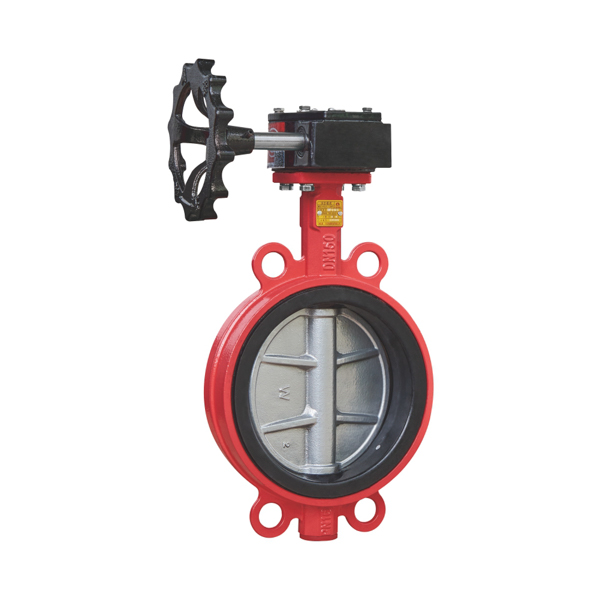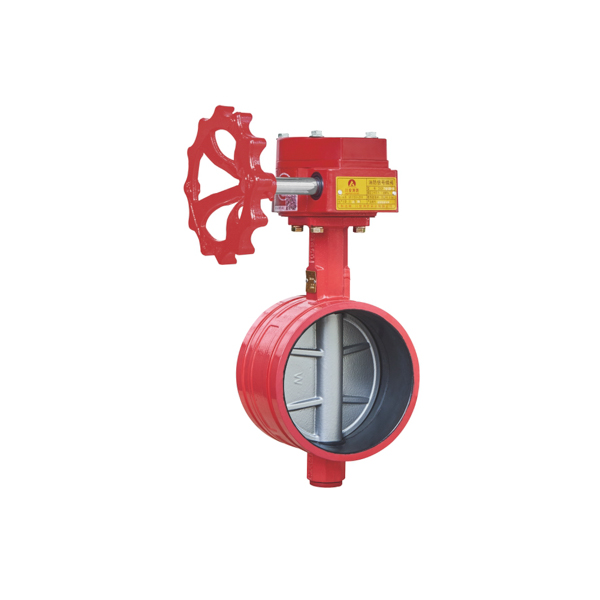
Lever Butterfly Valve — ZSDF7-S/ZSXDF7-S Manual Fire Isolation Valve DN50–DN150 | CA-FIRE

Model ZSDF7-S / ZSXDF7-S — Manual Fire Isolation Valve · Wafer Type

Lever Butterfly Valve

Quarter-turn manual butterfly valve for fire sprinkler branch lines, zone control valve (ZCV) assemblies, and test-and-drain connections. DN50–DN150, 1.6 MPa. Wafer flanged with optional DC24V tamper switch for NFPA 13 / NFPA 72 supervisory compliance. 90° open-to-close — instant visual position confirmation, no handwheel turns required. GGG40 or SS316 body. GB 5135 certified.
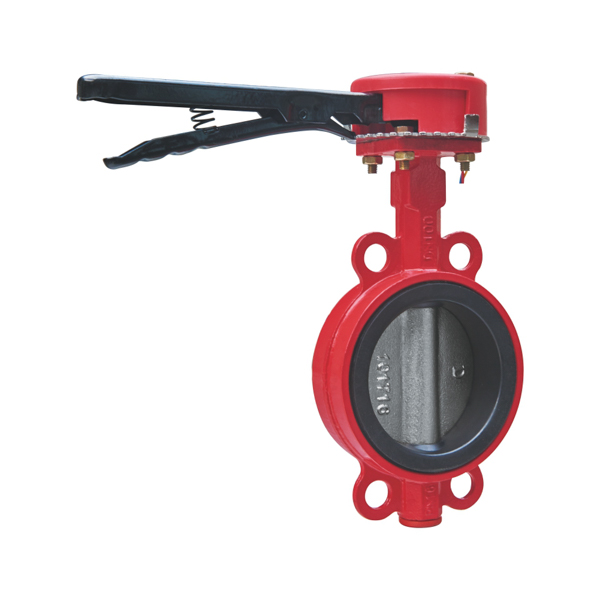
DN50–DN150 1.6 MPa Quarter-Turn Lever Wafer Flanged GB 5135
CA-FIRE ZSDF7-S / ZSXDF7-S Lever Wafer Butterfly Valve for Fire Protection
DN50–150Size Range
1.6 MPaWorking Pressure
6.4 MPaStrength Test
90°Quarter-Turn
DC24VTamper Switch

Why Lever Over Gear for Small DN?

On DN50–DN150 fire isolation valves, a lever handle outperforms a worm gear in every operational scenario that matters: emergency shutdown, system commissioning, and routine inspection. The quarter-turn motion is faster, more intuitive, and mechanically simpler with fewer moving parts.

The lever locks in detent notches at full-open and full-closed — no position indicator drift, no inadvertent movement. For test-and-drain valves, zone control valves, and inspector test connections, the lever is the industry-standard choice.

FactorLever (ZSDF7-S)Gear (ZSDF7)
Operation Speed90° — 1 sec15–30 turns
Best DN RangeDN50–DN150DN100–DN300
Emergency ShutdownImmediateSlower
Maintenance AccessMinimal clearanceHandwheel reach
Position IndicationLever angleDial indicator
Parts CountSimplerWorm gear assembly

Product Variants

Two Models — Signal & Non-Signal

Same wafer body, EPDM seat, and quarter-turn lever. Select based on whether NFPA 72 supervisory monitoring is required on the project.

Signal Version — Supervised
ZSXDF7-S
  • Integrated DC24V 0.5A tamper switch
  • Transmits OPEN / TAMPER / CLOSED to FACP
  • NFPA 72 Chapter 17 supervisory signal compliance
  • Required for supervised zone control valves on monitored fire alarm systems
  • Standard for commercial and high-rise sprinkler ZCV assemblies
Non-Signal Version — Unsupervised
ZSDF7-S
  • No tamper switch — lower cost
  • Physical lock-open or padlock supervision only
  • Inspector test connections, drain valves, test lines
  • For locations where AHJ accepts non-electrical supervision
  • Same body, seat, and pressure rating as ZSXDF7-S
Need DN200 or larger? For DN200–DN300, lever torque at 1.6 MPa working pressure exceeds practical hand limits. Use the Gear Operated Butterfly Valve (ZSDF7 / ZSXDF7) for larger sizes. The grooved equivalents are ZSDF8-S / ZSXDF8-S (lever grooved).

Key Features

Why Specify the ZSDF7-S Series

Six design points that make the lever butterfly valve the standard choice for DN50–DN150 fire protection branch line and zone isolation.

Single-Motion Isolation
Full open-to-close in one 90° lever sweep — no multi-turn handwheel operation. Critical for emergency isolation during active system testing, maintenance, or fire response. Lever detents lock at exactly 0° (open) and 90° (closed).
📡
Integrated Tamper Switch (ZSXDF7-S)
DC24V 0.5A supervisory output via stem-mounted cam and microswitch. Any lever movement from full-open changes switch state within 1–2° rotation and sends TAMPER to FACP, per NFPA 72 Chapter 17.
🔗
Compact Wafer Profile
45–60 mm face-to-face for DN50–DN150. Installs between ANSI 150, DIN PN16, or GB PN16 flanges without modification. Smallest possible valve station footprint for space-constrained mechanical rooms and riser shafts.
🔩
GGG40 or SS316 Body
Ductile iron GGG40 for standard freshwater and diluted foam service. Stainless steel SS316 for corrosive environments, offshore installations, and foam concentrate lines.
💧
EPDM Bi-Directional Seat
EPDM seal rated for water, AFFF foam-water, AR-AFFF, and protein foam at 1.6 MPa. Bi-directional — either end can be upstream. Media temperature 0–80°C (signal version) or 4–70°C (non-signal).
📋
GB 5135 Certified
ZSXDF7-S to GB 5135.13; ZSDF7-S to GB 5135.2. Hydrostatic tested at factory to 6.4 MPa (4× working pressure). Individual test certificate with each valve. Compliant with NFPA 13 supervision requirements.

Technical Data

Full Technical Specifications

ZSDF7-S and ZSXDF7-S share the same wafer body, EPDM seat, 1.6 MPa rating, and DN50–DN150 range. The tamper switch is the only difference.

Parameter ZSXDF7-S — With Signal ZSDF7-S — Without Signal
ModelZSXDF7-S-Q-50-150-16ZSDF7-S-Q-50-150-16
Nominal DiameterDN50 / DN65 / DN80 / DN100 / DN125 / DN150
Working Pressure1.6 MPa (16 bar / 232 psi)
Strength Test Pressure6.4 MPa
Seal Test Pressure3.2 MPa
Applicable MediaWater · AFFF foam-water · AR-AFFF · Protein foam
ActuatorQuarter-turn lever handle (手柄)
Operation90° lever — single motion full open to full closed
Tamper SwitchDC24V 0.5A output (OPEN / TAMPER / CLOSED)None
Switch Electrical RatingDC24V 1.5A rated
Connection TypeWafer — between flanges (ANSI 150 / DIN PN16 / GB PN16)
Body MaterialDuctile cast iron GGG40 / Stainless steel SS316
Seat MaterialEPDM
Media Temperature0–80°C4–70°C
Applicable StandardGB 5135.13GB 5135.2

Structural Dimensions

Face-to-Face Length — DN50–DN150

Lever butterfly valve face-to-face dimensions for pipe spool layout and interference checks. All dimensions in mm. Same as the gear operated ZSDF7 wafer type at equivalent sizes.

DN (mm) 506580100125150
F/F (mm) 455050556060
Lever clearance: Ensure 90° sweep clearance for the lever handle around the pipe. For valves in tight mechanical rooms or riser shafts, verify there is no obstruction within a 200–250 mm radius from the valve stem centerline in the lever's plane of rotation.

Applications

Where the Lever Butterfly Valve Is Specified

Standard selection for DN50–DN150 isolation points where fast quarter-turn operation is the priority. Typical uses:

🔧
Zone Control Valves (ZCV)
Floor ZCV assemblies in commercial and residential buildings. DN80–DN150 isolation of individual floor or zone wet pipe sprinkler branches. ZSXDF7-S tamper switch for FACP supervision.
🔍
Inspector Test Connections
DN50–DN80 inspector test and drain valves at the end of sprinkler branches. Quarter-turn lever allows single-hand operation during system testing and inspection per NFPA 25.
🚿
Test & Drain Assemblies
Combined test-and-drain valve sets on wet and dry pipe sprinkler systems. DN50–DN65 on branch drain lines. Fast 90° operation simplifies routine inspection by qualified personnel.
🧯
Hose Cabinet Isolation
DN65–DN100 isolation valves for fire hose reel and landing valve supply branches in commercial and high-rise buildings. Lever allows fast isolation of individual hose points for maintenance.
⚗️
Laboratory & Special Hazard Zones
DN50–DN100 branch isolations on pre-action or deluge zones in laboratory, data center, and paint spray booth fire protection. Fast closure needed for zone reconfiguration after discharge.
🏗️
Temporary & Construction Phase
Temporary fire protection during phased building construction. Lever valves provide fast isolation between occupied and under-construction zones without handwheel operation under pressure.

Selection Guide

Lever vs. Gear — Which to Specify

Both use the same wafer body, seat, and pressure rating. The actuator choice depends on valve size and application.

Specify Lever (ZSDF7-S) When:
Quarter-Turn
  • Valve is DN50 to DN150
  • Fast isolation speed is the priority (ZCV, test valve)
  • Valve will be operated frequently — inspections, testing
  • Space around valve is limited — lever needs less radial clearance than handwheel
  • Immediate visual confirmation of position needed (lever angle)
Specify Gear (ZSDF7) When:
Worm Gear
  • Valve is DN100 to DN300 (required for DN200+)
  • Controlled, slow opening needed to prevent water hammer
  • Main riser isolation or pump suction/discharge valves
  • High cycle frequency where lever would be difficult at large DN
  • Chain wheel extension required for high installation height

FAQ

Frequently Asked Questions

Common questions about the ZSDF7-S / ZSXDF7-S lever butterfly valve.

Why is the lever valve limited to DN150 maximum?
Butterfly valve operating torque increases with the square of disc diameter and proportionally with working pressure. At DN200 and above under 1.6 MPa working pressure, the torque required to rotate the disc exceeds what a single person can comfortably apply via a short lever handle. The worm gear on the ZSDF7 gear operated version provides 15:1 to 30:1 mechanical advantage to overcome this torque. For DN50–DN150, lever torque remains within safe hand operation limits. CA-FIRE does not offer lever operated versions above DN150 to prevent under-torquing and valve damage.
Does the lever valve tamper switch require external power?
No. The ZSXDF7-S tamper switch is a passive contact device — it outputs a DC24V supervisory signal sourced from the FACP's supervised circuit power, not from an external power supply. The switch simply opens or closes the circuit depending on valve position. The FACP provides the 24V loop current. Connect the two switch terminals to a supervisory initiating device circuit (SLC or conventional supervised zone) on the panel.
Can the lever handle be padlocked in the open position?
Yes. The ZSDF7-S (non-signal version) includes a lever handle with a padlock hole at the full-open detent position. This is the standard physical supervision method where AHJs accept padlock-and-chain lock-open in lieu of electrical tamper switch supervision. The lever detent at full-open prevents inadvertent closure from vibration or incidental contact. Note: For the ZSXDF7-S signal version, padlocking does not disable the tamper switch — both supervision methods are active simultaneously.
How does a lever butterfly valve install?
Installation is identical to any wafer butterfly valve. Place the valve body between two pipe flanges with the disc in a partially open position (10–15°) to prevent disc edge damage during bolt tightening. Insert flange bolts through both flanges alongside the valve body. Tighten bolts evenly in a cross-pattern to the flange torque specification. After bolt-up, verify the lever swings the full 90° arc without obstruction. The EPDM seat serves as the gasket — no additional flange gaskets are required.
What is the difference between ZSDF7-S (lever wafer) and ZSDF8-S (lever grooved)?
ZSDF7-S installs between standard flanges (wafer design). ZSDF8-S uses Victaulic-compatible grooved mechanical couplings and is part of the grooved butterfly valve page. Both use the same EPDM seat, same pressure rating, same optional tamper switch, and same DN50–DN150 lever range. Specify ZSDF7-S for flanged pipe systems; ZSDF8-S for grooved steel pipe systems.
Is this a manual butterfly valve for fire suppression?
Yes. The ZSDF7-S / ZSXDF7-S is a manual fire isolation butterfly valve — the quarter-turn lever provides direct hand operation with no gearbox or motorized actuator. It is designed specifically for fire suppression systems (fire sprinkler, standpipe, foam systems) and certified to GB 5135.2 (non-signal) and GB 5135.13 (with tamper switch). For larger DN200–DN300 sizes where manual lever torque becomes impractical, use the gear operated ZSDF7 / ZSXDF7 series instead.

Request a Quote or Datasheet

Ready to Specify the ZSDF7-S?

DN50–DN150 · GGG40 or SS316 · Signal or non-signal · Factory direct, fast lead times. Send us your pipe size and zone control layout.

Mobile
+86 13400715622
WhatsApp
+86 18150362095
WeChat
404863577
Scroll to Top