

The upright fire sprinkler head is the standard choice for exposed-piping systems — it mounts above the branch pipe with its deflector facing upward, discharging water in a characteristic umbrella pattern that is thrown upward, then deflected outward and downward to cover the protected area. CA-FIRE manufactures upright sprinklers across the full range of response types (standard, quick, and special response) and temperature ratings (57°C to 260°C), covering every occupancy class from warehouses and factories to cold-storage facilities and high-temperature industrial environments.
All models are produced at our Fujian factory with GB 5135 CCCF type approval. NFPA 13 compatible documentation is available for international project submittals.
Looking for a non-upright type? See: Pendent → · Sidewall → · Concealed →
Standard Response Upright Sprinkler — ZSTZ Series
The ZSTZ (upright) series are CA-FIRE's core standard-response glass bulb sprinklers. RTI 80–350 (m·s)½, 5mm glass bulb, available in seven activation temperatures from 57°C to 260°C. The most cost-effective choice for warehouses, factories, and exposed-pipe systems where quick response is not mandated.

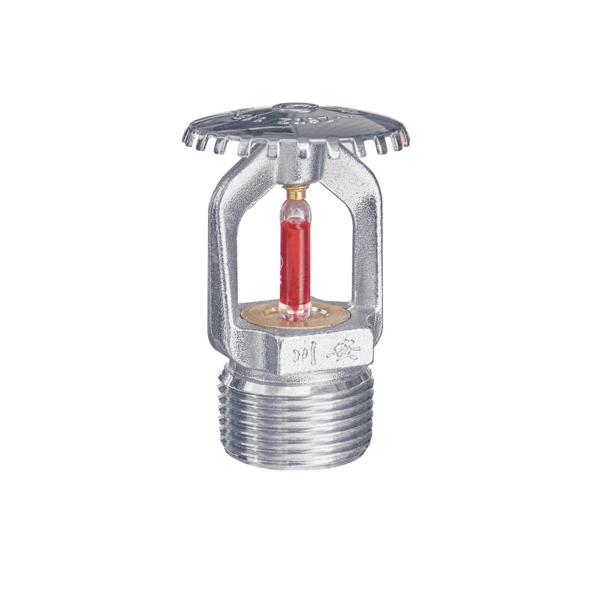
ZSTZ 80-68°C Q5 C
Standard ResponseMost common model. K5.6 (K80) upright, 68°C red bulb. General commercial, warehouse and industrial wet-pipe systems. Zinc alloy body.
| K-factor | K5.6 (K80) |
|---|---|
| Activation | 68°C · Red |
| RTI | 80–350 (m·s)½ |
| Thread | R½ (BSP) |
| Bulb | Glass 5mm |
| Min pressure | 0.10 MPa |
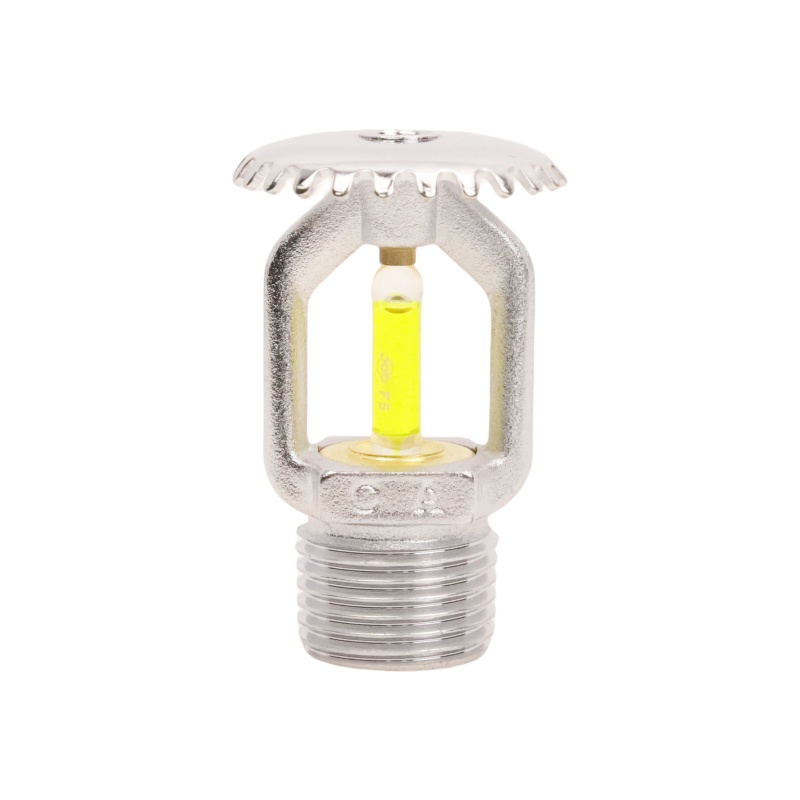
ZSTZ 115-68°C Q5 C
Standard ResponseK8.0 (K115) upright for higher-demand systems. Ordinary Hazard Group 1 & 2. Manufacturing, distribution warehouses, large-area storage.
| K-factor | K8.0 (K115) |
|---|---|
| Activation | 68°C · Red |
| RTI | 80–350 (m·s)½ |
| Thread | R¾ (BSP) |
| Bulb | Glass 5mm |
| Min pressure | 0.10 MPa |
ZSTZ 80-79°C Q5 C
Standard Response79°C yellow bulb — for spaces with moderate ambient heat: attics, roof spaces, sunlit plant rooms, seasonal temperature variation.
| K-factor | K5.6 (K80) |
|---|---|
| Activation | 79°C · Yellow |
| RTI | 80–350 (m·s)½ |
| Thread | R½ (BSP) |
| Max ambient | 49°C |
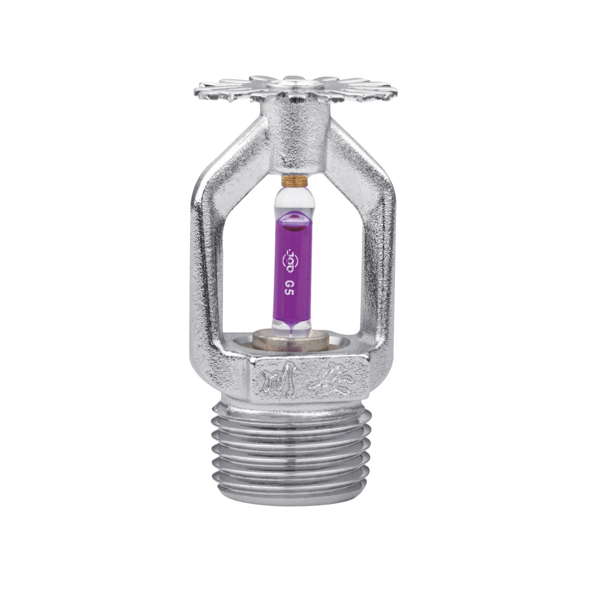
ZSTZ 80-182°C Q5 C
High Temperature182°C purple bulb — prevents false activation. Boiler rooms, laundries, steam pipe galleries, industrial processes below 152°C ambient.
| K-factor | K5.6 (K80) |
|---|---|
| Activation | 182°C · Purple |
| RTI | 80–350 (m·s)½ |
| Thread | R½ (BSP) |
| Max ambient | 152°C |
Standard Response — Full Temperature & Model Range
| Model | K-factor | Activation | Bulb Color | Max Ambient | Thread | RTI (m·s)½ | Typical Application |
|---|---|---|---|---|---|---|---|
| ZSTZ 80-57°C Q5 C | K5.6 | 57°C | Orange | 27°C | R½ | 80–350 | Cold climates, unheated warehouses |
| ZSTZ 80-68°C Q5 C ★ | K5.6 | 68°C | Red | 38°C | R½ | 80–350 | Most common — warehouses, factories |
| ZSTZ 115-68°C Q5 C ★ | K8.0 | 68°C | Red | 38°C | R¾ | 80–350 | High-demand, Extra Hazard occupancies |
| ZSTZ 80-79°C Q5 C | K5.6 | 79°C | Yellow | 49°C | R½ | 80–350 | Attics, sunlit roof spaces |
| ZSTZ 80-93°C Q5 C | K5.6 | 93°C | Green | 63°C | R½ | 80–350 | Hot utility spaces, plant rooms |
| ZSTZ 80-141°C Q5 C | K5.6 | 141°C | Blue | 111°C | R½ | 80–350 | Laundries, steam rooms |
| ZSTZ 80-182°C Q5 C | K5.6 | 182°C | Purple | 152°C | R½ | 80–350 | Boiler rooms, high-temp process |
| ZSTZ 80-260°C Q5 C | K5.6 | 260°C | Black | 230°C | R½ | 80–350 | Drying ovens, kilns |
★ Most commonly specified. Custom temperature ratings on request.
Quick Response Upright Sprinkler — K-ZSTZ Series
Quick response upright sprinklers (RTI ≤ 50 (m·s)½) activate significantly faster than standard response at the same heat exposure. Upright quick response heads are specified for open-rack warehouses, cold-storage facilities, and any application where thermal sensitivity is critical but piping runs below the deflector. CA-FIRE quick response upright heads use German-imported 3mm glass bulbs. Identified by the "J" suffix in the model code.
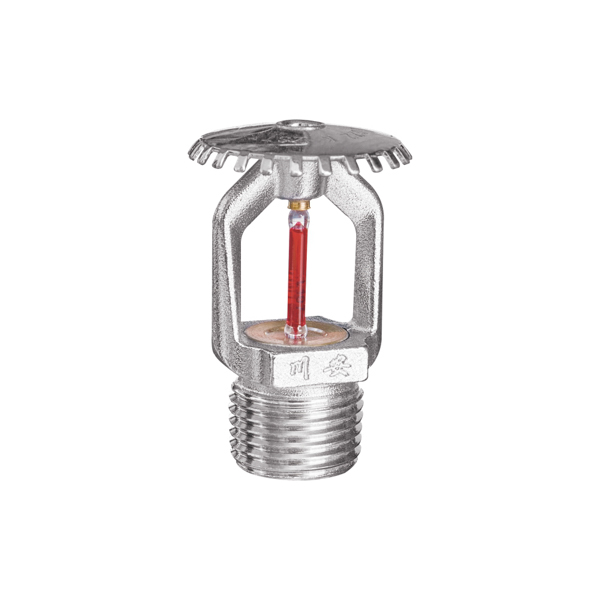
K-ZSTZ 80-68°C Q3 J
Quick ResponseQR K5.6 (K80) upright with 3mm German glass bulb. Standard QR upright for warehouses and industrial facilities where early activation is required. R½ thread, zinc alloy body.
| K-factor | K5.6 (K80) |
|---|---|
| Activation | 68°C · Red |
| RTI | ≤ 50 (m·s)½ |
| Thread | R½ (BSP) |
| Bulb | Glass 3mm (imported) |
| Min temp | 4°C |
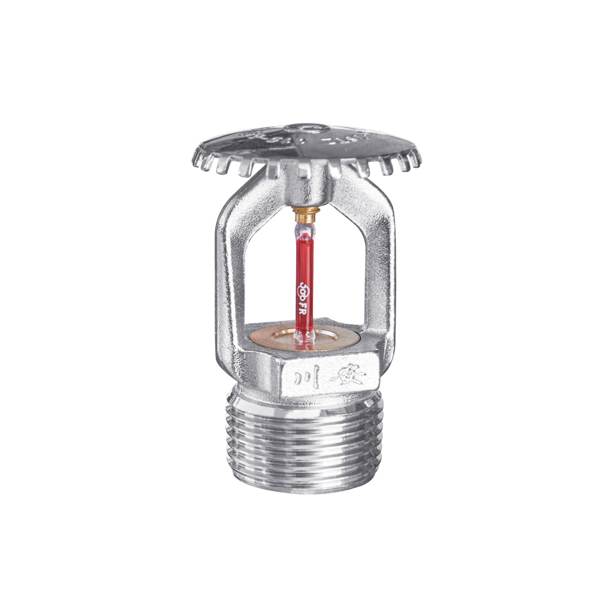
K-ZSTZ 115-68°C Q3 J
Quick ResponseQR K8.0 (K115) upright — for ordinary to extra hazard requiring greater flow with quick activation: high-rack storage, logistics centres, heavy industrial.
| K-factor | K8.0 (K115) |
|---|---|
| Activation | 68°C · Red |
| RTI | ≤ 50 (m·s)½ |
| Thread | R¾ (BSP) |
| Bulb | Glass 3mm (imported) |
| Min temp | 4°C |
K-ZSTZ 80-57°C Q3 J
Quick ResponseQR 57°C orange bulb upright — for unheated or cold-climate warehouses where early activation at low ambient temperatures is critical.
| K-factor | K5.6 (K80) |
|---|---|
| Activation | 57°C · Orange |
| RTI | ≤ 50 (m·s)½ |
| Thread | R½ (BSP) |
| Bulb | Glass 3mm (imported) |
| Min temp | 4°C |
Quick Response K-ZSTZ — Full Range
| Model | K-factor | Activation | Bulb | Max Ambient | Thread | Application |
|---|---|---|---|---|---|---|
| K-ZSTZ 80-57°C Q3 J | K5.6 | 57°C | 3mm | 27°C | R½ | Cold-climate warehouses, unheated storage |
| K-ZSTZ 80-68°C Q3 J ★ | K5.6 | 68°C | 3mm | 38°C | R½ | Most common QR upright — warehouses, industrial |
| K-ZSTZ 115-68°C Q3 J ★ | K8.0 | 68°C | 3mm | 38°C | R¾ | High-flow QR — logistics, high-rack storage |
| K-ZSTZ 80-79°C Q3 J | K5.6 | 79°C | 3mm | 49°C | R½ | Hot-climate warehouses, elevated ambient |
| K-ZSTZ 80-93°C Q3 J | K5.6 | 93°C | 3mm | 63°C | R½ | Hot utility spaces, high-ambient industrial |
| K-ZSTZ 80-141°C Q3 J | K5.6 | 141°C | 3mm | 111°C | R½ | QR in high-ambient industrial environments |
★ Most commonly specified.
Selection Guide — Which Upright Sprinkler Do I Need?
The right upright sprinkler depends on your occupancy hazard class, space ambient temperature, and whether your design requires quick response. Use this table to identify the correct series.
| Scenario | Recommended Series | K-Factor | Temp | Key Reason |
|---|---|---|---|---|
| Warehouse / factory (exposed pipe, Ordinary Hazard) | ZSTZ (SR) | K5.6 / K8.0 | 68°C | Standard response — cost-efficient for large exposed-pipe areas |
| Distribution / logistics (faster activation required) | K-ZSTZ (QR) | K5.6 / K8.0 | 68°C | Quick response — earlier suppression in open-plan facilities |
| Boiler room / laundry / high-ambient | ZSTZ 182°C | K5.6 | 182°C | Purple bulb — no false activation below 152°C ambient |
| Drying oven / kiln (extreme heat) | ZSTZ 260°C | K5.6 | 260°C | Black bulb — ambient up to 230°C |
| Cold climate / unheated warehouse | ZSTZ 57°C / K-ZSTZ 57°C | K5.6 | 57°C | Orange bulb — activates at lower fire temperatures |
| Dry-pipe system | ZSTZ (preferred orientation) | K5.6 / K8.0 | Per design | Upright orientation facilitates proper drainage of dry-pipe systems |
How an Upright Fire Sprinkler Head Works
In normal standby, the upright sprinkler's orifice is sealed by a spring-loaded cap held in place by a 3mm or 5mm glass bulb filled with glycerine solution. When surrounding air reaches the rated activation temperature, the glycerine expands, the internal pressure bursts the bulb, and the cap is released.
Water flows from the branch pipe through the orifice and strikes the upward-facing deflector plate — the deflector throws water upward and outward, which then falls downward in a characteristic umbrella pattern. The upright deflector is specifically engineered for above-pipe installation; it is not interchangeable with a pendent deflector.
In dry-pipe systems, the upright orientation provides a drainage advantage: water drains away from the upward-facing orifice when the system is depressurised, reducing freeze risk and scale buildup.
- Fire ignites → hot combustion gases rise to ceiling
- Hot gas layer heats glass bulb — glycerine inside expands
- Internal pressure bursts bulb at rated activation temperature
- Spring-loaded cap releases → orifice opens
- Water flows from branch pipe through orifice onto upward-facing deflector
- Deflector throws water upward and outward in umbrella pattern → fire suppressed
Upright vs Pendent — When to Specify Upright
Both types deliver equivalent fire protection performance — the same K-factors, activation temperatures, and hydraulic design methods apply to both. The choice is driven by pipe routing and installation environment.
| Factor | Upright Sprinkler Head | Pendent Sprinkler Head |
|---|---|---|
| Pipe position | Pipe runs below the sprinkler — head points upward | Pipe runs above the sprinkler — head points downward |
| Typical installation | Exposed systems: warehouses, factories, industrial buildings | Concealed systems: offices, hotels, commercial buildings |
| Dry-pipe suitability | Preferred — upright drains away from orifice | Acceptable with dry-pendent extensions |
| Aesthetics | Exposed deflector visible — suitable for industrial settings | Can be concealed with decorative cover plates |
| Interchangeability | Not interchangeable — installing an upright head in pendent orientation (or vice versa) causes incorrect water distribution and dangerous large droplets. Always verify orientation before installation. | |
Standards & Certifications
| Standard | Coverage & CA-FIRE Compliance |
|---|---|
| GB 5135.1 | Automatic sprinkler — glass bulb type. CA-FIRE ZSTZ and K-ZSTZ series hold full CCCF type approval under GB 5135.1. Certificate numbers available on request for China domestic project submissions. |
| GB 5135.2 | Fusible link type (applicable to ZSTZ fusible link upright models). |
| NFPA 13 | CA-FIRE export documentation includes K-factor data in both metric (L/min/bar½) and US units (gpm/psi½), pressure vs. flow curves, and material certificates compatible with NFPA 13 submittal packages for international projects. |
| ISO 9001:2015 | CA-FIRE QMS covers 100% hydrostatic leak test at 3.5 MPa, glass bulb fill-ratio inspection, activation temperature sampling, and thread gauge verification per GB 5135 requirements on every production batch. |
Frequently Asked Questions
What is the difference between an upright and a pendent fire sprinkler?
An upright sprinkler mounts above the branch pipe with its deflector facing up — water is thrown upward then deflected outward and downward in an umbrella pattern. A pendent sprinkler hangs downward from the branch pipe with its deflector facing down, discharging water in a hemispherical pattern below the ceiling.
The choice is determined by pipe routing: if the branch pipe runs below the ceiling in an exposed system (common in warehouses and industrial buildings), upright sprinklers are typically preferred. Upright and pendent sprinklers are not interchangeable — using an upright head in pendent position causes incorrect water distribution and dangerous large droplets.
Are upright sprinklers better for dry-pipe systems?
Yes — the upright orientation is generally preferred for dry-pipe and pre-action systems because water drains away from the upward-facing orifice when the system is depressurised. This reduces freeze damage risk in cold environments and scale/corrosion buildup over time.
For dry-pipe systems requiring pendent installation, dry-pendent sprinkler extensions are available. CA-FIRE can advise on the most appropriate solution for your system type.
Can upright sprinklers be used in a wet-pipe system?
Yes — upright sprinklers are fully compatible with wet-pipe, dry-pipe, pre-action, and deluge systems. The wet-pipe system is the most common application for standard upright sprinklers in warehouses and factories. The choice of upright vs. pendent is about pipe layout and installation orientation, not system type compatibility.
What does the K-factor mean and which K-factor do I need?
The K-factor is the hydraulic flow coefficient, defined by Q = K × √P, where Q is flow rate (L/min) and P is pressure at the sprinkler (bar). A higher K-factor produces more water flow at the same pressure.
K5.6 (K80): standard for most light-hazard and ordinary-hazard occupancies. At 0.10 MPa (1 bar), flows approximately 80 L/min (21 gpm).
K8.0 (K115): delivers approximately 115 L/min (30 gpm) at 1 bar — used for Ordinary Hazard Group 2 and Extra Hazard occupancies.
For warehouses with high-rack storage above 7.5 m, see our ESFR sprinkler page for K202 / K242 / K363 ESFR upright options.
What is the maximum spacing and coverage area for upright sprinklers?
Maximum spacing follows the same rules as pendent sprinklers under GB 50084 and NFPA 13:
Standard / Quick Response (K5.6 / K8.0):
Light Hazard — max 4.6 m spacing, max 20.9 m² per head (NFPA 13) / 20 m² per head (GB 50084).
Ordinary Hazard — max 4.0 m spacing, max 12.1 m² per head.
Extra Hazard — max 3.7 m spacing, max 9.3 m² per head.
Minimum spacing between heads: 1.8 m in all classes.
Can I replace an upright sprinkler myself?
Sprinkler replacement must be performed by a qualified fire protection contractor. Before ordering replacement heads, identify the existing sprinkler's model number, activation temperature (glass bulb colour), K-factor, thread size, and response type. CA-FIRE can supply exact-specification replacement upright sprinklers for both our own products and many third-party equivalents.
Per NFPA 25, replacement sprinklers must match the temperature rating, K-factor, response type, and orientation of the original.
Related Products
ZSTZ · K-ZSTZ · K5.6 / K8.0 · 57–260°C · Standard & Quick Response
GB 5135 CCCF Certified · NFPA 13 documentation available · Mixed models welcome · 24 hr quote