

Pendent Fire Sprinkler Head K-factor K80 / K115 57°C – 260°C Activation Temp Standard Response RTI 80–350 Quick Response RTI ≤ 50 Glass Bulb 3mm / 5mm Thread R½ · R¾ GB 5135 CCCF Certified NFPA 13 Documentation Available Factory Direct · 24 hr Quote
The pendent fire sprinkler head is the most widely installed sprinkler type worldwide — it hangs downward from the branch pipe with its deflector plate facing down, discharging water in a hemispherical pattern below the ceiling. CA-FIRE manufactures pendent sprinklers across the full range of response types (standard, quick, and special response) and temperature ratings (57°C to 260°C), covering every occupancy class from residential apartments to extra-hazard industrial facilities.
This page covers all CA-FIRE pendent sprinkler models: the standard-response ZSTZ / ZSTX series, the quick-response K-ZSTZ / K-ZSTX series, the extended-coverage EC-ZSTZ / EC-ZSTX series, and the high-temperature ZSTX 182°C / 260°C range. All models are produced at our Sichuan factory with GB 5135 CCCF type approval.
Looking for a non-pendent type? See: Upright → · Sidewall → · Concealed →
▶ Pendent Sprinkler — Water Distribution
Standard Response Pendent Sprinkler — ZSTZ / ZSTX Series
The ZSTZ (pendent) and ZSTX (upright/pendent convertible) series are CA-FIRE's core standard-response glass bulb sprinklers. RTI 80–350 (m·s)½, 5mm glass bulb, available in seven activation temperatures from 57°C to 260°C. The most cost-effective choice for ordinary and extra-hazard occupancies where quick response is not mandated.
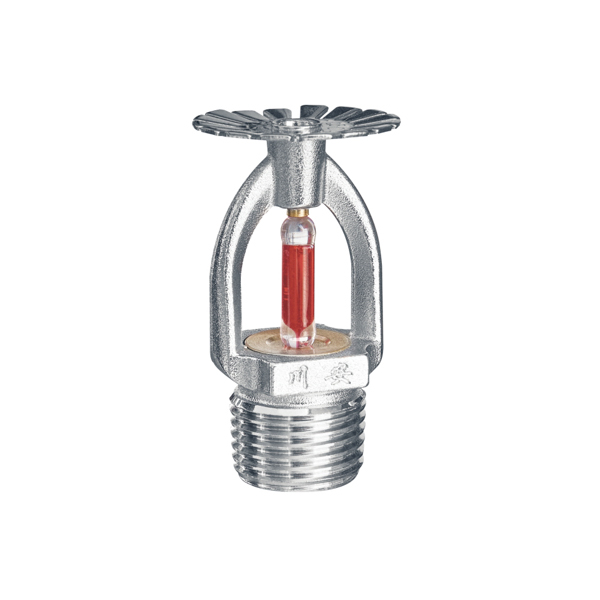
ZSTZ 80-68°C Q5 C
Standard ResponseMost common model. K5.6 (K80) pendent, 68°C red bulb. General commercial, warehouse, and industrial wet-pipe systems. Zinc alloy body.
| K-factor | K5.6 (K80) |
| Activation | 68°C · Red |
| RTI | 80–350 (m·s)½ |
| Thread | R½ (BSP) |
| Bulb | Glass 5mm |
| Min pressure | 0.10 MPa |
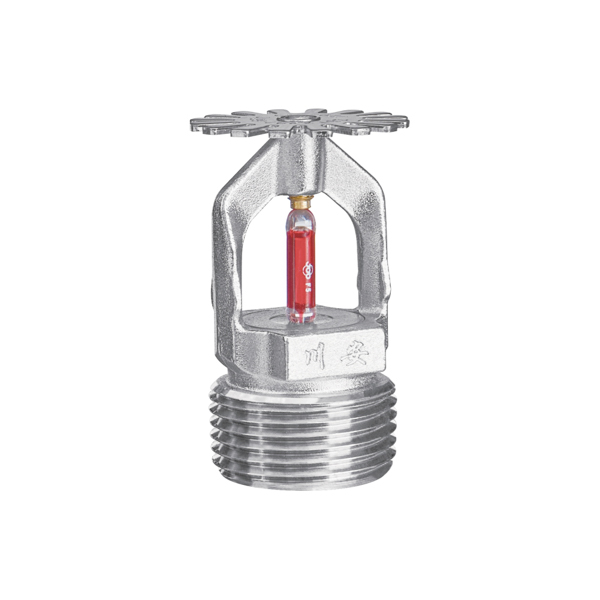
ZSTX 115-68°C Q5 C
Standard ResponseK8.0 (K115) pendent for higher-demand systems. Produces greater flow at the same pressure vs K5.6. Ordinary / Extra Hazard Group 1 design basis.
| K-factor | K8.0 (K115) |
| Activation | 68°C · Red |
| RTI | 80–350 (m·s)½ |
| Thread | R¾ (BSP) |
| Bulb | Glass 5mm |
| Min pressure | 0.10 MPa |
ZSTZ 80-79°C Q5 C
Standard Response79°C yellow bulb — for spaces with moderate ambient heat: attics, roof spaces, sunlit plant rooms, and areas subject to seasonal temperature variation.
| K-factor | K5.6 (K80) |
| Activation | 79°C · Yellow |
| RTI | 80–350 (m·s)½ |
| Thread | R½ (BSP) |
| Bulb | Glass 5mm |
| Max ambient | 49°C |
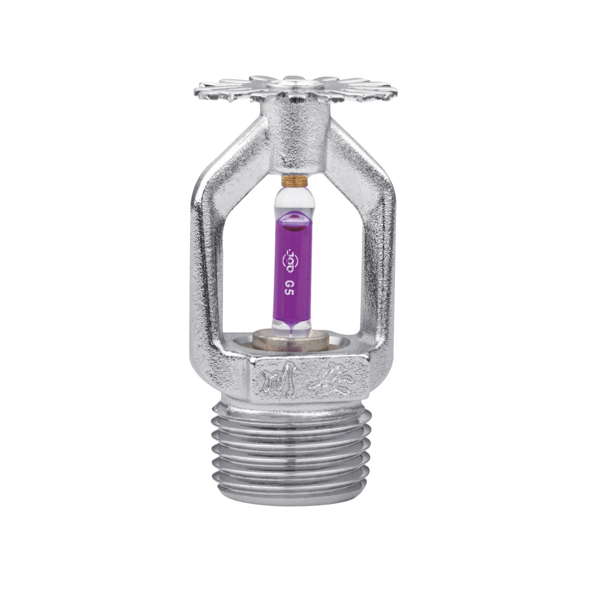
ZSTX 80-182°C Q5 C
High Temperature182°C purple bulb — prevents false activation in high-ambient environments. Boiler rooms, laundries, steam pipe galleries, and commercial kitchens below 152°C ambient.
| K-factor | K5.6 (K80) |
| Activation | 182°C · Purple |
| RTI | 80–350 (m·s)½ |
| Thread | R½ (BSP) |
| Bulb | Glass 5mm |
| Max ambient | 152°C |
Standard Response — Full Temperature & Model Range
| Model | K-factor | Activation Temp | Bulb Color | Max Ambient | Thread | RTI (m·s)½ | Typical Application |
|---|---|---|---|---|---|---|---|
| ZSTZ 80-57°C Q5 C | K5.6 | 57°C | Orange | 27°C | R½ | 80–350 | Cold climates, positive-temp refrigerated areas |
| ZSTZ 80-68°C Q5 C | K5.6 | 68°C ★ | Red | 38°C | R½ | 80–350 | Most common — warehouses, offices, industrial |
| ZSTX 115-68°C Q5 C | K8.0 | 68°C ★ | Red | 38°C | R¾ | 80–350 | High-demand — Extra Hazard Group 1 occupancies |
| ZSTZ 80-79°C Q5 C | K5.6 | 79°C | Yellow | 49°C | R½ | 80–350 | Attics, sunlit roof spaces, moderate heat |
| ZSTZ 80-93°C Q5 C | K5.6 | 93°C | Green | 63°C | R½ | 80–350 | Hot utility spaces, some commercial kitchens |
| ZSTZ 80-141°C Q5 C | K5.6 | 141°C | Blue | 111°C | R½ | 80–350 | Laundries, steam rooms, heat-generating plant |
| ZSTX 80-182°C Q5 C | K5.6 | 182°C | Purple | 152°C | R½ | 80–350 | Boiler rooms, high-temp process areas |
| ZSTX 80-260°C Q5 C | K5.6 | 260°C | Black | 230°C | R½ | 80–350 | Drying ovens, kilns, extreme high-temp environments |
★ = most commonly specified. Models available in C (Conventional/Standard Response) and J (Quick Response) suffix variants. Custom temperature ratings on request.
Quick Response Pendent Sprinkler — K-ZSTZ / K-ZSTX Series
Quick response pendent sprinklers (RTI ≤ 50 (m·s)½) activate significantly faster than standard response at the same heat exposure. Required by NFPA 13 and GB 50084 for light-hazard occupancies (hotels, offices, schools, healthcare) with ceilings below specified heights. CA-FIRE quick response heads use German-imported 3mm glass bulbs for superior thermal sensitivity. Identified by the "J" suffix in the model code.
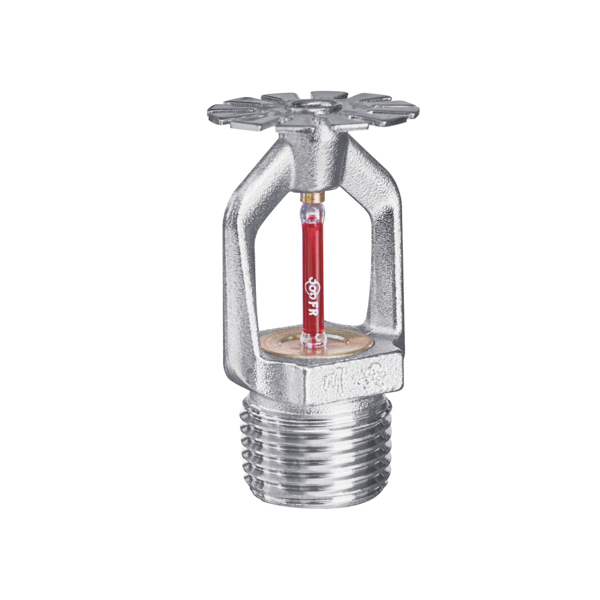
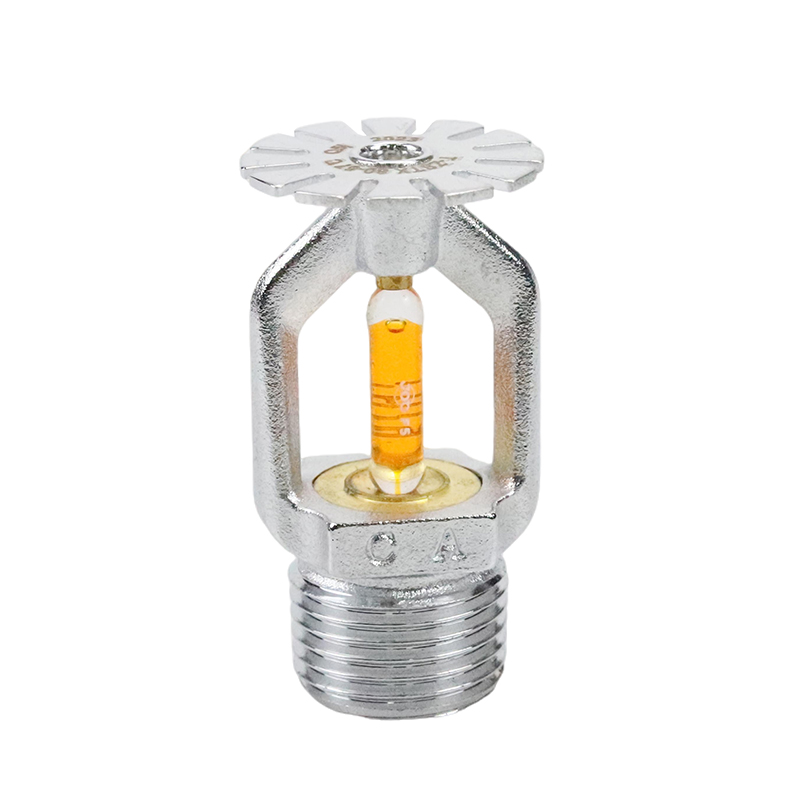
K-ZSTZ 80-68°C Q3 J
Quick ResponseQuick response K5.6 (K80) pendent with 3mm German glass bulb. The standard choice for hotels, offices, schools, and healthcare under NFPA 13 Light Hazard rules. Zinc alloy body, R½ thread.
| K-factor | K5.6 (K80) |
| Activation | 68°C · Red |
| RTI | ≤ 50 (m·s)½ |
| Thread | R½ (BSP) |
| Bulb | Glass 3mm (imported) |
| Min temp | 4°C |
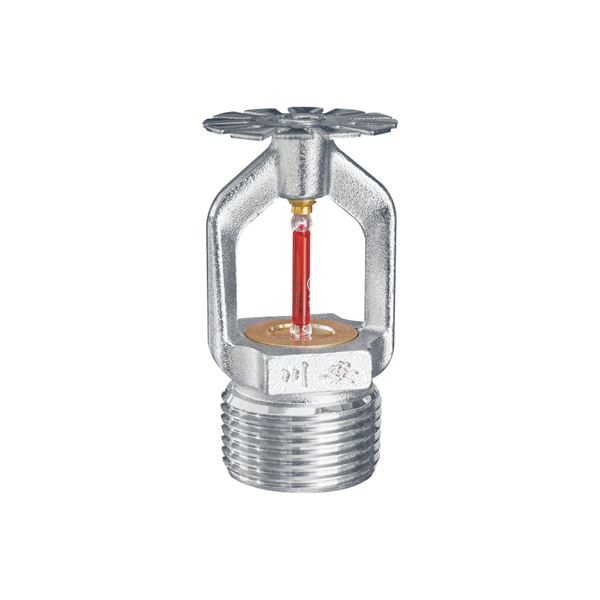
K-ZSTX 115-68°C Q3 J
Quick ResponseQuick response K8.0 (K115) pendent — for light-to-ordinary hazard occupancies requiring greater flow capacity: shopping malls, hotel lobbies, large open-plan offices, and airport terminals.
| K-factor | K8.0 (K115) |
| Activation | 68°C · Red |
| RTI | ≤ 50 (m·s)½ |
| Thread | R¾ (BSP) |
| Bulb | Glass 3mm (imported) |
| Min temp | 4°C |
K-ZSTZ 80-57°C Q3 J
Quick ResponseQuick response 57°C orange bulb — for unheated or cold-climate residential and light commercial buildings where early activation at low ambient temperatures is critical.
| K-factor | K5.6 (K80) |
| Activation | 57°C · Orange |
| RTI | ≤ 50 (m·s)½ |
| Thread | R½ (BSP) |
| Bulb | Glass 3mm (imported) |
| Min temp | 4°C |
Quick Response K-ZSTZ / K-ZSTX — Full Range
| Model | K-factor | Activation | Bulb | Max Ambient | Thread | Application |
|---|---|---|---|---|---|---|
| K-ZSTZ 80-57°C Q3 J | K5.6 | 57°C | 3mm | 27°C | R½ | Cold climate residential, low-ambient QR systems |
| K-ZSTZ 80-68°C Q3 J | K5.6 | 68°C ★ | 3mm | 38°C | R½ | Most common QR — hotels, offices, schools, healthcare |
| K-ZSTX 115-68°C Q3 J | K8.0 | 68°C ★ | 3mm | 38°C | R¾ | High-flow QR — malls, lobbies, open-plan offices |
| K-ZSTZ 80-79°C Q3 J | K5.6 | 79°C | 3mm | 49°C | R½ | Warm climate QR, buildings with elevated ambient |
| K-ZSTZ 80-93°C Q3 J | K5.6 | 93°C | 3mm | 63°C | R½ | High-ambient light hazard — hot utility spaces |
| K-ZSTZ 80-141°C Q3 J | K5.6 | 141°C | 3mm | 111°C | R½ | QR in high-ambient light hazard environments |
Extended Coverage Pendent Sprinkler — EC-ZSTZ / EC-ZSTX Series
Extended coverage (EC) pendent sprinklers deliver a larger, more uniform water distribution pattern — protecting up to 36 m² per head versus the 12–20 m² of standard sprinklers. This reduces installed head count and branch pipe runs by up to 50% in large open-plan spaces, lowering total system cost. Suitable for light and ordinary hazard occupancies per GB 50084 and NFPA 13.
EC-ZSTZ 115-68°C Q3 J
Extended CoverageEC pendent with large-area deflector. Max coverage 36 m² per head. Quick response, 68°C, K8.0 (K115). Ideal for open-plan offices, retail spaces, hotel lobbies, museums, and exhibition halls where minimal pipe runs are architecturally desirable.
| K-factor | K8.0 (K115) |
| Activation | 68°C · Red |
| Max coverage | 36 m² per head |
| RTI | ≤ 50 (m·s)½ |
| Thread | R¾ (BSP) |
| Standard | GB 5135 / NFPA 13 EC |
EC-ZSTX 80-68°C Q3 J
Extended CoverageK5.6 (K80) EC pendent — slightly smaller coverage than K8.0 (K115) EC but at lower minimum pressure. Suited for spaces with lower design flow requirements where EC coverage is still desired to reduce head count.
| K-factor | K5.6 (K80) |
| Activation | 68°C · Red |
| Max coverage | Up to 36 m² per head |
| RTI | ≤ 50 (m·s)½ |
| Thread | R½ (BSP) |
| Standard | GB 5135 / NFPA 13 EC |
Which Pendent Sprinkler Do I Need? — Selection Guide
The right pendent sprinkler depends on three factors: your occupancy hazard class, the ambient temperature of the space, and whether your system design requires quick response. Use this table to identify the correct series.
| Scenario | Recommended Series | K-Factor | Temp | Key Reason |
|---|---|---|---|---|
| Hotel / office / school (NFPA 13 Light Hazard) | K-ZSTZ (QR) | K5.6 | 68°C | NFPA 13 mandates QR for Light Hazard ceilings ≤ 4.9 m |
| Warehouse / factory (Ordinary Hazard) | ZSTZ / ZSTX (SR) | K5.6 / K8.0 | 68°C / 74°C | Standard response acceptable — cost-efficient for large areas |
| Open-plan office / retail (large area, few heads) | EC-ZSTZ (EC) | K8.0 | 68°C | 36 m² per head — fewer heads, minimal pipe runs |
| Boiler room / laundry / high-ambient | ZSTX 182°C (HT) | K5.6 | 182°C | Purple bulb — no false activation below 152°C ambient |
| Drying oven / kiln (extreme heat) | ZSTX 260°C (HT) | K5.6 | 260°C | Black bulb — for ambient up to 230°C |
| Cold climate / unheated building | K-ZSTZ 57°C (QR) | K5.6 | 57°C | Orange bulb — activates at lower fire temperatures |
How a Pendent Sprinkler Works
In normal standby, the pendent sprinkler's orifice is sealed by a spring-loaded cap held in place by a 3mm or 5mm glass bulb filled with a glycerine solution. The bulb is the heat-sensing element — when the surrounding air reaches the rated activation temperature, the glycerine expands, the internal pressure bursts the bulb, and the cap is released.
Water then flows from the branch pipe through the orifice and strikes the deflector plate below — the deflector's shape breaks the water into a hemispherical spray pattern that covers the protected area below the ceiling. Pendent deflectors are specifically designed to project water downward and outward, not upward, making them unsuitable for upright installation.
Only sprinklers directly exposed to the heat of the fire activate — typically 1–4 heads in a compartment fire. Automatic activation requires no power, no signal, and no human intervention.
Activation Sequence
Fire ignites → hot combustion gases rise to ceiling
Hot gas layer heats glass bulb — glycerine inside expands
Internal pressure bursts bulb at rated activation temperature
Spring-loaded cap releases → orifice opens
Water flows from branch pipe through orifice onto deflector
Deflector plate disperses water in hemispherical spray → fire suppressed
Standards & Certifications
| Standard | Coverage & CA-FIRE Compliance |
|---|---|
| GB 5135.1 | Automatic sprinkler — glass bulb type. CA-FIRE ZSTZ and K-ZSTZ series hold full CCCF type approval under GB 5135.1. Certificate numbers available on request for China domestic project submissions. |
| GB 5135.2 | Fusible link type (applicable to ZSTX fusible link pendent models). |
| NFPA 13 ↗ | CA-FIRE export documentation includes K-factor data in both metric (L/min/bar½) and US units (gpm/psi½), pressure vs. flow curves, and material certificates compatible with NFPA 13 submittal packages for international projects. |
| ISO 9001:2015 ↗ | CA-FIRE QMS covers 100% hydrostatic leak test at 3.5 MPa, glass bulb fill-ratio inspection, activation temperature sampling, thread gauge verification per GB 5135 requirements on every production batch. |
Frequently Asked Questions
What is the difference between a pendent and an upright fire sprinkler?
A pendent sprinkler hangs downward from the branch pipe with its deflector facing down — it discharges water in a hemispherical pattern below the ceiling. An upright sprinkler points upward from the branch pipe with its deflector facing up — water is thrown upward and deflected outward and downward by the upward-facing deflector.
Functionally, both types protect the same floor area and use the same hydraulic K-factors. The choice is determined by pipe routing: if the branch pipe runs above the finished ceiling with sprinklers penetrating through, pendent is the standard choice. If the pipe runs below the ceiling in an exposed system (common in warehouses and industrial buildings), upright sprinklers are typically preferred as they face away from the pipe and have better thermal sensitivity in that orientation.
Pendent and upright sprinklers are not interchangeable — using a pendent head in an upright position (or vice versa) will cause incorrect water distribution, dangerous large droplets, and invalid fire protection. Always verify the installation orientation matches the sprinkler type.
Do I need quick response or standard response pendent sprinklers?
Quick response (RTI ≤ 50 (m·s)½) is required by NFPA 13 for light-hazard occupancies — hotels, offices, schools, healthcare facilities, and similar spaces where life safety during occupant egress is the primary design objective. The faster activation helps suppress the fire earlier, keeping exit routes passable for longer. GB 50084 has equivalent requirements for civilian public buildings.
Standard response (RTI 80–350 (m·s)½) is acceptable for ordinary and extra hazard occupancies — warehouses, manufacturing, storage — where the primary objective is property protection rather than occupant egress. Standard response heads are also used in high-temperature environments where the glass bulb needs a thicker wall to withstand ambient conditions.
If you are unsure which applies to your project, check your system design basis against GB 50084 Table 5.0.1 (Chinese projects) or NFPA 13 Section 10.2 (international/export projects). CA-FIRE technical sales can also provide guidance based on your occupancy type.
What does the K-factor mean and which K-factor do I need?
The K-factor is the hydraulic flow coefficient of the sprinkler, defined by the equation Q = K × √P, where Q is flow rate (L/min) and P is pressure at the sprinkler (bar in metric units). A higher K-factor produces more water flow at the same pressure.
K5.6 (metric K80) is the standard choice for most residential, light-hazard, and ordinary hazard occupancies. At 0.10 MPa (1 bar) working pressure, a K5.6 sprinkler flows approximately 80 L/min (21 gpm). K8.0 (metric K115) delivers approximately 115 L/min (30 gpm) at 1 bar — used when the hydraulic design requires greater discharge density, typically in ordinary hazard Group 2 and extra hazard occupancies.
For warehouses with storage heights above 7.5 m, neither K80 nor K115 is typically sufficient — see our ESFR sprinkler page for K14.0 / K17.0 / K25.2 (metric K202 / K242 / K363) warehouse options.
Can I replace a pendent sprinkler myself?
Sprinkler replacement must be performed by a qualified fire protection contractor in all jurisdictions. Replacing a sprinkler with the wrong type, temperature rating, or K-factor can render the system non-compliant with its design basis and potentially void your insurance coverage and fire certificate.
Before ordering replacement heads, identify the existing sprinkler's model number (stamped on the deflector or frame), activation temperature (glass bulb color), K-factor, and thread size. CA-FIRE can supply exact-specification replacement sprinklers for both our own products and many equivalent third-party models. Contact our technical sales team with the existing model details for a direct replacement recommendation.
Per NFPA 25 ↗, replacement sprinklers must match the temperature rating, K-factor, and response type of the original. The system should be taken offline, the area cleared, and the system re-pressurised and tested after any replacement work.
What is the maximum spacing and coverage area for pendent sprinklers?
Maximum spacing depends on hazard classification and sprinkler type under both GB 50084 and NFPA 13. The key limits for CA-FIRE pendent sprinklers are:
Standard / Quick Response (K5.6 / K8.0): Light Hazard — max 4.6 m spacing, max 20.9 m² per head (NFPA 13) or max 20 m² per head (GB 50084). Ordinary Hazard — max 4.0 m spacing, max 12.1 m² per head. Extra Hazard — max 3.7 m spacing, max 9.3 m² per head. Minimum spacing between heads: 1.8 m in all classes.
Extended Coverage (EC-ZSTZ/EC-ZSTX): Up to 6.0 m spacing, up to 36 m² per head, subject to hydraulic design validation meeting the required discharge density at maximum spacing. EC coverage rules require specific minimum operating pressures to be met at every head under design flow conditions — verify with hydraulic calculations before specifying.
Related Products
Fire Sprinkler →
Upright Sprinkler Head
Above-pipe installation. Same K-factors, upward-facing deflector.
Fire Sprinkler →
Sidewall Sprinkler Head
Wall-mounted, eliminates ceiling pipe runs. Hotels & corridors.
Fire Sprinkler →
Concealed Sprinkler Head
Flush-mount, decorative cover plate. Hotels & luxury interiors.
Related System →
Alarm Check Valve
Wet-pipe system valve station — pairs with pendent sprinklers.
Request a Quote — CA-FIRE Pendent Sprinkler Heads
ZSTZ · ZSTX · K-ZSTZ · K-ZSTX · EC-ZSTZ · EC-ZSTX · K5.6 / K8.0 · 57–260°C · Standard & Quick Response
GB 5135 CCCF Certified · NFPA 13 documentation available · Mixed models welcome · 24 hr quote