
CA-FIRE Protection · Fujian, China

Fire Sprinkler Alarm Valve — ZSFW Threaded Series

DN32–DN50 · G (BSP) / NPT Thread · Residential & Small Zone · GB 5135.6 · NFPA 13 / 13R
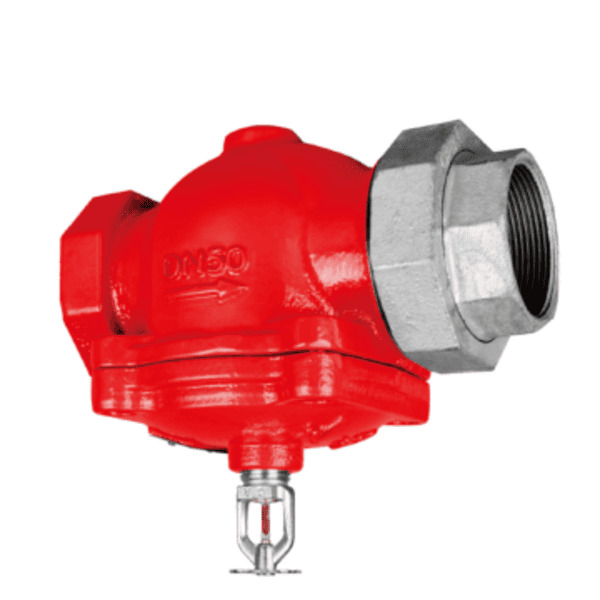
Home Alarm Check Valve Fire Sprinkler Alarm Valve
Fire Sprinkler Alarm Valve ZSFW DN32 DN40 DN50 threaded residential CA-FIRE

Fire Sprinkler Alarm Valve — ZSFW Series
DN32–DN50 · Threaded · Residential & Small Zone

The fire sprinkler alarm valve ZSFW is CA-FIRE's small-diameter, threaded-connection alarm check valve — purpose-designed for residential apartment buildings, small commercial zones, and any wet-pipe sprinkler application where the protected area is served by a small-bore riser of DN32 (1¼"), DN40 (1½"), or DN50 (2"). While the large flanged ZSFZ series handles main building risers from DN65 to DN300, the ZSFW covers the bottom end of the range — the light-density residential and small-zone applications that make up the majority of new residential high-rise and multi-storey apartment construction in China and across export markets.

The threaded connection replaces bolted flanges with standard pipe thread engagement — faster to install, smaller footprint, and no flange bolt or gasket components to source or manage. Working pressure is 1.6 MPa throughout, with <0.02 MPa hydraulic friction loss — the same hydraulic performance as the flanged ZSFZ series, allowing consistent NFPA 13 hydraulic calculation treatment across all system sizes.

For larger riser applications from DN65 to DN300, see the flanged ZSFZ wet alarm valve. For grooved pipework, see the ZSFZ-G grooved alarm valve. ← See all alarm check valve types

Quick Specifications
ModelZSFW 32 / 40 / 50-1.6
ConnectionThreaded — G (BSP) or NPT
SizesDN32 (1¼") · DN40 (1½") · DN50 (2")
Working Pressure1.6 MPa (16 bar)
Seal Test3.2 MPa
Strength Test6.4 MPa
Hydraulic Loss<0.02 MPa
Body MaterialDuctile cast iron, epoxy coated
Clapper / DiscEPDM rubber — chlorine-resistant
Temperature4°C – 70°C
InstallationUpright (vertical, flow upward)
Alarm PortG1/2 threaded (gong / pressure switch)
System TypeWet-pipe — residential & small zone
StandardGB 5135.6 · NFPA 13 / 13R · ISO 9001

Dimensional Data — 3 Sizes

All three sizes share identical pressure ratings and hydraulic performance. Thread standard is G (BSP) as standard; NPT available on request. DN50 is the most common size for residential riser applications.

DN SizeNPS EquivalentThread StandardWorking PressureSeal TestStrength TestHydraulic Loss
DN321¼"G1¼ (BSP) / 1¼" NPT1.6 MPa3.2 MPa6.4 MPa<0.02 MPa
DN401½"G1½ (BSP) / 1½" NPT1.6 MPa3.2 MPa6.4 MPa<0.02 MPa
DN502"G2 (BSP) / 2" NPT1.6 MPa3.2 MPa6.4 MPa<0.02 MPa
✓ Default — Stock Item
G Thread (BSP)
British Standard Pipe Parallel thread — the standard used in China, most of Asia, Europe, Australia, and the Middle East. This is CA-FIRE's default thread standard for the ZSFW. G thread fittings are marked "G" or "BSP" on the fitting. Parallel thread (not tapered) — sealing relies on the PTFE tape or pipe compound on the thread rather than taper compression.
✓ China · Southeast Asia · Middle East · Europe · Australia · Africa
Available on Request
NPT Thread
National Pipe Taper — the standard used in North America (USA, Canada) and some Latin American markets. Tapered thread — sealing is achieved by thread taper engagement with PTFE tape. NPT fittings have a characteristic taper where hand-tight engagement is not fully flush. G thread and NPT are not interchangeable — mixing thread standards on the same connection will cause leaks. Specify NPT at time of order.
✓ USA · Canada · parts of Latin America — specify at order, same lead time

How the ZSFW Fire Sprinkler Alarm Valve Works

Pressurised StandbySystem water pressure acts equally on both faces of the ZSFW clapper disc. The clapper remains seated under its own weight and the seating pressure differential. The distribution pipework is fully pressurised with water. No flow occurs.
Sprinkler ActivationA heat-actuated sprinkler in the protected zone opens. Water begins to flow from the distribution system through the open sprinkler head, reducing pressure in the system-side (outlet) pipework.
Clapper LiftsThe supply-side water pressure now exceeds the reduced system-side pressure. This net upward force lifts the ZSFW clapper off its seat, opening the waterway. Supply water flows through the valve to the open sprinkler.
Alarm TriggersWater simultaneously enters the alarm port groove in the valve body. It flows to the water motor alarm gong, which rings. The same flow actuates the alarm pressure switch, which signals the fire alarm panel and initiates the fire pump start timer.
Sustained SuppressionThe fire pump maintains supply pressure. Water continues to flow through the open sprinkler, suppressing the fire. The clapper remains open while flow continues. The water motor gong and pressure switch remain active.
ResetShut down via the main isolating valve, replace the sprinkler head, refill the system, and the ZSFW clapper resets automatically to the seated (standby) position under supply pressure. No manual clapper resetting required.
Retard Chamber — When Is It Required? Install a retard chamber when the ZSFW is connected to a public water supply with variable or fluctuating inlet pressure — typical in most residential buildings connected to municipal mains. NFPA 13 requires a retard chamber for any alarm valve on a variable-pressure supply. A retard chamber is not required only when the water supply is a dedicated fire pump with constant, stable, surge-free pressure. In practice, a retard chamber is recommended as the standard specification in all ZSFW installations.

Complete ZSFW Alarm Valve Station — Components

🔧
ZSFW Valve Body
DN32 / DN40 / DN50 threaded, ductile iron, epoxy coated, EPDM disc seal
🫙
Retard Chamber
Required for variable pressure supplies — prevents false alarms from pressure surges
🔔
Water Motor Alarm Gong
Hydraulic bell — no electrical power required for audible alarm output
Alarm Pressure Switch
Electrical signal to FAP on water flow — initiates pump start sequence
📊
Pressure Gauges (×2)
Supply pressure & system pressure — visible without test procedure
🚰
Main Drain Valve
Annual main drain test per NFPA 25 / GB 50116 requirements
🧪
Alarm Test Valve
Quarterly alarm trip test without opening a sprinkler head or draining the system
📦
Full Station Supply
All components available as a complete pre-assembled and tested station — contact CA-FIRE

ZSFW vs ZSFZ — Which Alarm Valve Size for Your System?

The correct alarm valve size is determined by the protected zone flow demand and riser pipe diameter. Use the table below to determine whether ZSFW (small zone, threaded) or the flanged ZSFZ range is the appropriate specification for each alarm valve station.

Parameter ZSFW (this product) DN32–DN50 Flanged ZSFZ DN65–DN300
ConnectionThreaded — G (BSP) or NPTFlanged — GB / ANSI B16.5 / DIN
Sizes availableDN32 · DN40 · DN50 DN65 · 80 · 100 · 125 · 150 · 200 · 250 · 300
Typical applicationResidential apartment zones · small commercial zones · individual floor sub-risersMain building risers · large-area commercial, industrial, warehouse systems
Sprinkler heads per zone2–20 heads (residential density)20+ heads up to entire building zones
Installation space Compact — riser shaft, service duct, valve boxDedicated valve room — flange bolt clearance required
Installation skill required Plumber / fire installer — standard pipe threadingFire protection installer — flanging tools and torque sequence
Hydraulic performanceIdentical — <0.02 MPa · 1.6 MPa WPIdentical — <0.02 MPa · 1.6 MPa WP
Specify whenRiser pipe is DN50 or smaller · residential/small zone · threaded pipeworkRiser pipe is DN65 or larger · flanged main system risers

Application Scenarios

🏢 Residential High-Rise Apartments — Floor Zone Valves
Multi-storey residential buildings under China's GB 50084 require automatic sprinkler systems in each apartment and common area. The typical system architecture uses a main flanged ZSFZ riser valve at the building entry, with ZSFW zone valves on individual floors or apartment groups. Each ZSFW DN50 station covers one floor's residential zone — typically 8–16 apartment-density sprinkler heads. The ZSFW's compact threaded body fits within the narrow riser shaft dimensions common in Chinese residential construction.
🏨 Hotels — Guest Floor Zone Control
High-rise hotels use a multi-zone riser system where each guest floor is served by an independent alarm valve station — enabling floor-by-floor alarm isolation, annunciation, and maintenance without shutting down the entire building system. The ZSFW DN50 serves each guest floor zone (typically 10–20 standard response heads per floor at hotel densities). The alarm pressure switch on each ZSFW floor station triggers per-floor alarm annunciation at the hotel fire alarm panel.
🛍️ Small Commercial Premises — Shops, Restaurants, Offices
Small commercial tenancies — restaurants up to approximately 300 m², retail units, and small offices — often require a standalone sprinkler system covering a single zone of 8–20 heads. The ZSFW DN50 provides a complete, code-compliant alarm valve station for these small-zone standalone systems without requiring the larger flanged valve assembly typically associated with full commercial systems.
🚗 Underground Car Parks — Sprinkler Zone Valves
Underground parking garages in residential and commercial buildings require sprinkler protection under GB 50084. The car park zone is typically served by its own alarm valve station separate from the building residential zones — allowing independent testing, maintenance, and alarm annunciation. A ZSFW DN50 is commonly specified for small car parks of up to 20 standard spray heads.
🌍 Export Residential Projects — NFPA 13R Compliance
NFPA 13R (Standard for Low-Rise Residential Occupancies) is frequently specified for residential developments in Southeast Asia, the Middle East, and Africa. The ZSFW DN50 meets NFPA 13R alarm valve requirements for residential systems with small-zone configurations. CA-FIRE provides full English-language submittal documentation — dimensional drawings, Cv data, material certificates, and functional test records — for NFPA 13R project submissions in export markets.
🔧 Renovation & Upgrade — Replacing Aged Alarm Valves
Older residential and small commercial buildings with existing threaded sprinkler systems often require alarm valve replacement as part of fire system upgrading programmes. The ZSFW drops into existing threaded pipework — DN32, DN40, or DN50 — without requiring any pipe modification or connection-type conversion. A direct threaded replacement for any obsolete alarm valve of the same DN size using standard G/BSP or NPT thread connection.

Standards & Certifications

StandardScope & Relevance to ZSFW Fire Sprinkler Alarm Valve
GB 5135.6 ↗ 自动喷水灭火系统 第6部分 湿式报警阀 — China's primary national standard for wet alarm valves across all sizes, including small-diameter threaded types. ZSFW meets all performance requirements: seal test (3.2 MPa), strength test (6.4 MPa), hydraulic friction loss (≤0.05 MPa, ZSFW achieves <0.02 MPa), and alarm activation flow rate requirements. CCCF type approval certificate issued under this standard — available for project submittals.
GB 50084 自动喷水灭火系统设计规范 — Chinese sprinkler system design code. Defines zone maximum area, number of heads per zone, required pressure at most remote head, and alarm valve station requirements for residential and small commercial applications. ZSFW DN50 is the standard specified valve size for residential zone control under GB 50084 Chapter 8 alarm valve installation requirements.
NFPA 13 / 13R ↗ NFPA 13 Standard for the Installation of Sprinkler Systems and NFPA 13R for Low-Rise Residential Occupancies. ZSFW hydraulic performance and dimensional data in English available for NFPA 13/13R project submittals in export markets. Cv values, pressure drop data, and material certificates supplied with order documentation.
NFPA 25 ↗ Standard for ITM — quarterly alarm trip test (via alarm test valve on the station trim), annual main drain test, and 5-year internal clapper inspection apply to the ZSFW identically to larger alarm valves. CA-FIRE provides ITM-compatible documentation including clapper disassembly instructions and inspection checklist for NFPA 25 compliance records.
ISO 9001:2015 ↗ CA-FIRE QMS — covers ZSFW ductile iron casting inspection, EPDM disc material testing, thread gauge verification (G/BSP and NPT), hydraulic pressure test (100% units tested at 3.2 MPa seal test before shipment), and alarm port flow-path dimensional check.

Frequently Asked Questions

What is the difference between a fire sprinkler alarm valve and a regular check valve? +
A standard check valve prevents backflow — it opens when forward flow exceeds its cracking pressure and closes to prevent reverse flow. That is its only function. A fire sprinkler alarm valve does the same — it functions as a check valve in the sprinkler system — but adds a critical additional feature: an alarm port that detects when water flows through the valve and triggers an alarm signal.

When a sprinkler activates and the ZSFW clapper lifts, water simultaneously enters the annular alarm groove in the valve body. This alarm flow drives the water motor gong (mechanical bell requiring no electrical power) and actuates the alarm pressure switch (electrical signal to the fire alarm panel). A standard check valve has no alarm port and provides no alarm function. GB 5135.6 and NFPA 13 both specifically require an alarm-capable valve (alarm check valve) as the zone control valve in wet-pipe systems — not a plain check valve.
What size ZSFW do I need — DN32, DN40, or DN50? +
The correct DN size matches the riser pipe diameter at the alarm valve installation point — the alarm valve must be the same DN as the riser it is installed on. The hydraulic design of the sprinkler system determines the riser diameter, which in turn determines the alarm valve size.

As a general reference for typical residential systems under GB 50084: DN50 covers most residential floor-zone risers serving 8–20 apartment-density heads (the most common ZSFW size in Chinese residential construction). DN40 is used for smaller sub-zone risers serving 4–12 heads. DN32 serves very small zones of 2–6 heads. If you have the hydraulic calculation for your system, the riser pipe size at each alarm valve station is directly specified — confirm with your fire protection system designer before ordering.
Should I order G (BSP) thread or NPT thread? +
Specify the thread standard to match the pipe thread standard used throughout your system's pipework and fittings. G thread (BSP) is the standard used in China, most of Asia, Europe, Australia, and the Middle East — the default specification for CA-FIRE ZSFW. NPT (National Pipe Taper) is the standard used in North America and some Latin American markets.

G (BSP) and NPT are not interchangeable — mixing thread standards on the same connection will cause leaks. If you are unsure which thread standard your project uses, check the thread designation on any existing threaded fittings in the system. Specify thread standard at time of order. CA-FIRE supplies ZSFW in G thread as standard; NPT is available on request with the same lead time for standard quantities.
Can I use the ZSFW without a retard chamber? +
Only if your water supply is a dedicated fire pump system with constant, stable, surge-free pressure — typically a private water tank with a centrifugal pump on a pressure-regulated circuit where there are no pressure transients to cause false alarm activation.

If the ZSFW is connected to a municipal public water supply or any supply that experiences pressure fluctuations, surges, or water hammer events, a retard chamber is required. NFPA 13 (Section 8.2.6) mandates a retard chamber for any alarm valve installed on a variable-pressure water supply. In practice, the vast majority of ZSFW installations in Chinese residential buildings connect to pumped supplies that may have minor pressure variation — a retard chamber is the recommended standard specification in all cases unless a specific engineering justification exists for omitting it.
How often does the ZSFW alarm valve need to be inspected or tested? +
Weekly / Monthly: Visual inspection of pressure gauges (supply and system pressures within normal range), visual check for leaks at valve body and connections.

Quarterly: Alarm trip test — open the alarm test valve on the station trim for 30–60 seconds to verify the water motor alarm gong rings and the alarm pressure switch sends a signal to the fire alarm panel. Tests the entire alarm activation circuit without opening a sprinkler head or draining the system.

Annual: Main drain test — fully open the main drain valve and record the residual supply pressure. Compare against the design pressure and the previous year's test result to detect any decline in water supply pressure or flow capacity.

5-Year: Internal inspection — disassemble the ZSFW clapper assembly, inspect the EPDM disc face and seat ring for wear, damage, or debris accumulation, replace any worn seals, and reassemble. CA-FIRE provides clapper disassembly instructions with each valve.
Can I use the ZSFW for a system with both water motor gong and alarm pressure switch? +
Yes — the ZSFW alarm port (G1/2 tapped connection) accommodates both the water motor alarm gong connection and the alarm pressure switch in a standard station piping arrangement. The alarm port flow is split via a small tee fitting in the alarm trim tubing: one branch feeds the retard chamber (which then feeds the water motor gong), and the other branch feeds the alarm pressure switch.

This dual-output alarm arrangement — mechanical gong (no power required) plus electrical pressure switch (FAP signal and pump start) — is the standard specification for all sprinkler alarm valve stations under GB 50084 and NFPA 13. CA-FIRE can supply the complete station assembly pre-piped and tested — contact [email protected] for pricing on complete ZSFW station assemblies by DN size.

Related Products

Get a Quote — ZSFW Fire Sprinkler Alarm Valve
DN32 · DN40 · DN50 · 1.6 MPa · Threaded G (BSP) or NPT · Ductile Iron · EPDM
GB 5135.6 · NFPA 13 / 13R · ISO 9001 · Valve only or complete station assembly · Factory direct · 24 hr quote
📧 Send Inquiry →
Scroll to Top