
Fire Protection
Butterfly
Valves
CA-FIRE manufactures supervisory butterfly valves and fire isolation valves for sprinkler, standpipe, and foam suppression systems. Four product lines — gear operated, lever, grooved end (Victaulic-compatible), and explosion-proof — covering every installation scenario. 10 models, DN50–DN300, 1.6 MPa, GB 5135 / NFPA 13 certified. Built in China, shipped worldwide.
Four Butterfly Valve Lines
for Every Installation Scenario
All lines share the same body materials, EPDM seat, 1.6 MPa working pressure rating, and optional DC24V tamper switch for supervisory-circuit integration (NFPA 13 / NFPA 72). As a specialist fire valve manufacturer, CA-FIRE ships all models with full GB 5135 test documentation.
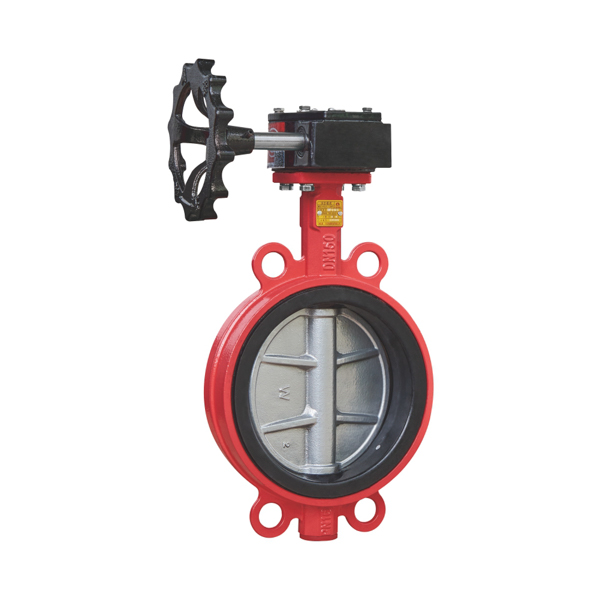 Most Popular
Gear Operated Butterfly Valve
Worm-gear actuator for smooth, low-effort operation at all sizes. Wafer flanged body fits between ANSI 150, DIN PN16, and GB PN16 flanges. Available with or without the DC24V tamper switch.
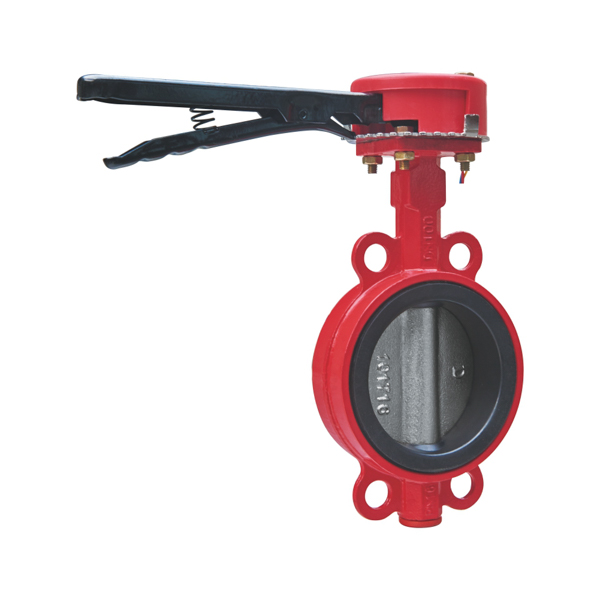 DN50–DN150
Lever Butterfly Valve
Quarter-turn 90° lever for instant visual open/closed confirmation without tools. Ideal for smaller-diameter branches and zones where quick manual isolation is the priority.
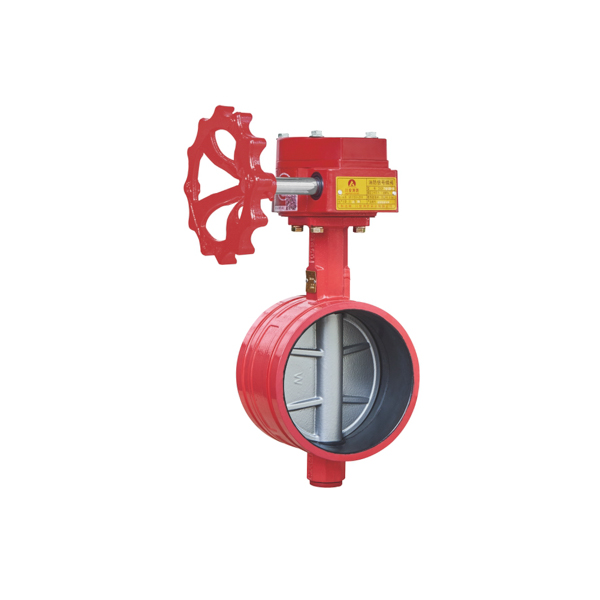 4 Models
Grooved End Butterfly Valve
Victaulic-compatible grooved ends (AWWA C606 / ISO 6182-12) cut installation time by up to 40% vs flanged. Available in gear or lever actuation, with or without tamper switch.
 Explosion-Proof
Explosion-Proof Butterfly Valve
Ex db IIC T6 Gb + Ex tb IIIC T80°C Db certified tamper switch for fire suppression in hazardous areas: oil & gas platforms, chemical plants, LNG terminals, and paint booths.
All 10 Models at a Glance
Every CA-FIRE butterfly valve model with connection type, actuator, tamper-switch status, and size range.
| Model Number | Product Line | Connection | Actuator | Tamper Switch | Size Range | Detail Page |
|---|---|---|---|---|---|---|
| ZSDF7 | Gear Operated | Wafer flanged | Worm gear | — | DN50 – DN300 | Gear Operated → |
| ZSXDF7 | Gear Operated | Wafer flanged | Worm gear | ✓ DC24V | DN50 – DN300 | Gear Operated → |
| ZSDF7-S | Lever | Wafer flanged | Quarter-turn lever | — | DN50 – DN150 | Lever → |
| ZSXDF7-S | Lever | Wafer flanged | Quarter-turn lever | ✓ DC24V | DN50 – DN150 | Lever → |
| ZSDF8 | Grooved End | Grooved (Victaulic) | Worm gear | — | DN50 – DN300 | Grooved → |
| ZSXDF8 | Grooved End | Grooved (Victaulic) | Worm gear | ✓ DC24V | DN50 – DN300 | Grooved → |
| ZSDF8-S | Grooved End | Grooved (Victaulic) | Quarter-turn lever | — | DN50 – DN150 | Grooved → |
| ZSXDF8-S | Grooved End | Grooved (Victaulic) | Quarter-turn lever | ✓ DC24V | DN50 – DN150 | Grooved → |
| ZSXDF7 Ex | Explosion-Proof | Wafer flanged | Worm gear | ✓ DC24V Ex | DN50 – DN300 | Explosion-Proof → |
| ZSXDF8 Ex | Explosion-Proof | Grooved (Victaulic) | Worm gear | ✓ DC24V Ex | DN50 – DN300 | Explosion-Proof → |
Which Butterfly Valve Is Right
for Your Project?
Use the decision criteria below to narrow down the correct product line, then refer to the full specification pages for model-level detail.
- ✓ DN50 through DN300 wafer flanged installation
- ✓ Existing ANSI 150 / DIN PN16 / GB PN16 flanged pipework
- ✓ Higher-torque sizes (DN200–DN300) where lever force becomes impractical
- ✓ Supervisory circuit integration via DC24V tamper switch (ZSXDF7)
- ✓ Sprinkler risers, zone control valves, fire pump outlets
- ✓ DN50 – DN150 only (lever torque limit)
- ✓ Frequent manual operation required by inspection teams
- ✓ Instant visual position indication (open/closed) without a gear box
- ✓ Branch lines, test & drain connections, zone isolation
- ✓ Lower installed cost than gear-operated equivalent at small DN
- ✓ Victaulic-compatible grooved coupling systems already on site
- ✓ Tight timelines — grooved ends reduce labor time up to 40% vs flanged
- ✓ High-rise buildings, prefab mechanical rooms, modular systems
- ✓ Need gear (DN50–DN300) or lever (DN50–DN150) in same grooved body
- ✓ Allows up to 1–3° deflection per coupling for thermal/seismic movement
- ⚡ Zone 1 / Zone 2 gas environments (Ex db IIC T6 Gb)
- ⚡ Zone 21 / Zone 22 dust environments (Ex tb IIIC T80°C Db)
- ⚡ Oil & gas platforms, LNG terminals, chemical plants, paint booths
- ⚡ IP66 required for outdoor or washdown environments
- ⚡ Supervisory signal required in hazardous-area fire suppression systems
Compare All Four Product Lines
| Specification | Gear Operated | Lever | Grooved End | Explosion-Proof |
|---|---|---|---|---|
| — | ZSDF7 / ZSXDF7 | ZSDF7-S / ZSXDF7-S | ZSDF8 / ZSXDF8 family | ZSXDF7/ZSXDF8 Ex |
| Connection Type | Wafer flanged | Wafer flanged | Grooved (Victaulic) | Wafer or Grooved |
| Actuator | Worm gear | Quarter-turn lever | Gear or Lever | Worm gear |
| Size Range | DN50 – DN300 | DN50 – DN150 | DN50 – DN300 (gear) DN50 – DN150 (lever) |
DN50 – DN300 |
| Working Pressure | 1.6 MPa | 1.6 MPa | 1.6 MPa | 1.6 MPa |
| Body Material | GGG40 / SS316 | GGG40 / SS316 | GGG40 / SS316 | GGG40 / SS316 |
| Seat Material | EPDM | EPDM | EPDM | EPDM |
| Tamper Switch | Optional DC24V | Optional DC24V | Optional DC24V | DC24V (standard) |
| Explosion Protection | — | — | — | Ex db IIC T6 Gb Ex tb IIIC T80°C Db |
| IP Rating | IP54 | IP54 | IP54 | IP66 |
| Flange Standard | ANSI 150 / DIN PN16 / GB PN16 | ANSI 150 / DIN PN16 / GB PN16 | AWWA C606 / ISO 6182-12 | ANSI 150 / DIN PN16 / GB PN16 |
| Product Standard | GB 5135.2 / GB 5135.13 | GB 5135.2 / GB 5135.13 | GB 5135.2 / GB 5135.13 | GB 5135.2 / GB 5135.13 |
| Operating Temperature | 4 – 70°C (no signal) 0 – 80°C (signal) |
4 – 70°C (no signal) 0 – 80°C (signal) |
4 – 70°C (no signal) 0 – 80°C (signal) |
0 – 80°C |
| Installation Speed vs Flanged | Baseline | Baseline | Up to 40% faster | Baseline |
Shared Across the Entire
Butterfly Valve Range
Every CA-FIRE fire isolation butterfly valve — regardless of connection type or actuator — is built on the same proven platform. Factory-direct from our manufacturing facility in Quanzhou, China.
Certified to Chinese & International Standards
All butterfly valves are designed, tested, and certified against the following codes and standards.
Frequently Asked Questions
Both are gear-operated wafer butterfly valves with identical body, disc, and seat construction. The only difference is the actuator housing: the ZSDF7 has no supervisory switch, while the ZSXDF7 includes a DC24V tamper switch that sends a supervisory signal to the fire-alarm control panel whenever the valve is moved away from the fully-open position. If your fire-protection system is required to comply with NFPA 13 §6.1 or NFPA 72 valve-supervision provisions, specify the ZSXDF7.
Grooved-end valves (ZSDF8 / ZSXDF8 family) are the right choice when your piping system already uses Victaulic-style grooved couplings, or when installation speed is critical. Grooved connections typically take under 10 minutes for a DN150 valve and require no gasket alignment or bolt torquing — reducing labor time by up to 40% compared with flanged installation. They also tolerate 1–3° of angular deflection per coupling, which provides inherent seismic and thermal expansion accommodation. If you have existing flanged pipework, the wafer valves (ZSDF7 / ZSXDF7) are the more economical choice.
Lever actuators rely on direct manual torque applied to the quarter-turn handle. As valve diameter increases, the torque required to seat and unseat the disc at rated pressure rises proportionally. Above DN150, this torque becomes uncomfortable or impractical for a single operator to apply reliably, especially in emergency conditions. For DN200 and above, the gear-operated models (ZSDF7 / ZSXDF7) provide mechanical advantage via a worm gear (15:1 to 30:1 ratio) that keeps operating force comfortable at all sizes up to DN300.
NFPA 13 §6.1 requires that all water-control valves in a fire sprinkler system be electrically supervised (or locked/chained open with sealed-valve procedures). For electrical supervision, you need a model with the DC24V tamper switch: ZSXDF7 (gear/wafer), ZSXDF7-S (lever/wafer), ZSXDF8 (gear/grooved), ZSXDF8-S (lever/grooved), or the explosion-proof variants. The switch connects to the fire-alarm control panel's supervisory input circuit and triggers an alarm within 2 seconds of the valve leaving the fully-open position. Chinese standard GB 5135.13 governs this functionality.
The standard ZSXDF7 and ZSXDF8 series carry IP54 ratings on the actuator housing, which handles splash water but not high-pressure jets or full immersion. If your installation requires IP66 for heavy washdown or outdoor exposure, and the area is not classified as a hazardous zone, the explosion-proof model (IP66) can technically be used — but the more economical solution is to ask CA-FIRE about custom IP66 housings fitted to the standard ZSXDF7/ZSXDF8 bodies. Contact sales@ca-fire.com to discuss your specific requirements.
CA-FIRE (川安消防实业有限公司) is a specialist fire protection valve manufacturer based in Nan'an, Quanzhou, Fujian Province, China — one of China's main fire-equipment manufacturing clusters. All butterfly valves are produced and tested at our own factory. We supply project distributors, fire-system integrators, and EPC contractors worldwide. Factory-direct pricing is available for volume orders. Contact sales@ca-fire.com for a quote or to request product samples.
The ZSXDF series currently holds Chinese NEPSI Ex certification to GB 3836 (Ex db IIC T6 Gb + Ex tb IIIC T80°C Db), which is technically equivalent to IEC 60079 and covers the same gas/dust protection levels as ATEX and IECEx. For projects in the EU requiring formal ATEX marking, or in jurisdictions requiring IECEx certificates, please contact us — we can discuss third-party verification or recommend equivalent specification language for your AHJ submission.
GGG40 ductile iron is the standard and most cost-effective choice for typical municipal water and fire protection systems where water chemistry is neutral to slightly alkaline. SS316 stainless steel is recommended for: seawater or brackish water systems; aggressive chemical environments; coastal or tropical climates with high humidity and salt air; or projects with specific material specifications from the authority having jurisdiction (AHJ). SS316 carries a cost premium of approximately 25–40% over GGG40 but provides substantially greater corrosion resistance across the full DN50–DN300 range.