Fire Cabinets
Fire hose cabinets & extinguisher cabinets · Steel, stainless & tempered glass · Recessed, surface & outdoor · 800–2000 mm
The Complete Range of Fire Hose & Extinguisher Cabinets — 800 to 2000 mm
CA-FIRE manufactures a full range of fire cabinets for active fire protection systems — fire hose cabinets (also called fire hydrant cabinets or FHC) and fire extinguisher cabinets in steel, 304 stainless steel and tempered glass front. Every cabinet is built for Class I, II and III standpipe systems and houses NFPA-required hose, valve, nozzle and portable extinguisher equipment.
From the SG24 hose cabinet series with tempered safety glass for at-a-glance visual inspection, to the XMDDG extinguisher cabinet series for 5–20 lb portable extinguishers, to outdoor weatherproof and roller-shutter models for parking garages and gas stations — CA-FIRE covers 6 cabinet variants in flush-mount, surface-mount and outdoor configurations, all manufactured in our Fujian factory and shipped to over 60 countries.
What Is a Fire Cabinet?
A fire cabinet is a wall-mounted enclosure that stores and protects fire-fighting equipment — most commonly a fire hose, angle valve and nozzle, or a portable fire extinguisher — so that the equipment stays clean, dry, tamper-free and immediately accessible during a fire emergency. Fire cabinets are a permanent part of a building's active fire protection system and are required by NFPA 10, NFPA 14, OSHA and most international fire codes wherever portable extinguishers or standpipe hose stations are installed.
The two most common types are the fire hose cabinet (also called a fire hydrant cabinet or FHC), which houses a fire hose, angle valve and nozzle for Class I, II or III standpipe systems, and the fire extinguisher cabinet, which houses one or more portable dry-chemical, CO₂ or water extinguishers. Both types are built to the same construction principles: a steel or stainless steel body, a hinged door (often with tempered glass for visual inspection), red signage and clear identification labels, and an internal layout that complies with the relevant fire-protection standard.
This page covers fire cabinets used in active fire-protection systems. It does not cover fireproof file cabinets, flammable liquid storage cabinets, or fire-rated electrical enclosures — these are separate product categories with different standards and use cases.
Our Fire Cabinet Product Range
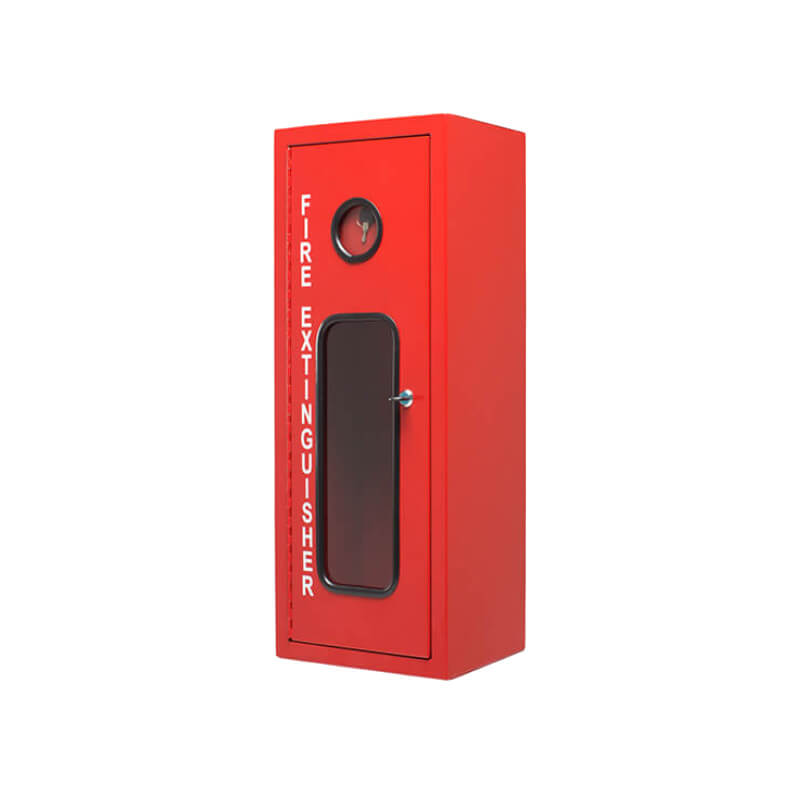
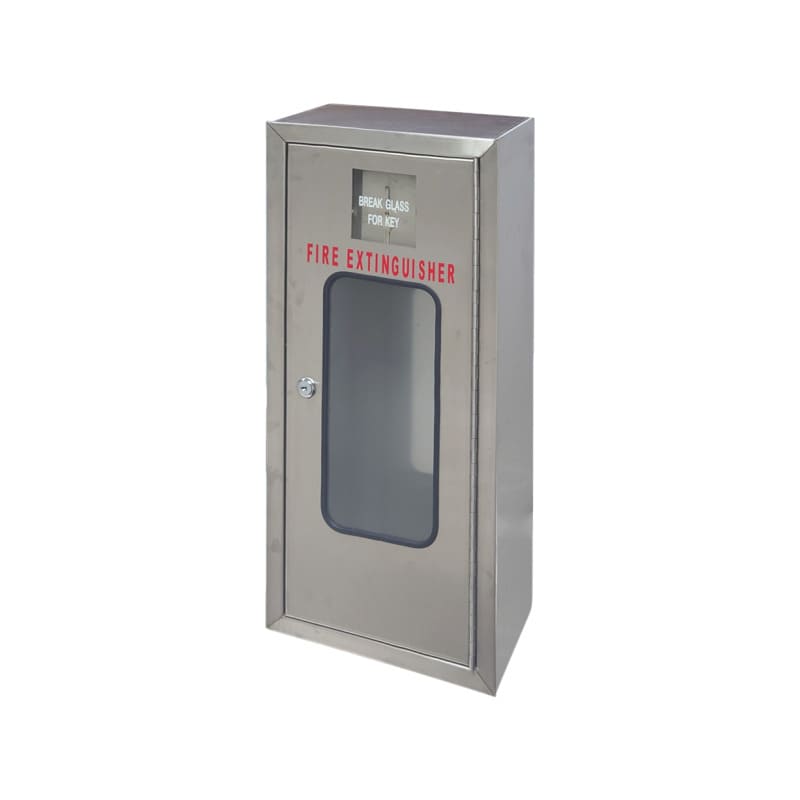
Six cabinet variants covering the most common configurations specified on commercial and industrial fire protection projects worldwide. Click any product for full specifications, dimensions, model numbers and submittal datasheets.
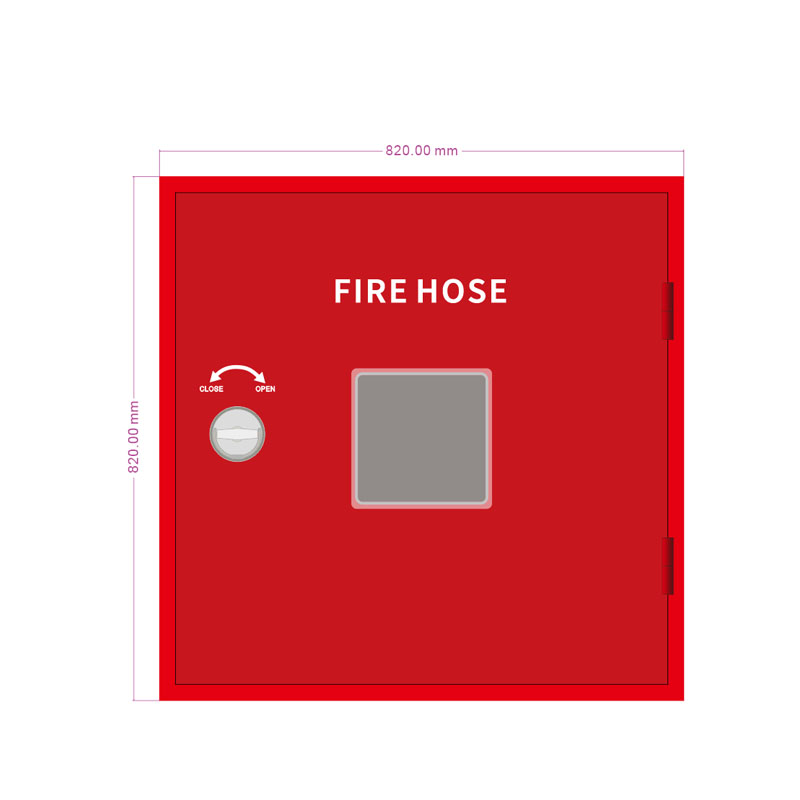 Most Popular
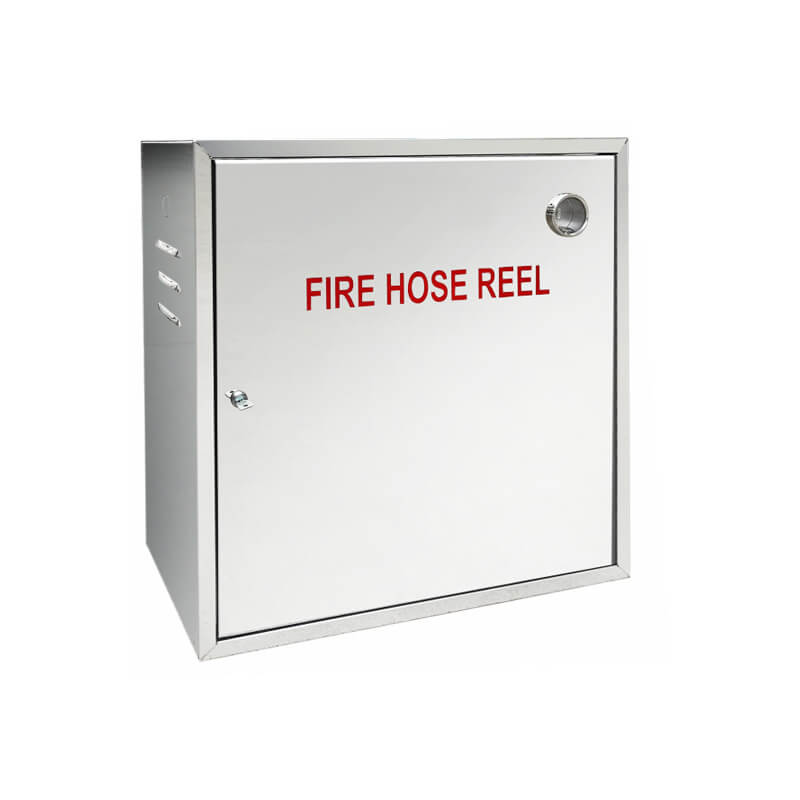
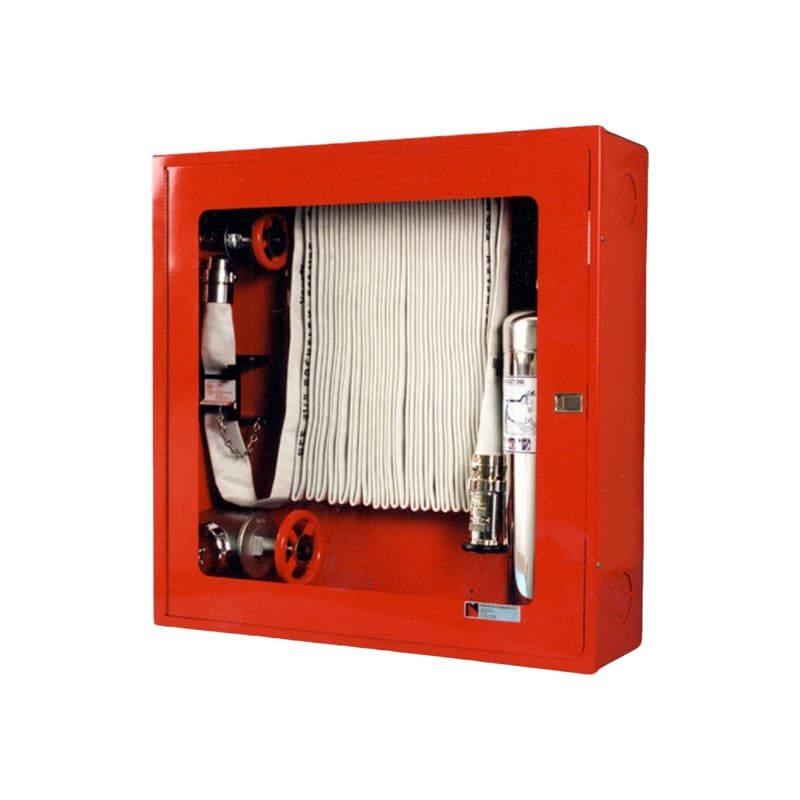
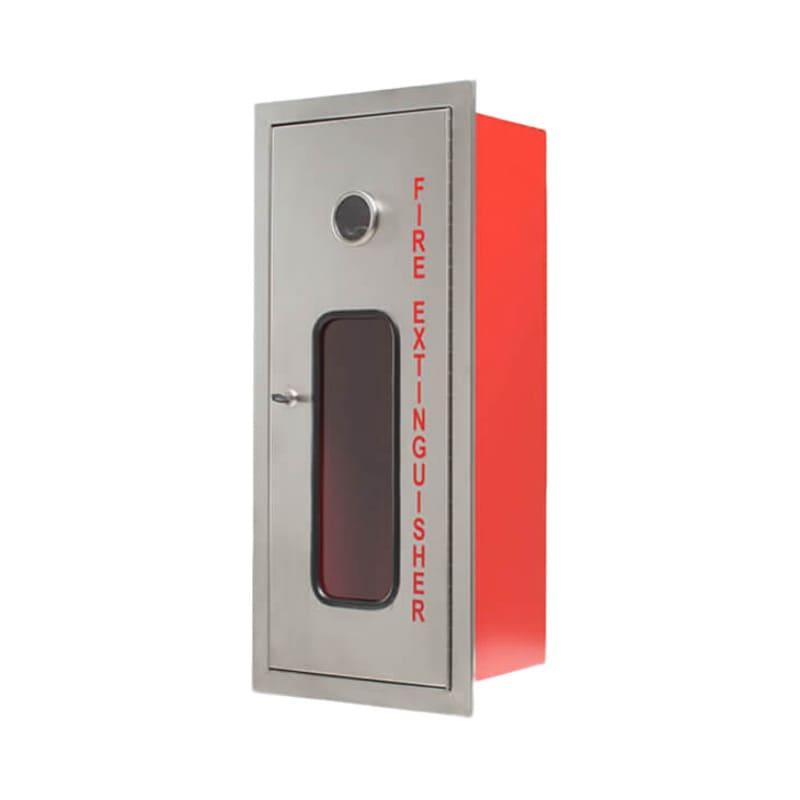
How to Choose the Right Fire Cabinet
Selecting the right fire cabinet depends on five questions. Work through them in order and the answer will narrow the field from six variants to one or two clear candidates. For deeper guidance, see our recessed vs surface mount comparison guide and the fire hose cabinet dimensions guide.
Standards & Compliance
Fire cabinets do not exist in isolation — they are part of a code-driven fire protection system, and every cabinet specification must reference the standards that govern the equipment inside it and the way it is mounted, signed and inspected. CA-FIRE cabinets are built to comply with the following standards, which together cover the major requirements for hose stations, portable extinguishers, accessibility and quality management.
Applications by Industry
Fire cabinets are required wherever a building has portable extinguishers or a standpipe hose system — which is to say, almost every commercial, industrial, public and high-occupancy structure. The right cabinet variant depends on the environment. Below are the most common applications we ship to from our Fujian factory.
Product Selection Guide — 6 Fire Cabinets at a Glance
| Product | Type | Material | Mounting | Size / Capacity | Best For |
|---|---|---|---|---|---|
| Tempered Glass Hose Cabinet | Hose Cabinet | Steel + Tempered Glass | Surface / Recessed | 800–1800 mm | Hotels, offices, malls — visual inspection |
| Stainless Steel Hose Cabinet | Hose Cabinet | 304 / 316 Stainless Steel | Surface / Recessed | 800–2000 mm | Coastal, marine, chemical, food-grade |
| Recessed Hose Cabinet | Hose Cabinet | Powder-coated Steel | Flush / Recessed | 1000–2000 mm | Architectural finish, narrow corridors |
| Recessed Extinguisher Cabinet | Extinguisher Cabinet | Steel + Glass Front | Flush / Recessed | 5 / 10 / 20 lb | Hospitals, hotels, ADA corridors |
| Outdoor Extinguisher Cabinet | Extinguisher / Hose Box | Weatherproof Steel | Surface / Free-standing | 10 / 20 lb · roller box | Gas stations, garages, ports, sites |
| Stainless Steel Extinguisher Cabinet | Extinguisher Cabinet | 304 / 316 Stainless Steel | Surface / Recessed | 5 / 10 / 20 lb | Food, pharma, chemical, marine |
Frequently Asked Questions
What is the difference between a fire hose cabinet and a fire hydrant cabinet?
In English fire-protection terminology, "fire hose cabinet" and "fire hydrant cabinet" refer to the same product — a wall-mounted enclosure that houses the hose, angle valve and nozzle of a standpipe hose station. The abbreviation FHC is used for both. Some markets prefer "hydrant cabinet" because the cabinet sits at an indoor hydrant outlet (the standpipe valve), while others prefer "hose cabinet" because the most visible content is the hose. Both terms are correct and refer to the same equipment.
What is the standard size of a fire hose cabinet?
Fire hose cabinet sizes depend on the standpipe class and hose length. For Class II systems with 1.5-inch occupant-use hose, common sizes are 800×650×240 mm to 1000×700×240 mm. For Class I and III systems with 2.5-inch fire-department hose, larger cabinets of 1600×700×240 mm to 2000×750×240 mm are typical. CA-FIRE's SG24 series covers all four standard sizes plus custom dimensions on request. See the full dimensions guide for the complete size chart.
How high should a fire extinguisher cabinet be mounted?
NFPA 10 sets the maximum mounting height for portable fire extinguishers at 5 feet (60 inches) from the floor to the top of the extinguisher when the extinguisher weighs 40 lb or less, and 3.5 feet (42 inches) for heavier extinguishers. The minimum clearance from the floor to the bottom of the extinguisher is 4 inches. ADA accessibility rules add a separate requirement: the operating mechanism must fall within the 15″–48″ reach range. For full details and a diagram, see our fire cabinet mounting height guide.
What is the difference between Class I, II and III fire hose cabinets?
The three classes refer to NFPA 14 standpipe systems and govern who is intended to use the hose and what hose size is provided. Class I systems have 2.5-inch hose connections for fire department use only and do not include a hose in the cabinet. Class II systems have 1.5-inch hose connections with 100 feet of pre-connected hose for occupant use. Class III systems combine both — a 2.5-inch FD connection and a 1.5-inch occupant hose at the same station. Cabinet size scales accordingly. See our Class I, II & III explained guide for full details.
What goes inside a fire hose cabinet?
A fully equipped Class II fire hose cabinet contains: an angle valve (typically 1.5″ or 2.5″, brass or bronze), a lined fire hose (canvas or rubber-jacketed, 65 mm × 25–30 m for Class II), a hose rack or reel, a fog/straight-stream nozzle, a portable fire extinguisher (in combined cabinets), and an axe or spanner (in some markets). All components are organised inside the cabinet to NFPA-style layout for fast access. For a full component-by-component breakdown, read What's Inside a Fire Hose Cabinet?.
Can fire cabinets be installed outdoors?
Yes, but only with the correct variant. Standard powder-coated steel cabinets are designed for indoor installation and will rust outdoors within 6–12 months in most climates. For outdoor installation, choose either the outdoor weatherproof model with UV-stable coating, EPDM seal and drainage holes, or upgrade to a 304 / 316 stainless steel cabinet for coastal, marine and high-corrosion environments. Both outdoor variants are padlock-ready to deter tampering.
Does a fire cabinet need to be locked?
NFPA 10 states that fire extinguishers must be readily accessible, which generally means cabinets should not be locked in a way that delays access during an emergency. However, in vandalism-prone or public locations, cabinets may use a break-glass front (tempered safety glass with a small hammer) or a key lock with a key stored in a nearby break-glass key holder. Outdoor cabinets are typically padlock-ready to deter theft of the extinguisher itself. The key principle is that the equipment must remain immediately available to a person responding to a fire.
Does CA-FIRE provide CAD blocks and Revit families for fire cabinets?
Yes. We provide free DWG CAD blocks, Revit RFA families, BIM objects and CSI MasterFormat specifications (Section 10 44 13 — Fire Protection Specialties) for all SG24 and XMDDG cabinet models. These files are used by architects and fire-protection engineers to drop accurate cabinet objects into project drawings and BIM models. Visit our CAD & BIM download centre to access the files.
How do I request a quote or order custom sizes?
Email [email protected] with the cabinet type (hose or extinguisher), material (steel / SS304 / SS316), mounting (recessed or surface), required size or extinguisher capacity, quantity, project location and target delivery date. We respond within one business day with pricing, lead time and a project submittal package. For OEM orders we also provide branded labelling, custom colours and CAD-to-production engineering. Custom sizes outside the standard SG24 / XMDDG range are available with a small MOQ.