Underground Fire Hydrant — Frost-Protected, Dual-Outlet & Pressure-Regulating Series | CA-FIRE
✓ GB Standard (国标 GB 4452)✓ DN100 / DN150✓ 1.6 MPa✓ Auto-Drain Frost Protection✓ 5 Variants incl. Pressure-Regulating✓ Water · Foam Compatible✓ ISO 9001 · GB · CE
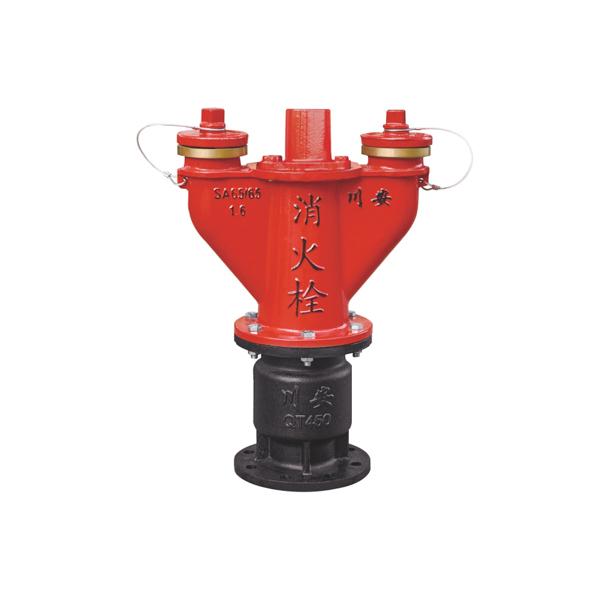
The CA-FIRE underground fire hydrant series covers the complete range of GB-standard flush-mounted outdoor hydrants for Chinese municipal road networks, residential communities, commercial developments and industrial sites. Installed below ground level inside a protective pit with a cast iron surface box, underground hydrants keep road surfaces unobstructed, resist vehicle damage, and provide a concealed-but-accessible water supply connection for fire and rescue services. The series is available in five structural variants: Standard, Frost-Protected (with air-vent and auto-drain), Dual-65 Outlet, Pressure-Regulating (SAT), and Pressure-Stabilising (SAW) — in DN100 and DN150 inlet sizes at 1.6 MPa working pressure. All models feature a built-in auto-drain system to prevent freeze damage, KWS65 or KWS80 hose coupling outlets compatible with Chinese standard fire hose, and are certified to GB 4452 with ISO 9001. All models are compatible with both water and foam concentrate supply systems, and can be manufactured in encrypted (加密型) and elevated (加高型) variants on request.
Five Variants — Select by Site Condition
All five variants share the same GB 4452 certification, 1.6 MPa working pressure, flange inlet connection and KWS outlet fittings. The difference is in functional specialisation — select based on climate, supply pressure and fire engineering requirements.
|
Standard Type SA100/65-1.6 · SA100/65-1.6A · SA150/80-1.6 The baseline GB underground hydrant for municipal roads, residential communities and commercial developments. Flush-mounted in a ground pit with cast iron surface box. Accessed via standpipe (消防水带接口) inserted through the surface box. Built-in auto-drain prevents barrel freeze after each use. The SA100/65-1.6A variant features an upgraded flow path geometry for higher flow delivery at the same supply pressure — specify where fire engineering calculations demand above-standard flow from a DN100 inlet.
|
Dual-65 Outlet Type SA65/65-1.6 Two independent 65 mm KWS65 outlets instead of the single-outlet standard model, allowing simultaneous connection of two separate fire hose lines from a single hydrant without a Y-splitter adapter. The dual-outlet design speeds up fire brigade setup at incidents where two attack lines are deployed simultaneously. Each outlet has its own independent valve so lines can be opened, throttled and closed independently. Specify for high-rise building perimeters, large commercial buildings and any location where the fire engineering design calls for simultaneous dual-line capability at a single hydrant point.
|
Frost-Protected Type SA100/65-1.6 (防冻型) with air vent The frost-protected underground hydrant adds an air-vent check valve (吸气阀) above the main drain valve. After the main valve closes, the air vent opens to break the vacuum that would otherwise slow drainage — allowing the residual water column in the barrel to drain rapidly into the surrounding soil before it can freeze. The stainless steel filter screen at the drain outlet prevents soil backflow from contaminating the hydrant body. This variant is the mandatory specification for northern China provinces with sustained sub-zero winters (Heilongjiang, Inner Mongolia, Jilin, Xinjiang, Qinghai) and any location where GB 50974 requires frost protection for underground hydrants.
|
||||||||||||||||||
|
Pressure-Regulating Type (SAT) SAT100/65-1.6 · SAT150/80-1.6 The SAT pressure-regulating (调压型) hydrant incorporates an integrated pressure-reducing valve at the outlet, automatically reducing supply main pressure to the working pressure required at the hose coupling. Specify for high-rise buildings, elevated terrain, or water supply zones where the main pressure significantly exceeds 0.7 MPa at the hydrant — preventing hose burst, coupling failure and firefighter injury from over-pressurised hose lines. The pressure-reducing mechanism is factory-set and can be adjusted within the specified range on site. No external pressure-reducing valve or bypass assembly required — the function is integrated within the hydrant body, minimising above-ground installation complexity.
|
Pressure-Stabilising Type (SAW) SAW100/65-1.6 · SAW150/80-1.6 The SAW pressure-stabilising (稳压型) hydrant incorporates a pressure-stabilising mechanism that maintains consistent outlet pressure despite fluctuations in supply main pressure. Unlike the SAT pressure-reducing type (which only reduces maximum pressure), the SAW type both limits peak pressure and compensates for pressure drops during simultaneous multi-hydrant operation. Specify for large industrial complexes, development zones and infrastructure projects where multiple hydrants may be operated simultaneously from the same supply main, and where consistent outlet pressure at each active hydrant is a design requirement for the fire suppression strategy.
|
All Variants — Common Options Available across the full range Encrypted (加密型): Security outlet thread profile and cap system for high-security sites — prevents unauthorised hose connection without the dedicated key. Elevated (加高型): Extended barrel length for installations with deeper cover depth, raised road surfaces or special groundworks. All models can be manufactured as elevated variants. Foam-compatible: All models are compatible with water and pre-mixed foam concentrate supply. Internal wetted materials tested with 3% and 6% AFFF / AR-AFFF. Custom depth: Barrel depth can be specified to match project groundworks depth — confirm at enquiry. |
Technical Specifications — Full Model Range
| Series | Model | Pressure | Inlet | Inlet DN | Water Takeoff | Hose Coupling | Opening Height |
|---|---|---|---|---|---|---|---|
| Standard 地下消火栓 |
SA100/65-1.6 | 1.6 MPa | Flange | DN100 | M125×6 | KWA65 | ≥50 |
| SA100/65-1.6A | DN100 | M125×6 | KWA65 | ≥50 | |||
| SA150/80-1.6 | DN150 | M170×6 | KWA80 | ≥55 | |||
| Dual-65 Outlet 双65出口型 |
SA65/65-1.6 | DN100 | — | KWA65 × 2 | ≥50 | ||
| Pressure-Regulating 调压型 SAT |
SAT100/65-1.6 | DN100 | M125×6 | KWA65 | — | ||
| SAT150/80-1.6 | DN150 | M170×6 | KWA80 | — | |||
| Pressure-Stabilising 稳压型 SAW |
SAW100/65-1.6 | DN100 | M125×6 | KWA65 | ≥50 | ||
| SAW150/80-1.6 | DN150 | M170×6 | KWA80 | ≥55 |
Common Parameters — All Models
| Parameter | Specification |
|---|---|
| Compliance Standard | GB 4452 (室外消火栓) · ISO 9001:2015 · CE |
| Rated Working Pressure | 1.6 MPa |
| Test Pressure | 2.4 MPa — 30-minute hydrostatic hold, zero leakage |
| Inlet Connection | Flange — GB standard flange dimensions |
| DN100 Outlets | Water takeoff M125×6 · Hose coupling KWA65 (65 mm Chinese standard) |
| DN150 Outlets | Water takeoff M170×6 · Hose coupling KWA80 (80 mm Chinese standard) |
| Body Material | Ductile iron · Stainless steel drain filter screen |
| Auto-Drain | Built-in auto-drain on all models · Frost-protected variant adds air-vent for accelerated drainage |
| Foam Compatibility | Compatible with water and foam concentrate mixed supply · Customisable per user requirement |
| Special Options | Encrypted (加密型) · Elevated barrel (加高型) · Custom depth — all available across full range |
| Warranty | 2 years |
* All models can be manufactured as elevated (加高型) variants for deeper cover installations. Confirm required barrel depth at enquiry.
Key Technical Features
|
❄️ Frost-Protected Auto-Drain System All SA series underground hydrants incorporate an automatic drain valve at the base of the barrel, below the frost line. When the main valve closes after use, the drain port opens and gravity-drains all residual water from the barrel above the frost depth — preventing ice formation inside the barrel during sub-zero periods. The frost-protected variant adds an air-vent check valve (吸气阀) at the top of the below-ground barrel. This device breaks the vacuum that would otherwise slow drainage, allowing the water column to fall freely under gravity. A stainless steel mesh filter at the drain outlet prevents soil and grit backflow from contaminating the hydrant interior. This combination — main drain + air vent + SS filter — is the proven design for reliable freeze protection in northern China climates. Auto-Drain + Air Vent + SS Filter · Passive · No Maintenance Required |
⚖️ Integrated Pressure Management — SAT & SAW Chinese water distribution networks, especially in high-rise urban areas and multi-level terrain, frequently deliver supply pressures significantly above the 0.35–0.7 MPa range at which firefighters can safely and effectively handle a charged hose line. Excessive outlet pressure causes hose recoil, coupling failure and physical danger to operators. The SAT pressure-regulating hydrant integrates a pressure-reducing valve directly within the hydrant body, eliminating the need for a separate in-line PRV assembly. The SAW pressure-stabilising hydrant goes further — maintaining consistent outlet pressure across all active hydrants on the supply main even as multiple units are opened simultaneously and system pressure drops. Both types are specified by fire system designers on projects governed by GB 50974 where supply pressures at hydrant points would otherwise exceed safe operating limits. SAT: Pressure-Reducing · SAW: Pressure-Stabilising · Integrated · No External PRV |
|
🚗 Concealed — No Surface Obstruction Underground hydrants are the preferred specification for Chinese urban public roads because they present no obstacle to pedestrian or vehicle traffic, cannot be accidentally struck by vehicles (no above-ground barrel to impact), and do not create a visual obstruction in streetscapes, plazas or green belt areas. The cast iron surface box is flush-mounted at road or pavement level and marked with the standard 消防 (fire protection) identification. Per GB 50974, underground hydrants are the default specification for municipal roads in built-up urban areas. Above-ground hydrants are permitted as an alternative on industrial sites and private roads. Where both types are used on the same project, the underground model is typically specified for road-frontage positions and the above-ground type for internal plant road positions. Flush-Mounted · No Traffic Hazard · Urban Road Standard |
🔥 Water & Foam Compatible — All Models All SA series underground hydrants are compatible with water and foam concentrate mixed supply, as standard. When connected to a foam bladder tank proportioning system, the hydrant delivers pre-mixed foam solution directly to the hose coupling outlet without any modification. Internal wetted materials — ductile iron body, EPDM seals, brass valve core — are tested for compatibility with 3% and 6% AFFF and AR-AFFF foam concentrates. This compatibility makes the SA series the standard choice for mixed-site industrial projects where some hydrant positions serve water-only zones and others serve foam zones — a single product specification simplifies procurement, installation and spare parts management across the entire site. Water + AFFF / AR-AFFF · 3% & 6% · No Modification Required |
How the Underground Fire Hydrant Works
The underground fire hydrant differs fundamentally from the above-ground pillar hydrant in its operation method: it requires a standpipe (消防水带接口) to bring the water connection above ground level before a fire hose can be attached. Chinese fire brigade appliances carry the required standpipe and operating key as standard equipment.
|
1
Locate & Open the Surface Box The cast iron surface box is flush with road or pavement level, marked 消防 and painted yellow. The fire crew locates the box using hydrant location signs, in-cab mapping or the surface box marking. The lid is lifted or unlocked (for encrypted variants, the dedicated key is required). The hydrant operating spindle and outlet coupling are visible inside the ground pit. |
2
Insert the Standpipe The standpipe — a rigid metal pipe carried on the fire appliance — is inserted into the ground pit and connected to the hydrant outlet coupling (KWA65 or KWA80 bayonet connection). The standpipe brings the water delivery point to above-ground level, where the fire hose can be connected in the same way as for an above-ground hydrant. For SA65/65-1.6 dual-outlet models, two standpipes can be connected simultaneously. |
|
3
Open the Main Valve The hydrant operating key (T-bar or square key carried on all Chinese fire appliances) is inserted through the surface box into the operating square on the main valve spindle. Rotating the key opens the main valve, delivering water from the supply main through the standpipe to the hose connection above ground. The SAT pressure-regulating mechanism activates automatically as flow begins, limiting outlet pressure to the set value. |
4
Shutdown & Auto-Drain Close the main valve by reversing the key rotation. Disconnect and remove the standpipe. Replace the surface box lid. The auto-drain valve opens automatically as the main valve closes — draining all residual water from the barrel above the drain point into the surrounding soil within 3–5 minutes. For the frost-protected variant, the air-vent accelerates this drainage. No manual drain procedure is required. |
Model Selection Guide
| Your Requirement | Recommended | Reason |
|---|---|---|
| Urban municipal road, residential estate or commercial development — temperate climate | SA100/65-1.6 | Standard model — lowest cost, fully GB 4452 compliant, suitable for the vast majority of general-purpose urban and suburban installations |
| Northern China — sustained sub-zero winters (Heilongjiang, Inner Mongolia, Jilin, Xinjiang) | SA100/65-1.6 Frost-Protected variant |
Air-vent + auto-drain + SS filter provides the fastest barrel drainage and most reliable freeze protection for climates with sustained temperatures below −10°C |
| High-rise building perimeter — fire engineering design calls for two simultaneous attack lines from one hydrant point | SA65/65-1.6 | Dual independent 65 mm outlets allow two standpipes and two hose lines to be deployed simultaneously from a single hydrant position — no Y-splitter required |
| Supply main pressure at hydrant point exceeds 0.7 MPa — high-rise zone, elevated terrain, high-pressure district main | SAT100/65-1.6 or SAT150/80-1.6 | Integrated pressure-reducing valve limits outlet pressure to safe working range without requiring a separate PRV assembly or bypass system |
| Large development or industrial zone — multiple hydrants on same main, consistent pressure required at all active points simultaneously | SAW100/65-1.6 or SAW150/80-1.6 | Pressure-stabilising mechanism maintains consistent outlet pressure as supply pressure varies during multi-hydrant simultaneous operation |
| Any site requiring maximum flow rate from underground hydrant — DN150 supply main available | SA150/80-1.6 | DN150 inlet and KWA80 hose coupling provide the highest flow capacity in the standard SA range |
Installation Guide
Site Requirements & GB 50974 Spacing Rules
Per GB 50974 (消防给水及消火栓系统技术规范): underground hydrants on municipal urban roads should be spaced at a maximum of 120 m measured along the road; each hydrant must be within a 150 m hose lay distance of any building face it is designed to serve; hydrants should be positioned 0.5–1.0 m from the kerb face (not in the traffic lane); a minimum 1.0 m clearance in all directions is required around the surface box for standpipe insertion and operation. The surface box must be set at finished road or pavement level — not raised above or recessed below the surface. The hydrant centreline must be installed with the barrel vertical (≤ 3 mm/m tolerance).
Installation Steps
Excavate the hydrant pit to the required depth — the hydrant barrel length must place the drain valve below the local frost depth (confirm frost depth for the project location per local standard). Prepare a reinforced concrete base pad at the bottom of the pit. Set the hydrant on the base pad, thread the inlet flange onto the water main tee or saddle fitting, and fit the EPDM flange gasket. Align bolt holes and tighten flange bolts in a cross pattern to the specified torque. Backfill around the barrel in compacted layers — ensure drainage material (gravel) surrounds the drain valve port to allow expelled water to soak away and prevent backpressure on the drain valve. Set the cast iron surface box frame at finished road level — ensure the box centreline aligns with the hydrant outlet and operating square. Conduct a commissioning hydrostatic test at 2.4 MPa for 30 minutes before backfilling the final road layer. Install hydrant location sign per GB 50974 and local fire authority requirements.
Frost-Protected Variant — Additional Requirements
The drain valve must be positioned below the local design frost depth (as specified in GB 50014 Appendix or local provincial standard — typically 0.6–1.8 m below finished ground level in northern provinces). Ensure the drain valve port is surrounded by ≥ 200 mm of clean gravel fill (10–20 mm aggregate) to allow free drainage without backpressure. Do not seal or block the drain outlet with impermeable backfill material. Do not park heavy vehicles over the hydrant pit area, as soil compaction may restrict the drainage zone around the drain valve. After installation, verify the drain function by briefly opening the main valve with no standpipe installed and confirming that water drains completely from the barrel within 5 minutes of closing.
Maintenance Schedule
| Frequency | Task |
|---|---|
| Monthly | Inspect surface box condition — confirm lid opens freely, is flush with road surface and is not cracked, corroded or obstructed by road resurfacing material. Verify hydrant location sign is in place and legible. Clear any debris from inside the surface box. Confirm the 1.0 m access zone around the box is not obstructed by parked vehicles, street furniture or construction material. |
| Quarterly | Insert standpipe and briefly open the main valve to verify water flow and check for leakage at the standpipe connection. Close the valve and confirm the auto-drain operates — check that the barrel is empty within 5 minutes of closure by re-inserting the standpipe and observing whether water is present. Inspect KWA outlet coupling seals for wear — replace if the standpipe connection feels loose or leaks. Lubricate the operating spindle with waterproof grease. For SAT/SAW models: check outlet pressure with a gauge to verify the pressure management mechanism is operating at the factory-set value. |
| Annual | Full hydrostatic test at 2.4 MPa (30 minutes, zero leakage) per GB 4452 annual inspection requirements. Flow test and record at representative system pressure. Inspect the stainless steel drain filter screen for blockage — clean or replace. For frost-protected variant: inspect the air-vent valve for correct operation. Update fire protection system maintenance records as required by the local fire protection inspection authority (消防验收). |
| Before winter | For northern China locations: conduct a pre-winter drain test to confirm full barrel drainage before first frost. Verify no blockage exists at the drain valve or gravel drainage zone around the drain port. For frost-protected variants: confirm the air-vent check valve opens freely. If the drainage zone has been disturbed by nearby excavation, restore gravel fill around the drain port to ensure free drainage path is maintained. |
Applications
|
Municipal Urban Roads The standard specification for all GB-standard municipal road fire protection infrastructure. Installed per GB 50974 spacing requirements — typically one hydrant every 120 m on each side of main urban roads. Flush-mounted surface box keeps pavement clear for pedestrians and vehicles. → SA100/65-1.6 (temperate) or frost-protected variant (north) |
Residential Communities & Commercial Developments New residential communities (住宅小区), commercial complexes and mixed-use developments in Chinese cities — all subject to GB 50974 fire protection infrastructure requirements during construction approval. Underground hydrants are the standard specification for road-frontage positions within the development boundary. → SA100/65-1.6 standard |
Northern China — Cold Climate Heilongjiang, Jilin, Inner Mongolia, Xinjiang, Qinghai — provinces with sustained sub-zero winters where standard drainage is insufficient to reliably empty the barrel before it freezes. The frost-protected variant with air-vent is the mandatory specification under local fire authority requirements in these regions. → Frost-protected variant with air-vent |
|
High-Rise Building Perimeters High-rise residential towers, super-high-rise commercial buildings and hotel complexes where the fire engineering design requires both dual simultaneous attack line capability and pressure regulation for the high supply pressures typical of high-rise water supply zones. → SA65/65-1.6 (dual outlet) + SAT (pressure-regulating) |
Large Industrial & Development Zones Economic development zones, industrial parks and large manufacturing facilities with multiple hydrants on a shared supply main — where simultaneous operation of several hydrants would cause unacceptable pressure drop at individual units. The SAW pressure-stabilising model maintains consistent outlet pressure across all active units. → SAW100/65-1.6 or SAW150/80-1.6 |
BRI Export — GB Standard Markets Infrastructure projects in Southeast Asia, Central Asia, Africa and the Middle East financed or built by Chinese contractors under Belt-and-Road Initiative frameworks, where GB standard fire protection equipment is specified. CA-FIRE supplies the full SA series to BRI contractors across 30+ countries. → Per project engineer’s GB 50974 specification |
Frequently Asked Questions
What is the difference between pressure-regulating (SAT) and pressure-stabilising (SAW) underground hydrants?
Both types manage outlet pressure, but they solve different problems. The SAT (调压型) is a pressure-reducing type: it uses an integrated pressure-reducing valve to limit the outlet pressure to a safe level when the supply main pressure is too high. It only reduces pressure — it does not compensate for pressure drops. The SAW (稳压型) is a pressure-stabilising type: it actively maintains a consistent outlet pressure both when supply pressure is too high AND when it drops during simultaneous multi-hydrant operation. If your project has high static supply pressure, specify SAT. If your project has both high pressure risk and the requirement for consistent pressure across multiple simultaneously operating hydrants, specify SAW.
Why does an underground hydrant need a standpipe, and is it included with the hydrant?
An underground hydrant’s outlet coupling is below ground level inside the ground pit — a standpipe (消防水带接口) is a portable metal riser pipe that connects to the below-ground coupling and extends above ground, providing a fire hose connection point at working height. In China, standpipes are standard equipment carried on all fire brigade appliances — they are not normally supplied with the hydrant itself. The SA series hydrant is supplied with the underground hydrant body and the surface box only. For private fire protection systems where the project authority requires standpipes to be available at the site (not solely brigade-carried), confirm standpipe requirements at the time of enquiry and CA-FIRE can supply matching KWA-compatible standpipes.
When should I specify underground vs above-ground fire hydrants for a GB standard project?
Per GB 50974, both types are permitted — the choice is determined by site conditions and local fire authority preference. Underground hydrants are the standard for Chinese municipal public roads because they present no obstruction to pedestrian or vehicle traffic and cannot be struck by vehicles. Above-ground hydrants are preferred for industrial sites, private plant roads, logistics parks and any location where immediate visual identification and direct hose connection without a standpipe is required. For projects with both road-frontage positions and internal plant road positions, it is common to specify underground hydrants at road edges and above-ground hydrants on internal roads — confirm the design split with your fire engineering consultant.
What frost depth should I use to specify the correct barrel length for northern China installations?
The design frost depth (设计冻深) for the installation location is specified in GB 50014 (室外排水设计标准) Appendix B or the relevant provincial/municipal construction standard. Typical values range from 0.6 m in southern northern provinces to 1.8–2.2 m in Heilongjiang. The hydrant’s auto-drain valve must be positioned at least 100–150 mm below the design frost depth. When ordering, provide the project location and the design frost depth — CA-FIRE will confirm the required barrel length for the specific installation. All SA models can be manufactured in elevated/extended barrel variants to accommodate any required burial depth.
Does the underground fire hydrant require a separate surface box, and is it included in the supply?
Yes — the cast iron surface box (地下消火栓箱/消火栓井) is supplied with the hydrant as a standard item. The surface box provides the flush-mounted access point at road level, protects the below-ground hydrant from debris ingress, and carries the standard 消防 identification marking. CA-FIRE supplies the SA hydrant body and the matching cast iron surface box together as a standard set. If the project requires a specific surface box load rating (e.g. heavy-duty traffic-rated box for an in-road installation), confirm the load class at enquiry.
Applicable Standards & References
| Standard | Scope |
|---|---|
| GB 4452 | 室外消火栓 — Outdoor Fire Hydrants. Primary product standard for all GB outdoor hydrants including the SA underground series. Specifies performance requirements, dimensional standards, materials, testing and marking. Published by the Standardization Administration of China (SAC). |
| GB 50974 | 消防给水及消火栓系统技术规范 — Technical Code for Fire Water Supply and Fire Hydrant Systems. Governs system design including hydrant type selection (above-ground vs underground), spacing rules, flow and pressure requirements, pipe sizing and installation for all GB standard projects in China. The primary reference standard for fire system designers specifying this product. |
| NFPA 24 | Standard for the Installation of Private Fire Service Mains and Their Appurtenances. Referenced on export projects (BRI and international) where the project engineer uses NFPA standards alongside GB. Provides hydrant installation, spacing and flow testing requirements for private water mains — a useful reference for CA-FIRE customers on international projects requiring dual-standard compliance. |
| ISO 9001:2015 | CA-FIRE quality management system certification — covers design, manufacturing, inspection and supply chain for all SA series underground fire hydrant products. |
Related Products
|
GB Standard · Above-Ground Above-Ground Fire Hydrant — Standard, Anti-Impact & Large-Flow GB SS series above-ground pillar hydrant in Standard (SS-H), Anti-Impact (SS-D) and Large-Flow (SS-A) variants. For industrial sites, logistics parks and locations where above-ground visibility and direct hose connection are preferred. |
Foam Series · Petrochemical Foam Fire Hydrant Purpose-built foam + water dual-outlet hydrant for petrochemical plant perimeters, oil storage tank farms, aviation fuel facilities and other Class B fire hazard applications. GB standard, anti-impact and pressure-regulating variants available. |
All Types · Full Range Fire Hydrant — Category Overview Compare all CA-FIRE fire hydrant types — GB underground, above-ground, foam, Russian standard, French type and BS750 — with full specification table and standard selection guide. |
Get a Quote — Underground Fire Hydrant
GB 4452 · DN100 / DN150 · 1.6 MPa · Standard · Frost-Protected · Dual-Outlet · Pressure-Regulating · Pressure-Stabilising
Auto-Drain · Foam Compatible · Encrypted Option · Factory Direct · BRI Export Supply
sales@ca-fire.com
WhatsApp: +86 18150362095
+86 13400715622
WeChat: 404863577