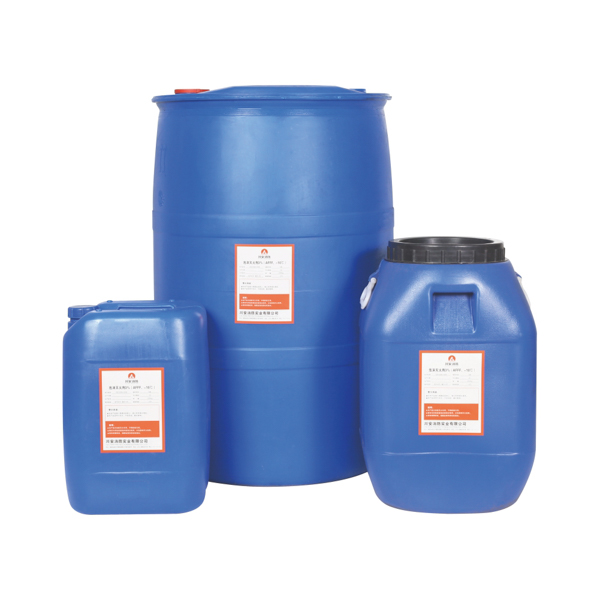
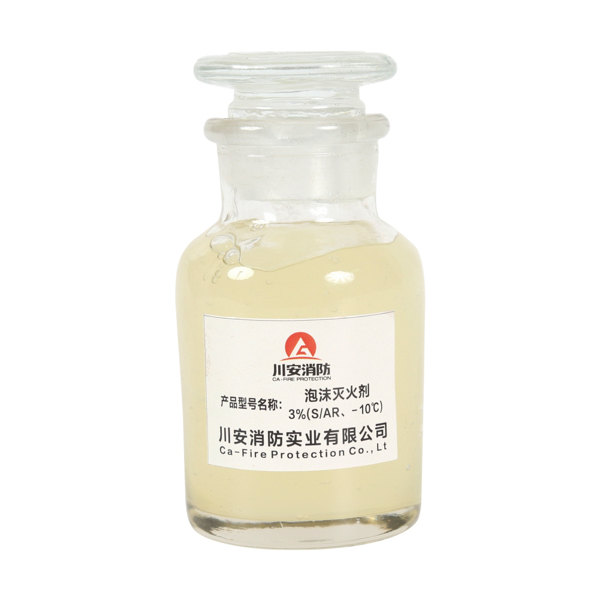
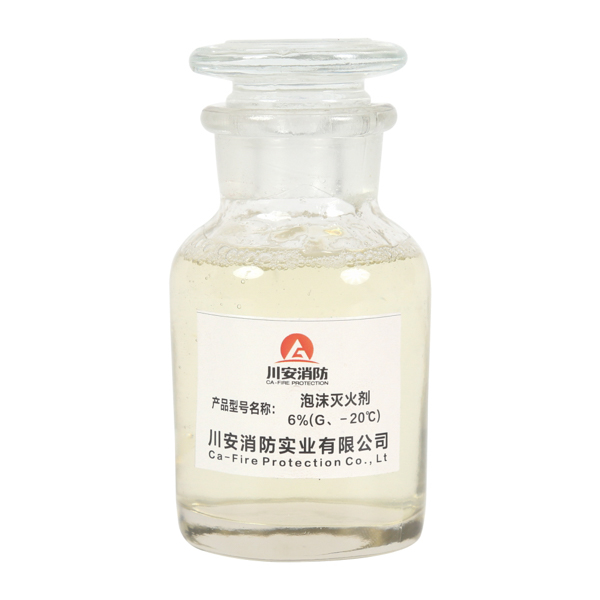
FFFP Film-Forming Fluoroprotein Foam Concentrate 3% 6% | CA-FIRE
CA-FIRE Protection · Foam Concentrate

FFFP Film-Forming Fluoroprotein
Foam Concentrate

3 % & 6 % mixing ratio  ·  Class B hydrocarbon fires  ·  3%FP-10°C & 6%FP  ·  Burnback resistant · Subsurface injection compatible

FFFP Foam Concentrate

Film-Forming Fluoroprotein Foam Concentrate
for Large-Scale Tank Fire Suppression

CA-FIRE FFFP (Film-Forming Fluoroprotein) foam concentrate is an advanced Class B firefighting foam that combines two complementary suppression mechanisms: the rapid aqueous film-forming knockdown of AFFF, and the exceptional burnback resistance of protein-based fluoroprotein foam. This dual-action performance makes FFFP the preferred agent for large petroleum storage tanks, floating-roof crude oil tanks and subsurface injection systems — scenarios where both speed of suppression and long-term foam blanket durability are critical.

The fluoroprotein base creates a dense, oil-shedding foam blanket that resists fuel contamination and maintains integrity under intense heat radiation from the burning tank — providing the extended burnback resistance that pure AFFF cannot match. Simultaneously, fluorosurfactants cause an aqueous film to spread ahead of the foam across the fuel surface, cutting off vapour and achieving rapid knockdown within the first minutes of application.

Available in 3%FP-10°C (3% mixing ratio, freeze point −10°C) and 6%FP (6% mixing ratio, freeze point −5°C). Compatible with surface, semi-subsurface and subsurface foam injection systems. Manufactured and tested to GB 15308 and NFPA 11 at our Fujian facility.
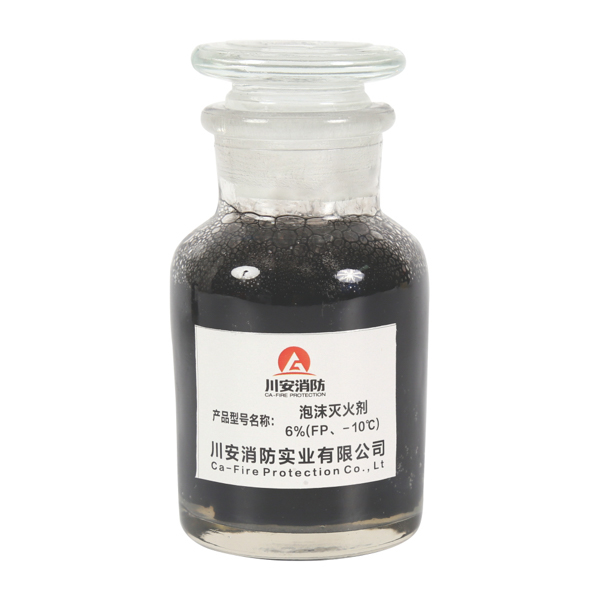
Superior Burnback Resistance Aqueous Film Knockdown 3% & 6% Mixing Ratio Subsurface Injection OK Large Oil Tank Fires Floating-Roof Tanks NFPA 11 Compatible GB 15308 Tested
FFFP Film-Forming Fluoroprotein Foam Concentrate 3% 6% — CA-FIRE Protection In Stock
3 / 6%
Mixing Ratio
−10 °C
Freeze Point (3%)
45 °C
Max Use Temp
6–9
pH Value
Low
Expansion Type
10 yr
Shelf Life
Key Advantages

What Makes FFFP the Choice for Large Tank Fires

🛡️
Superior Burnback Resistance
The protein foam matrix creates a dense, viscous blanket that sheds oil and resists heat radiation. The blanket remains stable even as hot fuel continues to contaminate the surface — providing lasting protection while firefighters cool the tank shell and eliminate ignition sources.
Fast Aqueous Film Knockdown
Fluorosurfactants cause a thin aqueous film to spread across the fuel surface ahead of the advancing foam blanket — suppressing flammable vapour and achieving rapid initial fire control in the critical first minutes of application, comparable to standard AFFF.
🔩
Subsurface Injection Ready
The fluoroprotein base provides excellent oil-shedding as foam rises through a fuel column in subsurface injection systems. Foam arrives at the surface relatively clean and intact — far more reliably than standard AFFF, which loses surfactants during passage through the oil.
🏭
Purple-K Twin-Agent Compatible
Fluoroprotein foam chemistry has superior compatibility with potassium bicarbonate (Purple-K) dry chemical powder compared to AFFF. This makes FFFP the preferred agent for ARFF twin-agent rapid intervention systems at airports and large fuel terminals.
Performance Comparison

FFFP vs AFFF vs Fluoroprotein —
Which Agent for Which Scenario?

Performance Criterion Standard AFFF Fluoroprotein (FP) FFFP (This Product)
Initial knockdown speed Excellent Good Excellent
Burnback resistance Limited Excellent Excellent
Foam blanket durability Moderate Excellent Excellent
Oil shedding (fuel resistance) Moderate Excellent Excellent
Subsurface injection performance Poor Good Good
Aqueous film formation Yes No Yes
Purple-K dry powder compatibility Fair Excellent Excellent
Large crude oil / floating-roof tanks Acceptable Good Best
Technical Specifications

FFFP Foam Concentrate — Technical Data

Model Mixing Ratio Freeze Point pH Value Expansion Ratio Min Use Temp Max Use Temp Water Compatibility
3%FP-10°C 3% −10 °C 6.0–9.0 6.0–9.0 (Low) −5 °C 45 °C Fresh water
6%FP 6% −5 °C 6.0–9.0 6.0–9.0 (Low) −5 °C 45 °C Fresh water

All specifications per GB 15308 test methods at 20°C. Contact CA-FIRE for third-party test certificates, NFPA 11 Annex B performance test data or project-specific technical enquiries.

Packaging Options

Pack SizeContainer TypePallet QtySuitable For
20 LHDPE Jerrican40 jerricans / pallet Portable systems, small fixed systems, testing samples
200 LSteel or HDPE Drum4 drums / pallet Fixed deluge systems, medium-scale tank protection
1000 LIBC Tote (HDPE / SS cage)1 IBC / pallet Large tank farm systems, bulk refinery supply
Typical Applications

Where FFFP Foam Concentrate Is Used

🛢️
Large Crude Oil Storage Tanks
Fixed foam systems on large cone-roof and open-top crude oil tanks where high burnback resistance is required. FFFP is the preferred agent under NFPA 11 for tanks over a critical size where re-ignition risk during suppression operations is the primary design concern.
🔄
Floating-Roof Tank Rim Fires
Floating-roof tank rim seal fires require a foam that can maintain a stable blanket on the narrow annular space between the floating roof and the tank shell. FFFP's superior burnback resistance and oil-shedding properties make it ideal for rim seal fire systems.
⬇️
Subsurface Injection Systems
High-speed subsurface foam injection systems that pump foam solution through a base pipe into the bottom of a tank. FFFP's fluoroprotein chemistry ensures the foam arrives at the fuel surface with sufficient integrity to form an effective suppressive blanket.
✈️
Airport ARFF Twin-Agent Systems
Airport rescue and firefighting (ARFF) vehicles using FFFP + Purple-K (potassium bicarbonate) twin-agent rapid intervention. Fluoroprotein chemistry provides excellent Purple-K compatibility for combined application on aircraft fuel fires.
Petroleum Refineries
Fixed foam systems on refinery process units, atmospheric and vacuum distillation columns, and intermediate hydrocarbon product storage tanks. FFFP is specified where process temperatures create high re-ignition risk after initial knockdown.
🚢
Marine Tanker Cargo Protection
Fixed foam fire fighting systems on oil tanker cargo tanks and pump rooms where the fuel cargo volume and tank dimensions demand the highest burnback resistance. Used in SOLAS-compliant systems on petroleum product tankers.
Injection System Compatibility

FFFP Works with All Three
Tank Foam Injection Methods

FFFP is the only foam type fully effective in all three NFPA 11 foam application methods for storage tanks.

01
Surface Application
Foam is delivered by monitors, foam pourers or fixed foam makers onto the surface of the burning fuel from above the tank shell. The most common method for cone-roof and open-top tanks. FFFP delivers fast film-forming knockdown plus durable blanket.
✓ Fully Compatible
02
Semi-Subsurface Application
Foam solution is injected through a foam-discharge hose stored in a reel inside the tank, which extends to just below the fuel surface when the system activates. Limits foam travel through the fuel. FFFP maintains blanket quality on deployment.
✓ Fully Compatible
03
Subsurface Injection
Foam solution is pumped through a fixed pipe at the base of the tank and rises through the full fuel column to the surface. The most demanding method — FFFP's fluoroprotein chemistry ensures oil shedding during ascent, maintaining foam quality at the surface where standard AFFF would lose effectiveness.
✓ Preferred Agent
FAQ

Frequently Asked Questions about FFFP Foam Concentrate

FFFP (Film-Forming Fluoroprotein) combines the fast aqueous film knockdown of AFFF with the burnback resistance and oil-shedding durability of protein-based fluoroprotein foam. Standard AFFF achieves rapid initial fire control but its foam blanket degrades relatively quickly under fuel contamination and heat — making it unsuitable for scenarios where the foam must remain stable for extended periods. FFFP's protein matrix creates a far more durable blanket that resists breakdown, making it the preferred choice for large tank fires where the suppression operation may take many minutes or hours and burnback protection during that time is critical.
Burnback resistance is the foam's ability to resist re-ignition after the initial fire has been controlled. In a large petroleum tank fire, the foam blanket must remain intact while firefighters approach the tank, cool the shell, and confirm all ignition sources are eliminated — a process that can take many minutes on a large tank. Hot fuel continuously contaminates the underside of the foam blanket, trying to break it down. A foam with poor burnback resistance collapses, exposes the fuel surface and allows re-ignition. FFFP's protein chemistry creates a dense, viscous blanket that sheds fuel contamination and resists collapse, maintaining protection throughout the entire suppression operation. This is the primary reason NFPA 11 references fluoroprotein-based foams for large-diameter tank applications.
Yes — and FFFP is actually the preferred agent for subsurface injection. In subsurface injection, foam solution is pumped through a base pipe and must travel up through the full fuel column before reaching the burning surface. Standard AFFF foam loses its fluorosurfactants to the oil during this ascent, arriving at the surface with degraded film-forming ability. FFFP's fluoroprotein base gives the foam strong oil-shedding properties — it rises through the fuel column shedding the oil from its bubble walls, arriving at the surface relatively clean and able to form an effective suppressive blanket. This is why subsurface injection systems on large petroleum tanks are typically specified with FFFP or straight fluoroprotein foam rather than standard AFFF.
Both models produce equivalent firefighting performance. The key differences are mixing ratio and freeze point. 3%FP-10°C is mixed at 3% and has a freeze point of −10°C, making it the better choice for colder climates and outdoor installations in temperate or cold regions. 6%FP is mixed at 6% with a freeze point of −5°C, suited to warmer climates and indoor installations. The choice should be driven by your proportioning system design — the system proportioner must be calibrated for either 3% or 6%, and the correct concentrate must match. Never substitute one percentage for the other without recalibrating the proportioner.
Yes. Fluoroprotein foam has excellent compatibility with potassium bicarbonate (Purple-K) dry chemical powder — significantly better than standard AFFF. The FFFP + Purple-K combination is a well-established twin-agent system used on ARFF (airport rescue and firefighting) vehicles and large fuel terminal rapid intervention systems. Purple-K provides instant flame knockdown while FFFP rapidly forms a stable vapour-suppressing blanket. Monoammonium phosphate ABC powder causes more rapid foam breakdown in fluoroprotein foams and should be avoided in twin-agent applications. Confirm specific compatibility with CA-FIRE's technical team for your system configuration.
No. Do not mix FFFP with standard AFFF concentrate. The protein chemistry of FFFP can interact adversely with synthetic AFFF components, producing unpredictable changes in expansion ratio, drainage time and burnback resistance. A system being converted from AFFF to FFFP should be fully drained, flushed and cleaned before loading the new concentrate. All proportioner components, bladder tanks and foam concentrate piping should be inspected and cleaned as part of the conversion process. Contact CA-FIRE for a system conversion protocol.
CA-FIRE FFFP foam concentrate is available in 20 L HDPE jerricans, 200 L steel or HDPE drums, and 1000 L IBC totes. OEM private-label packaging is available for distributors. 20 L DHL Express sample orders for pre-purchase testing are available within approximately 5 business days to most destinations. Contact sales@ca-fire.com for project pricing, lead times and bulk order arrangements. Please specify model (3%FP-10°C or 6%FP) and required volume when enquiring.
Request a Quote for FFFP Foam Concentrate
Contact CA-FIRE for project pricing on 3%FP-10°C or 6%FP, bulk OEM supply, SDS documents or 20 L sample orders. Please specify model and required volume when enquiring.
📧 Get a Quote Now
Scroll to Top