AR-AFFF Alcohol Resistant Foam Concentrate 3% 6% | CA-FIRE
CA-FIRE Protection · Foam Concentrate

AR-AFFF Alcohol Resistant
Foam Concentrate

3×3% & 6×6% mixing ratio  ·  Polar solvents & hydrocarbons  ·  AFFF/AR & S/AR types  ·  Freeze point to −36 °C

AR-AFFF Foam Concentrate

Alcohol Resistant Foam Concentrate
for Polar Solvents & Class B Fires

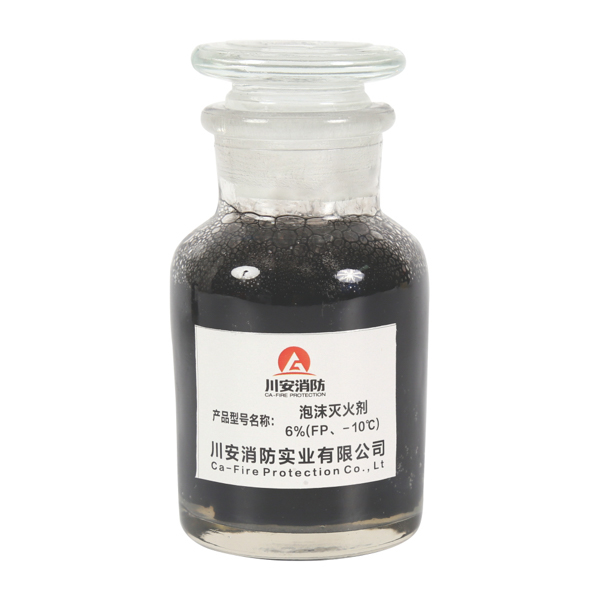
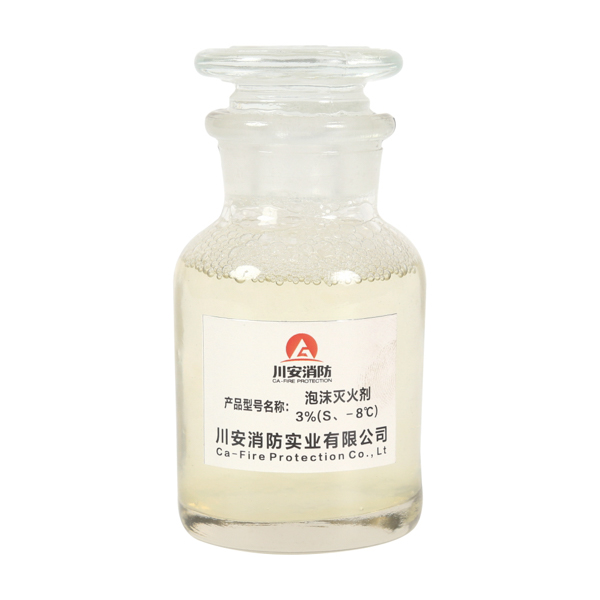
CA-FIRE AR-AFFF (Alcohol Resistant Aqueous Film Forming Foam) concentrate is a multi-purpose foam agent engineered to suppress Class B fires involving both polar solvents and conventional hydrocarbon fuels. Standard AFFF foam collapses almost instantly when applied to water-miscible fuels such as ethanol, acetone or IPA — the polar solvent simply dissolves the foam bubble walls before a suppressive blanket can form. AR-AFFF solves this with a proprietary polymer membrane technology that precipitates an insoluble, protective barrier on contact with the polar fuel surface, shielding the foam from rapid breakdown.

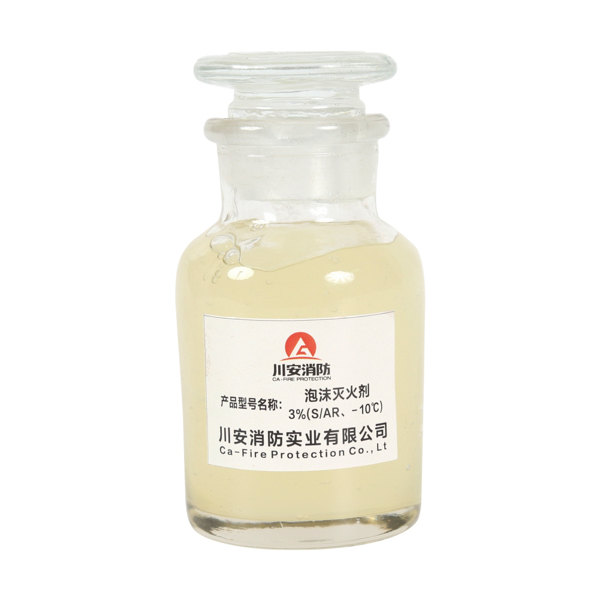
Two formulation types are available: AFFF/AR (Aqueous Film Forming Foam / Alcohol Resistant), which retains the aqueous film-forming properties of standard AFFF alongside alcohol resistance; and S/AR (Synthetic / Alcohol Resistant), a purely synthetic hydrocarbon-surfactant formulation preferred where non-protein chemistries or high-salinity sea water compatibility is specified.

Both types are available in 3×3% and 6×6% mixing ratios, with standard and sea water grades (freeze point −36 °C) available in each. Manufactured at our Fujian facility and tested to GB 15308 and NFPA 11 standards.
Polar Solvents & Alcohols Class B Hydrocarbons 3×3% & 6×6% Ratio AFFF/AR & S/AR Types Sea Water Grade −36 °C Polymer Membrane Tech NFPA 11 Compatible GB 15308 Tested
AR-AFFF Alcohol Resistant Foam Concentrate S/AR Type 3% 6% — CA-FIRE Protection In Stock
3×3 / 6×6%
Mixing Ratio
−36 °C
Min Freeze Point
45 °C
Max Use Temp
6–9
pH Value
2 Types
AFFF/AR & S/AR
10 yr
Shelf Life
Polymer Membrane Technology

Why Standard AFFF Fails on Polar Solvents
— and How AR-AFFF Solves It

When standard AFFF foam is applied to a polar solvent fire such as an ethanol spill, the fuel immediately begins dissolving the water within the foam bubble walls. Within seconds the foam collapses — before any meaningful vapour suppression can occur. The fire continues burning unaffected.

CA-FIRE AR-AFFF contains a high-molecular-weight polysaccharide polymer that remains dormant in the water phase of the foam solution. The instant the foam contacts a polar solvent, the polymer is "triggered" and precipitates as a dense, insoluble gel membrane directly on the fuel surface. This membrane acts as a physical shield between the polar fuel and the foam, preventing the fuel from dissolving the bubble walls.

The result is a stable, self-healing foam blanket that suppresses flammable vapour and seals the fuel surface — providing effective fire control on polar solvents that would destroy standard AFFF within moments of application.

Standard AFFF on Polar Solvent
Polar fuel dissolves foam bubble walls → rapid foam collapse → no vapour suppression → fire continues. Standard AFFF is ineffective on ethanol, acetone, IPA and similar fuels.
AR-AFFF on Polar Solvent
Polymer precipitates instantly → insoluble membrane shields foam from fuel → stable blanket forms → vapour suppressed → fire controlled. Effective on both polar solvents and hydrocarbons.
Standard AFFF on Hydrocarbon
Standard AFFF performs well on hydrocarbon fuels (gasoline, diesel, kerosene). But if both fuel types are present on site, you need two separate foam stocks — a management and supply chain challenge.
AR-AFFF on Hydrocarbon
AR-AFFF also suppresses hydrocarbon fires effectively — the polymer stays dormant on non-polar fuels. One concentrate covers both fuel classes, simplifying system design and inventory.
Technical Specifications

AR-AFFF Foam Concentrate — Technical Data

Type 1: AFFF/AR (Aqueous Film Forming / Alcohol Resistant)

Model Type Mixing Ratio Freeze Point pH Value Expansion Ratio Min Use Temp Max Use Temp Water
3%AFFF/AR-10°C AFFF/AR 3×3% −10 °C 6.0–9.0 6.0–9.0 −5 °C 45 °C Fresh
3%AFFF/AR 耐海水-36°C AFFF/AR 3×3% −36 °C 6.0–9.0 6.0–9.0 −31 °C 45 °C Sea water
6%AFFF/AR-8°C AFFF/AR 6×6% −8 °C 6.0–9.0 6.0–9.0 −3 °C 45 °C Fresh
6%AFFF/AR 耐海水-36°C AFFF/AR 6×6% −36 °C 6.0–9.0 6.0–9.0 −31 °C 45 °C Sea water

Type 2: S/AR (Synthetic / Alcohol Resistant)

Model Type Mixing Ratio Freeze Point pH Value Expansion Ratio Min Use Temp Max Use Temp Water
3%S/AR-10°C S/AR 3×3% −10 °C 6.0–9.0 6.0–9.0 −5 °C 45 °C Fresh
3%S/AR 耐海水-36°C S/AR 3×3% −36 °C 6.0–9.0 6.0–9.0 −31 °C 45 °C Sea water
6%S/AR-8°C S/AR 6×6% −8 °C 6.0–9.0 6.0–9.0 −3 °C 45 °C Fresh
6%S/AR 耐海水-36°C S/AR 6×6% −36 °C 6.0–9.0 6.0–9.0 −31 °C 45 °C Sea water

All specifications per GB 15308 test methods at 20 °C. Sea water grade models tested with synthetic sea water at standard salinity. Contact CA-FIRE for third-party test certificates or project-specific technical data.

Packaging Options

Pack SizeContainer TypePallet QtySuitable For
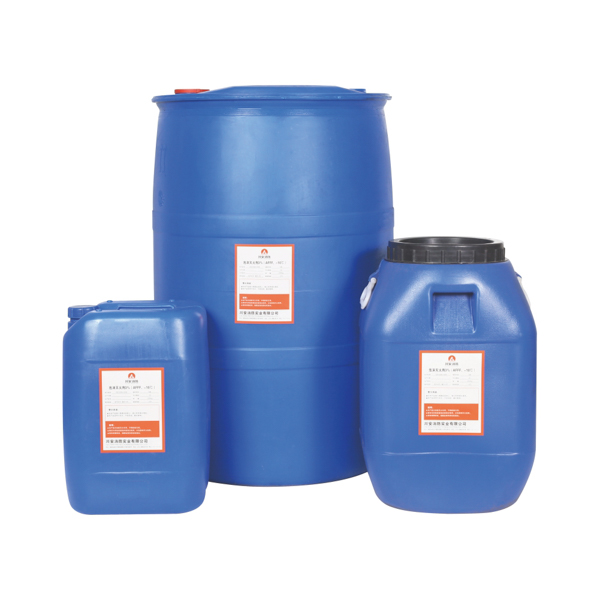
20 LHDPE Jerrican40 jerricans / pallet Portable equipment, small systems, testing samples
200 LSteel or HDPE Drum4 drums / pallet Fixed systems, mid-scale projects
1000 LIBC Tote (HDPE / SS cage)1 IBC / pallet Large-scale industrial or chemical plant supply
Typical Applications

Where AR-AFFF Foam Concentrate Is Used

🧪
Chemical Plants & Solvent Storage
Fixed foam deluge systems on solvent tanks, chemical storage bunds and process areas handling alcohols, ketones, esters and other polar flammable liquids. AR-AFFF is the required agent wherever water-miscible fuels are stored or processed.
🏭
Pharmaceutical Manufacturing
Solvent storage rooms, dispensing areas and pharmaceutical process facilities routinely handling large quantities of ethanol (IPA, methanol, ethyl acetate). AR-AFFF provides reliable protection where standard foam is unsuitable.
🍺
Distilleries & Breweries
High-proof spirit storage and production areas present severe alcohol fire risks. AR-AFFF is specified for automatic foam deluge systems on spirit warehouses, column stills and bottling facilities.
Fuel Terminals — Mixed Products
Fuel loading terminals handling both conventional petroleum products and ethanol-blended fuels (E10, E85, E100) require AR-AFFF to cover all product types from a single foam system, eliminating dual-agent complexity.
🚢
Chemical Tankers & Offshore
SOLAS-compliant fixed foam systems on chemical tanker pump rooms, cargo tank decks and offshore platform process modules where polar solvent cargo is carried. Sea water grade (−36 °C) specified for marine use.
🛢️
Petroleum & Oxygenate Storage
Terminals and refineries storing both conventional hydrocarbon fuels and oxygenate blending components (ethanol, MTBE, ETBE). Single AR-AFFF stock replaces the need for separate AFFF and alcohol-resistant foam stocks.
Application Guide

Key Considerations
When Using AR-AFFF

AR-AFFF requires some additional care in application compared to standard AFFF. Follow these guidelines to ensure effective foam delivery on polar solvent fires.

1
Verify Proportioner Viscosity Rating
AR-AFFF has higher viscosity than standard AFFF due to the polymer additive. Confirm that bladder tank pickup tubes, proportioner orifices and pipe sizing are rated for AR-AFFF viscosity at the minimum design temperature.
2
Apply Gently — Avoid High Turbulence
Apply foam gently over the surface or onto a deflection plate. High-turbulence nozzles can disrupt the polymer membrane before it forms. Use standard (non-aspirating) nozzles with caution; aspirating foam branches give better membrane formation.
3
Select Correct Grade for Water Supply
Use fresh water grade for standard fresh water systems. Use sea water grade (耐海水-36°C) for sea water proportioning systems, offshore or cold-climate applications. Do not substitute grades.
4
Maintain Application Rate
AR-AFFF typically requires a higher application rate per unit area than standard AFFF on polar solvent fires. Follow NFPA 11 Table 5.7.3 or the system designer's specified application rate for the specific fuel class.
Fuel Compatibility

Fuel & System
Compatibility Guide

Fuel / System Type Compatible
Gasoline / diesel / kerosene ✓ Yes
Crude oil / fuel oil ✓ Yes
Aviation fuel (Jet A / Jet A-1) ✓ Yes
Ethanol / methanol / IPA ✓ Yes
Acetone / MEK / ketones ✓ Yes
Esters (ethyl acetate, etc.) ✓ Yes
Diethyl ether / THF ✓ Yes
Ethanol-blended fuels (E10–E100) ✓ Yes
Fresh water proportioning ✓ Yes
Sea water proportioning ✓ Sea water grade only
Inline / Venturi proportioner ⚠ Verify viscosity
Bladder tank system ⚠ Verify viscosity
Standard AFFF (do not mix) ✗ Do not mix
FAQ

Frequently Asked Questions about AR-AFFF Foam Concentrate

AR-AFFF is used to extinguish Class B fires involving polar solvents (water-miscible flammable liquids such as ethanol, methanol, acetone, IPA, MEK and esters) as well as conventional hydrocarbon fuels (gasoline, diesel, kerosene, crude oil). Standard AFFF foam collapses almost instantly on polar solvents. AR-AFFF overcomes this with a polymer membrane that forms on contact with the polar fuel surface, protecting the foam blanket from dissolution and enabling effective vapour suppression and fire control.
CA-FIRE offers two AR formulation types. AFFF/AR is based on fluoroprotein chemistry and retains the aqueous film-forming properties of standard AFFF — it forms both a foam blanket and a thin aqueous film on the hydrocarbon fuel surface, giving excellent knockdown speed. S/AR is a purely synthetic, hydrocarbon-surfactant formulation without fluoroprotein. It is preferred where the system specification calls for a non-protein agent, where tank materials are incompatible with protein-based foams, or where a non-protein chemistry is required for environmental reasons. Both types provide equivalent alcohol resistance on polar solvent fires. If in doubt about which type is correct for your system, contact CA-FIRE's technical team.
The dual-percentage notation indicates the mixing ratio for two different fuel categories. 3×3% means the concentrate is proportioned at 3% for both hydrocarbon fuels and polar solvent fuels. 6×6% means 6% on both fuel types. Older AR-AFFF formulations sometimes used different ratios on each fuel type (e.g., 3% on hydrocarbons but 6% on polar solvents), which added system complexity. CA-FIRE's current AR-AFFF range uses matched ratios on both fuel types, so you only need to set one proportioning ratio in the system — simplifying design and operation.
No. Do not mix AR-AFFF with standard AFFF concentrate. The polymer in AR-AFFF can interact with components of standard AFFF, causing precipitation, increased viscosity or reduced performance in either agent. Bladder tanks, proportioner systems and storage containers used with AR-AFFF should be flushed thoroughly before switching to or from a different foam type. Always label foam storage clearly and train personnel to avoid cross-contamination. Contact CA-FIRE if you need guidance on converting an existing AFFF system to AR-AFFF.
The sea water grade (耐海水-36°C) — available in both AFFF/AR and S/AR types — is specifically formulated for proportioning with sea water. It maintains full alcohol resistance and foam performance when mixed with sea water, and has a freeze point of −36°C suitable for cold-climate marine environments (minimum operating temperature −31°C). The standard fresh water grades (−10°C or −8°C freeze point) are designed for fresh water use and should not be used as the primary agent in sea water proportioning systems, though they remain effective if fresh water is always available as the dilution medium.
CA-FIRE AR-AFFF is effective on the common industrial polar solvents including ethanol, methanol, isopropyl alcohol, n-propanol, acetone, methyl ethyl ketone (MEK), ethyl acetate, diethyl ether, and ethanol-blended fuels. However, the effectiveness of any AR foam on highly unusual solvents or solvent blends should be verified by bench testing before a system is designed. Some highly aggressive solvents (very high polarity, low surface tension, or very low flash point combined with high temperature) may require an application rate higher than the NFPA 11 standard minimum. Contact CA-FIRE for guidance on challenging fuel scenarios.
CA-FIRE AR-AFFF is available in 20 L HDPE jerricans, 200 L drums and 1000 L IBC totes. OEM private-label packaging is available for distributors. For pre-purchase testing and system compatibility verification, 20 L DHL Express samples are available for delivery to most countries within approximately 5 business days. Contact sales@ca-fire.com for project pricing, lead times and sample requests. Please specify the type (AFFF/AR or S/AR), mixing ratio (3×3% or 6×6%) and grade (fresh water or sea water) when enquiring.
Request a Quote for AR-AFFF Foam Concentrate
Contact CA-FIRE for project pricing on AFFF/AR or S/AR types, bulk OEM supply, SDS documents or 20 L sample orders. Please specify type, mixing ratio and grade when enquiring.
📧 Get a Quote Now
Scroll to Top