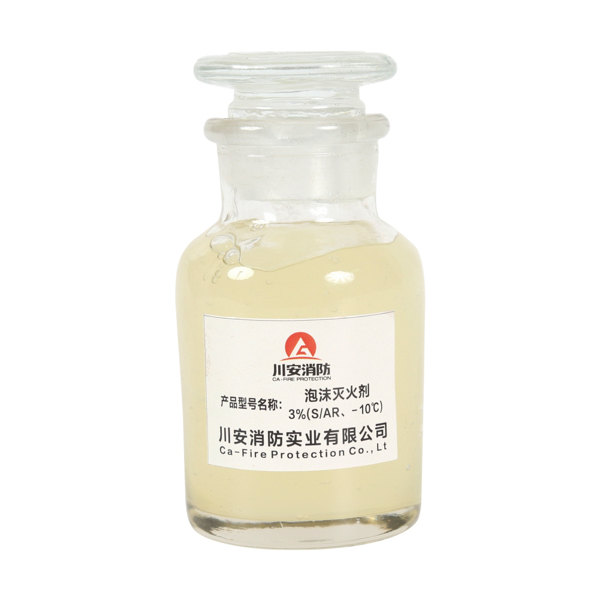
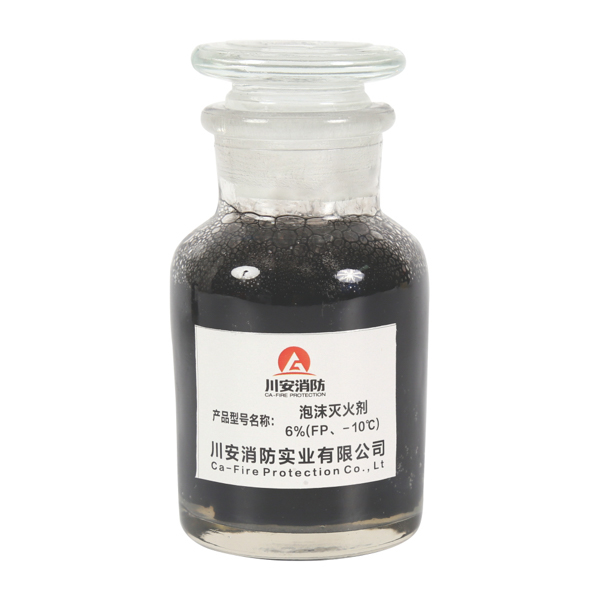
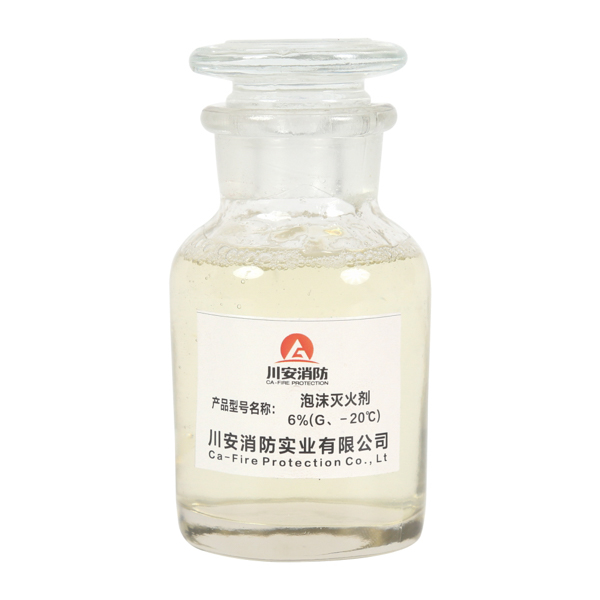
AFFF Aqueous Film Forming Foam Concentrate 3% 6% | CA-FIRE
CA-FIRE Protection · Foam Concentrate

AFFF Aqueous Film Forming
Foam Concentrate

3 % & 6 % mixing ratio  ·  Class B hydrocarbon fires  ·  S-3-AB & S-6-AB  ·  Fresh water & sea water compatible

AFFF Foam Concentrate

Aqueous Film Forming Foam Concentrate
for Class B Fire Suppression

CA-FIRE AFFF (Aqueous Film Forming Foam) concentrate is a high-performance, synthetic-based foam agent designed to rapidly suppress Class B flammable hydrocarbon liquid fires. When applied through a proportioning system, the concentrate mixes with water to produce an aqueous foam that spreads instantly across the fuel surface, forming a continuous, self-healing aqueous film that simultaneously cuts off the oxygen supply and suppresses flammable vapour.

Available in two mixing ratios — S-3-AB (3%) and S-6-AB (6%) — CA-FIRE AFFF is compatible with all standard proportioning systems including inline (Venturi) proportioners, bladder tank systems, balanced pressure systems and around-the-pump proportioners. Both models are formulated for use with fresh water and sea water.

Manufactured at our Fujian facility and tested to GB 15308 and NFPA 11 standards. Full SDS, TDS and test certificate documentation supplied with every order.
Class B Hydrocarbon Fires 3% & 6% Mixing Ratio Fresh & Sea Water NFPA 11 Compatible GB 15308 Tested Fast Film Formation Low Expansion Foam 10+ Year Shelf Life
AFFF Aqueous Film Forming Foam Concentrate 3% 6% S-3-AB S-6-AB — CA-FIRE Protection In Stock
3 / 6%
Mixing Ratio
−5 °C
Freeze Point (3%)
45 °C
Max Use Temp
6–9
pH Value
Low
Expansion Type
10 yr
Shelf Life
Mechanism of Action

How AFFF Extinguishes Fire

01
Proportioning
AFFF concentrate is inducted into the water supply at 3% or 6% ratio via an inline proportioner, bladder tank or balanced pressure system, producing a homogeneous foam solution.
02
Foam Generation
The foam solution is aspirated through a foam branch pipe or monitor nozzle, entraining air to create a stable, low-expansion foam blanket with 6–9× expansion ratio.
03
Aqueous Film
Fluorosurfactants in the concentrate cause the foam to spread rapidly across the fuel surface. A thin aqueous film drains ahead of the foam, providing immediate vapour suppression before the foam blanket arrives.
04
Oxygen Exclusion
The foam blanket seals the fuel surface, cuts off the oxygen supply, suppresses re-ignition, and cools the fuel. The self-healing film reseals minor disturbances to maintain vapour suppression.
Technical Specifications

AFFF Foam Concentrate — Technical Data

Model Mixing Ratio Freeze Point pH Value Expansion Ratio Min Use Temp Max Use Temp Water Compatibility
S-3-AB 3% −5 °C 6.0–9.0 6.0–9.0 (Low) 0 °C 45 °C Fresh water & sea water
S-6-AB 6% −2 °C 6.0–9.0 6.0–9.0 (Low) 0 °C 45 °C Fresh water & sea water

All specifications measured at 20 °C per GB 15308 test methods. Performance may vary slightly with sea water depending on salinity. Contact CA-FIRE for project-specific technical data or third-party test certificates.

Packaging Options

Pack Size Container Type Pallet Qty Suitable For
20 L HDPE Jerrican 40 jerricans / pallet Portable equipment, small systems, samples
200 L Steel or HDPE Drum 4 drums / pallet Fixed systems, mid-scale projects
1000 L IBC Tote (HDPE / SS cage) 1 IBC / pallet Large-scale industrial supply, bulk top-up
Typical Applications

Where AFFF Foam Concentrate Is Used

🛢️
Oil Storage Tank Farms
Fixed foam systems on cone-roof and floating-roof crude oil, diesel and fuel oil storage tanks. Sub-surface and semi-sub-surface injection systems using AFFF are specified under NFPA 11 and API 2030.
✈️
Airports & Aircraft Hangars
Airport rescue and firefighting (ARFF) vehicles and hangar foam deluge systems. AFFF is the primary agent specified for fuel spill fires on airport aprons and for protecting aircraft in hangars.
🚢
Marine & Offshore
Fixed foam fire fighting systems on vessel machinery spaces, pump rooms and cargo tank decks. SOLAS compliance systems on tankers and bulk carriers. Offshore platform deluge protection.
🏭
Petrochemical Plants
Process area foam systems protecting distillation columns, heat exchangers and flammable liquid handling areas. Bund protection systems for transformer oil and chemical storage areas.
Fuel Loading Terminals
Foam monitors and deluge protection at fuel loading racks, road tanker loading gantries and pipeline pump stations where fuel spill fire risk is high during transfer operations.
🔧
Industrial Facilities
General industrial sites with flammable liquid processing or storage — paint factories, solvent warehouses, printing facilities and power station transformer bund protection.
Application Guide

How to Use
AFFF Concentrate

Follow these steps to ensure correct proportioning and effective foam application in fixed or portable systems.

1
Select the Correct Model
Match the concentrate percentage (3% or 6%) to your proportioning system design. Using the wrong percentage will result in over- or under-concentration and degraded foam performance.
2
Set Proportioner Ratio
Verify the inline proportioner, bladder tank pickup tube or balanced pressure valve is set to the correct mixing ratio. Calibrate with water before foam operations if required.
3
Apply Gently onto Fuel
Direct the foam stream onto an overhead deflection surface or tank wall, not directly onto the burning fuel. Allow the foam to roll gently over the fuel surface to prevent foam submergence and contamination.
4
Maintain Foam Blanket
Continue foam application until a stable blanket covers the entire fuel surface. Maintain coverage for at least the minimum application time specified by NFPA 11 for the tank type and diameter.
Equipment Compatibility

Proportioning
System Compatibility

Proportioning System Type Compatible
Inline / Venturi proportioner ✓ Yes
Bladder tank (pressure proportioner) ✓ Yes
Balanced pressure pump skid ✓ Yes
Around-the-pump proportioner ✓ Yes
Compressed air foam system (CAFS) ✓ Yes
Portable foam branch / monitor ✓ Yes
Fresh water supply ✓ Yes
Sea water supply ✓ Yes
Dry chemical (ABC powder) twin-agent ⚠ Verify first
FAQ

Frequently Asked Questions about AFFF Foam Concentrate

AFFF (Aqueous Film Forming Foam) concentrate is used to extinguish Class B flammable liquid fires involving hydrocarbon fuels such as gasoline, diesel, kerosene, crude oil and jet fuel. It is widely specified for petroleum storage tank farms, oil refineries, airports, marine vessels and industrial fuel-handling facilities. AFFF works by forming a thin aqueous film on the fuel surface that simultaneously cuts off oxygen and suppresses flammable vapour, stopping combustion rapidly and preventing re-ignition.
The percentage refers to the mixing ratio — the volume of concentrate added to the water supply. S-3-AB (3%) is mixed at 3 parts concentrate to 97 parts water; S-6-AB (6%) is mixed at 6 parts to 94 parts water. Both produce equivalent firefighting performance when correctly proportioned. The choice is determined entirely by your proportioning system design: inline proportioners, bladder tanks and balanced pressure systems are each calibrated for a specific percentage. Never substitute one for the other without recalibrating or replacing the proportioner. If in doubt, check the system design data or contact CA-FIRE's technical team.
Yes. Both S-3-AB and S-6-AB models are formulated for full compatibility with sea water, making them suitable for marine vessels, offshore platforms and coastal industrial installations where sea water is the available fire-fighting water supply. Foam performance — expansion ratio, drainage time and film formation — is maintained when mixed with sea water at normal salinity levels. For very high-salinity brines or unusual water chemistry, contact CA-FIRE to confirm suitability.
CA-FIRE AFFF foam concentrate has a minimum shelf life of 10 years when stored in the original sealed containers, away from direct sunlight and extreme temperatures, within the 0 °C to 45 °C storage temperature range. Once containers are opened, unused concentrate should be resealed and used as soon as practicable. Annual in-situ sampling and performance testing in accordance with NFPA 11 Annex C is strongly recommended. Replace the concentrate if expansion ratio, 25% drainage time or pH fall outside the specified limits on testing.
AFFF can be used alongside certain dry chemical agents in twin-agent rapid intervention systems. Sodium bicarbonate and potassium bicarbonate-based dry powders are generally compatible and can be applied simultaneously with AFFF foam. Monoammonium phosphate (ABC multipurpose powder) tends to break down AFFF foam more aggressively — if using ABC powder in a twin-agent application, confirm compatibility through a bench test before field deployment. Contact CA-FIRE's technical support team for guidance specific to your system configuration.
AFFF is specifically designed and optimised for Class B flammable liquid fires. While the water content of the foam solution provides some cooling on Class A materials, AFFF is not the recommended agent for wood, paper, rubber or plastic fires. For Class A fires, CA-FIRE recommends the Class A Foam Concentrate (MJABP), which is formulated with surfactant wetting agents specifically for deep penetration into solid fuels. For a general-purpose agent that covers both Class A and Class B, consider the Synthetic Foam Concentrate (S-type).
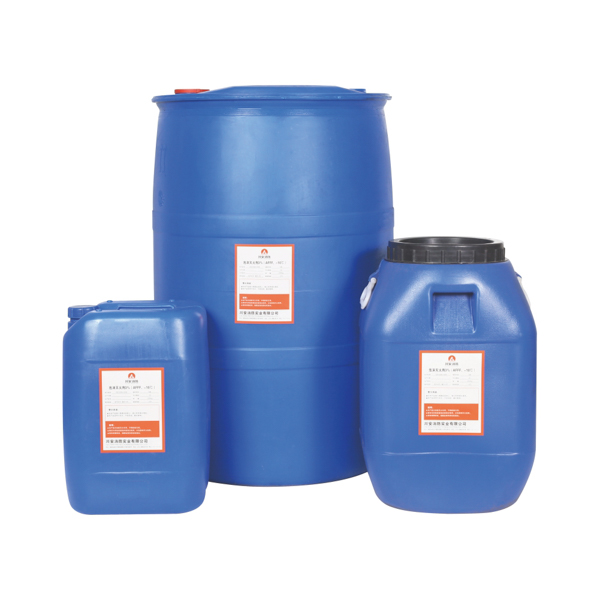
CA-FIRE AFFF foam concentrate is available in 20 L HDPE jerricans, 200 L steel or HDPE drums, and 1000 L IBC totes. OEM private-label packaging is available for distributors. Standard in-stock items typically ship within 3–7 business days ex-factory from Fujian. Bulk project orders (pallets / FCL container quantities) are produced to order — lead times vary by quantity; contact sales@ca-fire.com for a project-specific lead time and quotation. DHL Express samples (20 L) are available for pre-purchase testing within approximately 5 business days to most destinations.
Request a Quote for AFFF Foam Concentrate
Contact CA-FIRE for project pricing on S-3-AB or S-6-AB, bulk OEM supply, SDS documents or 20 L sample orders. We respond within one business day.
📧 Get a Quote Now
Scroll to Top