CA-FIRE Protection · Foam Bladder Tank Series

Portable Foam Fire Extinguishing System — PY Series

Self-Contained Mobile Foam Suppression · 8 Models · 4 & 8 L/s · 10–36 Min Discharge · 3% or 6% Ratio · No Electricity · Deploy in < 5 Minutes · GB / ISO 9001 / CE
PY Series No Fixed Pipework 4 & 8 L/s 10–36 Min 3% / 6% Ratio No Electricity Class B Fires ISO 9001
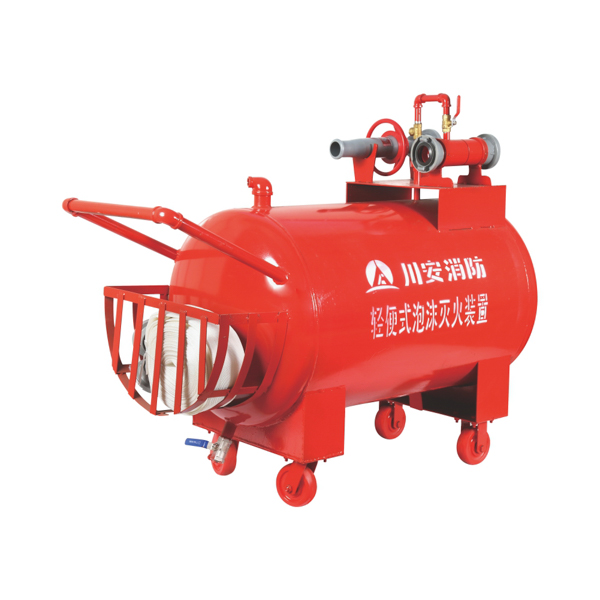
CA-FIRE PY Series Portable Foam Fire Extinguishing System — wheeled self-contained unit for industrial first-response fire suppression
PY Series Portable Foam Fire Extinguishing System — wheeled steel frame, single-operator deployment, no fixed pipework required
Product Overview

Portable Foam Fire Extinguishing System

PY Series · Self-Contained Mobile Foam Suppression

A self-contained, wheeled foam suppression unit that stores foam concentrate in an integrated bladder tank and delivers a precisely proportioned foam solution to any compatible discharge device — foam gun, foam generator or foam monitor. No fixed pipework, no civil works, no electrical connection. Eight models covering Class B and Class A+B fires per NFPA 11 and GB 50151. Deployable by a single operator in under 5 minutes.

Flow Rate
4 or 8 L/s
Discharge Time
10–36 min
Working Pressure
0.6–1.0 MPa
Mixing Ratio
3% or 6%
Models Available
8 variants
Electricity
None required

Deploy in < 5 minutes — connect water supply, open valve, apply foam. No tools, no training course, no power required.

NFPA 11 Class B GB 50151 ISO 9001 CE
📧 Request a Quote

Technical Specifications — Working Parameters

Working Pressure Range 0.6 – 1.0 MPa
Foam Concentrate Mixing Ratio3% or 6% (model dependent)
Flow Rate 4 L/s or 8 L/s (model dependent)
Foam Injection Duration 10 – 36 minutes (model dependent)
Applicable Fire Types Class B — flammable liquids, petroleum products, solvents; Class A+B combined fires
Compatible Discharge DevicesFoam guns · Foam generators (low / medium / high expansion) · Foam monitors
Compatible Foam ConcentratesAFFF · FFFP · Protein foam · AR-AFFF (at rated 3% or 6% mixing ratio)
Power Requirement None — fully hydraulic, water supply pressure drives proportioner
Frame Type Wheeled or skid-mounted carbon steel frame — single-operator deployment
Applicable Standards NFPA 11 · GB 50151 · GB 15308
Certifications GB standard · ISO 9001 · CE

PY Series — 8 Models at a Glance

Eight models cover 3% and 6% mixing ratios, 4 L/s and 8 L/s flow rates, and foam injection durations from 10 to 36 minutes. Select the model that provides sufficient discharge duration for the fire risk area and hazard size.

Model Mixing Ratio Flow Rate (L/s) Foam Injection Time (min) Proportioner Working Pressure (MPa) Fire Types
PY4/100 (3%) 3% 412PQ40.6–1.0Class B / A+B
PY4/200 (3%) 3% 424PQ40.6–1.0Class B / A+B
PY4/300 (3%) 3% 436PQ40.6–1.0Class B / A+B
PY8/300 (3%) 3% 818PQ80.6–1.0Class B / A+B
PY8/400 (3%) 3% 824PQ80.6–1.0Class B / A+B
PYB/300 (6%) 6% 413PQ80.6–1.0Class B / A+B
PYB/500 (6%) 6% 416PQ80.6–1.0Class B / A+B
PY8/400 (6%) 6% 810PQ80.6–1.0Class B / A+B
Model number format: PY = portable foam unit · number after slash = concentrate volume (litres) · percentage = mixing ratio. Contact CA-FIRE for free model selection guidance based on your hazard area, required flow rate and discharge duration.

How to Select the Right PY Model — 3 Steps

Step 1 — Choose Flow Rate
4 L/s: Foam guns and small generators — covering individual equipment spill fires and small bund areas up to approx. 50 m².

8 L/s: Larger monitors and generators — covering medium bund areas and process equipment fires where greater foam throw distance is needed.
Step 2 — Choose Discharge Duration
Multiply your required flow rate (L/s) × your required discharge duration (seconds) = minimum concentrate volume (litres).

Example: 4 L/s × 3% ratio × 1,200 sec (20 min) = 144 L concentrate → select PY4/200 (3%) at 200 L capacity.
Step 3 — Match Foam Concentrate
3% models for AFFF and synthetic concentrates requiring 3% mixing ratio.

6% models for protein foam and concentrates requiring 6% mixing ratio. Always match the system ratio to the concentrate manufacturer's specification.

How the Portable Foam Fire Extinguishing System Works

The PY series operates on the same fully hydraulic bladder tank proportioning principle as CA-FIRE's fixed PHY and PHYM series — no electricity, no diesel engine, no electronic controls. Ready the moment water pressure is applied.

1
💧
Standby — Bladder Pre-Charged
The rubber bladder is filled with foam concentrate at the factory or after each recharge. The unit is stored on its wheeled frame at the designated deployment location — no connections, no power, no standby maintenance required.
2
🚶
Deploy — Wheel to Fire
A single operator wheels the unit to the fire location, connects a fire hose water supply to the inlet and connects the selected discharge device — foam gun, generator or monitor — to the outlet. No tools required. Under 5 minutes total.
3
🎯
Discharge — Precise 3% or 6% Foam
Opening the water supply valve applies pressure to the outside of the bladder, squeezing concentrate into the venturi proportioner at exactly the rated ratio. Consistent foam solution from first discharge — no warm-up, no calibration.
4
♻️
Recharge — Concentrate Preserved
After suppression, any unused concentrate remains in full-quality condition — water never entered the concentrate side. Rinse the discharge device, refill the bladder, and the unit is ready for the next deployment. No concentrate wasted.
Key Features
🚗
Fully Mobile — Single Operator, No Civil Works
The portable foam fire extinguishing system is mounted on a wheeled steel frame engineered for rapid manual deployment across industrial sites. Balanced weight distribution allows a single operator to manoeuvre through standard doorways, along facility corridors and across outdoor ground to the fire location. No fixed pipework, no civil construction, no electrical connection required at any stage. For larger sites, tow by vehicle or load onto a flatbed for rapid transport between risk zones.
No Fixed Infrastructure · Single Operator
No Electricity — Works When Site Power Fails
Because the bladder tank proportioner operates entirely on water supply pressure, the portable foam system functions independently of site electrical infrastructure — critical in industrial fire scenarios where electrical systems may be compromised, shut down or unsafe to operate. Ready to deploy wherever a fire hose water supply connection at 0.6–1.0 MPa is available. No generator, no control panel, no power cable required. Suitable for ATEX/IECEx hazardous area use without electrical hot-work permits.
0.6–1.0 MPa Water Supply Only · ATEX Safe
🎯
Precise Proportioning — Consistent Suppression Performance
The venturi proportioner delivers foam concentrate to the water stream at a consistent 3% or 6% ratio across the full rated flow range. Under-proportioned foam lacks the film-forming properties needed to extinguish flammable liquid fires; over-proportioned foam wastes expensive concentrate. The CA-FIRE bladder tank proportioner maintains accuracy within ±3% of the rated ratio across the 0.6–1.0 MPa working pressure range — reliable suppression performance from first discharge, in line with NFPA 11 proportioning requirements.
±3% Accuracy · 3% or 6% Ratio
♻️
Reusable Concentrate — Lower Operating Cost
After a partial deployment, unused concentrate remaining in the bladder is in full-quality condition — the closed bladder system prevents water from entering the concentrate side of the tank throughout the discharge. This reusability distinguishes the bladder tank from open atmospheric tank proportioners, where any concentrate mixed with water must be disposed of after discharge — a significant cost advantage for high-frequency deployment scenarios such as industrial fire brigade training exercises and regular system drills.
Unused Concentrate Retained · No Waste

Typical Applications — Portable Foam Fire Extinguishing System

🛢️
Oil Fields & Petroleum Terminals
Pre-positioned at wellheads, flow lines and tank farm bund areas. Deployable to a fuel spill fire in minutes — before a fixed deluge system activates or before a fire tender arrives on scene.
🏭
Refineries & Petrochemical Plants
Immediate first-response for plant operators at process units, pump seal areas and reactor zones. Covers both 3% and 6% concentrate types — supplement fixed foam and water deluge systems.
Ports & Marine Terminals
Fuel bunkering berths and cargo handling areas. Compact dimensions allow access through hatch openings and along vessel deck runs where larger wheeled equipment cannot pass.
✈️
Airport Airside Operations
Aircraft fuel servicing areas and ground support maintenance facilities. Supplements airport fire tender operations — addresses incipient fuel spill fires before they escalate to major incidents.
📦
Warehouses & Distribution Centres
Facilities storing flammable liquids, aerosols and solvents. Distributed through large warehouse areas to provide first-response suppression while overhead fixed sprinkler systems activate.
🔧
Fixed System Impairment Backup
Backup coverage during fixed system maintenance or planned impairments. Directs foam to specific fire locations — roof seam failures, flange spray fires — that fixed overhead devices cannot target.

Deployment Procedure — 4 Steps to Full Suppression

The PY series portable foam system is designed for deployment by site personnel without specialist fire-fighting training. Follow these four steps from standby to active suppression.

Pre-Deployment Check
Confirm concentrate type and ratio matches the discharge device. Verify level indicator shows a full charge. Check water supply point pressure is within 0.6–1.0 MPa. Confirm hose connections and discharge device are free from damage.
🚶
Position Upwind of Fire
Wheel the unit to a safe upwind and uphill position from the fire. Connect the water supply hose to the system inlet and the discharge device to the outlet. Ensure all connections are fully tightened before opening the water supply.
🔥
Open Water Supply — Apply Foam
Open the water supply valve progressively (not rapidly, to avoid water hammer). Once stable flow is established, direct the foam stream onto the base of the fire or onto the burning liquid surface as appropriate for the discharge device in use.
🔄
Post-Deployment Recharge
Close the water supply valve, disconnect hoses. Record concentrate volume remaining. Rinse the proportioner and discharge device. Inspect for damage. Recharge bladder to full charge level before returning the unit to standby designation.

Maintenance Schedule

Regular inspection and maintenance ensures the portable foam fire extinguishing system is ready for immediate deployment at all times. Record all inspection findings in the equipment maintenance log.

FrequencyTask
Monthly Inspect tank exterior, frame, wheels and handle for corrosion, mechanical damage or deformation. Check all hose connections, valves and proportioner body for leaks or deterioration. Verify concentrate level indicator shows a full charge. Confirm unit is stored in its designated location, accessible and unobstructed.
Quarterly Compare concentrate volume indicated against original fill volume — any unexplained reduction may indicate bladder leakage. Inspect proportioner inlet and outlet connections for scale, debris or corrosion. Test water supply connection and verify supply pressure is within 0.6–1.0 MPa operating range.
Annual Proportioning accuracy test — connect to a calibrated flow measuring arrangement and verify foam-to-water ratio is within ±3% of the rated mixing ratio at both minimum and maximum rated flow. Inspect bladder condition through tank inspection port. Pressure test the tank to 1.5× working pressure. Document all findings in the maintenance log.
Every 3–5 Yrs Preventive bladder replacement regardless of apparent condition — or earlier if inspection reveals cracks, stiffening or chemical attack. CA-FIRE supplies replacement bladders for all PY series models with full installation guidance and technical support.
🔢
8 Models — 10 to 36 Min
Eight PY series models across 3% and 6% ratios, 4 and 8 L/s flow rates, and 10–36 minute discharge durations — the right capacity from small plant room spill fires to large bund suppression.
🏭
Factory Tested Before Despatch
Every portable foam system undergoes factory pressure testing and proportioning accuracy verification before despatch. Full test documentation provided for site safety records and authority inspection.
🌍
ISO 9001 · 50+ Countries
ISO 9001 certified manufacturing, GB certification, CE marking. Over a decade supplying portable foam suppression equipment to oil, gas, petrochemical, aviation and industrial clients globally.
📐
Free Application Support
CA-FIRE's technical team provides model selection support and application engineering for every inquiry. Contact us with hazard type, risk area size and required discharge duration — we identify the right PY model.

Frequently Asked Questions — Portable Foam Fire Extinguishing System

What is a portable foam fire extinguishing system used for?
A portable foam fire extinguishing system suppresses Class B fires involving flammable and combustible liquids — petroleum products, chemicals, solvents and fuels — and combined Class A and B fires. It mixes foam concentrate with water at a precise 3% or 6% ratio and discharges the resulting foam solution through a discharge device onto the burning surface. The foam blanket cuts off the oxygen supply, suppresses flammable vapour generation and provides a cooling effect — extinguishing the fire and preventing re-ignition. See NFPA 11 for foam system design requirements.
What is the difference between the 3% and 6% model variants?
The percentage refers to the foam concentrate mixing ratio — the proportion of concentrate in the finished foam solution. A 3% ratio system uses 3 litres of concentrate per 97 litres of water; a 6% ratio system uses 6 litres per 94 litres of water. The 6% models are used with protein foam and certain older AFFF concentrates that require a higher mixing ratio to produce effective foam. Always match the system mixing ratio to the concentrate manufacturer's specification — using a 6% concentrate in a 3% system will under-proportion, reducing suppression effectiveness significantly.
How is the correct PY model selected for my application?
Two parameters drive model selection: (1) Flow rate — determined by the discharge device and hazard area size (4 L/s for foam guns and small generators; 8 L/s for larger monitors and generators); (2) Discharge duration — how many minutes of continuous foam supply is required. Multiply your required flow rate (L/s) × mixing ratio × required duration (seconds) = minimum concentrate volume in litres, then select the model with a concentrate charge meeting or exceeding this value. Contact CA-FIRE for free model selection guidance — provide your hazard type, area size and applicable standard.
How does the bladder tank proportioner differ from other foam proportioning methods?
The bladder tank proportioner is entirely hydraulically driven — water supply pressure squeezes foam concentrate from the bladder into the proportioner at the correct rate, with no external power, pumps or electronic controls. This makes it more reliable in emergency conditions than electrically powered proportioning systems and simpler to maintain than pump-based proportioners. Compared to a standard inline eductor (venturi proportioner without a bladder tank), the bladder tank system carries its own foam concentrate supply — making it a fully self-contained unit that does not depend on a separate concentrate storage tank or concentrate pump on site.
Can the portable foam system be used as part of a larger fixed foam installation?
Yes. The PY series can function both as a standalone mobile unit and as an auxiliary component of larger fixed foam systems — connected to a fixed system's foam outlet manifold during a maintenance impairment, or used in parallel with a fixed system to supplement foam delivery to a large fire. For permanent fixed installations requiring continuous supply, see CA-FIRE's horizontal foam bladder tank (4–360 L/s) and vertical foam bladder tank (8–120 L/s) ranges.
What foam concentrates are compatible with the PY series portable foam system?
The CA-FIRE PY series is designed for standard 3% and 6% AFFF (Aqueous Film-Forming Foam), FFFP (Film-Forming Fluoroprotein) and protein foam concentrates. Compatibility with specific concentrate formulations — including fluorine-free foam (F3) alternatives — should be confirmed with CA-FIRE's technical team before use, as bladder elastomer compatibility varies with F3 concentrate chemistry. See our technical download centre for product datasheets.
Related Products
Get a Quote — Portable Foam Fire Extinguishing System
PY Series · 8 Models · 4 & 8 L/s · 3% or 6% · 10–36 Min · NFPA 11 · Factory Direct · Free Model Selection Support.
Tell us your hazard type, risk area size and required discharge duration — CA-FIRE identifies the right PY model and returns a price within 24 hours.
📧 Send Enquiry Now
💬 WeChat: 404863577
Scroll to Top