
A water mist sprinkler — more precisely, a fixed water spray nozzle — does not work like a standard sprinkler head. Where a sprinkler throws large droplets over a wide floor area to control a spreading fire, a water spray nozzle atomises water into fine, high-velocity droplets directed at a specific target. The purpose is not to wet the floor around the equipment — it is to envelop the equipment itself in a continuous mist that simultaneously cools the surface, displaces oxygen in the immediate fire zone, and quenches radiant heat before it can ignite adjacent materials.
This targeted, three-mechanism attack makes water spray nozzles the standard protection method for hazards where a pool of water on the floor would cause more damage than the fire itself: oil-filled power transformers, gas turbine enclosures, diesel generators, hydraulic oil systems, cable tunnels, and flammable liquid process vessels. The nozzles are installed in fixed arrays precisely positioned around the protected equipment, and all activate simultaneously when the deluge valve opens — typically triggered by a UV/IR flame detector or manual emergency activation.
CA-FIRE manufactures two water spray nozzle families: the ZSTW B-series centrifugal (high-velocity) nozzles — which use a spinning deflector to generate very fine droplets at high exit velocity for rapid surface cooling and oxygen displacement — and the ZSTW C-series impact (medium-velocity) nozzles — which use a target deflector to produce larger, more penetrating droplets suited for rain-down systems and general area protection. Both series are open-type, require no thermal sensing element, and connect to a fixed pipe system controlled by an external deluge valve.
Related open-system products: Deluge Sprinkler (Open Nozzle) → · Water Curtain Nozzle → · Foam Sprinkler Head →
Two Nozzle Types — Centrifugal vs Impact
💨 ZSTW B-Series — Centrifugal (High-Velocity)
Also called: 离心式水雾喷头 · 高速水雾喷头
- Mechanism: Water is spun through an internal helical chamber and exits as a hollow cone of very fine droplets at high velocity (hence "high-velocity" designation).
- Droplet size: Very fine — DV50 typically 400–800 µm at rated pressure. Fine droplets maximise the surface-area-to-volume ratio, giving very high evaporation rate and rapid heat absorption per litre of water used.
- Penetration: High exit velocity allows droplets to penetrate the thermal plume above a burning surface and reach the fuel, even against moderate upward convection currents.
- Best for: High-temperature equipment surfaces — transformers, turbines, diesel generators, hot process vessels. The fine mist envelops and cools the entire equipment surface rapidly.
- Thread range: R:½ (K12–K27) / R:¾ (K33.7–K43) / R:1 (K54–K67) / R:1¼ (K80–K100)
- Spray angles: 90° or 120° — specify when ordering
💧 ZSTW C-Series — Impact (Medium-Velocity)
Also called: 撞击式水雾喷头 · 中速水雾喷头
- Mechanism: Water exits the orifice and strikes a conical or flat deflector pin, shattering into a cone of droplets. The deflector angle determines the spray pattern and droplet size.
- Droplet size: Medium — larger than centrifugal type. The heavier droplets carry greater momentum, giving better penetration through air currents and greater reach from the nozzle to the target surface.
- Penetration: Moderate — suitable for area coverage in rain-down systems and general equipment wetting, but not as effective as centrifugal type for penetrating strong thermal plumes.
- Best for: Rain-down deluge systems over horizontal surfaces, cable tunnel flooding, general-purpose area wetting where fine atomisation is not critical. Also used in rain-down systems for cooling outdoor storage vessels.
- Thread range: R:½ throughout range (K16–K80)
- Spray angles: 90° or 120° — specify when ordering
Spray Angle — 90° vs 120°
The 90° spray angle produces a tighter, more concentrated cone of droplets with higher exit velocity and greater penetration depth. Specified when nozzles must be positioned close to the protected equipment and full surface wetting is required at short throw distances. Preferred for transformer cooling where nozzles are mounted within 0.5–1.0 m of the transformer tank surface. Also used in cable tunnel installations where the tunnel cross-section is narrow and the nozzle must cover a defined vertical zone.
The 120° spray angle spreads droplets across a wider horizontal area per nozzle, reducing the number of heads required to cover a given floor area or equipment surface. Specified where nozzles are positioned further from the protected surface — typically 1.0–2.5 m from vertical transformer sides or 1.5–3.0 m above horizontal surfaces in rain-down systems. The wider spread reduces overlap requirements between adjacent nozzles, making hydraulic design more efficient for large-area protection zones.
ZSTW Series Product Range
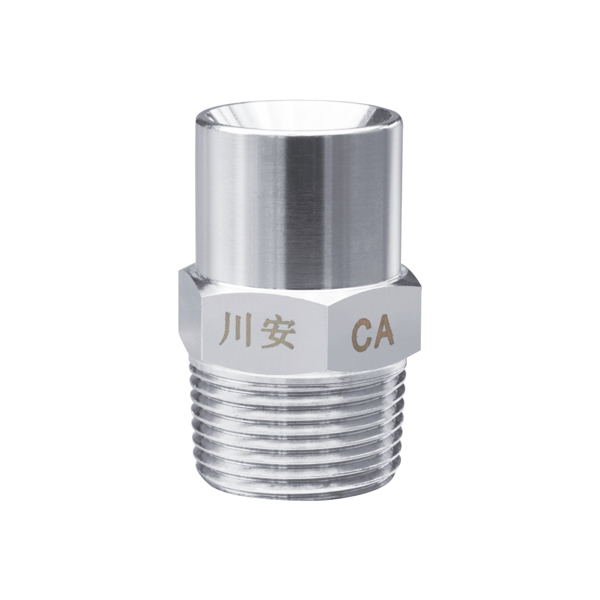
ZSTW B — Centrifugal Nozzle
High-Velocity · K12–K100 · 90°/120°The principal water spray nozzle for fixed water spray systems protecting flammable liquid equipment. Stainless steel or brass body with internal helical spin chamber. K12 through K100 flow factors across four thread sizes. Order suffix /90 (90° cone) or /120 (120° cone). For transformers, turbines, generators, cable vaults.
| Type | Centrifugal (high-velocity) |
|---|---|
| K range | 12 / 16 / 21.4 / 27 / 33.7 / 43 / 54 / 67 / 80 / 100 |
| Spray angles | 90° or 120° |
| Rated pressure | 0.35 MPa |
| Thread | R:½ to R:1¼ |
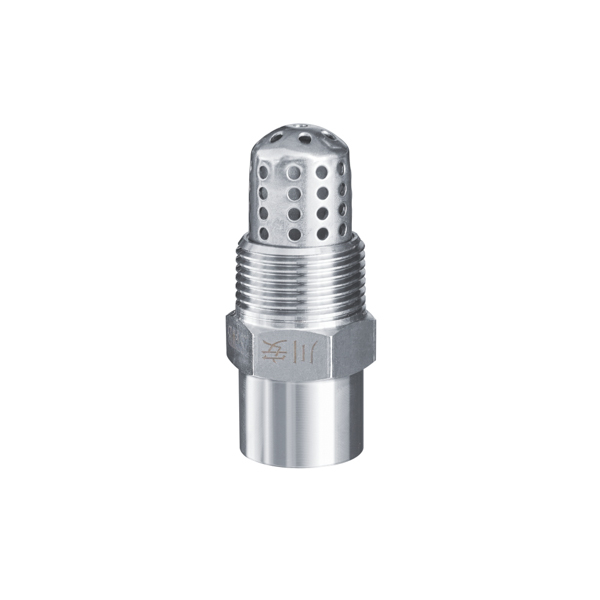
ZSTW B (带过滤网) — With Filter Screen
High-Velocity · Filtered · K12–K100Centrifugal nozzle with integral stainless steel filter screen at the inlet. The fine orifice of high-velocity water spray nozzles is susceptible to blockage by pipe-borne debris — the built-in 40-mesh filter screen prevents orifice clogging without requiring a separate strainer union at each head. Strongly recommended for all transformer and turbine protection systems where pipe cleanliness cannot be guaranteed.
| Type | Centrifugal + integral filter |
|---|---|
| Filter mesh | 40 mesh (stainless) |
| K range | Same as standard ZSTW B |
| Spray angles | 90° or 120° |
| Thread | R:½ to R:1¼ |
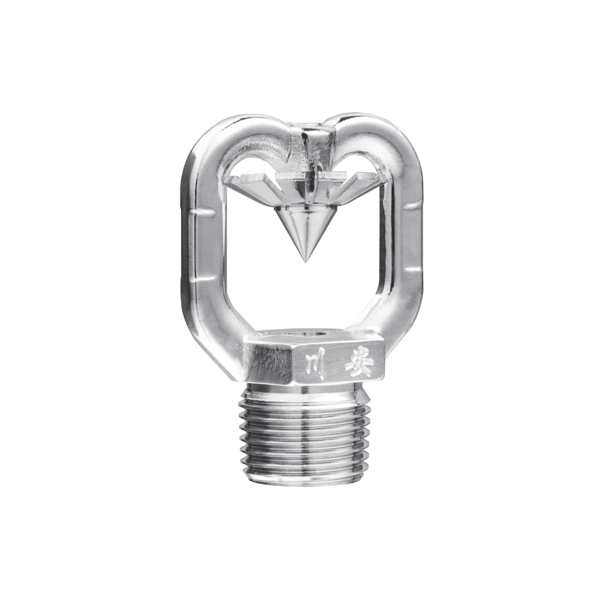
ZSTW C — Impact (Medium-Velocity) Nozzle
Medium-Velocity · K16–K80 · 90°/120°Impact-type water spray nozzle for rain-down deluge systems, cable tunnel flooding, and general area wetting. Larger droplets and wider reach per head than ZSTW B centrifugal type. All models R:½ thread. Used in outdoor rain-down cooling systems over horizontal tank surfaces and in cable tray flooding applications.
| Type | Impact (medium-velocity) |
|---|---|
| K range | 16 / 21 / 27 / 33 / 43 / 54 / 60 / 67 / 80 |
| Spray angles | 90° or 120° |
| Rated pressure | 0.35 MPa |
| Thread | R:½ (all models) |
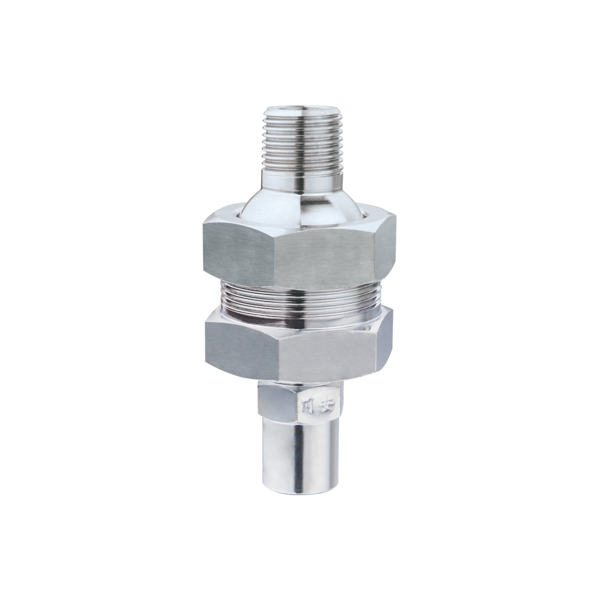
喷头万向接头 — Universal Joint Adaptor
Accessory · Adjustable AngleBall-and-socket universal joint adaptor for mounting ZSTW nozzles at any required spray angle without bending the supply pipe. Allows on-site adjustment of the nozzle aim direction after installation — critical for transformer bays where equipment geometry makes fixed-angle mounting impractical. Standard inlet/outlet threads match ZSTW B and C range.
| Function | Adjustable-angle nozzle mount |
|---|---|
| Adjustment | Full spherical (any direction) |
| Compatible with | ZSTW B & C series |
| Material | Brass / stainless steel |
| Thread | Matches nozzle inlet |
Full Technical Parameters — ZSTW B Centrifugal Series
| Model | Thread | Flow Factor K | Rated Pressure (MPa) | Flow at 0.35 MPa (L/min) | Spray Angle |
|---|---|---|---|---|---|
| ZSTW B — R:½ Thread · K12–K27 | |||||
| ZSTW B12/90 | R:½ | 12 | 0.35 | 22.5 | 90° |
| ZSTW B12/120 | R:½ | 12 | 0.35 | 22.5 | 120° |
| ZSTW B16/90 | R:½ | 16 | 0.35 | 30 | 90° |
| ZSTW B16/120 ★ | R:½ | 16 | 0.35 | 30 | 120° |
| ZSTW B21.4/90 | R:½ | 21.4 | 0.35 | 40 | 90° |
| ZSTW B21.4/120 ★ | R:½ | 21.4 | 0.35 | 40 | 120° |
| ZSTW B27/90 | R:½ | 27 | 0.35 | 50.5 | 90° |
| ZSTW B27/120 | R:½ | 27 | 0.35 | 50.5 | 120° |
| ZSTW B — R:¾ Thread · K33.7–K43 | |||||
| ZSTW B33.7/90 | R:¾ | 33.7 | 0.35 | 63 | 90° |
| ZSTW B33.7/120 ★ | R:¾ | 33.7 | 0.35 | 63 | 120° |
| ZSTW B43/90 | R:¾ | 43 | 0.35 | 80 | 90° |
| ZSTW B43/120 | R:¾ | 43 | 0.35 | 80 | 120° |
| ZSTW B — R:1 Thread · K54–K67 | |||||
| ZSTW B54/90 | R:1 | 54 | 0.35 | 101 | 90° |
| ZSTW B54/120 | R:1 | 54 | 0.35 | 101 | 120° |
| ZSTW B67/90 | R:1 | 67 | 0.35 | 125 | 90° |
| ZSTW B67/120 | R:1 | 67 | 0.35 | 125 | 120° |
| ZSTW B — R:1¼ Thread · K80–K100 · Largest Flow | |||||
| ZSTW B80/90 ★ | R:1¼ | 80 | 0.35 | 150 | 90° |
| ZSTW B80/120 ★ | R:1¼ | 80 | 0.35 | 150 | 120° |
| ZSTW B100/90 | R:1¼ | 100 | 0.35 | 187 | 90° |
| ZSTW B100/120 | R:1¼ | 100 | 0.35 | 187 | 120° |
★ Most commonly specified. Flow Q (L/min) = K × √P where P in MPa. All ZSTW B models available with integral filter screen (带过滤网) — specify at order. GB 5135 CCCF certified.
Full Technical Parameters — ZSTW C Impact (Medium-Velocity) Series
| Model | Thread | Flow Factor K | Rated Pressure (MPa) | Flow at 0.35 MPa (L/min) | Spray Angle |
|---|---|---|---|---|---|
| ZSTW C — R:½ Thread · All Models · Medium-Velocity Impact | |||||
| ZSTW C16/90 | R:½ | 16 | 0.35 | 30 | 90° |
| ZSTW C16/120 | R:½ | 16 | 0.35 | 30 | 120° |
| ZSTW C21/90 | R:½ | 21 | 0.35 | 39.3 | 90° |
| ZSTW C21/120 | R:½ | 21 | 0.35 | 39.3 | 120° |
| ZSTW C27/90 | R:½ | 27 | 0.35 | 50.5 | 90° |
| ZSTW C27/120 ★ | R:½ | 27 | 0.35 | 50.5 | 120° |
| ZSTW C33/90 | R:½ | 33 | 0.35 | 61.8 | 90° |
| ZSTW C33/120 ★ | R:½ | 33 | 0.35 | 61.8 | 120° |
| ZSTW C43/90 | R:½ | 43 | 0.35 | 80 | 90° |
| ZSTW C43/120 | R:½ | 43 | 0.35 | 80 | 120° |
| ZSTW C60/90 | R:½ | 60 | 0.35 | 101 | 90° |
| ZSTW C60/120 | R:½ | 60 | 0.35 | 101 | 120° |
| ZSTW C80/90 | R:½ | 80 | 0.35 | 150 | 90° |
| ZSTW C80/120 | R:½ | 80 | 0.35 | 150 | 120° |
★ Most commonly specified. All ZSTW C models use R:½ thread. GB 5135 CCCF certified. NFPA 15 documentation available on request.
Nozzle Selection Guide by Protection Scenario
Centrifugal type with 90° narrow cone for close-range surface wetting. Nozzles positioned 0.5–1.0 m from transformer tank sides, directed at the oil conservator, radiator fins, and transformer body. Integral filter screen strongly recommended. Deluge valve with UV/IR detection.
Centrifugal 120° for maximum surface coverage inside the turbine enclosure. Array of nozzles covers the turbine casing, fuel supply lines, and lube oil system simultaneously. High-velocity fine mist achieves rapid temperature reduction of hot metal surfaces.
Centrifugal 90° for close-range wetting of the generator housing, fuel tank, exhaust system, and lube oil drip areas. Typically a small zone (4–8 nozzles) covering the entire generator skid with a common deluge valve.
Impact medium-velocity type for cable tunnel flooding. 120° wide cone provides overlapping coverage along the tunnel length. Nozzles positioned at 2.0–3.0 m centres along the crown of the tunnel, directed downward onto cable trays. NFPA 15 water application rate: 6.1 L/min/m² minimum.
Impact type in rain-down configuration above horizontal storage vessels. Wide 120° cone maximises coverage of curved vessel surfaces from above. Used for exposure protection — keeping adjacent vessel shells cool during a fire in a neighbouring vessel or bund area.
Centrifugal type directed at hydraulic fluid manifolds, high-pressure hose bundles, and quench oil tanks in press and heat-treatment equipment. The 90° narrow cone concentrates water on the specific high-risk surface areas identified by hazard assessment.
Typical Applications by Industry
Power transformers, step-up transformers, generator stators, turbine-generator sets, and lube oil systems in thermal, hydro, nuclear, and renewable power plants.
Oil-filled circuit breakers, tap changers, cable sealing ends, and reactor inductors in high-voltage substations. Fixed water spray is specified in IEC 61936 and GB 50229 for transformer protection.
High-volume centrifugal nozzles in test cell drencher systems protecting jet engine test rigs against fuel/oil fire during full-power test runs. Activated by UV flame detection with zero-second delay.
Fixed spray systems protecting fuel transfer pump skids, valve manifolds, and pipe flanges where pressurised fuel leak-and-ignite is the dominant fire scenario. Deluge activated by heat or UV detector.
Hydraulic presses, injection moulding machines, and die-casting equipment using flammable hydraulic oil. Water spray systems protect against high-pressure oil mist ignition on hot die surfaces.
Turbine modules, generator rooms, process areas, and flare boom structures on offshore oil platforms require water spray systems per NFPA 15. Stainless steel body nozzles available for marine salt-air environments.
Fixed rain-down water spray systems in road tunnels per GB 50016 tunnel fire protection requirements. Impact nozzles cover the tunnel carriageway cross-section from crown-mounted pipes. Note: CA-FIRE also offers the dedicated PT series tunnel foam spray system for foam-water tunnel applications.
Large-K centrifugal nozzles for high-volume cooling of exothermic reactor vessels during runaway reaction or fire exposure. System designed to maintain reactor shell below the critical temperature at which the process hazard escalates.
Frequently Asked Questions
What is the difference between a water mist nozzle and a standard sprinkler head?
The difference is fundamental — they are designed for completely different protection objectives and should never be substituted for each other.
A standard sprinkler head (ZSTX, ZSTZ) is a closed-head device with a thermal sensing element. It activates individually when the temperature at its specific location exceeds the activation threshold, throwing large droplets over a wide floor area below to control a spreading fire. The goal is area fire control — limiting the fire to the sprinkled area.
A water mist / water spray nozzle (ZSTW) is an open-head device with no thermal sensing element. It is part of a deluge system where all nozzles in the zone activate simultaneously when an external detector triggers the deluge valve. The goal is targeted equipment protection — enveloping a specific piece of equipment (transformer, turbine, generator) with fine water mist to cool its surface and suppress ignition. The nozzle positions, spray angles, and flow rates are all engineered to the specific equipment geometry, not to a generic floor area.
Why is the ZSTW B centrifugal nozzle preferred for transformer protection over the ZSTW C impact type?
Oil-filled power transformers present a very specific fire scenario: burning transformer oil (insulating mineral oil, flash point ~140°C) can spray at high velocity from a ruptured conservator or bushing, creating a pressurised burning oil jet that is extremely difficult to suppress with large water droplets. The fine, high-velocity mist from a centrifugal nozzle achieves three things simultaneously that the impact type cannot match: (1) it penetrates the burning oil jet and reaches the ignition source; (2) fine droplets evaporate almost instantly on contact with hot oil, absorbing heat rapidly; and (3) the high droplet density creates an oxygen-excluding atmosphere around the transformer body that suppresses secondary ignition of oil films on the tank surface.
The impact (medium-velocity) ZSTW C type is effective for surface cooling and general area wetting — where the fire is a pool or surface fire, not a pressurised jet. For cable trays, open vessel surfaces, and rain-down cooling, the ZSTW C is appropriate and more economical. For transformer and turbine protection, specify ZSTW B.
Do I need to install a strainer / filter before ZSTW nozzles?
Yes — this is critical for centrifugal (high-velocity) nozzles. The ZSTW B series has a very small internal orifice (particularly in the K12 to K27 range) that is vulnerable to blockage by pipe scale, weld debris, sand, or any particulate matter that may be present in the water supply or the pipe system. Blockage of even a single nozzle creates a gap in the protection coverage around the equipment — a potentially catastrophic failure mode in a system designed to protect a high-value transformer or turbine.
CA-FIRE offers the ZSTW B with integral filter screen (带过滤网) which incorporates a 40-mesh stainless steel screen at the nozzle inlet. This is the recommended option for all new transformer and turbine spray systems. Where the standard (non-filtered) ZSTW B is installed, a Y-type strainer must be fitted at the start of each branch line supplying the nozzles, and the strainer must be included in the routine maintenance schedule with annual cleaning or inspection.
What detection system should be used to activate a water spray deluge system?
For transformer and turbine protection (the primary application of ZSTW nozzles), UV/IR flame detectors are the standard activation method. These optical detectors respond to the UV and infrared radiation emitted by a flame within milliseconds of ignition — far faster than any heat-based detection method. Given that a transformer oil fire can transition to a full-scale blaze within seconds, UV/IR detection is considered mandatory for oil-filled equipment protection in most jurisdictions.
Heat detectors or linear heat detection cable may be used as a secondary or cross-zoned detection method to prevent false activations from welding, arc flash, or other transient UV sources. The standard approach is a cross-zoned UV/UV or UV/IR configuration where two independent detector channels must both trigger before the deluge valve opens, reducing nuisance activation risk.
Manual activation (emergency pushbutton) must always be provided as a backup, allowing operators to activate the system without waiting for automatic detection in an emergency. Confirm the specific detection and activation requirements with the relevant standard (GB 50229 for power installations; NFPA 15 / NFPA 850 for general water spray and power plant applications).
Can ZSTW nozzles be used in a high-pressure water mist suppression system?
No — the CA-FIRE ZSTW B and C series are designed for medium-pressure fixed water spray systems operating at a rated pressure of 0.35 MPa (approximately 3.5 bar). They are not high-pressure water mist (HPWM) nozzles. High-pressure water mist systems operate at 35–100 bar and use specialist stainless steel nozzles with sub-millimetre orifices, engineered to produce ultra-fine droplets (DV50 below 200 µm) that suppress fires by oxygen displacement and cooling in enclosed spaces.
HPWM systems are appropriate for engine rooms, turbine enclosures where total flooding suppression is required, heritage buildings, and data centres where water damage from conventional sprinklers is unacceptable. If a high-pressure water mist system is required for your application, contact CA-FIRE to discuss the appropriate system specification — these are engineered-to-order systems requiring detailed hazard assessment, not standard catalogue items.
For the protection applications described on this page (transformers, turbines, cable tunnels, outdoor vessel cooling), the ZSTW B and C medium-pressure series are the correct and code-compliant specification.
Related Products
ZSTW B Centrifugal · ZSTW C Impact · K12–K100 · 90° / 120° · With/Without Integral Filter · Universal Joint Adaptor
GB 5135 CCCF Certified · NFPA 15 documentation · Transformer & turbine system design support · 24 hr quote
sales@ca-fire.com · WhatsApp +86 18150362095
Send Inquiry →