
The concealed fire sprinkler head — also known as a flush or recessed sprinkler — is the preferred choice wherever fire protection must be invisible until needed. The entire sprinkler body sits above the ceiling line; only a flat decorative cover plate is visible from below. When a fire raises the ambient temperature, the cover plate drops away, the glass bulb activates, and water discharges in a standard pendent spray pattern. CA-FIRE's concealed sprinkler range is the most widely specified type in hotels, luxury residences, hospitals, shopping centres, and any interior where aesthetics and fire safety must coexist.
CA-FIRE manufactures concealed sprinklers under the ZSTDY series — available in standard response (5mm glass bulb, RTI 50–80) and quick response (3mm German-imported glass bulb, RTI ≤50), with K5.6 (K80) and K8.0 (K115) flow coefficients and activation temperatures from 57°C to 141°C. All models are produced at our Fujian factory with GB 5135 CCCF type approval. NFPA 13 compatible documentation is available for international project submittals.
Looking for a different installation type? See: Pendent → · Upright → · Sidewall →
Standard Response Concealed Sprinkler — ZSTDY Series (5mm Bulb)
The standard response ZSTDY series uses a 5mm glass bulb (RTI 50–80 (m·s)½) and is the most common concealed sprinkler for commercial and mixed-use projects. The cover plate is rated to drop at approximately 10°C below the sprinkler's nominal activation temperature, ensuring the orifice is fully exposed before actuation. Available in K5.6 (K80) and K8.0 (K115), covering five activation temperatures from 57°C to 141°C.
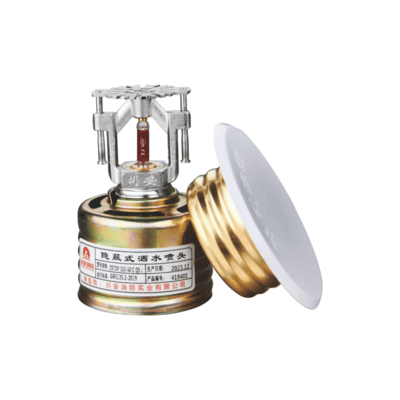
ZSTDY 115-68°C Q5
Standard ResponseK8.0 (K115) concealed pendent, 68°C red bulb. Most specified model for hotels, offices, hospitals and shopping centres. Flat white cover plate included. Zinc alloy body.
| K-factor | K8.0 (K115) |
|---|---|
| Activation | 68°C · Red |
| RTI | 50–80 (m·s)½ |
| Thread | R¾ (BSP) |
| Bulb | Glass 5mm |
| Min pressure | 0.10 MPa |
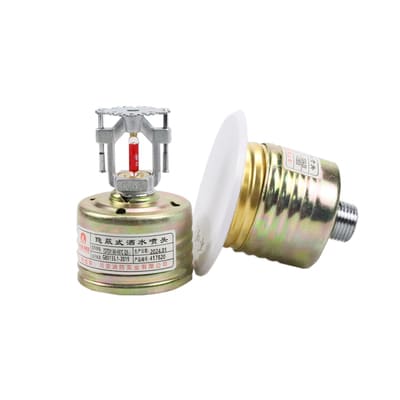
ZSTDY 80-68°C Q5
Standard ResponseK5.6 (K80) concealed pendent, 68°C red bulb. For light-hazard spaces with lower hydraulic design flow requirements. R½ thread, white cover plate included.
| K-factor | K5.6 (K80) |
|---|---|
| Activation | 68°C · Red |
| RTI | 50–80 (m·s)½ |
| Thread | R½ (BSP) |
| Bulb | Glass 5mm |
| Min pressure | 0.10 MPa |
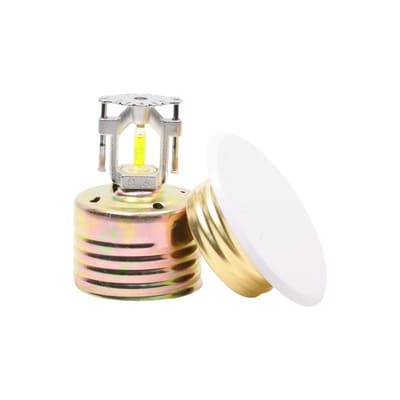
ZSTDY 80-79°C Q5
Standard Response79°C yellow bulb — for spaces with moderate ambient heat above 38°C: kitchens, laundries, sunlit atria, and warm-climate building interiors.
| K-factor | K5.6 (K80) |
|---|---|
| Activation | 79°C · Yellow |
| RTI | 50–80 (m·s)½ |
| Thread | R½ (BSP) |
| Max ambient | 49°C |
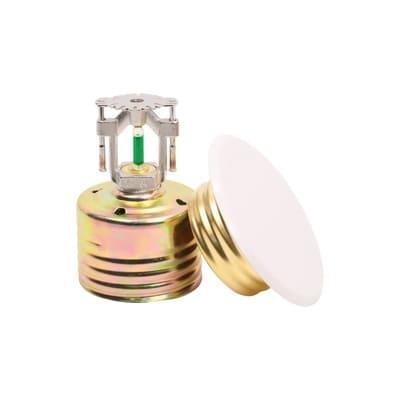
ZSTDY 80-93°C Q5
Standard Response93°C green bulb — for hot utility rooms, commercial kitchen support areas, and mechanical plant spaces where ambient temperatures reach up to 63°C.
| K-factor | K5.6 (K80) |
|---|---|
| Activation | 93°C · Green |
| RTI | 50–80 (m·s)½ |
| Thread | R½ (BSP) |
| Max ambient | 63°C |
Standard Response ZSTDY — Full Temperature Range
| Model | K-factor | Activation | Bulb Color | Max Ambient | Thread | RTI (m·s)½ | Typical Application |
|---|---|---|---|---|---|---|---|
| ZSTDY 80-57°C Q5 | K5.6 | 57°C | Orange | 27°C | R½ | 50–80 | Cold-climate or unheated interior spaces |
| ZSTDY 80-68°C Q5 ★ | K5.6 | 68°C | Red | 38°C | R½ | 50–80 | Standard commercial interiors — offices, retail |
| ZSTDY 115-68°C Q5 ★ | K8.0 | 68°C | Red | 38°C | R¾ | 50–80 | Most common — hotels, hospitals, shopping centres |
| ZSTDY 80-79°C Q5 | K5.6 | 79°C | Yellow | 49°C | R½ | 50–80 | Kitchens, laundries, warm-climate atria |
| ZSTDY 80-93°C Q5 | K5.6 | 93°C | Green | 63°C | R½ | 50–80 | Hot utility rooms, mechanical plant spaces |
| ZSTDY 80-141°C Q5 | K5.6 | 141°C | Blue | 111°C | R½ | 50–80 | High-ambient concealed installations |
★ Most commonly specified. Custom temperature ratings on request.
Quick Response Concealed Sprinkler — ZSTDY Series (3mm Bulb)
The quick response ZSTDY uses a German-imported 3mm glass bulb (RTI ≤50 (m·s)½), activating significantly faster at the same heat exposure. Required by NFPA 13 and GB 50084 for light-hazard occupancies — hotels, residential apartments, offices, healthcare — where early activation is critical for occupant egress. Identified by the "Q3" suffix in the model code.
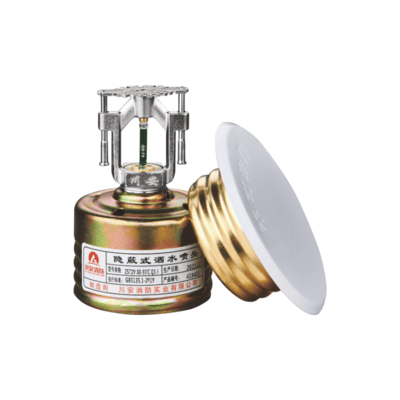
ZSTDY 80-93°C Q3
Quick ResponseQuick response K5.6 (K80) concealed with 3mm German glass bulb, 93°C green bulb. Combines QR thermal sensitivity with higher activation temperature — ideal for hotel rooms, serviced apartments, and residential spaces in warmer climates.
| K-factor | K5.6 (K80) |
|---|---|
| Activation | 93°C · Green |
| RTI | ≤ 50 (m·s)½ |
| Thread | R½ (BSP) |
| Bulb | Glass 3mm (imported) |
| Min temp | 4°C |
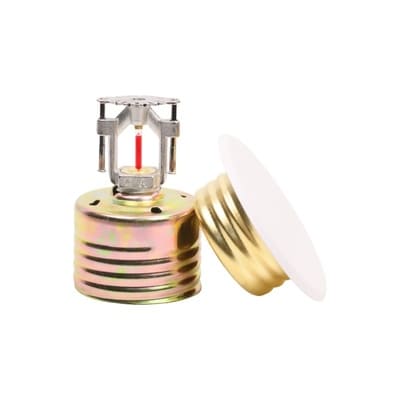
ZSTDY 80-68°C Q3
Quick ResponseQuick response K5.6 (K80) concealed, 68°C red bulb. The standard QR concealed choice for hotels, offices, healthcare, and residential projects requiring NFPA 13 Light Hazard quick response compliance.
| K-factor | K5.6 (K80) |
|---|---|
| Activation | 68°C · Red |
| RTI | ≤ 50 (m·s)½ |
| Thread | R½ (BSP) |
| Bulb | Glass 3mm (imported) |
| Min temp | 4°C |
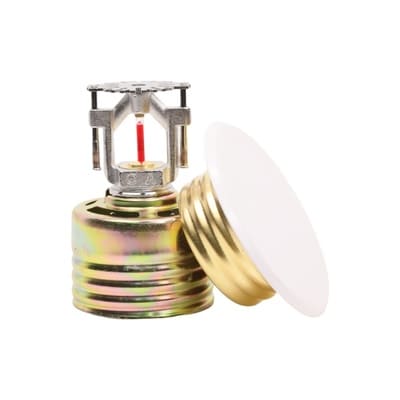
ZSTDY 115-68°C Q3
Quick ResponseQuick response K8.0 (K115) concealed, 68°C red bulb. For light-to-ordinary hazard spaces requiring higher flow with quick activation — hotel lobbies, large open-plan offices, airport terminals.
| K-factor | K8.0 (K115) |
|---|---|
| Activation | 68°C · Red |
| RTI | ≤ 50 (m·s)½ |
| Thread | R¾ (BSP) |
| Bulb | Glass 3mm (imported) |
| Min temp | 4°C |
Quick Response ZSTDY Q3 — Full Range
| Model | K-factor | Activation | Bulb | Max Ambient | Thread | Application |
|---|---|---|---|---|---|---|
| ZSTDY 80-57°C Q3 | K5.6 | 57°C | 3mm | 27°C | R½ | Cold-climate residential, low-ambient QR |
| ZSTDY 80-68°C Q3 ★ | K5.6 | 68°C | 3mm | 38°C | R½ | Most common QR concealed — hotels, offices, healthcare |
| ZSTDY 115-68°C Q3 ★ | K8.0 | 68°C | 3mm | 38°C | R¾ | High-flow QR — lobbies, open-plan, airport terminals |
| ZSTDY 80-79°C Q3 | K5.6 | 79°C | 3mm | 49°C | R½ | Warm-climate residences, elevated ambient interiors |
| ZSTDY 80-93°C Q3 | K5.6 | 93°C | 3mm | 63°C | R½ | Hotel rooms in hot climates, warm residential spaces |
| ZSTDY 80-141°C Q3 | K5.6 | 141°C | 3mm | 111°C | R½ | QR in high-ambient concealed installations |
★ Most commonly specified.
The Cover Plate — How Concealment Works
In normal standby, the ZSTDY concealed sprinkler sits flush with the ceiling. Only the flat circular cover plate — typically 65–70mm diameter, finished in white or custom colour — is visible from below. The cover plate snaps onto the sprinkler body via a retaining ring and is held in place by a low-temperature solder or wax element.
When fire raises the ceiling temperature, the cover plate's solder melts first, the plate drops, and the sprinkler's glass bulb is then directly exposed to heat. The bulb activates at its rated temperature, the orifice opens, and water discharges in a standard pendent hemisphere pattern identical to an exposed pendent sprinkler.
- Fire ignites → hot gases rise and accumulate at ceiling level
- Ceiling temperature rises → cover plate solder/wax melts at ~10°C below sprinkler rating
- Cover plate drops away — glass bulb fully exposed to heat
- Glass bulb bursts at rated activation temperature (e.g. 68°C)
- Spring-loaded cap releases → orifice opens
- Water flows through orifice onto pendent deflector → hemispherical spray pattern → fire suppressed
Note: Once activated, the cover plate cannot be reused. Always order replacement cover plates alongside replacement sprinkler heads after any activation event.
Selection Guide — Which Concealed Sprinkler Do I Need?
| Scenario | Recommended Model | K-Factor | Temp | Key Reason |
|---|---|---|---|---|
| Hotel guest rooms & corridors (NFPA 13 Light Hazard) | ZSTDY 80-68°C Q3 | K5.6 | 68°C | QR mandatory for Light Hazard ceilings ≤4.9 m |
| Hotel lobby / large open-plan office | ZSTDY 115-68°C Q3 | K8.0 | 68°C | Higher flow for larger coverage area |
| Hospital wards, healthcare facilities | ZSTDY 80-68°C Q3 | K5.6 | 68°C | QR required — early suppression for occupant safety |
| Residential apartments | ZSTDY 80-68°C Q3 | K5.6 | 68°C | Discreet finish for living spaces, QR for life safety |
| Commercial offices & retail (Ordinary Hazard) | ZSTDY 115-68°C Q5 | K8.0 | 68°C | Higher flow coefficient for Ordinary Hazard design density |
| Kitchens / warm-climate interiors | ZSTDY 80-79°C Q5 | K5.6 | 79°C | Yellow bulb — no false activation up to 49°C ambient |
| Hot-climate building interiors (>49°C ambient) | ZSTDY 80-93°C Q3 | K5.6 | 93°C | Green bulb — suitable for ambient up to 63°C |
Concealed vs Exposed Pendent — When to Specify Concealed
| Factor | Concealed Sprinkler (ZSTDY) | Exposed Pendent Sprinkler (ZSTX) |
|---|---|---|
| Ceiling appearance | Flush cover plate only — sprinkler body hidden above ceiling | Full sprinkler body and deflector visible below ceiling |
| Best for | Hotels, luxury residences, hospitals, retail, airports | Warehouses, factories, car parks, back-of-house |
| Installation | Requires ceiling void space for sprinkler body; cover plate fitted after ceiling finish | Simpler — head fitted directly to branch pipe below ceiling |
| Cost | Higher unit cost — cover plate is a consumable replacement part | Lower unit cost — no cover plate required |
| Cover plate options | White standard; custom RAL colours available on request | N/A |
| Fire performance | Identical — same K-factors, RTI classifications, and hydraulic design methods apply. The concealed cover plate delays exposure of the glass bulb by a few seconds, hence RTI 50–80 for 5mm bulb (vs 80–350 for exposed standard response). | |
Standards & Certifications
| Standard | Coverage & CA-FIRE Compliance |
|---|---|
| GB 5135.1 | Automatic sprinkler — glass bulb type. CA-FIRE ZSTDY series holds full CCCF type approval under GB 5135.1. Certificate numbers available on request for China domestic project submissions. |
| NFPA 13 | CA-FIRE export documentation includes K-factor data in both metric (L/min/bar½) and US units (gpm/psi½), RTI classification, cover plate temperature rating, pressure vs. flow curves, and material certificates compatible with NFPA 13 submittal packages for international projects. |
| ISO 9001:2015 | CA-FIRE QMS covers 100% hydrostatic leak test at 3.5 MPa, glass bulb fill-ratio inspection, activation temperature sampling, cover plate drop-temperature verification, and thread gauge check per GB 5135 requirements on every production batch. |
Frequently Asked Questions
What is a concealed fire sprinkler head and how is it different from a standard pendent?
A concealed fire sprinkler head (also called a flush or recessed sprinkler) has its body hidden above the ceiling line. Only a flat decorative cover plate is visible from below, making the sprinkler almost invisible in finished interiors. A standard exposed pendent sprinkler hangs fully below the ceiling with the body, frame, and deflector all visible.
Fire performance is essentially identical — the same K-factors and hydraulic design methods apply. The main differences are aesthetics, installation cost, and the fact that the concealed cover plate must be replaced after any activation event.
Does the cover plate affect fire performance?
The cover plate introduces a small delay — the plate must drop before the glass bulb is exposed to heat. This is why concealed sprinklers have a slightly faster RTI classification (50–80 for 5mm, ≤50 for 3mm) compared to fully exposed standard response heads (RTI 80–350). In practice, the delay is marginal and all concealed sprinklers sold by CA-FIRE meet NFPA 13 and GB 50084 performance requirements for their stated response classification.
Importantly, the cover plate has its own thermal element rated approximately 10°C below the sprinkler's activation temperature. This ensures the plate always falls away before the sprinkler activates.
Can I paint or customise the cover plate?
CA-FIRE concealed sprinklers are supplied with a standard white cover plate. Custom RAL colours are available on request for large projects. Never paint a cover plate on-site — paint can block the thermal element, preventing the plate from dropping and causing the sprinkler to fail to activate. Any on-site painting of cover plates voids the product certification and may render the system non-compliant.
What does the K-factor mean and which one do I need?
The K-factor is the hydraulic flow coefficient: Q = K × √P, where Q is flow rate (L/min) and P is pressure (bar). K5.6 (K80) flows ~80 L/min at 0.10 MPa — standard for light-hazard occupancies (hotels, offices, residences). K8.0 (K115) flows ~115 L/min at 0.10 MPa — used where the hydraulic design requires higher discharge density, typically Ordinary Hazard Group 1 and 2 occupancies.
Do I need quick response (Q3) or standard response (Q5) concealed sprinklers?
Quick response (Q3, RTI ≤50) is required by NFPA 13 for light-hazard occupancies — hotels, offices, schools, healthcare, and residential apartments — where life safety during occupant egress is the primary design objective.
Standard response (Q5, RTI 50–80) is acceptable for ordinary-hazard occupancies where the primary objective is property protection. In practice, many architects and specifiers choose QR (Q3) across the board for concealed heads in commercial interiors, as the cost difference is minimal and QR provides better life-safety performance.
What is the maximum coverage area for concealed sprinklers?
Coverage follows the same spacing rules as exposed pendent sprinklers under GB 50084 and NFPA 13:
Light Hazard: max 4.6 m spacing, max 20.9 m² per head (NFPA 13) / 20 m² per head (GB 50084).
Ordinary Hazard: max 4.0 m spacing, max 12.1 m² per head.
Minimum spacing between heads: 1.8 m in all classes.
For larger coverage areas in open-plan spaces, see our Extended Coverage (EC) sprinkler page — EC concealed heads can protect up to 36 m² per head.
Can I replace a concealed sprinkler myself?
Sprinkler replacement must be performed by a qualified fire protection contractor. When replacing concealed heads, you must replace both the sprinkler body and the cover plate as a matched set — never reuse a cover plate from an activated head or fit a cover plate with a different temperature rating than the sprinkler body. Per NFPA 25, replacement sprinklers must match the original's temperature rating, K-factor, response type, and model.
Related Products
ZSTDY Series · K5.6 / K8.0 · 57–141°C · Standard & Quick Response · Cover Plate Included
GB 5135 CCCF Certified · NFPA 13 documentation available · Mixed models welcome · 24 hr quote
sales@ca-fire.com · WhatsApp +86 18150362095
Send Inquiry →