
Fire Sprinkler Heads 36+ Types & Models Pendent · Upright · Sidewall · Concealed ESFR K14.0 / K17.0 / K25.2 K-factor K5.6 to K25.2 57°C – 260°C Activation Temperature Glass Bulb · Fusible Link Standard / Quick / Special Response Residential · Commercial · Industrial · Warehouse GB 5135 · NFPA 13 · ISO 9001
CA-FIRE manufactures one of China's most comprehensive ranges of fire sprinkler heads — 36+ models covering every standard installation type from small residential apartments to high-bay ESFR warehouses. Every sprinkler is produced in-house at our Fujian factory with full GB 5135 type approval, and key export models are available with English technical documentation for NFPA 13 project submittals. This page is your complete guide to every fire sprinkler type we manufacture — use the product cards below to navigate directly to the correct sprinkler for your application, or use the selection guide table to identify the right type by installation scenario.
All sprinklers on this page are standard (non-FM/UL) glass bulb and fusible link types. For FM Approved sprinkler heads, see our FM certified fire sprinkler range →
▶ See How a Fire Sprinkler Distributes Water — Factory Test
CA-FIRE sprinkler head activation and water distribution test — showing spray pattern, coverage uniformity, and response characteristics under controlled factory conditions.
Standard Fire Sprinkler Heads — By Installation Type
The four most common fire sprinkler types — pendent, upright, sidewall, and concealed — differ in how they are installed relative to the ceiling and pipe. Select the type that matches your system design and architectural requirements.

Most common type
Pendent Fire Sprinkler Head
Hangs downward from the branch pipe with the deflector facing down. The most widely specified sprinkler type for commercial and industrial ceilings. Covered area up to 20 m² per head. K5.6 (K80), K8.0 (K115), K14.0 (K202) available.
K-factor: K5.6 / K8.0 / K14.0 / K25.2 · Temp: 57–260°C · Thread: R½ / R¾ / R1
View Pendent Sprinklers →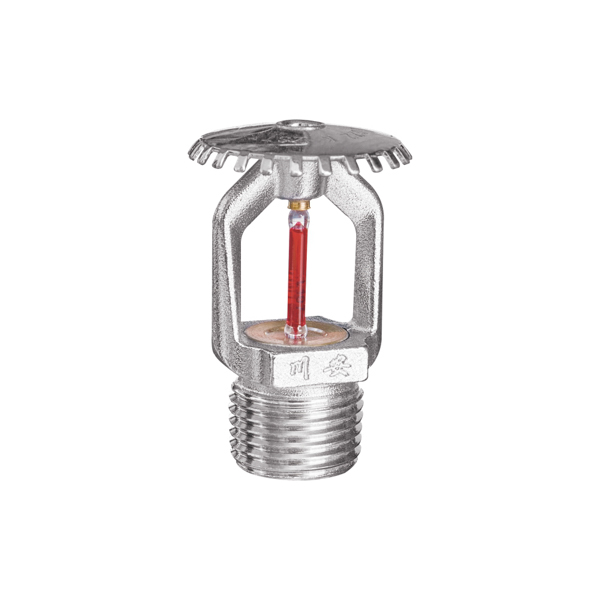
Above-pipe installation
Upright Fire Sprinkler Head
Points upward from the branch pipe, deflector facing up — water sprays upward then deflects outward and downward. Preferred for exposed-pipe systems, warehouses, and spaces where pipe runs below the ceiling.
K-factor: K5.6 / K8.0 · Temp: 57–182°C · Response: Standard / Quick · Thread: R½ / R¾
View Upright Sprinklers →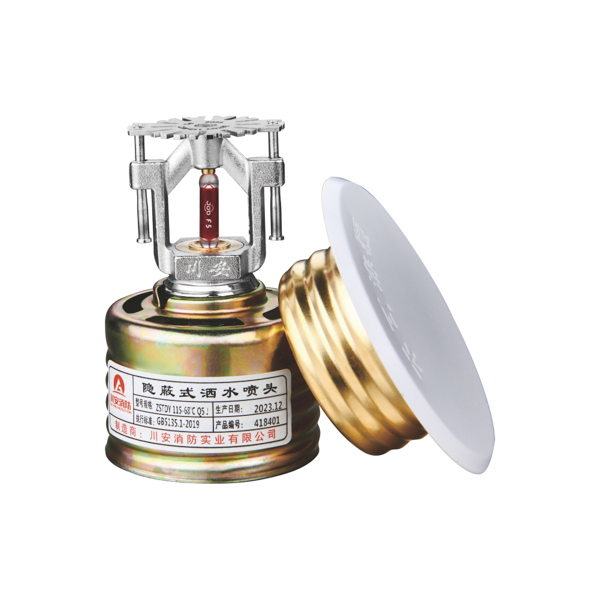
Flush / recessed
Concealed Fire Sprinkler Head
Recessed into the ceiling with a flat decorative cover plate — completely flush with the ceiling surface in standby. The cover plate drops away on heat activation. Specified for hotels, offices, and upscale interiors.
K-factor: K5.6 / K8.0 · Temp: 68°C activation · Cover: White / Chrome / Custom · Thread: R½
View Concealed Sprinklers →
Wall-mounted / horizontal
Sidewall Fire Sprinkler Head
Mounts horizontally on a wall or near the ceiling, projecting water in a half-parabolic pattern away from the wall. Eliminates ceiling pipe runs — ideal for hotel corridors, apartments, and spaces with difficult ceiling access.
K-factor: K5.6 / K8.0 · Temp: 68°C · Pattern: Standard / Extended coverage · Thread: R½ / R¾
View Sidewall Sprinklers →By Response Type — Standard, Quick & Special Response
Response type — defined by the RTI (Response Time Index) of the glass bulb — determines how quickly a sprinkler activates at a given heat exposure level. NFPA 13 and GB 5135 both specify minimum RTI values for different occupancy classifications.
▶ Standard Response Sprinkler — Product Overview

RTI ≤ 50 (m·s)½ · Light hazard
Quick Response Fire Sprinkler
RTI ≤ 50 (m·s)½ — activates significantly faster than standard response at the same heat exposure. Mandated by NFPA 13 for light-hazard occupancies (hotels, offices, schools, healthcare) below 3 m ceilings. Faster activation = earlier suppression = smaller fire.
Models: K-ZSTX · K-ZSTZ · K-ZSTBS series · RTI: 50 (m·s)½ · Temp: 68°C / 79°C
View Quick Response →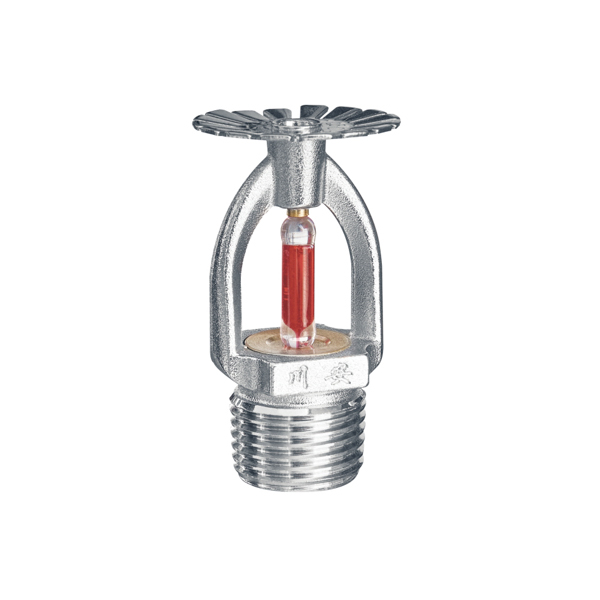
RTI 80–350 (m·s)½ · General use
Standard Response Fire Sprinkler
RTI 80–350 (m·s)½ — the baseline response category covering the majority of commercial, industrial, and warehouse applications. Available across all installation types (pendent, upright, sidewall) and temperature ratings from 57°C to 260°C.
Models: ZSTX · ZSTZ · ZSTBS series · RTI: 80–350 (m·s)½ · Temp: 57–260°C
View Standard Response →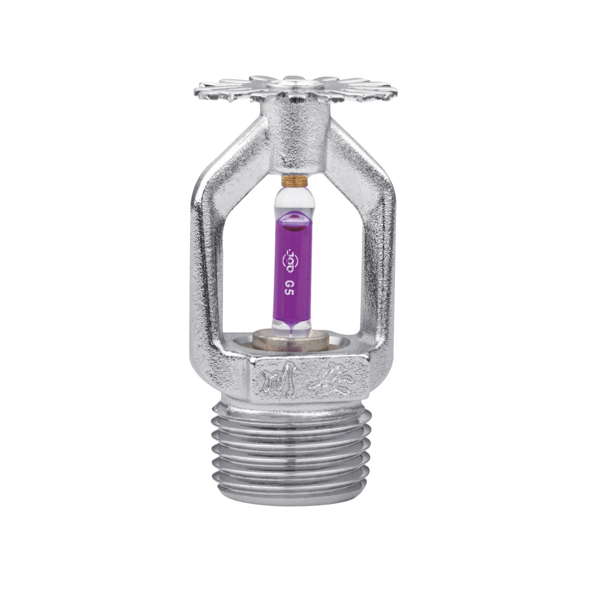
182°C / 260°C · High-ambient environments
High-Temperature Sprinkler — ZSTX Series
Activation temperatures of 182°C (black bulb) and 260°C (black bulb) — designed for spaces with permanent high ambient temperatures: commercial kitchens, boiler rooms, drying ovens, laundries, and heat-generating process environments where standard 68°C sprinklers would false-activate.
Models: ZSTX 80-182°C / ZSTX 80-260°C / ZSTX 115-260°C · Bulb: Black · Thread: R½ / R¾
View High-Temp Sprinklers →Extended Coverage & Large-Area Sprinklers
Extended coverage (EC) sprinklers cover areas up to 36 m² per head vs. the 12–20 m² of standard sprinklers — reducing the number of heads and branch pipe runs required for large open spaces. ESFR sprinklers are a separate class designed specifically for high-rack warehouse storage.
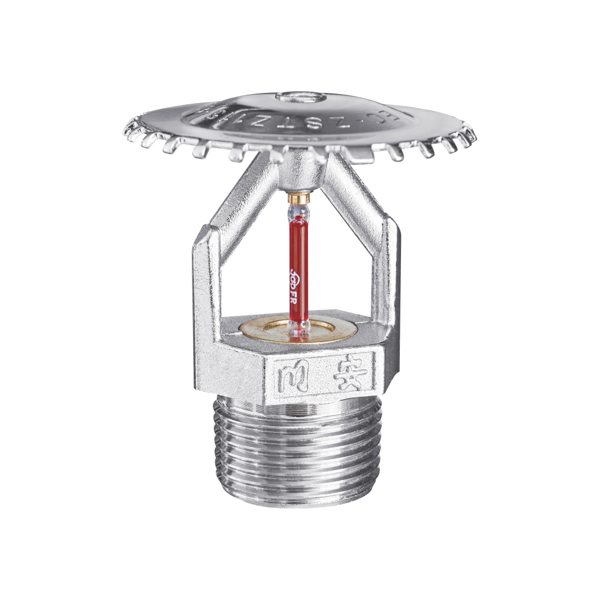
Up to 36 m² per head
Extended Coverage Sprinkler (EC)
EC sprinklers deliver a larger, more uniform water distribution pattern covering up to 36 m² per head — significantly reducing installed head count and associated pipework in large open-plan spaces. Available as pendent (EC-ZSTX), upright (EC-ZSTZ), and sidewall (EC-ZSTBS) types.
Models: EC-ZSTX · EC-ZSTZ · EC-ZSTBS · K-factor: K8.0 (K115) · Coverage: up to 36 m² · Temp: 68°C
View EC Sprinklers →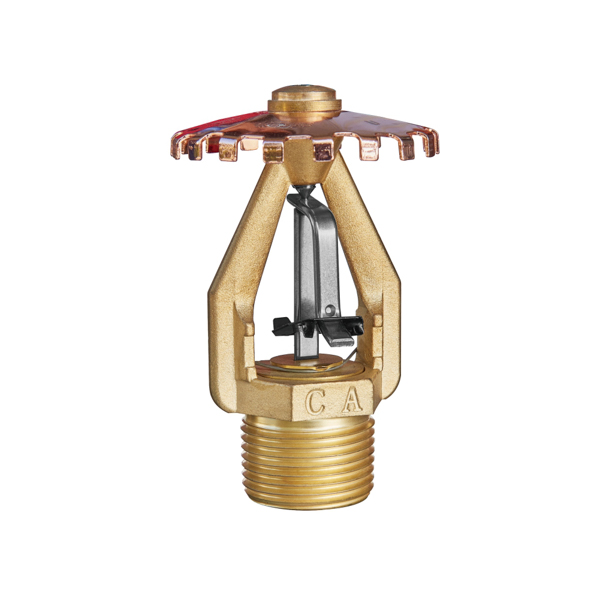
High-rack warehouse · K17.0–K25.2
ESFR Fire Sprinkler — Warehouse Protection
Early Suppression Fast Response — designed to suppress (not just control) fire in high-bay rack storage up to 13.5 m clearance height. Eliminates in-rack sprinklers by delivering very high flow at the ceiling level. K17.0 (K242) and K25.2 (K363) models, pendent and upright, 74°C / 100°C options.
Models: ESFR-K17.0/74°C P · ESFR-K25.2/74°C P · ESFR upright · Min pressure: 0.07–0.35 MPa · Thread: R¾ / R1
View ESFR Sprinklers →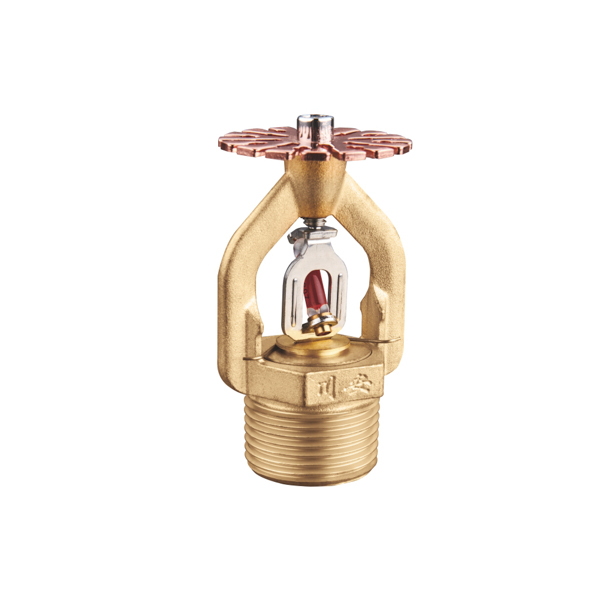
Storage height 7.5–13.5 m · K11.2–K25.2
Warehouse Special Application Sprinkler
Large-flow, special-distribution warehouse sprinklers (CMSAZ/CMSAX series) for high-ceiling storage and high-bay factories. K-factors K11.2–K25.2 (metric 161–363), storage height up to 10.5 m. Suitable for dry and pre-action systems where ESFR ceiling-only protection is the design basis.
Models: CMSAZ K11.2/K14.0/K17.0/K25.2-74°C · CMSAX K11.2/K14.0/K17.0/K25.2 · Min pressure: 0.07–0.35 MPa
View Warehouse Sprinklers →Special Application Fire Sprinklers
Beyond standard installation types, specific environments require specialist sprinkler designs with unique hydraulic patterns, materials, or activation mechanisms.
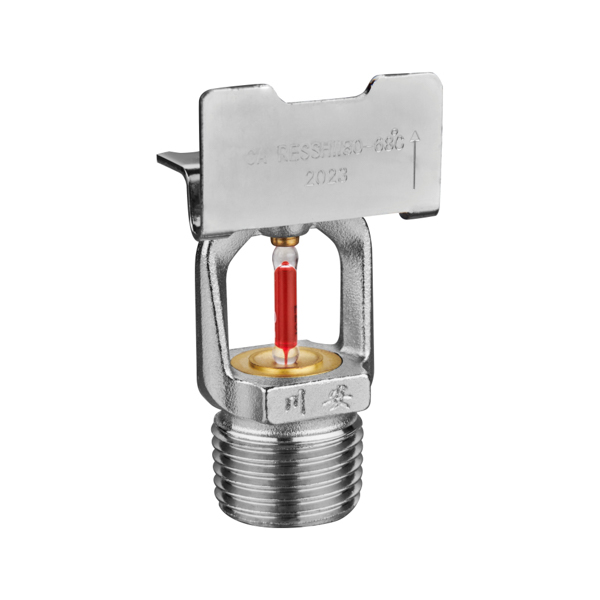
NFPA 13D / 13R · Apartments
Residential Fire Sprinkler
Low-flow residential sprinklers (CA RESHSW / CA RESSP) designed for NFPA 13D and 13R systems in homes, apartments, and low-rise residential buildings. Minimum 0.05 MPa operating pressure, flat-plate deflector for bedroom-compatible spray pattern.
Models: CA RESHSW · CA RESSP · Min pressure: 0.05 MPa · K-factor: K3.5–K5.6 · Temp: 57°C / 68°C · Coverage: per NFPA 13D
View Residential →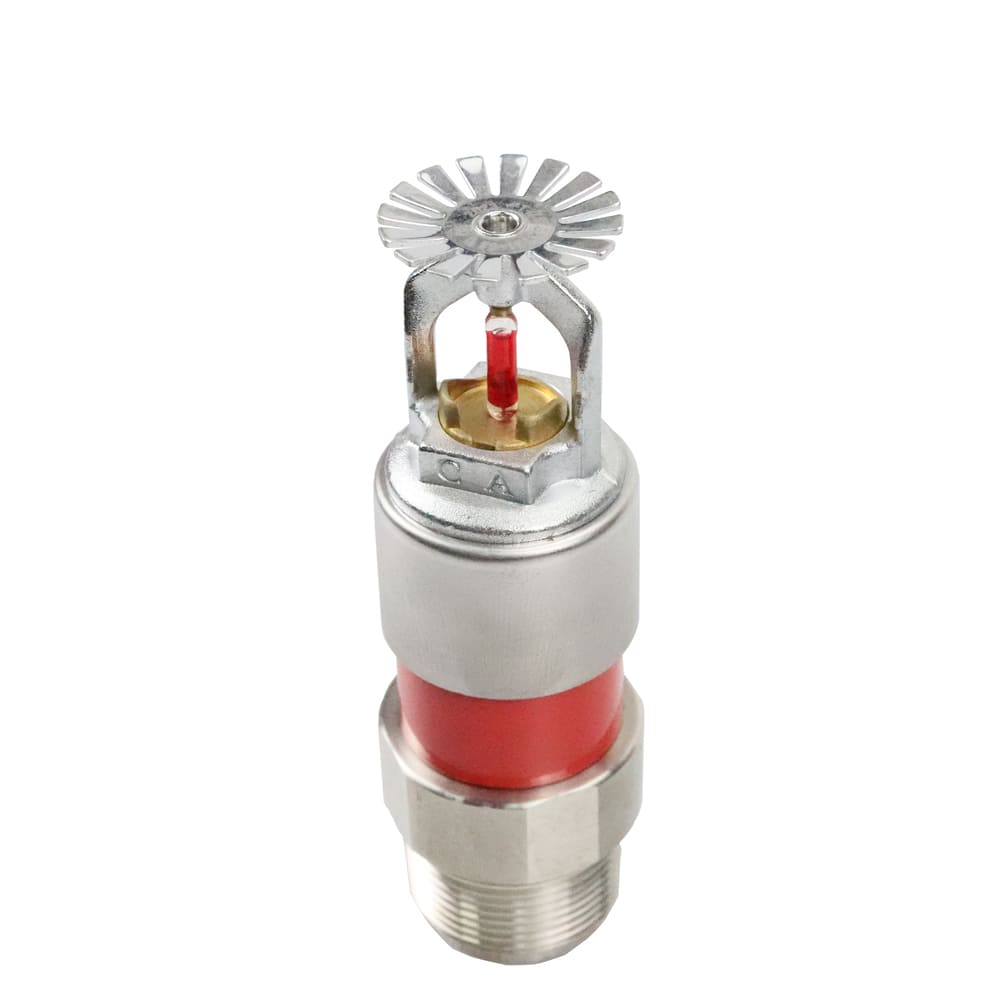
Freeze protection · Sub-zero
Dry Sprinkler Head
Dry-barrel pendent or upright sprinklers with an internal seal that prevents water from entering the barrel in standby — allowing installation into sub-zero freezing environments (cold stores, loading docks, unheated canopies) while connecting to a wet-pipe system in a heated space.
Types: Dry pendent · Dry upright · Dry sidewall · Barrel length: 50–300 mm options · Temp: 68°C / 74°C
View Dry Sprinklers →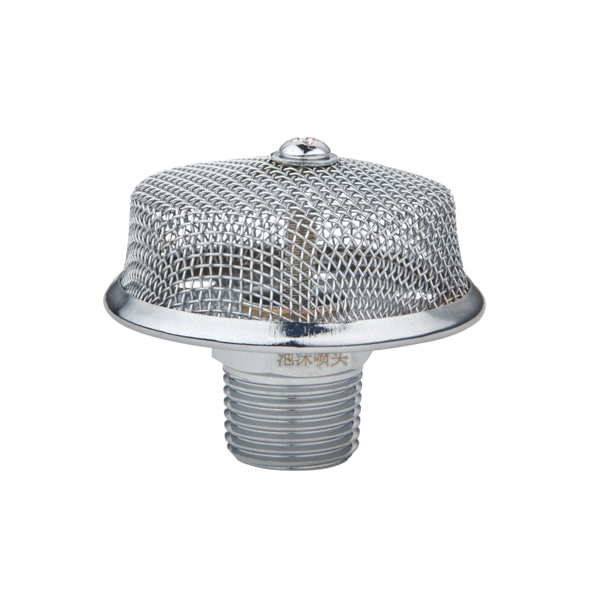
Oil / chemical / industrial
Foam Sprinkler Head
PT Series foam-water sprinklers produce a foam-water mixture using the Venturi effect — inducing proportioned foam concentrate from a bladder tank into the water stream at the sprinkler head itself. Designed for hydrocarbon spill fire protection in oil tank farms, chemical plants, and aircraft hangars.
Series: PT Series · Foam type: AFFF / AR-AFFF / protein · Expansion ratio: 2–4× · Thread: R½ / R¾ / R1
View Foam Sprinklers →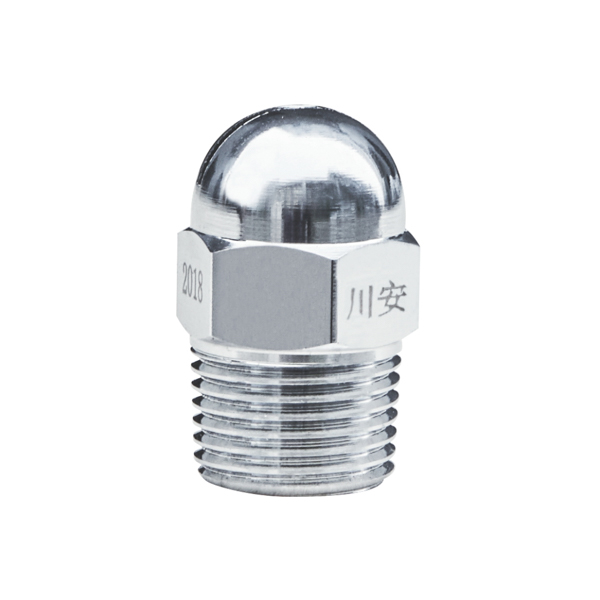
Fire partition · Atrium · Cooling
Water Curtain Sprinkler
Flat-fan pattern nozzles that create a continuous water curtain barrier — used for fire compartmentation at open doorways, atrium boundaries, stage proscenium openings, and conveyor belt pass-throughs. Complements or replaces fire-rated walls where architectural openings are unavoidable.
Pattern: Flat fan · Coverage: 1.2–2.4 m per nozzle · Flow: by design · Thread: R½ / R¾ / R1
View Water Curtain →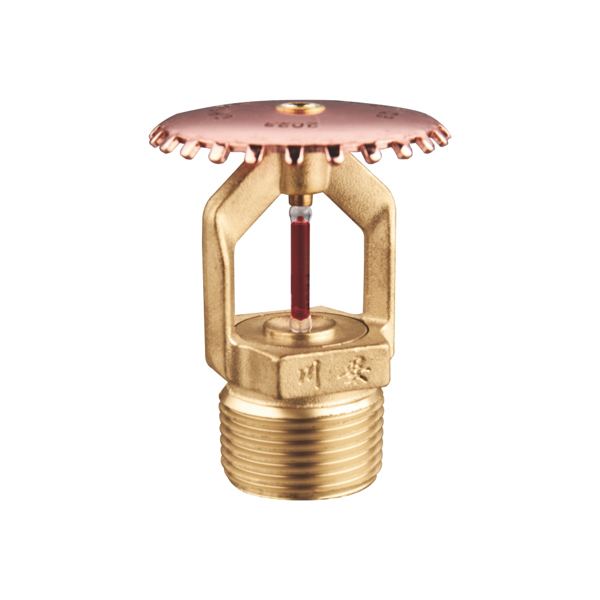
8–18 m clearance · Factories
Industrial Fire Sprinkler
Non-warehouse special application sprinklers (CHSAK/CHSAX series) for high-ceiling industrial buildings — factories, textile mills, car assembly plants, exhibition halls, and sports arenas with 8–18 m clearance height. Large K-factors, upright and pendent orientation.
Models: CHSAK / CHSAX K11.2/K14.0/K17.0/K25.2 · Height: 8–18 m · Min pressure: 0.10–0.15 MPa · Thread: R¾ / R1
View Industrial →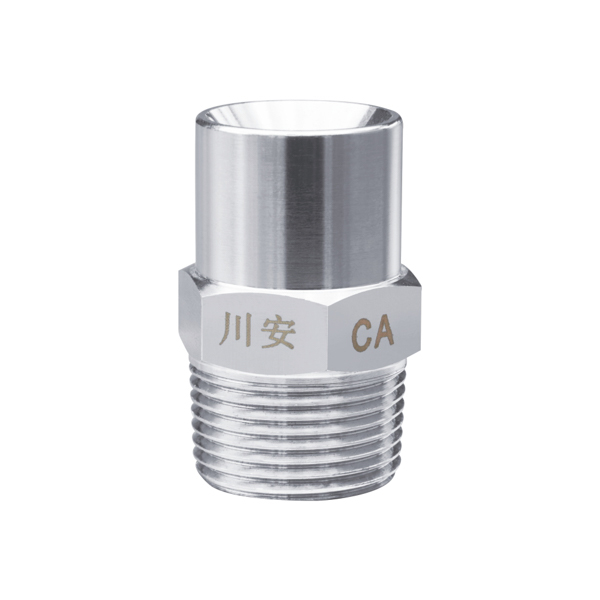
High-pressure mist · Critical assets
Water Mist Sprinkler
Centrifugal water mist nozzles produce ultra-fine water droplets (Dv0.99 < 1000 μm) that suppress fire through a combination of oxygen displacement, radiant heat absorption, and surface cooling — using 50–90% less water than conventional sprinklers. For turbine rooms, data centres, and heritage buildings.
Type: Centrifugal mist · Droplet size: <1000 μm · Pressure: high-pressure system · Min water use: 50% reduction
View Water Mist →
Fusible link · High-temp environments
Fusible Link Sprinkler Head
Uses a low-melting-point alloy solder link instead of a glass bulb to hold the cap in place. Fusible link sprinklers are more resistant to mechanical damage than glass bulb types and are preferred for rough industrial environments. Available in 72°C, 93°C, and 141°C ratings.
Models: ZSTX 115-74°CY · ZSTZ 80-72°CY · Activation: solder link · Temp: 72°C / 93°C / 141°C
View Fusible Link →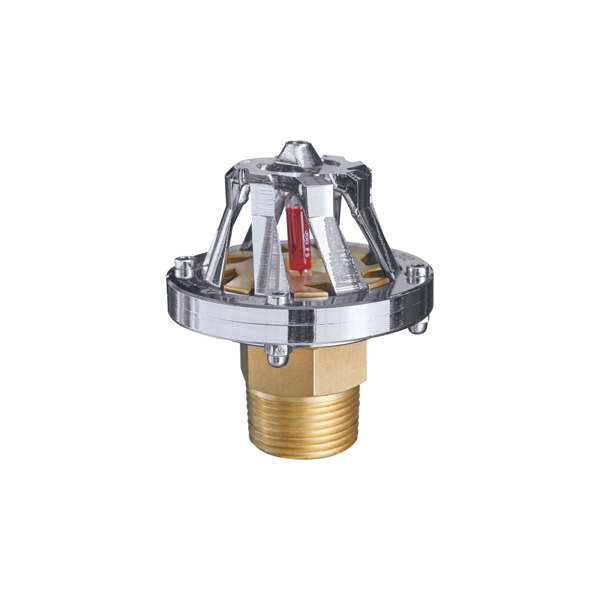
Open nozzle · Deluge system
Deluge Sprinkler (Open Nozzle)
Open (non-thermally activated) nozzles for deluge systems — all nozzles in a zone discharge simultaneously when the deluge valve opens on an external fire detection signal. Used for aircraft hangars, transformer bays, cable tunnels, and other high-flash-point hazard protection.
Series: B-DSXC · Nozzle: open spray · K-factor: by design · Connects to: deluge alarm valve system
View Deluge Nozzles →Fire Sprinkler Selection Guide — Application to Type
Use this table to quickly identify the correct sprinkler type for your application and system design basis. For complex projects, contact CA-FIRE technical sales for a full sprinkler schedule recommendation.
| Application / Environment | Recommended Type | K-Factor | Temperature | Key Requirement |
|---|---|---|---|---|
| Hotel guest rooms & corridors | Concealed or Sidewall QR | K5.6 | 68°C | Quick response (RTI ≤50) · Aesthetic finish |
| Offices & commercial buildings | Pendent QR or Concealed | K5.6 / K8.0 | 68°C / 79°C | Quick response required by NFPA 13 Light Hazard |
| Residential apartments / houses | Residential sprinkler | K3.5–K5.6 | 57°C / 68°C | NFPA 13D/13R or GB 50084 residential design |
| Warehouses < 7.5 m storage | Standard pendent | K8.0 / K14.0 | 68°C / 74°C | Ordinary / Extra Hazard Group 1–2 design density |
| High-rack warehouse 7.5–13.5 m | ESFR K17.0 / K25.2 | K17.0 / K25.2 | 74°C / 100°C | Suppression mode · No in-rack sprinklers required |
| Cold stores / freezers (sub-zero) | Dry pendent / upright | K5.6 / K8.0 | 68°C / 74°C | Dry barrel — water held back from sub-zero zone |
| Boiler rooms / high-temp process | High-temp pendent | K5.6 / K8.0 | 182°C / 260°C | Black bulb — prevents false activation in hot ambient |
| Factory / industrial (8–18 m) | Industrial CHSAK / CHSAX | K11.2–K25.2 | 68°C / 74°C | Non-warehouse special application design |
| Open-plan offices / retail (large area) | Extended coverage EC | K8.0 | 68°C | Up to 36 m² per head — fewer heads, less pipework |
| Oil tank farms / chemical plants | Foam sprinkler PT series | K5.6–K8.0 | 68°C / 74°C | AFFF / AR-AFFF foam-water suppression |
| Fire partition / atrium boundary | Water curtain nozzle | By design | N/A | Flat-fan pattern — continuous water curtain barrier |
| Aircraft hangars / transformer bays | Deluge open nozzle | By design | Open (no bulb) | Simultaneous zone discharge via deluge valve |
Glass Bulb Color = Activation Temperature — Quick Reference
The glass bulb color is the fastest way to identify a sprinkler's activation temperature on-site. CA-FIRE glass bulbs follow the international color code standardised in ISO 6182-1 and adopted by NFPA 13 and GB 5135.
| Bulb Color | Activation Temperature | Max Ambient (°C) | Typical Applications |
|---|---|---|---|
| Orange | 57°C | 27°C | Refrigerated spaces (positive temp), cold climate buildings |
| Red | 68°C | 38°C | Most common — offices, hotels, warehouses, residential |
| Yellow | 79°C | 49°C | Spaces with moderate heat, attics, sunlit roof spaces |
| Green | 93°C | 63°C | Hot utility spaces, some commercial kitchens |
| Blue | 121°C / 141°C | 91°C / 111°C | Laundries, steam distribution rooms, heat-generating plant |
| Purple | 182°C | 152°C | Boiler rooms, high-temperature process areas |
| Black | 260°C | 230°C | Extreme high-temperature environments — drying ovens, kilns |
Standards & Certifications
| Standard | Relevance to CA-FIRE Sprinkler Range |
|---|---|
| GB 5135 Series | China's national standard for automatic sprinkler heads — GB 5135.1 (glass bulb), GB 5135.2 (fusible link), GB 5135.11 (residential), GB 5135.14 (ESFR), GB 5135.15 (extended coverage). CA-FIRE holds CCCF type approval certification for all standard product lines under this standard series. Type approval certificates available on request for project submissions. |
| GB 50084 | Code for Design of Automatic Sprinkler Systems — System design code governing selection of sprinkler type, K-factor, installation density, and spacing rules for all occupancy classes in China. All CA-FIRE sprinklers are designed to meet GB 50084 performance requirements for their respective installation type and hazard class. |
| NFPA 13 ↗ | Standard for the Installation of Sprinkler Systems — the primary international reference for sprinkler system design outside China. CA-FIRE export documentation provides Cv data, K-factor values (in US and metric units), pressure drop curves, and material certificates compatible with NFPA 13 submittal requirements. |
| ISO 9001:2015 ↗ | CA-FIRE QMS covers raw material incoming inspection (brass / zinc alloy castings, glass bulb dimensions), 100% hydrostatic leak test at 3.5 MPa, glass bulb fill-ratio and bubble-check inspection, activation temperature sampling, thread gauge verification, and packing/marking control for each production batch. |
Frequently Asked Questions
What is the difference between pendent, upright, and sidewall fire sprinklers?
Pendent sprinklers hang below the branch pipe with the deflector facing downward — water sprays in a hemispherical pattern below the sprinkler. This is the most common type for systems where the branch pipe runs above the ceiling and penetrates through. Upright sprinklers point upward above the branch pipe, deflector facing up — water is thrown upward and deflected outward and downward. Preferred for exposed pipe systems where the pipework is visible. Sidewall sprinklers mount horizontally on a wall, deflecting water in a half-parabola pattern away from the wall — used where ceiling pipe installation is impractical (e.g., hotel corridors, apartments with no ceiling void).
All three types can achieve the same hydraulic protection; the choice is driven by pipe routing, architectural requirements, and the system designer's layout. Pendent and upright are interchangeable in many system designs (with different fittings); sidewall requires a separate branch-line design.
What does the K-factor mean on a fire sprinkler?
The K-factor is the flow coefficient of the sprinkler — it defines the relationship between water pressure at the sprinkler and the resulting flow rate, expressed as: Q = K × √P (where Q is flow in L/min and P is pressure in bar, in metric units). A higher K-factor produces more flow at the same pressure, or achieves a target flow at lower pressure.
Common K-factors and their typical applications: K5.6 (metric K80) — standard residential, light hazard commercial; K8.0 (metric K115) — ordinary hazard commercial, extended coverage; K14.0 / K17.0 (metric K202 / K242) — warehouse, high-challenge storage; K25.2 (metric K363) — ESFR high-rack warehouse, maximum flow at minimum pressure. When designing a system, the K-factor of the selected sprinkler is the primary input for hydraulic calculation of pipe sizes and pump requirements.
What is an ESFR sprinkler and when is it required?
ESFR stands for Early Suppression Fast Response — a sprinkler specifically designed to suppress (stop) a fire in high-bay rack storage rather than merely controlling it. ESFR sprinklers are defined by their combination of very high K-factor (K14.0–K25.2, metric K202–K363), fast RTI (≤50 (m·s)½), and high operating pressure — delivering a large volume of water with strong penetrating momentum to reach the base of a racking fire through rising heat and combustion gases.
ESFR sprinklers are specified when: storage height exceeds approximately 7.5 m, the storage commodity is a high-challenge class (plastics, aerosols, roll paper, rack-stored liquids), and the system designer's basis of design is ceiling-only protection without in-rack sprinklers. CA-FIRE ESFR heads cover K17.0 / K25.2 (metric K242 / K363, storage up to 12–13.5 m) in both pendent and upright orientations at 74°C, 82°C, and 100°C activation temperatures.
What is the difference between quick response and standard response sprinklers?
The response sensitivity of a sprinkler is classified by its RTI — Response Time Index, in (m·s)½ — which measures how quickly the sprinkler's heat-sensing element (glass bulb or fusible link) absorbs heat from the surrounding hot gas layer. Quick response (QR) sprinklers have RTI ≤ 50 (m·s)½; standard response (SR) sprinklers have RTI between 80 and 350 (m·s)½.
NFPA 13 and GB 50084 both mandate quick response sprinklers for light-hazard occupancies (hotels, schools, offices, healthcare facilities) with ceiling heights below a specified threshold — because occupant life safety in these spaces requires the earliest possible suppression. Standard response sprinklers are acceptable for ordinary and extra hazard occupancies (warehouses, factories, industrial) where the primary goal is property protection rather than life safety during egress. CA-FIRE quick response sprinklers are designated with the "J" suffix in the model code (e.g., K-ZSTX 80-68°C Q3J).
Do CA-FIRE sprinklers have FM or UL certification?
The sprinklers on this page are standard (non-FM/UL) models certified under China's GB 5135 standard with CCCF type approval — appropriate for projects in China and many export markets that accept GB or ISO standards. These sprinklers are not FM Approved or UL Listed.
CA-FIRE also manufactures a separate range of FM Approved and UL Listed fire sprinkler heads for projects in North America, the Middle East, and other markets that specifically require FM/UL certification. See our UL/FM certified fire sprinkler page → for the full FM/UL range, listing details, and project submittal documentation.
Get a Quote — CA-FIRE Fire Sprinkler Heads
36+ types · K5.6–K25.2 · 57°C–260°C · Pendent · Upright · Concealed · Sidewall · ESFR · Residential
GB 5135 CCCF certified · NFPA 13 documentation available · MOQ flexible · Factory direct · 24 hr quote