Home › Fire Hydrant › Smart Fire Hydrant
✓ IoT / Cloud-Connected✓ Flow Metering + Pressure Monitoring✓ Tilt & Tampering Alarm✓ GPS Location✓ Lock-Control Card Access✓ DN100 / DN150 · 1.6 MPa✓ ISO 9001 · GB · CE
Why Smart Hydrants — The Problem with Unmonitored Infrastructure
|
Four Failures of the Traditional Hydrant Network 1 — Unauthorised water theft. Construction sites, road washing contractors and individuals routinely operate municipal fire hydrants for non-fire uses. Each unauthorised draw reduces supply main pressure, depletes treated water stock, accelerates valve wear and creates a billing and accountability gap that costs urban water authorities millions of RMB annually across a large network. 2 — Undetected physical damage. Vehicle impacts that tilt or partially shear a hydrant — but do not produce an obvious water loss — frequently go unreported for weeks or months. A tilted hydrant that looks operational may have a compromised valve seat or a cracked inlet flange that will fail completely under fire service pressure demand. 3 — No real-time supply pressure data. Fire commanders arriving at an incident have no way to know the current static and residual pressure at the specific hydrant they are deploying — only that it was within range at its last scheduled inspection, potentially months ago. A supply main fault between inspections goes undetected until deployment failure. 4 — Paper-based inspection records. Municipal hydrant inspection is mandated by GB 50974 and local fire authority requirements, but paper record systems cannot flag overdue inspections, missed events, or systematic failures across large networks. A hydrant that was never inspected looks identical on paper to one inspected last week. |
What the SS-ZN Smart Hydrant Solves 1 — Prevents water theft at source. The SS-ZN-III lock-control variant requires a registered card swipe to unlock the valve before the operating wrench can be applied. Any attempt to operate the valve without a valid card triggers an immediate alarm to the cloud platform and the water authority's mobile app. Registered card users (fire brigade appliances, authorised contractors) are logged with timestamp, location and flow volume for every use. 2 — Detects tilt and impact in real time. The tilt sensor triggers an alarm the moment a vehicle impact moves the hydrant body beyond the set threshold — allowing the water authority to dispatch an inspection team within hours rather than months. 3 — Continuous pressure monitoring. Supply main pressure at every hydrant point is logged continuously and transmitted to the cloud platform. Fire commanders can access the current pressure reading at any GPS-identified hydrant on the network before deployment. Pressure drops below the design minimum trigger automatic alerts. 4 — Digital inspection records. Every sensor reading, alarm event and maintenance action is timestamped and stored in the cloud platform — creating an auditable digital record for fire authority inspection compliance that cannot be falsified and does not require manual data entry. |
Three Products — New Installation & Retrofit
|
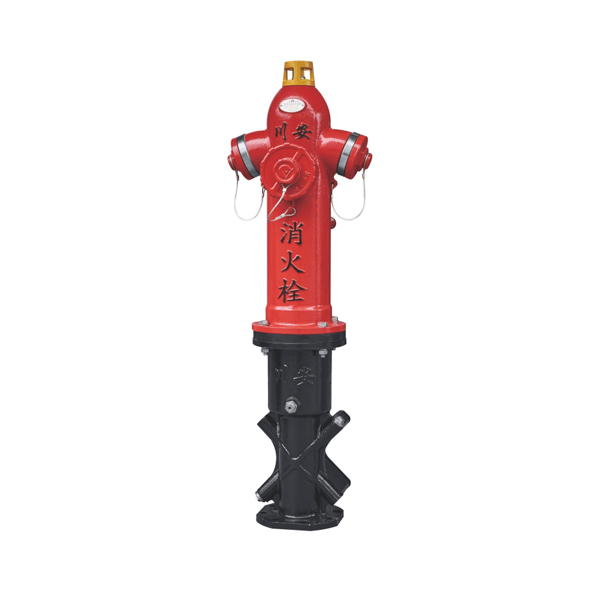
Flow-Metering Smart Hydrant Smart Above-Ground Fire Hydrant (Flow-Metering Type) · SS-ZN-II The baseline smart hydrant — provides continuous real-time monitoring of flow, pressure, water-on status, tilt angle and battery level at every deployment point, with GPS location and cloud reporting. Operates identically to a standard SS pillar hydrant mechanically — no lock-control, no card requirement. Any authorised operator with a hydrant key can open it. Specify for municipal road networks, new residential developments and industrial sites where monitoring and data logging are required but access control is not — for example, where fire brigade deployment speed must not be impeded by a card authentication step.
|
Lock-Control Flow Smart Hydrant Smart Above-Ground Fire Hydrant (Lock-Control Flow Type) · SS-ZN-III Adds a card-based electronic lock-control module to all the monitoring functions of the ZN-II. The valve operating mechanism is electronically locked in the closed position by default — the lock releases only when a registered RFID card or authorised mobile app is presented within the detection range. Unauthorised operation triggers an immediate cloud alarm and push notification to the registered authority. Every authorised access event is logged: card ID, timestamp, GPS location, flow volume drawn and valve-open duration. The water authority or property manager has complete visibility of who operated which hydrant, when, for how long and how much water was drawn — at every point on the network, from a single cloud dashboard.
|
Smart Cap — Retrofit Monitor Smart Cap · GZG Series The GZG smart cap is a retrofit sensor unit that replaces the standard top cap on any existing GB above-ground hydrant — instantly adding tilt monitoring, flow detection and GPS location to existing infrastructure without excavation, pipework modification or hydrant replacement. The cap connects to the hydrant's existing top valve nut and communicates via the same IoT/cloud platform as the ZN-II/III hydrant series. This makes the GZG the lowest-cost path to a monitored hydrant network for municipalities or property managers with large numbers of existing standard hydrants — a full SS-ZN-II/III replacement is only required where full flow metering and pressure logging are needed; the GZG provides the most critical monitoring functions (tilt, tampering, GPS) at a fraction of the cost.
|
Technical Specifications — Full Model Range
| Series | Model | Pressure | Inlet (mm) | Outlet | Opening Height | Main Functions |
|---|---|---|---|---|---|---|
| Flow-Metering SS-ZN-II | SS100/65-1.6ZN-II | 1.6 MPa | 100 | 2-KWS65 | ≥50 | Flow metering Pressure monitoring Flow-on detection Tilt monitoring GPS location & navigation |
| SS100/65-1.6ZN-II (DN150 inlet) | 150 | 2-KWS65 | ≥55 | |||
| SS150/80-1.6ZN-II | 150 | 2-KWS80 | ≥55 | |||
| Lock-Control Flow SS-ZN-III | SS100/65-1.6ZN-III | 100 | 2-KWS65 | ≥50 | Card-swipe water draw Flow metering Pressure monitoring Flow-on detection Tilt monitoring GPS location & navigation |
|
| SS150/65-1.6ZN-III | 150 | 2-KWS65 | ≥55 | |||
| SS150/80-1.6ZN-III | 150 | 2-KWS80 | ≥55 | |||
| Smart Cap Retrofit GZG | GZG100-1.6 | 1.6 MPa | 100 | — | — | Flow-on detection Tilt monitoring GPS location & navigation |
| GZG150-1.6 | 150 | — | — |
Common Mechanical Parameters — SS-ZN-II & SS-ZN-III
| Parameter | Specification |
|---|---|
| Compliance Standard | GB 4452 · GB/T 37461 (Smart Fire Hydrant Systems) · ISO 9001:2015 · CE |
| Rated Working Pressure | 1.6 MPa |
| Test Pressure | 2.4 MPa — 30-minute hydrostatic hold, zero leakage |
| Inlet Connection | Flange — GB standard dimensions |
| Outlets — DN100 models | 2-KWS65 (65 mm Chinese standard hose coupling) |
| Outlets — DN150/80 models | 2-KWS80 (80 mm Chinese standard hose coupling) |
| Body Material | Ductile iron — electrostatic powder coating RAL 3000 red |
| Auto-Drain | Built-in auto-drain · Frost-protected variant available |
| Power Supply | Built-in long-life lithium battery · Low-battery alarm via cloud platform |
| Communication | NB-IoT / LoRa / 4G (project-specific) — real-time cloud data upload |
| Management Platform | Cloud SaaS platform — PC dashboard + mobile app · Fire authority / water company / property manager access · API integration available |
| Special Options | Foam-type smart hydrant · Anti-impact smart hydrant · Elevated barrel variants — available on request |
| Warranty | 2 years (hydrant body) · Battery life ≥ 5 years under normal operating conditions |
* Foam-type, anti-impact, elevated barrel and encrypted variant smart hydrant variants available on request across all SS-ZN series models.
Six Monitoring Functions — What Each Sensor Does
|
📊 Flow Metering An integrated ultrasonic or electromagnetic flow sensor measures the volume of water passing through the hydrant on each deployment. The cumulative flow volume per event is transmitted to the cloud platform with the start and end timestamp — giving the water authority a complete record of every draw from every hydrant on the network. For SS-ZN-III lock-control models, flow volume is attributed to the specific card ID that unlocked the valve, enabling individual accountability for every use event including non-fire water draws by authorised contractors. |
📈 Pressure Monitoring A solid-state pressure transducer continuously monitors static supply main pressure at the hydrant inlet. Readings are logged at configurable intervals (typically every 15–60 minutes) and transmitted to the cloud platform. Any reading below the design minimum or above the maximum triggers an immediate cloud alarm. This allows the water authority to detect supply main faults, burst pipes, illegal connections and pump station failures in real time — before they result in deployment failure at a fire incident. |
|
💧 Flow-On Detection A dedicated water-flow sensor detects the onset of flow at any time — including when the hydrant is opened without a registered card (for ZN-II models) or without a valid card (ZN-III alarm trigger). This distinguishes between the hydrant being operated legitimately (flow + authorised card) and the hydrant being operated without authorisation (flow + no card, or flow outside normal deployment parameters). Immediate alert is sent to the cloud platform and to designated contact numbers when unexpected flow is detected. |
📐 Tilt Monitoring A MEMS accelerometer/inclinometer continuously measures the tilt angle of the hydrant body in two axes. When the tilt angle exceeds the set threshold in any direction — indicating vehicle impact, ground subsidence or vandalism — an immediate alarm is sent to the cloud platform with the hydrant's GPS coordinates and the magnitude of tilt. This typically shortens the time between a vehicle impact event and a maintenance response from months (next scheduled inspection) to hours (immediate cloud alert dispatch), dramatically reducing the probability of an impaired hydrant being deployed at a fire incident. |
|
📍 GPS Location & Navigation Each hydrant's GPS coordinates are recorded at commissioning and continuously verified — any movement of the hydrant (theft, relocation without system update) is detected and alerted. The GPS data is used by the cloud management platform to display every hydrant as a georeferenced asset on a real-time map — allowing fire commanders, water authority engineers and property managers to identify the nearest available hydrant to any incident location and navigate to it via the mobile app without relying on outdated paper maps or legacy GIS data. |
🔋 Battery Monitoring + 🔐 Lock Control Battery monitoring: The internal lithium battery state-of-charge is transmitted to the cloud platform. Low battery alert is generated when the battery falls below the set threshold, ensuring maintenance teams replace batteries before they expire in the field — preventing silent sensor failure that would remove a hydrant from the monitoring network without visible indication. Lock control (ZN-III only): The electronic solenoid lock module physically prevents the valve operating square from rotating without a valid RFID card or authorised app command. The lock is fail-safe — in the event of battery depletion, the lock defaults to the unlocked position to ensure fire brigade access is never impeded. Fire override mode allows the brigade to unlock any registered hydrant remotely via the cloud platform during a declared incident. |
Cloud Management Platform — Centralised Network Visibility
All SS-ZN smart hydrants connect to a single cloud SaaS management platform accessible via PC browser and mobile app. The platform is designed for three user types operating the same network simultaneously with role-based data access.
|
🚒 Fire Department Real-time map of all hydrants with current pressure status, alarm flags and GPS routing to nearest serviceable hydrant. Pre-incident planning module exports hydrant location and pressure data to incident command systems. Override unlock capability for ZN-III hydrants during declared incidents. Post-incident flow data export for incident report documentation. |
🔧 Water Company Network-wide pressure monitoring dashboard with threshold alerts. Flow volume analytics for NRW (non-revenue water) analysis — comparing authorised fire use records against total drawn volume to quantify water theft. Inspection scheduling module with automatic overdue alerts. Battery replacement scheduling. Maintenance work order generation from alarm events. API integration with existing SCADA/GIS systems. |
🏢 Property / Site Manager Site-specific hydrant map view with status indicators. Alarm notification routing to building manager and security. Contractor card management — issue, revoke and audit RFID access cards for authorised non-fire water use (construction, road washing, events). Compliance report export for fire protection annual inspection submission to the local fire authority. |
Model Selection Guide
| Your Requirement | Recommended | Reason |
|---|---|---|
| New municipal road network — monitoring and data logging required, fire brigade access must not be impeded by card authentication | SS100/65-1.6ZN-II | Full monitoring suite without lock-control — standard key operation preserved for fire brigade speed; all monitoring functions active |
| Urban area with documented water theft, construction zones, areas with high non-fire hydrant use | SS100/65-1.6ZN-III | Lock-control prevents unauthorised use; card logging creates accountability and enables billing for authorised non-fire draws; immediate alarm on bypass attempt |
| Existing large network of standard hydrants — upgrade to monitoring without full replacement budget | GZG100-1.6 or GZG150-1.6 Smart Cap | Retrofit cap provides tilt alarm, flow detection and GPS at fraction of full replacement cost — no excavation, no pipework, no disruption to water supply during installation |
| Large commercial development, industrial park or smart city infrastructure project — requires full monitoring + access control + billing | SS150/80-1.6ZN-III | DN150 large
|