Dry Fire Sprinkler System – Comprehensive Guide to Fire Sprinkler Dry System Design & Use
When it comes to fire protection in environments where freezing temperatures or seasonal water drainage is a concern, a dry fire sprinkler system stands as a reliable, code-compliant solution. Also known as a dry sprinkler system or fire sprinkler dry system, this specialized setup is engineered to prevent pipe damage from freezing while delivering rapid fire suppression when needed. As a core offering in CA-fire Protection’s extensive fire safety portfolio, our dry fire protection system solutions are designed to meet the unique demands of unheated warehouses, outdoor canopies, cold storage facilities, and industrial areas where water-filled pipes would pose significant risks. This ultimate guide delves into every critical aspect of dry fire sprinkler system technology—from its fundamental working principles and key differences from wet or pre-action systems to its core components, pros and cons, and real-world applications—while highlighting how CA-fire’s expertise aligns with industry leaders like Tyco, Victaulic, and Viking. Whether you’re a facility manager, contractor, or project engineer, this guide equips you with the knowledge to select, install, and maintain a dry fire sprinkler system that safeguards your space effectively.
What Is a Dry Fire Sprinkler System? Definition & Working Principle
Core Definition of Dry Fire Sprinkler System
A dry fire sprinkler system is an automatic fire sprinkler setup where the pipes are filled with pressurized air or nitrogen instead of water. Unlike wet pipe systems that keep water in constant readiness, a fire sprinkler dry system stores water in a separate reservoir or main line, held back by a dry pipe valve until a fire is detected. This design eliminates the risk of frozen or burst pipes in low-temperature environments (below 4°C/39°F), making it a critical dry fire protection system for cold storage facilities, unheated warehouses, outdoor structures, and regions with harsh winters.
How Does a Dry Fire Sprinkler System Work?
The operation of a dry fire sprinkler system follows a precise, reliable sequence to ensure rapid fire suppression without pre-installed water in the pipes:
- Standby State: Under normal conditions, the dry sprinkler system’s pipes are pressurized with air or nitrogen (typically 0.07–0.14 MPa). This pressure keeps the dry pipe valve closed, preventing water from entering the pipe network. CA-fire’s dry fire protection system uses high-quality pressure regulators to maintain consistent air pressure, ensuring system readiness.
- Fire Detection & Activation: When a fire breaks out, the heat triggers one or more dry sprinkler heads (e.g., CA-fire’s T-ZSTGX series dry sprinkler heads). As the sprinkler head’s fusible alloy link melts or glass bulb shatters, the pressurized air in the pipes escapes through the open head.
- Pressure Drop & Valve Opening: The sudden drop in air pressure activates the dry pipe valve, which opens to release water from the main supply into the pipe network. CA-fire’s dry pipe valves are engineered with accelerators to speed up this process, reducing the time between sprinkler activation and water discharge (a critical factor in dry fire sprinkler system performance).
- Water Distribution & Fire Suppression: Water flows through the pipes and out of the activated sprinkler heads, covering the fire area with a targeted spray to suppress flames and cool surrounding materials. The system continues to operate until the fire is extinguished and the main valve is manually reset.
Key to this process is the dry fire sprinkler system’s ability to balance air pressure and water flow—ensuring no accidental discharge while guaranteeing rapid response when a fire occurs. CA-fire’s systems are calibrated to meet NFPA 13 standards, requiring water to reach the farthest sprinkler head within 60 seconds for light-to-medium hazard areas and 90 seconds for high-hazard environments.
Dry Fire Sprinkler System vs. Wet, Pre-Action & Dry Chemical Sprinkler System
To fully understand the value of a dry fire sprinkler system, it’s essential to distinguish it from other common fire sprinkler setups, including wet pipe systems, pre-action systems, and dry chemical sprinkler system alternatives:
Dry Fire Sprinkler System vs. Wet Pipe System
The most fundamental difference lies in the pipe contents and environmental suitability:
- Wet Pipe System: Pipes are permanently filled with water, ready to discharge immediately when sprinkler heads activate. Ideal for temperature-controlled environments (4°C–38°C) but unsuitable for cold areas, as water-filled pipes will freeze and burst.
- Dry Fire Sprinkler System: Pipes filled with pressurized air/nitrogen, with water introduced only after activation. Designed for environments below 4°C, eliminating freezing risks. While response time is slightly longer (due to air evacuation), CA-fire’s fire sprinkler dry system minimizes delays with advanced dry pipe valves and accelerators.
The choice between a wet and dry sprinkler system hinges on temperature: wet systems excel in heated spaces for faster response, while dry sprinkler system is non-negotiable for cold or unheated areas.
Dry Fire Sprinkler System vs. Pre-Action System
Pre-action systems combine elements of dry and wet systems but serve distinct use cases:
- Pre-Action System: Requires two triggers (e.g., smoke detector + sprinkler head activation) to release water, reducing false discharge risks. Common in data centers, museums, and areas with high-value assets sensitive to water damage.
- Dry Fire Sprinkler System: Single-trigger activation (sprinkler head only) with simpler design and lower installation costs. Better suited for industrial or storage spaces where false discharges are less critical than freeze protection.
Dry Fire Sprinkler System vs. Dry Chemical Sprinkler System
While both include “dry” in their names, they operate on entirely different principles:
- Dry Fire Sprinkler System: Uses water as the suppression agent, delivered via air-pressurized pipes. Ideal for Class A (solid fuels), Class B (flammable liquids), and some Class C (electrical) fires.
- Dry Chemical Sprinkler System: Distributes dry chemical agents (e.g., ABC powder) via pressurized containers. Primarily for Class B and Class C fires but leaves residue and is less effective for deep-seated Class A fires.
CA-fire’s dry fire protection system focuses on water-based suppression, offering cleaner, more effective fire control for most industrial and commercial applications while avoiding the cleanup associated with dry chemical systems.
Core Components of a Dry Fire Sprinkler System
A dry fire sprinkler system relies on specialized components working in harmony to ensure reliability, safety, and performance. CA-fire’s systems integrate high-quality parts—many compatible with industry leaders like Tyco, Victaulic, and Viking—to deliver seamless operation:
Dry Pipe Valve
The heart of any dry fire sprinkler system, the dry pipe valve is a spring-loaded, pressure-sensitive valve that separates the water supply from the air-pressurized pipes. CA-fire’s ZSFC series dry pipe valves (with accelerators) are designed to open quickly when air pressure drops, minimizing water delivery time. These valves meet NFPA 13 standards, featuring a clapper design that ensures tight sealing in standby mode and full opening during activation.
Dry Sprinkler Heads
Custom-engineered for dry sprinkler system use, these heads are available in various types to suit application needs:
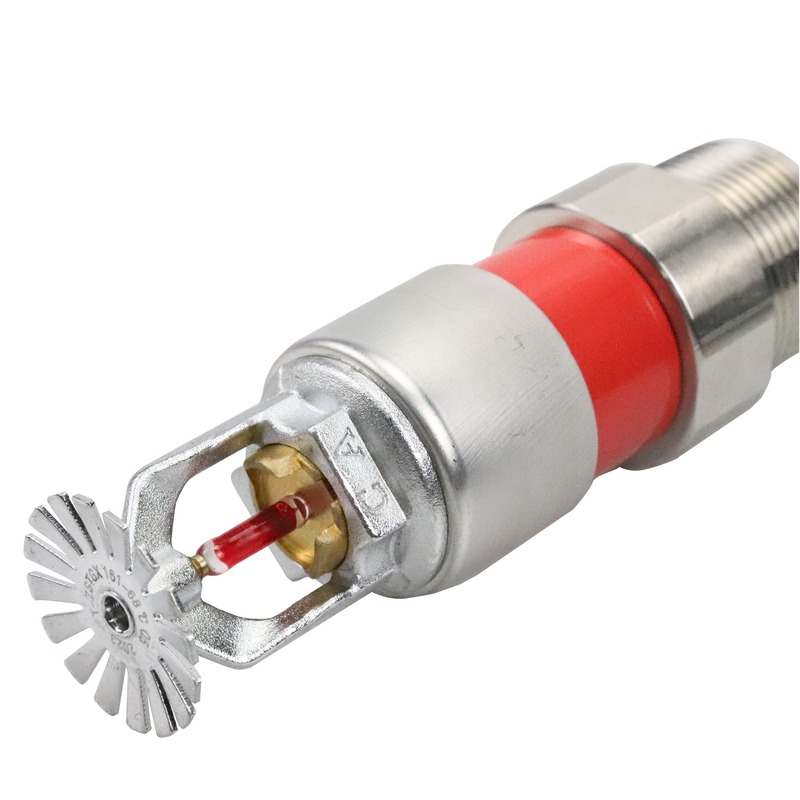
- Standard Dry Sprinkler Heads: CA-fire’s T-ZSTGX series (e.g., T-ZSTGX 80-68°CQ5) features a dry barrel design that prevents water from entering the head until system activation. Available with 68°C glass bulbs or 74°C fusible alloy links, with K-factors ranging from K80 to K363 for diverse flow requirements.
- Extended Length Dry Sprinkler Heads: Customizable lengths (80–1500mm) for deep ceiling cavities or outdoor installations, ensuring proper heat detection while maintaining the dry fire protection system’s freeze-resistant design.
- ESFR Dry Sprinkler Heads: For high-rack warehouses and cold storage facilities, CA-fire’s ESFR-363/74°C P(DT) dry sprinkler heads combine early suppression fast response (ESFR) technology with dry system compatibility, protecting high-piled goods in unheated environments.
Air Compressor & Pressure Maintenance Device
To keep the dry fire sprinkler system’s pipes pressurized, an air compressor (or nitrogen generator) is required. CA-fire’s systems include pressure maintenance devices that monitor and replenish air pressure automatically, preventing false valve activation due to minor leaks. This component ensures the fire sprinkler dry system remains in standby mode until a genuine fire occurs.
Accelerator & Drain Valves
An accelerator speeds up the pressure drop in the pipes, reducing the time between sprinkler activation and water flow—critical for dry fire sprinkler system performance in large facilities. CA-fire’s accelerators are calibrated to work seamlessly with dry pipe valves, cutting response time by up to 50%. Drain valves, meanwhile, allow for seasonal pipe drainage and maintenance, further protecting the dry sprinkler system from freezing damage.
Alarm Devices & Control Panel
When the dry fire sprinkler system activates, pressure switches trigger audible/visual alarms and send signals to a central control panel. CA-fire’s control panels integrate with building management systems, alerting facility staff and emergency services immediately. For hazardous environments, explosion-proof alarm devices are available to meet safety standards.
Piping & Fittings
The dry sprinkler system’s piping is constructed from corrosion-resistant materials (steel, stainless steel) to withstand pressurized air and water flow. CA-fire offers compatible fittings, including grooved and flanged connections, designed to maintain airtight integrity—essential for preserving system pressure in standby mode. These components are compatible with Victaulic’s grooved piping systems and Tyco’s dry system fittings, ensuring interoperability with industry-standard hardware.
Pros & Cons of Dry Fire Sprinkler System
Advantages of Dry Fire Sprinkler System
- Freeze Protection: The primary benefit of a dry fire sprinkler system is its ability to operate in temperatures below 4°C, preventing frozen or burst pipes—a critical advantage for cold storage facilities, unheated warehouses, and outdoor structures.
- Versatility: Suitable for a wide range of environments, from industrial plants and shipping docks to residential attics and seasonal structures. CA-fire’s dry fire protection system can be customized to fit small retail spaces or large industrial complexes.
- Minimal Water Damage Risk: Since water is not stored in the pipes, the fire sprinkler dry system reduces the risk of accidental water damage from leaks or broken pipes—ideal for areas with sensitive equipment or inventory.
- Code Compliance: Meets NFPA 13, FM Approval, and local building codes for cold-temperature fire protection, ensuring regulatory compliance for commercial and industrial projects.
- Compatibility with Dry Sprinkler Heads: Works seamlessly with specialized dry sprinkler heads, including extended-length and ESFR models, to address unique installation and hazard requirements.
Disadvantages of Dry Fire Sprinkler System
- Longer Response Time: Compared to wet pipe systems, a dry fire sprinkler system requires time to evacuate air from the pipes before water reaches the sprinkler heads. While accelerators mitigate this, response time is still 10–60 seconds longer—something to consider for high-hazard environments.
- Higher Installation & Maintenance Costs: The dry sprinkler system’s air compressors, dry pipe valves, and pressure maintenance devices add complexity and cost compared to wet systems. Regular maintenance (air pressure checks, valve inspections) is also more intensive.
- Air Pressure Requirements: The system relies on consistent air pressure to function properly. Leaks or compressor failures can compromise readiness, requiring proactive monitoring and upkeep.
- Not Ideal for High-Hazard Fast-Spread Fires: In spaces with highly flammable materials that require instant water delivery, wet pipe or pre-action systems may be more suitable than a dry fire protection system.
Applications of Dry Fire Sprinkler System
A dry fire sprinkler system is the preferred choice for environments where freezing temperatures or water drainage needs make wet pipe systems impractical. Key applications include:
Industrial Facilities
- Unheated warehouses, manufacturing plants, and production facilities in cold climates.
- Outdoor canopies, loading docks, and shipping areas exposed to low temperatures.
- Cold storage warehouses (for food, pharmaceuticals, or chemicals) where pipes must remain dry to avoid product contamination from frozen water.
Commercial & Public Spaces
- Parking garages (especially underground or open-air structures in regions with freezing winters).
- Retail stores with unheated storage areas or seasonal extensions.
- Schools, churches, and community centers with unheated auditoriums, basements, or utility rooms.
Residential & Institutional Buildings
- Attics, crawl spaces, and garages in homes or apartment buildings where heating is inconsistent.
- Seasonal residences, cabins, or vacation homes that are unoccupied during winter months.
- Hospitals and nursing homes with unheated utility tunnels or equipment rooms.
Specialized Environments
- Oil and gas facilities, including offshore platforms and pipeline terminals with cold-exposed piping.
- Construction sites with temporary fire protection needs during winter months.
- Telecommunication towers and outdoor electrical enclosures where freezing is a constant risk.
CA-fire’s dry fire sprinkler system solutions have been deployed in countless projects worldwide, from small retail storage rooms to large-scale industrial cold storage facilities, proving their reliability in diverse cold-temperature scenarios.
Dry Fire Sprinkler System Brands: CA-fire & Industry Leaders
CA-fire’s Dry Fire Sprinkler System Expertise
As a global leader in fire protection, CA-fire Protection offers a comprehensive range of dry fire sprinkler system components and turnkey solutions, engineered to meet international standards (NFPA 13, FM Approval, ISO 9001). Our systems integrate seamlessly with components from industry giants while delivering cost-effective, tailored designs for specific project needs. CA-fire’s dry fire protection system advantages include:
- Customizable designs for small to large-scale projects.
- High-quality dry pipe valves, sprinkler heads, and accessories built for durability in cold environments.
- Technical support from fire protection engineers to ensure proper system design and installation.
- Compliance with global codes and compatibility with leading brand components.
Industry Leaders: Tyco, Victaulic, Viking
While CA-fire’s dry fire sprinkler system solutions stand on their own merit, they are also compatible with components from trusted industry leaders:
- Tyco: A pioneer in fire protection, Tyco offers dry pipe valves, accelerators, and sprinkler heads that integrate with CA-fire’s fire sprinkler dry system setups. Their dry systems are known for reliability in extreme cold, making them a popular choice for industrial applications. Visit Tyco’s dry sprinkler system page for more details.
- Victaulic: Renowned for their grooved piping systems, Victaulic’s fittings and valves are widely used in dry sprinkler system installations for their airtight seal and easy assembly. CA-fire’s piping solutions are compatible with Victaulic’s grooved technology, ensuring leak-free performance. Explore Victaulic’s dry fire protection products here.
- Viking: Viking’s dry sprinkler heads and dry pipe valves are industry standards for cold-temperature fire protection. Their extended-length dry heads and high-performance accelerators complement CA-fire’s dry fire sprinkler system designs, especially for large or complex facilities. Learn about Viking’s dry sprinkler systems on their official site.
CA-fire’s commitment to compatibility ensures that our dry fire protection system can be integrated with these leading brands, giving customers flexibility in component selection while maintaining system performance and code compliance.
Conclusion – Is a Dry Fire Sprinkler System Right for You?
A dry fire sprinkler system is an indispensable solution for any environment where freezing temperatures threaten water-filled fire protection pipes. Its ability to combine freeze resistance with reliable fire suppression makes it a cornerstone of fire safety in unheated warehouses, cold storage facilities, outdoor structures, and regions with harsh winters. While it comes with longer response times and higher upfront costs compared to wet pipe systems, the dry sprinkler system’s unique benefits far outweigh these trade offs for cold-temperature applications.
CA-fire Protection’s dry fire protection system solutions—backed by decades of engineering expertise, global certifications, and compatibility with industry leaders like Tyco, Victaulic, and Viking—offer the perfect balance of performance, reliability, and cost-effectiveness. Whether you’re designing a new facility or retrofitting an existing space, our team of fire protection specialists can tailor a dry fire sprinkler system to meet your specific needs, ensuring regulatory compliance and maximum safety.
Don’t let freezing temperatures compromise your fire protection. Invest in a dry fire sprinkler system from CA-fire today and safeguard your space with a solution designed for durability, efficiency, and peace of mind.
Contact CA-fire for Dry Fire Sprinkler System Solutions:
- Email: sales@ca-fire.com
- Mobile/WhatsApp: +86 13400715622 / +86 18150362095
- WeChat: 404863577
- Website: https://www.ca-fire.com
- URL: /dry-fire-sprinkler-system/
External Link (dofollow): For detailed dry fire sprinkler system installation and maintenance standards, visit the National Fire Protection Association (NFPA) website (NFPA 13: Standard for the Installation of Sprinkler Systems).