CA-FIRE Protection · Fujian, China

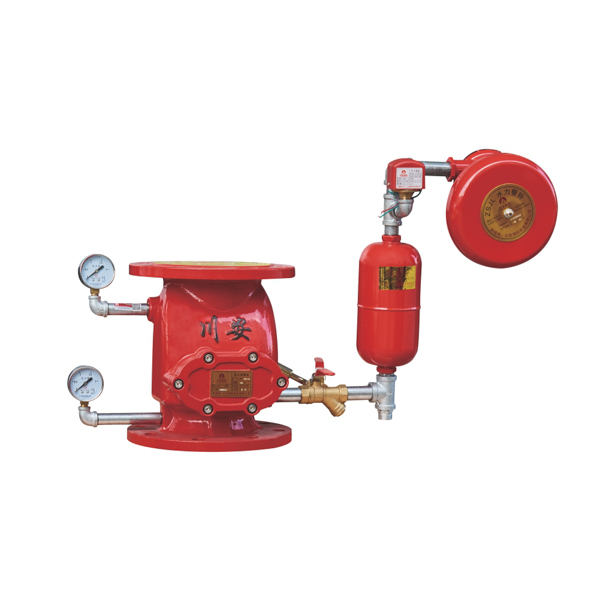
Wet Alarm Valve — ZSFZ Flanged Series

DN65–DN300 · 1.6 MPa · EPDM Clapper · GB 5135.6 · NFPA 13 · Factory Direct from Fujian, China
Home Alarm Check Valve Wet Alarm Valve
Wet Alarm Valve ZSFZ flanged series DN65-DN300 CA-FIRE

Wet Alarm Valve — ZSFZ Flanged Series
DN65–DN300 · 1.6 MPa

The wet alarm valve is the master control component of a wet-pipe automatic fire sprinkler system — a flanged one-way clapper valve installed between the fire water supply and the sprinkler distribution pipework. In standby, it holds the entire downstream network under water pressure. The instant a sprinkler head opens thermally during a fire, the pressure drop lifts the clapper, water flows to the activated heads, and the valve simultaneously drives the water motor alarm gong and alarm pressure switch — delivering both hydraulic and electrical alarm signals with no electrical power required for the primary alarm output.

CA-FIRE's ZSFZ series flanged wet alarm check valve is manufactured in 8 sizes from DN65 to DN300, covers the full GB 5135.6 standard range, and is the standard wet alarm valve specification for commercial buildings, high-rise residential towers, hospitals, hotels, warehouses, airports, and data centres throughout China and on export projects in Southeast Asia, the Middle East, and Africa.

← See all alarm check valve types

Quick Specifications
ModelZSFZ 65~300-1.6
ConnectionFlanged (GB / ANSI / DIN)
SizesDN65 · 80 · 100 · 125 · 150 · 200 · 250 · 300
Working Pressure1.6 MPa (16 bar)
Seal Test3.2 MPa
Strength Test6.4 MPa
Hydraulic Loss<0.02 MPa
Body MaterialDuctile cast iron, epoxy coated
ClapperDuctile iron + EPDM rubber
Temperature4°C – 70°C
InstallationUpright (vertical, flow upward)
StandardGB 5135.6 · NFPA 13 · ISO 9001
🔒
EPDM Clapper Seat — Zero Leakage in Standby
The clapper seat rubber facing is EPDM — rated for continuous water immersion, resistant to chlorine treatment up to 5 ppm, and rated 4°C–70°C. EPDM maintains full sealing force over the valve's 25-year design life without the compression set that affects standard NBR seals in wet-pipe standby conditions. Zero leakage past the seat is verified at 3.2 MPa seal test pressure before shipment.
📊
Hydraulic Loss <0.02 MPa — Minimal Pressure Impact
GB 5135.6 permits up to 0.05 MPa hydraulic resistance at rated flow. The ZSFZ series achieves <0.02 MPa — less than half the permitted maximum. This reduces the required supply pressure margin and allows NFPA 13 hydraulic calculations to account for a smaller pressure drop at the alarm valve station, freeing pressure budget for the sprinkler heads and distribution pipework.
🔔
Water Motor Alarm Gong — No Electrical Power Required
The G3/4 alarm port connects to the retard chamber and water motor alarm gong via standard trim pipework. When the clapper lifts and sustained flow is confirmed through the retard chamber, the hydraulically-driven gong activates within seconds — completely independent of electrical power, battery backup, or the fire alarm control panel. Audible alarm at the valve room is guaranteed even during power failure.
🏭
8 Sizes DN65–DN300 — Complete Range in One Product Line
8 sizes from DN65 to DN300 cover all wet-pipe system configurations — from a single-zone riser in a small commercial building (DN65–DN80) to a multi-zone high-rise trunk main (DN250–DN300). All sizes are catalogue stock. Flange drilling available in GB, ANSI B16.5, and DIN PN16 patterns for domestic and export projects.

Dimensional Data — All 8 Sizes

All sizes share the same working pressure (1.6 MPa), seal test pressure (3.2 MPa), strength test pressure (6.4 MPa), and hydraulic friction loss (<0.02 MPa). Only valve height varies by DN size.

DN SizeHeight (mm)Working PressureSeal TestStrength TestHydraulic Loss
DN652001.6 MPa3.2 MPa6.4 MPa<0.02 MPa
DN802301.6 MPa3.2 MPa6.4 MPa<0.02 MPa
DN1002601.6 MPa3.2 MPa6.4 MPa<0.02 MPa
DN1252751.6 MPa3.2 MPa6.4 MPa<0.02 MPa
DN1503051.6 MPa3.2 MPa6.4 MPa<0.02 MPa
DN2003751.6 MPa3.2 MPa6.4 MPa<0.02 MPa
DN2504701.6 MPa3.2 MPa6.4 MPa<0.02 MPa
DN3005601.6 MPa3.2 MPa6.4 MPa<0.02 MPa
🎬 Factory Pressure Test — Live Bench Test on ZSFZ Wet Alarm Valve
Every CA-FIRE ZSFZ wet alarm valve undergoes mandatory seal test (3.2 MPa) and strength test (6.4 MPa) on 100% of production — not on a sample basis. This video shows a live bench test on a DN100 ZSFZ valve at full test pressure per GB 5135.6.

How a Wet Alarm Valve Works — Step by Step

1
Pressurised Standby Supply pressure acts on the clapper underside; system pressure (trapped water in distribution pipework) acts on the upper side. Both gauges show equal pressure — the net force keeps the clapper seated. Alarm gong silent. System is fully charged and ready.
2
Sprinkler Head Opens A heat-activated sprinkler head opens thermally. Water discharges from the open head. Downstream (system) pressure begins to drop; supply pressure remains unchanged. A pressure differential develops across the clapper.
3
Clapper Lifts Supply pressure lifts the clapper off its seat. Water flows freely from supply main to distribution pipework and on to the open sprinkler head(s). Supply gauge pressure drops slightly; system gauge drops to near zero.
4
Alarm Port Activates As the clapper lifts, the alarm port opens. Water enters the retard chamber — if flow is sustained (genuine fire activation), the retard chamber fills and water drives the water motor alarm gong. The alarm pressure switch simultaneously sends an electrical signal to the fire alarm control panel.
5
System Reset Close the OS&Y isolation valve upstream; drain the downstream system via the main drain valve; replace activated sprinkler heads; re-pressurise; confirm clapper reseats and both gauges equalise before returning to standby.
Why the Retard Chamber Matters: Without it, water hammer and brief pressure surges would drive water into the alarm port and activate the gong — producing false alarms. The retard chamber is a calibrated delay device: small transient volumes drain out before reaching the gong; a genuine activation generates sustained flow that triggers the alarm within the 90-second NFPA 25 / GB 5135.6 requirement.

Wet Alarm Valve Assembly — Complete Component List

A wet alarm valve assembly (also called a wet alarm valve station) comprises the alarm check valve body plus standardised trim components. CA-FIRE can supply the complete assembly or the valve body alone.

#ComponentFunctionNotes
1ZSFZ Wet Alarm Check ValveFlow control + alarm portDN65–DN300; this product
2OS&Y Gate Valve (upstream)Supply isolationOutside-stem-and-yoke; visible open/closed position; tamper-switch supervised
3Retard ChamberFalse alarm preventionCalibrated drain orifice; delays alarm output 5–90 s; filters water hammer surges
4Water Motor Alarm GongAudible alarm — no electricityHydraulically driven; mandatory per GB 5135.6 & GB 50084; exterior mounting recommended
5Alarm Pressure SwitchElectrical signal to FACP24 V DC signal to fire alarm control panel; confirms zone activation for BMS and remote monitoring
6Supply Pressure GaugeUpstream pressure display0–1.6 MPa range; glycerine-filled for vibration resistance
7System Pressure GaugeDownstream pressure displayDifferential with supply gauge confirms clapper seal integrity in standby
8Main Drain ValveSystem drain + alarm trip testSame DN as alarm valve body; full-flow drain test used for annual alarm trip verification per NFPA 25
9Inspector's Test ValveQuarterly alarm testSmall-bore connection at most remote hydraulic point; flow equivalent to one sprinkler head

Flanged vs Grooved Wet Alarm Valve — Selection Guide

CA-FIRE manufactures the wet alarm valve in both flanged (ZSFZ) and grooved configurations. The correct choice depends on the pipe connection method used throughout the sprinkler system.

ParameterFlanged ZSFZ (this product)Grooved Wet Alarm Valve
Connection methodBolted flanges — 4 to 12 bolts per jointMechanical groove coupling — 2 bolts
Available sizes DN65–DN300 (8 sizes)DN80–DN200 (4 sizes)
Installation timeStandard — requires flange alignment and bolt torquingFast — groove coupling engages in minutes
Pipe system compatibility Universal — flanged or threaded systemsGrooved-pipe systems only
Joint rigidity Rigid — preferred for large DN and high-pressure risersSemi-flexible — allows slight angular movement
International spec acceptance Universal — GB / ANSI / DIN flange patternsIPS / ISO groove — Victaulic-compatible
Specify whenLarge DN (200–300), standard flanged project, export specs require ANSI/DIN flangesGrooved pipework throughout, tight installation schedule, Victaulic-compatible project

Application Scenarios

🏢 Commercial High-Rise Buildings
Office towers, hotels, hospitals, and residential high-rises with controlled indoor temperatures. One ZSFZ alarm valve station per sprinkler zone riser — typically DN100 to DN200 for floor-by-floor zone protection with a trunk DN250–DN300 main.
📦 Logistics Warehouses & Distribution Centres
Large-footprint storage with ESFR (early suppression fast response) sprinklers. High flow demand requires large DN alarm valves — typically DN150–DN200 per zone. ZSFZ's <0.02 MPa friction loss minimises the pressure allowance in NFPA 13 hydraulic calculations.
💻 Data Centres (Controlled Temperature Zones)
White space and support areas maintained at 18–27°C — suitable for wet-pipe. The ZSFZ wet alarm valve is used for suppression zones with standard pendent sprinkler heads; pre-action systems are reserved for IT equipment areas where false discharge risk is the primary concern.
🛍️ Shopping Centres & Retail Complexes
High-occupancy, large-floor-area buildings with multiple sprinkler zones — each zone served by a dedicated ZSFZ alarm valve station typically in a fire valve room per floor or zone. Reliable EPDM clapper seating ensures zero standing leakage across hundreds of installed valve stations.
✈️ Airport Terminals & Transport Hubs
Large-volume heated interior spaces — departure halls, concourses, retail areas — use wet-pipe systems with ZSFZ alarm valves on each zone. Terminal check-in areas typically specify DN100–DN150 per zone; large departures halls may require DN200. CA-FIRE has supplied alarm valves to multiple Chinese airport terminal projects.
🌍 Export / BRI Projects
Projects in Southeast Asia, Africa, the Middle East, and South Asia specifying NFPA 13 compliance. ZSFZ flange drilling available in ANSI B16.5 150 lb and DIN PN16 patterns. Cv data and dimensional drawings provided for project hydraulic submittals in any format required.

Standards & Certifications

StandardScope & Relevance to ZSFZ Wet Alarm Valve
GB 5135.6-2006 ↗ 自动喷水灭火系统 第6部分 湿式报警阀 — primary Chinese national standard governing wet alarm valve hydraulic performance, clapper seal test (3.2 MPa), strength test (6.4 MPa), hydraulic friction loss limit (≤0.05 MPa), and alarm response time. ZSFZ series holds national fire product type approval certification under this standard.
NFPA 13 ↗ Standard for the Installation of Sprinkler Systems — alarm valve selection, placement, trim assembly requirements, 90-second alarm response requirement, drain sizing, inspector's test connection. CA-FIRE provides Cv data per DN size for NFPA 13 hydraulic calculations on export project submittals.
NFPA 25 ↗ Standard for the Inspection, Testing, and Maintenance of Water-Based Fire Protection Systems — quarterly alarm trip test, annual main drain test, 5-year internal inspection of clapper and seat. ZSFZ valve body design allows clapper removal and inspection without removing the valve body from the pipework.
GB 50084 自动喷水灭火系统设计规范 — Chinese design code; specifies alarm valve installation location, valve room requirements (lighting, drainage, heating ≥4°C), and alarm device configuration including retard chamber and water motor gong requirements.
ISO 9001:2015 ↗ CA-FIRE QMS certification — covers casting inspection, clapper seat machining tolerances, EPDM material verification (EDX spectroscopy), hydraulic pressure testing, and shipment documentation for all ZSFZ sizes.

Frequently Asked Questions

What is a wet alarm valve and how is it different from a standard check valve? +
A standard check valve prevents backflow — it has no alarm function and cannot detect or signal water flow. A wet alarm check valve includes an alarm port and retard chamber connection that routes water to the alarm-initiating devices (water motor alarm gong and alarm pressure switch) whenever the clapper lifts and sustained flow is detected. This dual function — flow control and alarm output — is what makes it a listed sprinkler system component under GB 5135.6 and NFPA 13, rather than a generic plumbing fitting.

Practically, this means the wet alarm check valve is the only valve in a wet-pipe sprinkler system that activates the fire alarm. An ordinary check valve installed in place of an alarm valve would allow the system to flow water through open sprinkler heads — but would generate no alarm signal. This is why alarm valves require specific type approval certification and cannot be substituted with standard check valves in fire sprinkler installations.
What size wet alarm valve do I need for my project? +
The correct DN size is determined by the hydraulic design of the sprinkler system — specifically the peak demand flow rate of the zone protected by that alarm valve station. As a general guide: DN65–DN80 for small zones (up to ~200 sprinkler heads at standard spacing); DN100–DN150 for medium zones (200–400 heads, or ESFR systems with high demand density); DN200–DN300 for large-zone, multi-floor, or high-rack storage systems.

For export projects requiring NFPA 13 hydraulic calculations, CA-FIRE provides Cv values per DN size. Contact [email protected] with your design flow rate and we can confirm the appropriate DN selection.
Can this wet alarm valve be installed horizontally? +
No. The ZSFZ flanged wet alarm valve must be installed in the upright (vertical) position with water flow directed upward through the valve. The clapper is gravity-seated — in standby, the clapper relies on its own weight and balanced water pressure to remain seated on the valve seat. If installed horizontally, the clapper will not seat reliably under gravity and may produce either constant false-alarm leakage into the alarm port or failure to reseat after a test or activation.

For horizontal riser configurations or tight-clearance installations where the standard upright orientation is not possible, contact CA-FIRE to discuss project-specific requirements. In most cases, the solution is to redesign the riser orientation or to use an offset pipe configuration.
What is the retard chamber and does the wet alarm valve come with one? +
The retard chamber is a small pressure vessel installed between the alarm port of the wet alarm check valve and the water motor alarm gong. Its purpose is to prevent false alarms caused by brief pressure surges (water hammer, pump start, pressure fluctuations) that momentarily lift the clapper without representing a genuine fire event. The retard chamber has a calibrated drain orifice — small transient volumes drain out before the chamber fills enough to drive the gong; only sustained flow (genuine activation) fills the chamber and triggers the alarm.

The ZSFZ valve body is supplied with the G3/4 alarm port threaded connection ready for retard chamber installation. CA-FIRE can supply the retard chamber as part of a complete alarm valve station assembly — specify when ordering whether you need the valve body only or the complete assembly including retard chamber, gong, pressure switch, gauges, drain valve, and inspector's test connection.
What maintenance does a wet alarm valve require under NFPA 25? +
Quarterly (NFPA 25 § 5.2.4): Alarm trip test — open the inspector's test valve and confirm the water motor alarm gong activates within 90 seconds and the alarm pressure switch sends a signal to the fire alarm control panel. Check both supply and system gauges for equal pressure in standby. Visual inspection for external leaks, corrosion, and physical damage.

Annually (NFPA 25 § 5.2.5): Full main drain test — open the main drain valve fully and observe residual supply pressure under flow. Inspect retard chamber drain orifice for blockage. Verify OS&Y valve tamper switch function.

Every 5 years (NFPA 25 § 5.4): Internal inspection — remove clapper assembly and inspect seat, hinge pin, and EPDM rubber facing for wear, cracking, or compression set. Replace EPDM clapper seal if deformation exceeds manufacturer tolerance. CA-FIRE supplies replacement clapper assemblies and EPDM seals by model number and DN size — contact [email protected].
Does the ZSFZ wet alarm valve comply with NFPA 13 for export projects? +
The ZSFZ series is designed in alignment with NFPA 13 functional requirements and holds Chinese national fire product type approval certification under GB 5135.6 — the Chinese national equivalent standard. GB 5135.6 and NFPA 13 / UL 193 require the same core functions: one-way clapper action, alarm port activation within 90 seconds, minimum seal and strength test pressures, and retard chamber compatibility.

For projects with a contractual UL Listing or FM Approval requirement (common on US-standard export contracts), the GB 5135.6 certification is not a direct substitute. Contact [email protected] to discuss the specific project certification requirement. For most BRI, EPC, and ASEAN-region projects specifying NFPA 13 compliance without mandatory UL/FM listing, the ZSFZ series is an accepted specification.
What is the lead time and can you supply a complete wet alarm valve assembly? +
Standard catalogue sizes (DN65–DN300) are stock items with a typical lead time of 3–5 working days ex-works Quanzhou, Fujian for standard order quantities. For large-quantity project orders (100+ valves), confirm availability and production schedule with our sales team at time of order placement.

CA-FIRE can supply the complete wet alarm valve assembly — valve body, retard chamber, water motor alarm gong, alarm pressure switch, supply and system gauges, main drain valve, and inspector's test connection — pre-assembled and tested as a station, or as individual components for site assembly. Contact [email protected] or WhatsApp +86 18150362095 for a project quotation within 24 hours.

Related Products

Get a Quote — ZSFZ Wet Alarm Valve
DN65–DN300 · 8 Sizes · 1.6 MPa · GB 5135.6 · NFPA 13 · ISO 9001
Valve body only or complete wet alarm valve assembly · ANSI / DIN / GB flange patterns · Factory direct · 24 hr quote
📧 Send Inquiry →
Scroll to Top