Y Type Strainer — Flanged End Pipeline Filter
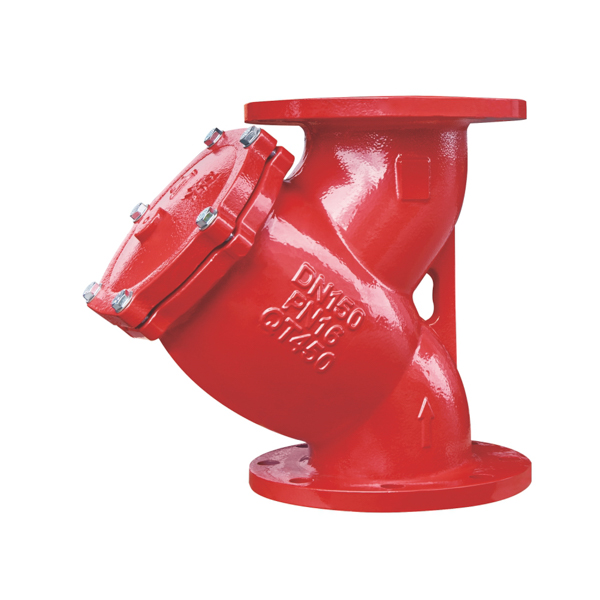
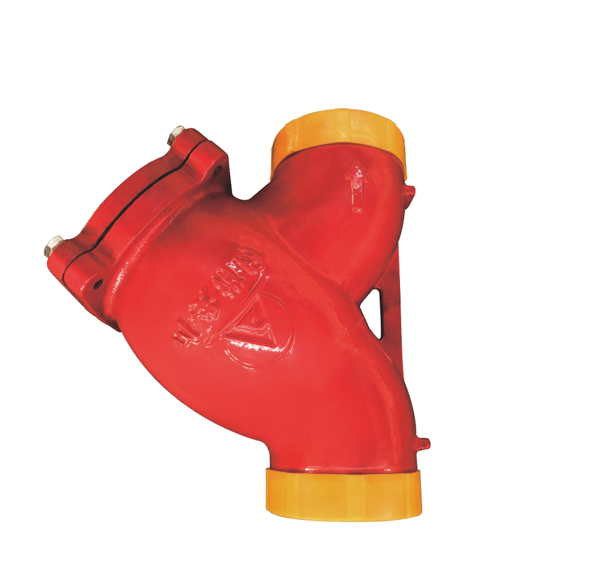
A Y type strainer is an inline pipeline filtration device that removes solid particles, debris and scale from flowing fluid before it reaches sensitive downstream equipment such as pumps, pressure-reducing valves, relief valves and control valves. The name comes from the valve body’s characteristic Y-shaped profile — the main flow path runs straight through the body, while the filtration chamber branches off at an angle, housing a removable stainless steel screen that captures contaminants without restricting normal flow.
CA-FIRE’s flanged Y type strainer is engineered for installation at the inlet of pumps, pressure-reducing valves, alarm valves and other critical equipment in fire protection pipelines, water supply systems and general industrial pipework. Available in DN50–DN300 with flanged end connections per ANSI B16.1 or DIN 2501, it protects downstream equipment from particulate damage throughout its full service life. The bolted screen cap allows quick screen removal and cleaning without disconnecting the valve from the pipeline.
Y Type Strainer Technical Specifications
| Parameter | Specification |
|---|---|
| Product Type | Y Type Strainer — Flanged End |
| Nominal Pressure | 1.6 MPa (PN16) |
| Nominal Diameter | DN50–DN300 |
| Strength Test Pressure | 2.4 MPa |
| Applicable Medium | Water and equivalent fluid media |
| Medium Temperature | 4–70 °C |
| Body Material | Ductile iron, epoxy coated |
| Screen Material | Stainless steel (SS304) perforated mesh |
| Connection Method | Flanged — ANSI B16.1 Class 125 / DIN 2501 PN16 |
| Screen Access | Bolted end cap — tool removal, no pipe disconnection |
| Certifications | GB/T standard, ISO 9001, CE |
Structural Length by Nominal Diameter
| Nominal Diameter | Structural Length (mm) |
|---|---|
| DN50 | 197 |
| DN65 | 240 |
| DN80 | 270 |
| DN100 | 300 |
| DN125 | 335 |
| DN150 | 385 |
| DN200 | 470 |
| DN250 | 540 |
| DN300 | 610 |
Y Type Strainer Key Features
Stainless Steel Screen — Durable and Cleanable
The filtering element inside the Y type strainer is a precision-perforated stainless steel (SS304) cylindrical screen. SS304 construction gives the screen excellent corrosion resistance in water, foam mixture and mildly acidic or alkaline pipeline environments, maintaining structural integrity and consistent mesh aperture throughout repeated cleaning cycles. The screen is designed to be removed, flushed clean under running water or blown through with compressed air, and reinstalled — a maintenance cycle that can be completed in minutes without any specialist tools. Where higher corrosion resistance is required, SS316 screens are available as an option.
Flanged End Connection — Permanent, Leak-Free Integration
The raised-face flanged ends of the Y type strainer bolt directly to matching pipeline flanges, creating a permanent joint that requires no periodic re-tightening and is not susceptible to coupling extrusion under pressure surge conditions. Flanged connection is the preferred installation method for Y type strainers at critical protection points — pump inlets, alarm valve inlets and pressure-reducing valve stations — where joint integrity must be maintained under the full range of system operating pressures including water hammer and surge events. The symmetrical flange drilling to ANSI B16.1 or DIN 2501 ensures straightforward replacement of existing inline strainers with no pipeline modification.
Y-Body Geometry — Flow Efficiency and Compact Footprint
The oblique screen chamber of the Y type strainer is oriented at approximately 45° to the main flow axis, creating a filtering surface area significantly larger than the pipe bore without requiring the extended face-to-face length of a basket-type strainer. Fluid enters the body axially, passes through the screen from inside to outside, and exits through the main bore — the oblique chamber geometry ensures that collected debris falls to the bottom of the screen by gravity during operation, concentrating it away from the flow path and extending the cleaning interval between maintenance operations. The Y body profile also results in a lower pressure drop across the Y type strainer than equivalent basket strainers, particularly as the screen begins to load with debris.
Bottom-Drain Connection for In-Line Blowdown
The screen cap of the Y type strainer incorporates a drain plug that can be replaced with a drain valve for in-line blowdown without removing the screen cap. When a drain valve is fitted, accumulated debris can be flushed from the screen chamber by briefly opening the drain valve under system pressure — the flow velocity through the drain flushes debris out without full screen removal. This blowdown capability is particularly valuable in systems where the Y type strainer is protecting equipment in a continuously operating pipeline that cannot be easily shut down for screen removal maintenance.
Robust Ductile Iron Body for Long Service Life
The Y type strainer body is cast from ductile iron (GGG50) and finished with fusion-bonded epoxy coating inside and out. Ductile iron provides significantly higher tensile strength and impact resistance than grey cast iron, resisting cracking under pressure surge and water hammer conditions that can occur in fire protection systems during pump start-up and valve closure. The epoxy coating protects against internal corrosion from stagnant water — a particular concern in fire protection pipelines where the water may stand static for extended periods between test flows.
Y Type Strainer Applications
[IMAGE: Y type strainer flanged installed pump inlet fire protection pipeline — CA-FIRE] [IMAGE ALT TEXT: Y type strainer flanged installed at pump inlet fire protection pipeline — CA-FIRE]
Pump Inlet Protection
The most critical application of a Y type strainer is at the suction inlet of fire pumps, jockey pumps and booster pumps. Solid particles entering the pump impeller cause erosion, imbalance and premature bearing failure — failures that can remain undetected until the pump is called on during a fire emergency. Installing a Y type strainer on the pump suction line captures debris before it reaches the impeller, protecting the pump and ensuring reliable performance when it matters most. The flanged connection matches standard pump suction flange drillings across all common pump sizes.
Pressure-Reducing Valve Protection
Pressure-reducing valves (PRVs) rely on precision-machined internal pilot components and diaphragms that are highly susceptible to damage from pipe scale, weld spatter and sediment. A Y type strainer installed immediately upstream of each PRV captures particles before they can jam the pilot valve or score the diaphragm seat, maintaining PRV setpoint accuracy and extending the service interval between PRV overhauls. In high-rise building fire protection systems where PRVs are installed at every third or fourth floor to zone the static pressure, a Y type strainer at each PRV station is standard engineering practice.
Alarm Valve and Deluge Valve Inlet Protection
Alarm valves, deluge valves and pre-action valves all incorporate internal seats, clapper assemblies and pilot trim components that must seat cleanly to maintain system set pressure and prevent false alarms. A Y type strainer installed upstream of each alarm valve protects the clapper seat and trim components from particulate contamination — reducing false alarm events, extending valve service intervals and ensuring the valve opens reliably under fire conditions.
Relief Valve and Control Valve Protection
Relief valves and automatic control valves depend on lapped metal seats for accurate set pressure and tight shut-off. Even small particles lodging in the seat cause leakage that gradually worsens as the seat erodes. A Y type strainer upstream of each relief valve or control valve prevents this contamination, maintaining setpoint accuracy and reducing the frequency of seat lapping and overhaul work.
General Industrial Pipeline Filtration
Beyond fire protection, the Y type strainer is widely used as a general-purpose pipeline filter in HVAC chilled and hot water circuits, industrial process water systems, irrigation mains and municipal water distribution networks — anywhere that downstream equipment requires protection from entrained solid particles. The ductile iron body and stainless steel screen are compatible with a wide range of water-based fluids across the 4–70°C operating temperature range.
How to Select the Right Y Type Strainer
Selecting the correct Y type strainer for an application involves three key parameters:
1. Nominal Diameter Match the Y type strainer nominal diameter to the pipeline nominal diameter. Installing an oversized strainer creates unnecessary turbulence and installation cost; installing an undersized strainer increases pressure drop and reduces cleaning intervals. CA-FIRE’s flanged Y type strainer covers DN50 through DN300, matching all standard pipeline sizes in fire protection and industrial installations.
2. Screen Mesh Size The standard SS304 screen supplied with the CA-FIRE Y type strainer uses a perforation size suited to general water system filtration. Finer mesh screens are available for applications requiring removal of smaller particles — such as precision instrument protection or ultrafine filtration. Specify the required mesh size or filtration rating when ordering.
3. Pressure Rating The CA-FIRE flanged Y type strainer is rated to 1.6 MPa working pressure, with a strength test pressure of 2.4 MPa. This covers the majority of fire protection and building services pipeline applications. For higher-pressure systems, contact CA-FIRE’s technical team for alternative pressure class options.
Installation Guidelines
Pre-Installation Checklist
- Verify the Y type strainer nominal diameter and flange drilling standard match the pipeline specification.
- Confirm the installation orientation — the screen chamber must be oriented so that the drain cap points downward or horizontally, never upward, to allow debris to settle by gravity and drain cleanly.
- Check the body, screen and flange faces for transit damage before installation.
- Ensure the pipeline upstream of the Y type strainer has been flushed to remove construction debris before the strainer is commissioned — installing a temporary bypass during initial system flushing prolongs screen life.
Flanged Connection Installation
Insert the correct gasket material between the Y type strainer flanges and the pipeline flanges, and tighten all flange bolts evenly in a cross-pattern sequence to the manufacturer’s torque specification. Confirm the flow direction arrow on the Y type strainer body points in the direction of pipeline flow — installing the strainer in reverse flow direction causes the screen to be loaded from the outside in, making cleaning significantly more difficult and reducing the effective strainer open area.
Screen Installation Check
Before commissioning, remove the screen cap and confirm the stainless steel screen is correctly seated in the screen housing with no gaps around its circumference. Reinstall the screen cap and tighten the cap bolts evenly to the specified torque — over-tightening the cap bolts on a cast body can crack the cap flange.
Post-Installation Pressure Test
Conduct a hydrostatic pressure test to the system test pressure and check for leakage at the flange joints and screen cap. After commissioning and the first period of operation — typically two to four weeks — remove and inspect the screen to assess the debris load from initial pipeline commissioning. Clean or replace the screen as required before returning the system to service.
Maintenance Schedule
Monthly — Visual Inspection
- Inspect the Y type strainer body, flange joints and screen cap for leaks, corrosion or mechanical damage.
- Check the pressure differential across the Y type strainer if differential pressure gauges are fitted — a rising differential indicates screen loading and approaching cleaning requirement.
Quarterly — Screen Inspection and Cleaning
- Close the upstream and downstream isolation valves and depressurise the Y type strainer body via the drain plug or drain valve.
- Remove the screen cap bolts and withdraw the stainless steel screen.
- Inspect the screen for holes, tears or deformation — replace immediately if any damage is found.
- Clean the screen by flushing with clean water or blowing through with low-pressure compressed air from the inside outward.
- Inspect the screen cap gasket and replace if any compression set or damage is visible.
- Reinstall the screen, replace the cap gasket if required, refit the cap and restore system pressure.
Annual — Full Inspection
- Conduct a full internal inspection of the Y type strainer body, screen housing and screen cap sealing surfaces.
- Pressure test to 2.4 MPa and record results.
- Replace the screen element preventively every 3–5 years, or earlier if inspection reveals damage or irreversible fouling.
- Replace flange gaskets if any signs of deterioration are observed.
Y Type Strainer — Frequently Asked Questions
What is a Y type strainer used for?
A Y type strainer is a pipeline device that filters solid particles — pipe scale, weld spatter, sand, rust and construction debris — from flowing fluid before it reaches sensitive downstream equipment. In fire protection systems, Y type strainers are installed upstream of pumps, alarm valves, pressure-reducing valves and control valves to protect their precision internal components from particulate damage. In industrial and building services pipework, the Y type strainer serves the same protective function across a broader range of equipment types and fluid services.
Why is it called a Y type strainer?
The name describes the physical shape of the valve body. When viewed from the side, the main pipeline body and the angled screen chamber together form a shape resembling the letter Y. The main flow passes through the straight portion of the Y, while the screen chamber occupies the angled branch. This Y-body geometry creates a larger screen area than the pipe bore allows while keeping the overall face-to-face length of the strainer compact.
How often should a Y type strainer screen be cleaned?
Cleaning frequency depends on the cleanliness of the fluid and the particle load in the pipeline. In a well-established, flushed fire protection pipeline, Y type strainer screens may only require cleaning once or twice per year. In new installations or systems with known scale or corrosion issues, screens may require cleaning monthly during the first year of operation. The most reliable indicator is differential pressure across the strainer — when the pressure differential rises above the manufacturer’s recommended maximum, cleaning is required regardless of the elapsed time since last service.
What is the difference between a Y type strainer and a basket strainer?
A Y type strainer uses a cylindrical screen element housed in an oblique chamber and is typically more compact and lower in pressure drop than a basket strainer for equivalent pipe sizes. A basket strainer uses a larger basket-shaped element housed in a full-diameter pot body, providing greater debris holding capacity before cleaning is required. Y type strainers are preferred for most pipeline protection applications; basket strainers are chosen where high debris loads or long maintenance intervals between cleaning are required.
Can the Y type strainer be installed horizontally?
Yes, the Y type strainer can be installed in horizontal, vertical or inclined pipelines. For horizontal pipeline installation, orient the screen cap to point downward or at a downward angle — this allows collected debris to settle to the bottom of the screen chamber under gravity, away from the main flow path, and drain cleanly when the cap is removed for cleaning. Avoid orienting the screen cap upward in horizontal installation, as this causes debris to accumulate against the main flow area and increases pressure drop.
Why Specify CA-FIRE’s Flanged Y Type Strainer?
CA-FIRE’s Y type strainer is manufactured to consistent dimensional tolerances that ensure straightforward bolt-in replacement of existing pipeline strainers with no gasket shimming or flange offset adjustment. Every strainer undergoes factory hydrostatic pressure testing to 2.4 MPa before despatch. The ductile iron body, fusion-bonded epoxy coating and SS304 stainless steel screen are specified for 25+ year service life in fire protection and industrial water system applications.
With ISO 9001 certified manufacturing and products accepted by fire protection authorities and engineering consultants across more than 50 countries, CA-FIRE’s flanged Y type strainer is a dependable specification for pump protection, valve protection and general pipeline filtration applications from DN50 through DN300.
Get a Quote
Contact CA-FIRE for pricing, technical drawings, project specifications or OEM supply enquiries. Our engineering team responds within one business day.
- Email: sales@ca-fire.com
- Mobile / WhatsApp: +86 13400715622
- WeChat: 404863577
- Website: www.ca-fire.com
Related products: Grooved Y Type Strainer · Gate Valve Series · Fire Alarm Valves
For pipeline strainer selection and maintenance guidance, refer to NFPA 25.