
Stainless Steel Alarm Valve — ZSFZ-Ex Series for Corrosive Environments
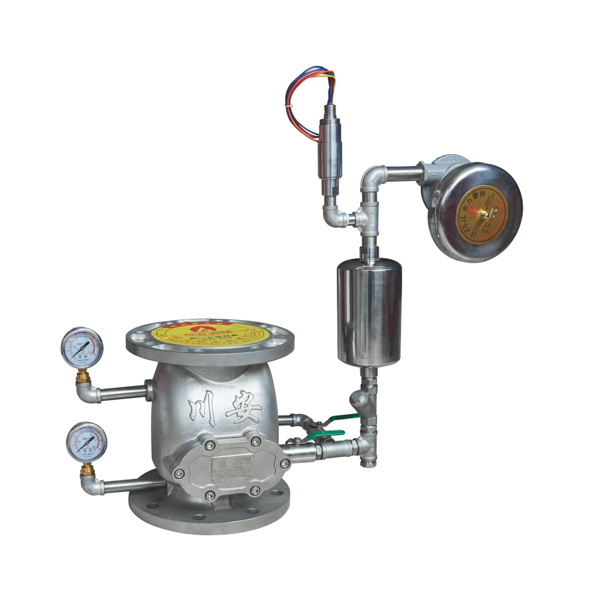
A stainless steel alarm valve is specified in place of a standard cast iron wet alarm valve when the installation environment exposes the valve body and alarm components to corrosion that would degrade a painted ductile iron valve within its design service life. Salt-laden coastal air, chemical plant atmospheres, outdoor installations, food processing wash-down environments and hazardous area classified locations all demand the inherent corrosion resistance that only a stainless steel alarm valve body can reliably provide — without dependence on coatings that chip, crack and undercut over time.
CA-FIRE’s ZSFZ-Ex Series stainless steel alarm valve is a flanged wet-pipe alarm check valve manufactured in SS304 or SS316 stainless steel, available in DN50–DN350 across ten nominal sizes. It delivers the same automatic alarm triggering, one-way check function and hydraulic alarm gong output as a standard cast iron wet alarm valve, with the addition of a stainless steel body engineered for 25+ year service life in corrosive environments. An explosion-proof variant (ZSFZ-Ex) pairs the SS body with Ex-rated pressure switches, solenoid valves and control panels certified for installation in hazardous area classified locations.
Stainless Steel Alarm Valve Technical Specifications
[IMAGE: stainless steel alarm valve ZSFZ-Ex series DN50-DN350 flanged — CA-FIRE] [IMAGE ALT TEXT: stainless steel alarm valve ZSFZ-Ex flanged DN50-DN350 SS304 SS316 — CA-FIRE fire protection]
Dimensional Data
| Nominal Size | Body Height (mm) | Working Pressure | Seal Test | Strength Test | Friction Loss |
|---|---|---|---|---|---|
| DN50 | 270 | 1.6 MPa | 3.2 MPa | 6.4 MPa | < 0.08 MPa |
| DN65 | 270 | 1.6 MPa | 3.2 MPa | 6.4 MPa | < 0.08 MPa |
| DN80 | 330 | 1.6 MPa | 3.2 MPa | 6.4 MPa | < 0.08 MPa |
| DN100 | 340 | 1.6 MPa | 3.2 MPa | 6.4 MPa | < 0.08 MPa |
| DN125 | 415 | 1.6 MPa | 3.2 MPa | 6.4 MPa | < 0.08 MPa |
| DN150 | 435 | 1.6 MPa | 3.2 MPa | 6.4 MPa | < 0.08 MPa |
| DN200 | 555 | 1.6 MPa | 3.2 MPa | 6.4 MPa | < 0.08 MPa |
| DN250 | 655 | 1.6 MPa | 3.2 MPa | 6.4 MPa | < 0.08 MPa |
| DN300 | 800 | 1.6 MPa | 3.2 MPa | 6.4 MPa | < 0.08 MPa |
| DN350 | 850 | 1.6 MPa | 3.2 MPa | 6.4 MPa | < 0.08 MPa |
Key Parameters
| Parameter | Specification |
|---|---|
| Model | ZSFZ 50–350-1.6P / ZSFZ-Ex (explosion-proof) |
| Connection | Flanged — ANSI B16.1 / DIN 2501 |
| Working Pressure | 1.6 MPa |
| Seal Test Pressure | 3.2 MPa |
| Strength Test Pressure | 6.4 MPa |
| Hydraulic Friction Loss | < 0.08 MPa |
| Body Material | SS304 (standard) / SS316 (marine/chloride environments) |
| Clapper Facing | EPDM rubber / PTFE |
| Medium | Water, foam-water mixture |
| Temperature Range | 4–70 °C |
| Installation Orientation | Upright (vertical) |
| Alarm Port Connection | G3/4 thread |
| Explosion-Proof Rating | Ex db IIC T5 Gb (ZSFZ-Ex variant) |
| Standards | GB 5135.1, NFPA 13 |
SS304 vs. SS316 — Which Grade to Specify
The stainless steel alarm valve is available in two grades. The selection depends on the specific corrosive agents present in the installation environment.
SS304 is the standard grade — suitable for inland chemical plant atmospheres, food processing, wastewater treatment and general industrial corrosive environments where chloride ion concentration is low. It provides excellent resistance to oxidising acids and most industrial chemicals, and is significantly more corrosion resistant than ductile iron in all conditions.
SS316 contains approximately 2% molybdenum, which provides dramatically improved resistance to chloride-induced pitting and crevice corrosion. SS316 is the correct specification for any installation within 5 km of the coast, in direct contact with seawater or salt spray, in offshore or marine environments, or in chemical processing environments where chloride compounds are present in the atmosphere or process fluids. The cost difference between SS304 and SS316 is modest relative to the lifecycle cost of replacing a corroded alarm valve and the associated system shutdown — specifying SS316 in any chloride-risk environment is straightforward engineering economy.
Key Features of the ZSFZ-Ex Stainless Steel Alarm Valve
Stainless Steel Body — Corrosion Resistance Without Coating Dependence
The fundamental advantage of a stainless steel alarm valve over a coated ductile iron equivalent is that corrosion resistance is inherent in the material, not dependent on the integrity of an applied coating. Epoxy and paint coatings on cast iron valves are vulnerable to mechanical damage during installation, thermal cycling that causes differential expansion between the coating and substrate, and chemical attack from vapours that penetrate microscopic coating defects. Once the coating is compromised, rapid under-film corrosion begins — often invisibly, progressing to structural degradation and alarm port blockage before the next scheduled inspection. A stainless steel alarm valve body corrodes at a predictable, extremely slow rate in all environments within its specification envelope, regardless of surface damage from installation or maintenance activity.
Wide Size Range — DN50 to DN350
The ZSFZ-Ex stainless steel alarm valve covers a significantly wider size range than most equivalent products — DN50 through DN350 across ten nominal diameters. This breadth covers every wet-pipe sprinkler system application from small branch-line installations at DN50 through to large main riser and primary system applications at DN300–DN350, all from a single product family with consistent dimensional standards, accessory interfaces and maintenance procedures.
Explosion-Proof Variant — Hazardous Area Classified Installations
The ZSFZ-Ex variant pairs the stainless steel alarm valve body with a complete suite of Ex-certified electrical accessories, enabling the complete alarm valve station to be installed in Zone 1 and Zone 2 hazardous area classified locations where flammable gas, vapour or combustible dust atmospheres may be present:
- Explosion-proof pressure switch CT6 — Ex db IIC T5 Gb / Ex tb IIIC T95°C Db, IP65, DC24V/AC220V
- Explosion-proof solenoid valves CT4/CT5/CT6 — Ex db IIC T6 Gb / Ex tb IIIC T80°C Db, IP66/IP68
- Explosion-proof deluge system control panel — Ex mb IIC T4 Gb / Ex mb IIIC T130°C Db, DC24V/AC220V, IP65
- Explosion-proof junction box HY-8A-Ex — Ex db II B T6 Gb / Ex tb IIIB T80°C Db, IP66
This combination — stainless steel body for chemical corrosion resistance plus Ex-rated accessories for hazardous area safety — makes the ZSFZ-Ex the correct specification for petrochemical plants, oil refineries, offshore platforms, paint shops and grain handling facilities where both requirements apply simultaneously.
Compatible Alarm Accessories
Despite its premium construction, the ZSFZ-Ex stainless steel alarm valve uses the same G3/4 alarm port thread and accessory interface dimensions as CA-FIRE’s standard cast iron wet alarm valve series. This means it is directly compatible with CA-FIRE’s standard water motor alarm gong, retard chamber and pressure switch — and with the Ex-rated accessory variants listed above — without requiring custom alarm port adapters or modified trim pipework.
Stainless Steel vs. Cast Iron Alarm Valve — Selection Guide
| Factor | Stainless Steel Alarm Valve | Cast Iron Wet Alarm Valve |
|---|---|---|
| Body corrosion resistance | ✓ Inherent — no coating required | Depends on epoxy coating integrity |
| Coastal / marine environment | ✓ SS316 specified | Not recommended |
| Chemical plant atmosphere | ✓ Suitable | Limited — coating vulnerable |
| Indoor climate-controlled room | Suitable (premium cost) | ✓ Standard specification |
| Freezing environment | Wet system not suitable — specify dry valve | Wet system not suitable |
| Explosion-proof requirement | ✓ ZSFZ-Ex variant available | Not available |
| Food / pharma hygiene | ✓ Stainless required | Not suitable |
| Outdoor / semi-outdoor | ✓ Recommended | Not recommended |
| Available size range | DN50–DN350 | DN65–DN300 |
| Relative cost | Higher initial cost | ✓ Lower initial cost |
| 20-year lifecycle cost (corrosive env.) | ✓ Lower | Higher — replacement cycles |
Specify the stainless steel alarm valve when the installation environment involves any of: coastal or marine exposure, corrosive chemical atmospheres, outdoor installation, food safety requirements, hazardous area classification, or high-humidity condensing conditions. Specify the standard cast iron wet alarm valve for standard indoor, climate-controlled building environments where long-term corrosion risk is low.
Applications
[IMAGE: stainless steel alarm valve installed petrochemical plant hazardous area — CA-FIRE ZSFZ-Ex] [IMAGE ALT TEXT: stainless steel alarm valve ZSFZ-Ex installed petrochemical plant explosion-proof — CA-FIRE]
Petrochemical Plants and Oil Refineries
Process unit areas, pump rooms, tank farm valve stations and loading gantry fire protection systems at refineries and petrochemical facilities are subject to hydrocarbon vapour atmospheres, corrosive process chemical contamination and hazardous area classification — often simultaneously. The ZSFZ-Ex stainless steel alarm valve addresses all three requirements in a single product: SS316 body for chemical and hydrocarbon resistance, and Ex-rated accessories for hazardous area safety. It is the standard specification for wet-pipe sprinkler systems in Zone 1 and Zone 2 classified petrochemical facility areas.
Coastal and Port Facilities
Port terminal buildings, harbourside warehouses, marine terminal pump rooms and shipyard facilities within 5 km of the coast require SS316 stainless steel throughout all fire protection valve assemblies exposed to the salt-air marine atmosphere. The ZSFZ-Ex SS316 stainless steel alarm valve provides the chloride corrosion resistance needed for 20+ year service life in these environments, replacing the frequent re-coating and premature replacement cycles that characterise cast iron valve installations in coastal locations.
Offshore Platforms and Marine Vessels
Engine rooms, pump rooms and accommodation module fire protection systems on offshore oil and gas platforms and large vessels require stainless steel alarm valves that can withstand continuous salt spray, high humidity and the mechanical stresses of offshore installation and vessel motion. The ZSFZ-Ex’s flanged connections and stainless body meet the material requirements of major offshore classification society standards for fire protection equipment.
Food and Beverage Processing
Food processing plants, breweries, beverage production facilities and cold-chain processing environments specify stainless steel for all equipment surfaces to comply with food safety regulations and hygiene standards including HACCP. A stainless steel alarm valve body in these facilities eliminates the corrosion contamination risk associated with painted cast iron valves in regular wash-down environments, and meets the material consistency requirements of food safety authorities and third-party food safety certification schemes.
Chemical Manufacturing
Chemical plants producing or handling acids, alkalis, solvents, oxidising agents and other corrosive process chemicals need fire protection valves with body materials resistant to the specific chemicals present in each process area. SS304 covers most general chemical plant atmospheres; SS316 is specified for chlorine, chloride compound and strong acid environments. CA-FIRE’s technical team can advise on the correct grade for specific chemical compatibility requirements.
Data Centres and Server Rooms in Humid Climates
In tropical and high-humidity climates, data centre and server room fire protection systems installed in buildings without consistent climate control can develop corrosion on standard cast iron alarm valves — particularly in the alarm port trim piping. A stainless steel alarm valve with stainless trim accessories eliminates this corrosion risk in humidity-sensitive installations.
Installation Notes
Preventing Galvanic Corrosion at Pipe Transitions
Where the stainless steel alarm valve connects to carbon steel or ductile iron sprinkler pipework, a galvanic cell is formed at the bi-metal interface — the less noble metal (carbon steel) corrodes preferentially. Prevent this by installing dielectric flange gaskets or isolation unions at the transition flanges between the stainless steel alarm valve body and the adjacent carbon steel or iron pipework. In fully stainless steel sprinkler systems — used in the most aggressive environments — this issue does not arise.
Flange Gasket Specification
In corrosive environments, specify PTFE envelope or full-face PTFE gaskets at all flange connections, or EPDM rubber gaskets in environments not exposed to hydrocarbon fluids. Standard compressed fibre gaskets are not recommended for long-term service in chemical plant or coastal environments.
Alarm Accessory Material Consistency
For the stainless steel alarm valve installation to provide full corrosion protection, the alarm trim piping — connections between the alarm port, retard chamber, water motor gong and pressure switch — should also be specified in stainless steel or corrosion-resistant materials. Mixing stainless valve body with standard brass or carbon steel alarm trim in aggressive environments negates part of the benefit of specifying a stainless body. CA-FIRE can supply complete stainless trim accessory packages on request.
Maintenance Schedule
Per NFPA 25 requirements for wet-pipe alarm valve assemblies:
| Frequency | Task |
|---|---|
| Weekly | Visual inspection — pressure gauges, valve exterior, alarm piping for leaks |
| Monthly | Verify upstream gate valve is open and supervised |
| Quarterly | Water flow alarm test via inspector’s test connection — verify water motor gong and pressure switch response |
| Annually | Full internal inspection — clapper, seat, retard chamber, alarm port; check all flange connections |
| Every 5 years | Replace EPDM clapper facing if hardening or cracking detected |
One practical advantage of the stainless steel alarm valve in corrosive environments is reduced maintenance burden compared to cast iron equivalents — the stainless body requires no re-coating, rust treatment or anti-corrosion touch-up during routine maintenance cycles, reducing annual maintenance time and consumable costs.
Frequently Asked Questions
When should I specify SS316 instead of SS304 for a stainless steel alarm valve?
Specify SS316 for any installation within approximately 5 km of the coast, in direct contact with seawater or salt spray, in offshore or marine environments, or in chemical processing environments where chlorides are present in the atmosphere or process water. For all other corrosive environments without significant chloride risk, SS304 provides adequate protection at lower cost. If in doubt, specify SS316 — the cost difference is modest and the performance margin in chloride environments is substantial.
Can the ZSFZ-Ex stainless steel alarm valve be used in a pre-action or dry pipe system?
No — the ZSFZ-Ex is a wet-pipe alarm check valve, designed for wet pipe sprinkler systems where the downstream pipework is continuously filled with pressurised water. For dry pipe systems in freezing environments, specify the dry alarm valve. For pre-action systems in sensitive environments, specify the pre-action alarm device.
Is the explosion-proof variant available in all sizes?
The ZSFZ-Ex explosion-proof variant is available across the full DN50–DN350 size range. The Ex rating applies to the electrical accessories (pressure switch, solenoid valve, control panel) rather than the valve body itself, so the body dimensions and specifications are identical to the standard ZSFZ stainless steel alarm valve.
What is the difference between the stainless steel alarm valve and the standard cast iron wet alarm valve?
The operating principle, alarm port interface, accessory compatibility and performance specifications are identical. The difference is entirely in the body material — stainless steel vs. epoxy-coated ductile iron — and the resulting corrosion resistance, service life in aggressive environments and accessory options. For standard indoor building environments, the cast iron wet alarm valve is the cost-effective specification. For corrosive, coastal, outdoor or hazardous area installations, the stainless steel alarm valve is the correct engineering choice.
Does CA-FIRE supply the complete alarm valve station assembly?
Yes. CA-FIRE supplies the stainless steel alarm valve body together with the complete alarm trim assembly — retard chamber, water motor alarm gong, pressure switch, alarm test valve and drain valve — as a complete alarm valve station. Ex-rated accessory variants for hazardous area installations are available as a matched set. Contact CA-FIRE’s technical team to specify the complete station for your project.
Get a Quote
Contact CA-FIRE for pricing, material grade selection, technical drawings, explosion-proof certification documentation or OEM supply enquiries. Our engineering team responds within one business day.
- Email: sales@ca-fire.com
- Mobile: +86 13400715622 | WhatsApp: +86 18150362095
- WeChat: 404863577
- Website: www.ca-fire.com
Related products: Wet Alarm Valve — Cast Iron · Grooved Alarm Valve · Dry Alarm Valve · Pre-Action Alarm Device · Alarm Check Valve Series
For wet-pipe alarm valve installation, testing and maintenance requirements, refer to NFPA 13 and NFPA 25.
| Size (DN) | Height (mm) | Working Pressure | Seal Test Pressure | Strength Test Pressure | Hydraulic Friction Loss |
|---|---|---|---|---|---|
| DN50 | 270 mm | 1.6 MPa | 3.2 MPa | 6.4 MPa | < 0.08 MPa |
| DN65 | 270 mm | 1.6 MPa | 3.2 MPa | 6.4 MPa | < 0.08 MPa |
| DN80 | 330 mm | 1.6 MPa | 3.2 MPa | 6.4 MPa | < 0.08 MPa |
| DN100 | 340 mm | 1.6 MPa | 3.2 MPa | 6.4 MPa | < 0.08 MPa |
| DN125 | 415 mm | 1.6 MPa | 3.2 MPa | 6.4 MPa | < 0.08 MPa |
| DN150 | 435 mm | 1.6 MPa | 3.2 MPa | 6.4 MPa | < 0.08 MPa |
| DN200 | 555 mm | 1.6 MPa | 3.2 MPa | 6.4 MPa | < 0.08 MPa |
| DN250 | 655 mm | 1.6 MPa | 3.2 MPa | 6.4 MPa | < 0.08 MPa |
| DN300 | 800 mm | 1.6 MPa | 3.2 MPa | 6.4 MPa | < 0.08 MPa |
| DN350 | 850 mm | 1.6 MPa | 3.2 MPa | 6.4 MPa | < 0.08 MPa |
H3: Key Technical Parameters
| Parameter | Value |
|---|---|
| Product Model | ZSFZ 50~350-1.6P-Ex |
| Connection Type | Flanged |
| Nominal Working Pressure | 1.6 MPa (16 bar / 232 psi) |
| Seal Test Pressure | 3.2 MPa |
| Strength Test Pressure | 6.4 MPa |
| Hydraulic Friction Loss | < 0.08 MPa |
| Valve Body Material | Stainless Steel (304 / 316) |
| Clapper Facing Material | EPDM Rubber / PTFE |
| Applicable Medium | Water, Foam-Water Mixture |
| Applicable Temperature Range | 4°C to 70°C |
| Installation Orientation | Upright (vertical) |
| Explosion-Proof Rating | Available (Ex variant) |
| Alarm Port Size | G3/4 thread |
| Size Range | DN50 to DN350 |