
BS750 Fire Hydrant Above-Ground — BS EN 14384, 2½″ Instantaneous | CA-FIRE
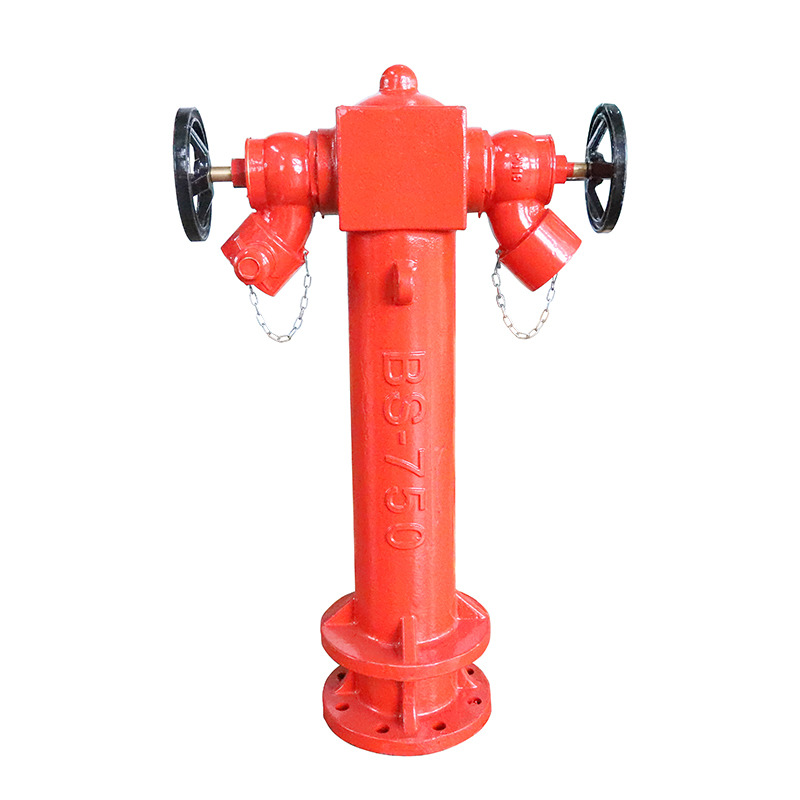
<!-- ══════════════════════════════════════════════════════════ BS750 Above-Ground Fire Hydrant — BS EN 14384 / UK Standard WordPress-safe: all styles inline, + for tag rows URL: /product/bs750-fire-hydrant/ ══════════════════════════════════════════════════════════ -->
<!-- INTRO TAGS — using + to avoid flex override -->
✓ BS EN 14384 Compliant✓ DN100 · PN16 · 1.6 MPa✓ 2½″ Instantaneous Coupling✓ Ductile Iron EN-GJS-450-10✓ −20°C to +60°C✓ UK · Australia · Commonwealth✓ CE · ISO 9001 · BS
The CA-FIRE BS750 fire hydrant above-ground is manufactured to BS EN 14384 — the harmonised European standard for pillar fire hydrants, adopted as the British national standard and widely recognised across UK and Commonwealth markets. The DN100 pillar hydrant delivers up to 80 L/s at 1.6 MPa working pressure through two 2½″ instantaneous coupling outlets — the British fire service standard that allows direct hose connection by UK, Australian, South African and Commonwealth fire brigades in under three seconds without tools. Ductile iron body (EN-GJS-450-10) with hot-dip galvanising (Zn ≥ 85 μm) and RAL 3000 red powder coating provides a 20+ year outdoor service life. The hydrant connects to existing water mains via PN16 flanges per BS EN 1092-1 and is supplied with CE declaration, BS certification, third-party test reports, and a bilingual (English/local language on request) installation manual for straightforward authority submission across all BS-standard markets.
Technical Specifications — BS EN 14384
| Parameter | Specification |
|---|---|
| Compliance Standard | BS EN 14384 · CE · ISO 9001:2015 |
| Nominal Diameter | DN100 (100 mm / 4 inch) |
| Working Pressure (PFA) | PN16 — 1.6 MPa (232 psi) |
| Test Pressure (Hydrostatic) | 2.4 MPa — 30-minute hold, zero leakage |
| Maximum Flow Rate | 80 L/s (1,270 GPM) |
| Outlet Configuration | 2 × 2½″ instantaneous coupling (British standard — compatible with UK, Australian & Commonwealth fire service hose) |
| Inlet Connection | Flange — PN16, BS EN 1092-1 |
| Body Material | Ductile iron EN-GJS-450-10 |
| Valve Core Material | Brass alloy Cu-Zn 40 |
| Sealing Material | EPDM rubber · −20°C to +80°C temperature range |
| Surface Treatment | Hot-dip galvanising (Zn ≥ 85 μm) + electrostatic powder coating RAL 3000 red (yellow available for some Commonwealth markets) |
| Operating Temperature | −20°C to +60°C |
| Overall Height | 1,100 mm (excluding flange base) |
| Net Weight | 85 kg (without accessories) |
| Standard Accessories | 2 × outlet caps · 1 × operating bar (pentagonal) · 1 × flange gasket · 4 × fixing bolts |
| Optional Accessories | Thermal insulation jacket · reflective marker post · locking device · road traffic guard |
| Service Life | 20+ years |
| Warranty | 2 years |
* Yellow RAL 1023 surface colour available for Australian market where yellow is the standard hydrant colour. Thermal insulation jacket recommended for Scotland, Northern England and highland installations below −10°C.
Key Features
|
🇬🇧 BS EN 14384 — UK & Commonwealth Standard BS EN 14384 is the harmonised European standard for above-ground pillar fire hydrants, adopted in the UK as the national standard replacing the older BS 5041 series. It specifies minimum requirements for DN 80, DN 100 and DN 150 pillar hydrants at PN16 — covering flow performance, leaktightness, mechanical strength, corrosion resistance, drain facility and conformity marking. In the UK, above-ground hydrants to BS EN 14384 are specified for industrial sites, commercial developments, private roads and off-highway locations where the underground BS 750 system is not used. The same standard is widely recognised across Commonwealth markets including Australia, New Zealand, South Africa, Hong Kong, Singapore and the Gulf States — all of which use 2½″ instantaneous coupling fire service equipment. BS EN 14384 · CE · ISO 9001 · Third-Party Tested |
🔗 2½″ Instantaneous Coupling — Direct UK Fire Service Connection Both outlets are fitted with 2½″ British instantaneous coupling — the twist-lock connection used by UK fire and rescue services, Australian fire brigades, and most Commonwealth fire services. The instantaneous coupling allows a firefighter to connect a charged delivery hose in under three seconds with a single quarter-turn motion, even wearing gloves in low-visibility conditions. The coupling geometry is machined to the BS standard dimensional tolerance. Both outlets are positioned at working height for simultaneous dual-hose attack deployment. Outlet caps are retained by a chain to prevent loss during deployment. No adaptors are required when used with standard UK or Commonwealth fire service equipment — a critical factor in emergency response time. 2 × 2½″ Instantaneous · Twist-Lock · No Adaptors Required |
|
🏗️ Ductile Iron EN-GJS-450-10 — 20+ Year Service Life The hydrant body is cast from ductile iron EN-GJS-450-10 — a material specified across European fire hydrant standards for its combination of corrosion resistance, impact toughness and pressure integrity. Unlike grey cast iron, which fractures under impact, EN-GJS-450-10 has a minimum elongation at fracture of 10%, absorbing vehicle impact and ground movement without catastrophic failure. The dual-layer surface protection — hot-dip galvanising (Zn ≥ 85 μm) providing a zinc-iron inter-metallic barrier, then electrostatic powder coating as a second sealing layer — delivers salt-spray resistance exceeding 1,000 hours per ISO 9227. This performance is specified for UK coastal installations and industrial sites with airborne chemical contamination. EN-GJS-450-10 · Zn ≥ 85 μm · 1,000 h Salt-Spray |
🌏 Commonwealth Market Supply — Full Documentation The British instantaneous coupling standard extends across the Commonwealth and former British territories. CA-FIRE’s BS750 fire hydrant is specified and supplied to fire protection contractors and infrastructure developers across the UK, Australia, New Zealand, South Africa, Zimbabwe, Kenya, Nigeria, Ghana, Hong Kong, Singapore, Malaysia, UAE, Qatar, Bahrain and other Gulf States. Every order ships with CE declaration of conformity, BS EN 14384 third-party test certification, quality inspection records, and an English-language installation manual. Country-of-origin certificates and import documentation for specific destination countries are available on request — ensuring smooth customs clearance and fire authority submission across all Commonwealth markets. UK · AUS · NZ · SA · Gulf States · 50+ Countries |
How the BS750 Above-Ground Fire Hydrant Works
The BS750 above-ground fire hydrant uses a globe (screw-down) valve mechanism operated via a pentagonal top nut — the same operating profile as used on underground hydrants, so UK and Commonwealth fire crews use the same standard hydrant key for both types.
|
1
Standby — Main valve closed, outlets capped Both 2½″ instantaneous outlets are protected by retained caps. The main globe valve is fully closed. Where a drain facility is fitted (recommended for Scottish Highlands, northern England and high-altitude Commonwealth locations), the hydrant barrel automatically empties after each use, preventing barrel freeze in sub-zero conditions. |
2
Activation — Hydrant key opens main valve The fire crew’s standard pentagonal hydrant key engages the top nut. Clockwise rotation raises the globe valve disc off its seat, opening the flow path from the water main through the barrel to the outlets. BS EN 14384 permits a maximum of 12 turns from fully closed to fully open — a limit that ensures rapid water delivery in emergencies. |
|
3
Discharge — 2½″ instantaneous hose connection Remove outlet cap(s). Press the 2½″ instantaneous coupling on the delivery hose against the outlet face and rotate a quarter-turn — the coupling locks and seals in one action. Both outlets can be used simultaneously for a dual-line attack at maximum 80 L/s, or one outlet for a single-line operation. The globe valve controls flow rate by degree of opening. |
4
Shutdown — Close valve, drain, replace caps Close the main valve anti-clockwise. Disconnect hose lines by reversing the quarter-turn. Replace outlet caps. Where a drain facility is fitted, the barrel self-empties automatically. In freezing conditions without a drain facility, manually purge residual water via the test port. Confirm no drip leakage from the valve before leaving. |
Installation Guide
Pre-Installation Checklist
Before installing the BS750 above-ground fire hydrant, confirm the following: the product’s BS EN 14384 certification matches the project specification and local authority requirement; the hydrant shows no transport damage (body, flange face, outlet ports); all standard accessories are present; the concrete plinth is flat, stable and rated for ≥ 200 kg bearing load; minimum 1.5 m clearance exists on all sides for fire appliance access; the water main flange face is clean and the supply pressure is rated for PN16 / 1.6 MPa. Where the installation is on a UK adoptable road, confirm that Water Regulations Advisory Scheme (WRAS) approval requirements for components in contact with potable water have been addressed and that the project engineer has confirmed compliance with AMP requirements for the relevant water company.
Installation Steps
Set the hydrant on the prepared reinforced concrete plinth and verify verticality with a spirit level (tolerance ≤ 3 mm/m). Fit the EPDM flange gasket between the hydrant inlet flange and the water main flange. Align all bolt holes and insert M16 flanged bolts — tighten in a star-pattern sequence to 45–55 N·m torque. Secure the hydrant to the plinth with chemical anchor bolts (M16 × 100 mm minimum). Conduct the commissioning hydrostatic test: cap both outlets, fill slowly to purge air, pressurise to 2.4 MPa and hold for 30 minutes with zero observed leakage at all joints, the valve body, stem gland and outlet faces. Install hydrant marker plate at kerb edge per local authority requirement — in the UK, yellow hydrant marker plates to BS 3251 are standard on public highways.
Emergency Operation
Locate the hydrant (marker plate or app). Confirm access zone is clear of vehicles and obstacles. Remove outlet caps by turning anti-clockwise. Connect 2½″ instantaneous coupling hose lines with a quarter-turn clockwise. Engage the pentagonal hydrant key on the top nut and turn clockwise to open. Adjust opening degree to control flow. After use: close fully anti-clockwise; disconnect hose couplings by reversing the quarter-turn; replace caps; confirm drain facility or manually purge in cold conditions; inspect body for damage.
Maintenance Schedule
| Frequency | Task |
|---|---|
| Monthly | Visual inspection of body, outlet caps and surface coating for corrosion, mechanical damage or paint failure. Confirm BS EN 14384 mandatory markings are legible. Verify hydrant marker plate is upright and visible. Confirm 1.5 m clearance zone is unobstructed. In UK: confirm the hydrant is on the current inspection schedule for the relevant Water Company or Fire & Rescue Service. |
| Quarterly | Remove outlet caps and inspect 2½″ instantaneous coupling faces and EPDM seals for wear, cracking or deformation — replace with CA-FIRE genuine parts if degraded. Apply Molykote or equivalent grease to the pentagonal top nut and stem thread. Check flange bolts for loosening and re-torque to 45–55 N·m. Test drain facility (where fitted) by briefly opening the valve with no hose and confirming full drainage within 3 minutes of closure. |
| Annual | Full hydrostatic test (2.4 MPa, 30 minutes). Inspect globe valve disc and seat for wear; replace if closing torque has increased or residual leakage observed. Repaint areas where coating has degraded to bare metal. Update maintenance log. In Australia and New Zealand: confirm hydrant is listed on the local council or infrastructure manager’s maintenance register and annual inspection is compliant with AS 1221 requirements. |
| Before winter | Verify drain facility is operational; fit insulation jacket for installations in Scotland, northern England, high-altitude sites or cold Commonwealth locations; mark position with snow poles where accumulation may obscure the hydrant body or marker plate. |
Applications
|
UK — Industrial Sites & Private Roads Industrial estates, logistics parks, manufacturing sites and private road networks where above-ground pillar hydrants are specified instead of the UK’s typical underground system. Above-ground hydrants are favoured on private land where the underground BS 750 system is not mandated and where high-visibility, direct hose access is preferred by the site fire team. |
Australia & New Zealand Above-ground pillar hydrants are standard infrastructure across Australian states and New Zealand — installed along roads, in industrial precincts, commercial developments and rural properties. Australian fire brigades use 2½″ instantaneous couplings, directly compatible with this hydrant. Yellow RAL 1023 surface colour is available for markets where yellow is the standard hydrant colour. |
South Africa & Sub-Saharan Africa South Africa’s fire hydrant infrastructure follows British standards with 2½″ instantaneous couplings. The same coupling system is common across Zimbabwe, Kenya, Tanzania, Ghana, Nigeria and other former British territories in sub-Saharan Africa. CA-FIRE supplies container loads to infrastructure developers and fire protection contractors across the region. |
|
Gulf States — GCC Infrastructure Projects UAE, Qatar, Bahrain, Kuwait, Oman and Saudi Arabia — markets where British fire safety standards and 2½″ instantaneous coupling equipment are widely used, particularly on projects designed by British or Commonwealth engineering consultants, or operating under Civil Defence authority requirements that reference British standards. |
Southeast Asia — Singapore, Malaysia, Hong Kong Singapore SCDF, Malaysia BOMBA and Hong Kong FSD all operate with 2½″ instantaneous coupling equipment derived from British fire service standards. New development projects, industrial parks and commercial high-rise buildings in these markets routinely specify BS EN 14384 above-ground hydrants for external fire protection perimeter rings. |
Commercial & Petrochemical Sites Commercial complexes, airports, refinery perimeters, LNG terminal berths and petrochemical plants across Commonwealth markets where the high flow rate (80 L/s at PN16) and robust ductile iron construction are required to meet fire engineering calculations for large industrial fire scenarios. |
Frequently Asked Questions
What is the difference between BS 750 and BS EN 14384 for fire hydrants?
This is an important distinction. BS 750 is the British Standard for underground fire hydrants — the flush-mounted, below-ground hydrants used on UK public highways, accessed via a surface box and standpipe. It does not govern above-ground pillar hydrants. BS EN 14384 is the standard for above-ground pillar fire hydrants (the type on this page) — published by BSI (British Standards Institution) and harmonised across Europe.
The term “BS750 above-ground fire hydrant” is commonly used in export markets to describe a British-standard above-ground hydrant with 2½″ instantaneous couplings — the type on this page. The correct technical standard reference for this product is BS EN 14384. CA-FIRE supplies both the above-ground pillar hydrant (this page) and the underground series — see the underground fire hydrant page for the below-ground variants.
What is a 2½″ instantaneous coupling and which countries use it?
The 2½″ British instantaneous coupling (sometimes called “British instantaneous” or “BI”) is a quarter-turn bayonet-style hose coupling that allows rapid hose attachment without tools. The coupling face seals with an EPDM gasket and locks with a 90° rotation. It is the standard hose coupling used by UK Fire & Rescue Services, Australian fire brigades (State Fire Services), New Zealand Fire and Emergency NZ, South African fire services, and the fire and civil defence authorities across Hong Kong, Singapore, Malaysia, UAE, Qatar, Bahrain and most other Commonwealth and formerly British-administered markets. This coupling is not compatible with French DSP, German Storz, or Russian GOST thread couplings — specifying the correct coupling for the local fire service is essential.
Is the hydrant suitable for Australian yellow colour requirements?
Yes. Australian Standard AS 2419.1 and state fire service requirements in some Australian jurisdictions specify yellow (typically Dulux Safety Yellow or equivalent RAL 1023) as the standard surface colour for fire hydrants, rather than the red used in the UK and most other markets. CA-FIRE’s BS EN 14384 hydrant is available with RAL 1023 yellow powder coating on request — confirm the required colour at the time of enquiry. New Zealand, South Africa and other Commonwealth markets where red is standard are supplied with the default RAL 3000 red finish.
Does this hydrant require a drain facility for UK or cold-climate installation?
BS EN 14384 permits hydrants with or without a drain facility. For above-ground hydrants in locations where ambient temperature falls below 0°C — Scotland, northern England, high-altitude sites, and cold Commonwealth locations — a drain facility is strongly recommended to prevent barrel freeze between uses. CA-FIRE’s hydrant is available with the drain facility option; specify this requirement at enquiry stage. For tropical and subtropical Commonwealth markets (most of sub-Saharan Africa, Southeast Asia, Gulf States) where freezing is not a risk, the drain facility is not required.
How does this hydrant compare to the French type and Russian standard hydrants?
All three are above-ground pillar hydrants at DN100 PN16, but with incompatible outlet couplings and different standard certifications. The BS EN 14384 hydrant (this page) uses 2½″ British instantaneous couplings — for UK and Commonwealth fire service equipment. The French type NF EN 14384 hydrant uses 65 mm DSP couplings — for French and Francophone markets. The Russian GOST hydrant uses metric-threaded outlets — for Russia and CIS markets. The applicable type is determined by which country or authority has jurisdiction over the project — not by any performance or quality difference between the three. Always confirm the project’s applicable standard before ordering.
Applicable Standards & References
| Standard | Scope & Relevance |
|---|---|
| BS EN 14384 | Pillar fire hydrants — the primary certification standard for this product. Specifies minimum requirements for DN 80 to DN 150 pillar hydrants at PN16: dimensions, flow performance, leaktightness, mechanical strength, corrosion resistance, drain facility and marking. Published by BSI (British Standards Institution) and CEN. |
| BS EN 1092-1 | Circular flanges for pipes, valves and fittings — governs the PN16 inlet flange dimensions on this hydrant for connection to UK and Commonwealth water main pipework. |
| NFPA 291 | NFPA’s Recommended Practice for Fire Flow Testing and Marking of Hydrants. While a US-origin document, NFPA 291’s colour-coding guidance for hydrant flow classification is referenced by fire engineers on some Commonwealth infrastructure projects as a supplementary guidance document for hydrant testing and marking. |
| AS 2419.1 | Australian Standard for fire hydrant installations — applies to above-ground hydrant installations in Australia. Governs hydrant spacing, colour coding, marker plate requirements and testing. Relevant for specifying the yellow surface colour variant of this hydrant for the Australian market. |
| ISO 9001:2015 | CA-FIRE quality management system certification — covers design, manufacturing, inspection and supply for all fire hydrant products. |
Why Specify CA-FIRE’s BS750 Above-Ground Fire Hydrant
|
✓ 2½″ Instantaneous Outlets Precision-Machined to BS Dimensional Standard The 2½″ instantaneous coupling geometry is machined to BS dimensional tolerance on every batch. Dimensional conformance is verified before despatch — ensuring reliable quarter-turn lock engagement with UK and Commonwealth fire service hose equipment under field conditions, including by crew wearing gloves. |
✓ Complete BS EN 14384 Certification — Ready for Authority Submission CE declaration of conformity, BS EN 14384 third-party accredited test report, quality inspection records and English-language installation manual ship with every order. This documentation set is accepted by UK building control, Australian fire authorities (AFAC member services) and GCC Civil Defence authorities without additional verification requests. |
|
✓ Commonwealth Market Supply Track Record CA-FIRE has supplied BS EN 14384 pillar hydrants to fire protection contractors and infrastructure developers across the UK, Australia, South Africa, Gulf States and Southeast Asia. We understand the project documentation requirements, import clearance processes and colour specification variations across these markets. |
✓ Factory-Direct · Single Units to Container Loads Factory-direct supply eliminates distributor margin. Competitive pricing for single-unit project orders and full container load bulk supply. Yellow or red colour, drain facility option, and accessory packages confirmed at enquiry. Lead time and pricing within one business day. |
Related Products
|
French NF EN 14384 · Francophone Markets French Type Above-Ground Fire Hydrant NF EN 14384 pillar hydrant with 2 × 65 mm DSP coupling outlets — for France, Francophone Africa, DOM-TOM and French-specification projects. |
GOST 24013-80 · Russia & CIS Russian Standard Above-Ground Fire Hydrant GOST 24013-80 pillar hydrant with −40°C auto-drain frost protection. For Russia, CIS and Eastern European projects requiring GOST certification. |
All Types · Full Range Fire Hydrant — Category Overview Compare all CA-FIRE fire hydrant types — BS750, French, Russian, GB above-ground, underground and foam series — with full specification comparison table. |
Get a Quote — BS750 Above-Ground Fire Hydrant
BS EN 14384 · DN100 · PN16 · 2½″ Instantaneous Coupling · Ductile Iron · CE Certified
UK · Australia · South Africa · Gulf States · Southeast Asia · Factory Direct
sales@ca-fire.com
WhatsApp: +86 18150362095
+86 13400715622
WeChat: 404863577
|
Item
|
Specification
|
|---|---|
|
Product Model
|
BS750 Fire Hydrant
|
|
Compliance Standard
|
BS 750:1999, EN 14384:2004, ISO 9001:2015
|
|
Nominal Diameter
|
100mm (4 inches)
|
|
Working Pressure
|
1.6MPa (232 psi)
|
|
Test Pressure
|
2.4MPa (348 psi) (Hydrostatic Test)
|
|
Maximum Flow Rate
|
80L/s (1270 GPM)
|
|
Outlet Nozzle
|
1 x 100mm (main outlet), 1 x 65mm (auxiliary outlet)
|
|
Body Material
|
Ductile Iron EN-GJS-450-10
|
|
Valve Core Material
|
Brass Alloy (Cu-Zn Alloy)
|
|
Sealing Material
|
EPDM Rubber (Temperature Resistance: -20°C ~ +80°C)
|
|
Surface Treatment
|
Hot-Dip Galvanizing (Zn Coating ≥ 85μm) + Electrostatic Powder Coating (RAL 3000 Red)
|
|
Installation Method
|
Flange Connection (PN16, BS 4504 standard flange)
|
|
Operating Temperature
|
-20°C ~ +60°C
|
|
Overall Height
|
1100mm (excluding flange base)
|
|
Net Weight
|
85kg (without accessories)
|
|
Accessories Included
|
Hydrant Cap (2 pcs), Operating Wrench (1 pc), Flange Gasket (1 pc), Fixing Bolts (4 pcs)
|
|
Certifications
|
BS Certification, CE Certification, ISO 9001 Certification
|